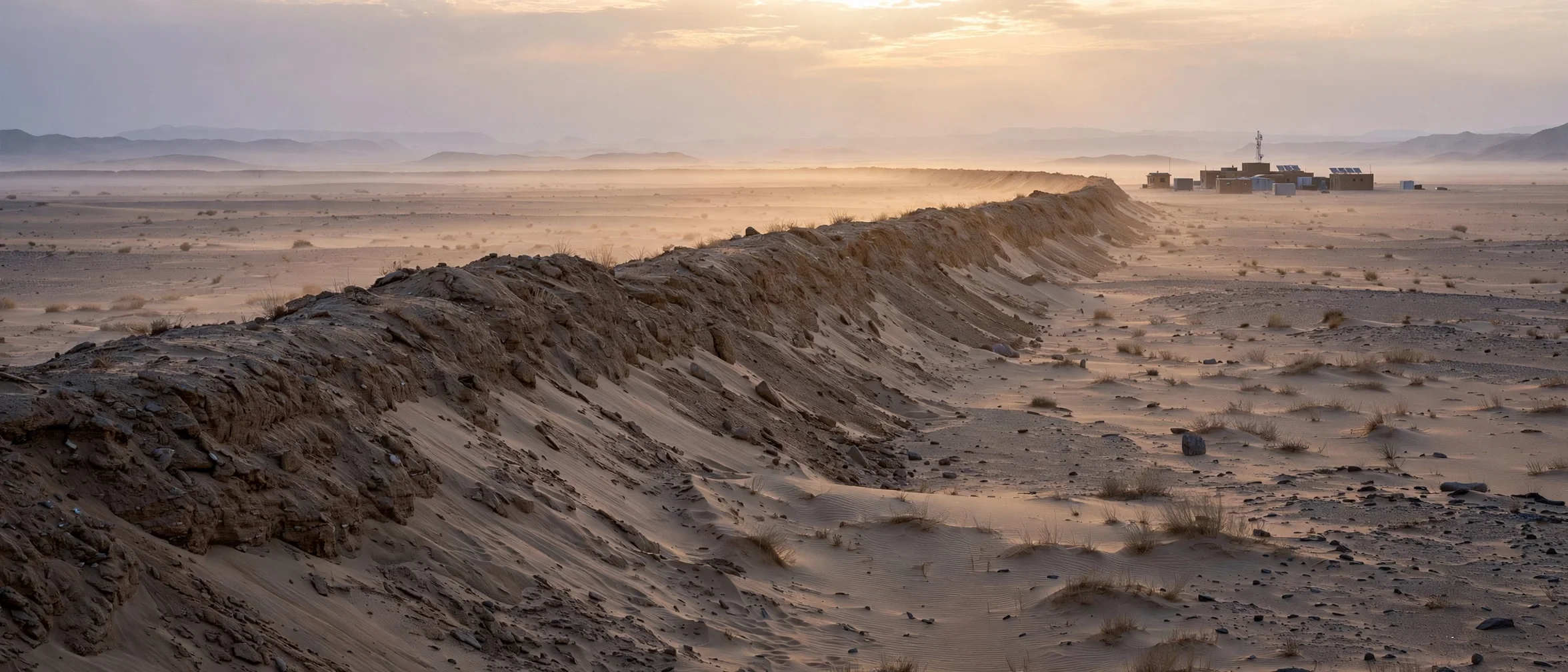
El muro de arena en el desierto y un puesto remoto, en el contexto del fin de la misión en el Sahara Occidental. · EPM
UN Vows to Keep Backing Western Sahara After MINURSO Ends
The MINURSO mandate expired at midnight on Saturday after Russia vetoed a United States draft and a rival Russian text failed, and the United Nations says it…
MINURSO Ends and Western Sahara Enters a Delicate New Phase
The MINURSO mandate expired at midnight on Saturday without agreement in the Security Council, a liquidation period begins on Sunday, and the Secretary-General…
--- The context ---
The mandate of MINURSO, the United Nations mission for the referendum in Western Sahara, expired at midnight on Saturday after the Security Council failed on Friday to agree on its future. A presence that since 1991 had monitored the ceasefire and created conditions for a political solution has therefore ended.
--- The facts ---
A draft resolution from the United States was vetoed by Russia, while a rival Russian text failed to win the nine votes needed for adoption. When its mandate ended, the mission was headquartered in Laayoune, with nine team sites, four west of the berm and five east of it, and a liaison office in Tindouf. It had about 200 civilian staff, military observers and staff officers from over 35 countries, and a dedicated mine action capability.
Sunday marks the start of a liquidation period, with a smaller team reporting to the Department of Operational Support overseeing the disposal of equipment. According to the statement by Secretary-General António Guterres, delivered by his spokesperson, the departure does not abrogate the inalienable right of the people of Western Sahara to self-determination, and all parties were called on to respect and promote their rights. Guterres recognized the central role of the mission since 1991, thanked its personnel and Alexander Ivanko, who led it after hostilities resumed in 2020 through a particularly challenging period, and paid tribute to the 20 personnel lost during 35 years.
MINURSO was established under resolution 690 (1991), in line with settlement proposals by the United Nations and the Organization of African Unity accepted in 1988 by Morocco and the Frente POLISARIO. Those proposals provided for a referendum between independence and integration with Morocco that never took place. In 2007 Morocco put forward an autonomy proposal envisaging the territory as self-governing under Moroccan sovereignty.
--- The positions ---
The delegate of the United States said his draft would have supported self-determination and moved the 50 year conflict forward, calling the status quo unacceptable. The Russian delegate said the text would have imposed one-sided solutions and described his vote as a veto intended to save the situation. The Russian alternative of a one year extension to 31 October 2027 failed to attract enough support from the 15 nation body. The United Nations stands ready to continue supporting dialogue through Personal Envoy Staffan de Mistura.
--- What remains unknown ---
What remains unknown is how the rights of the Sahrawi people will be protected without the presence that monitored the ceasefire, how long the liquidation will last and whether the Council will seek another common formula.
--- Unanswered questions ---
Who will monitor the ceasefire once the liquidation ends and the smaller team withdraws? Can Staffan de Mistura sustain dialogue without a mission on the ground? What concrete steps will back the right to self-determination beyond declarations?
--- EPM analysis ---
The central risk is a protection vacuum. Without observers, any incident can escalate without an international presence to contain it. Guterres expressed concern about security and the risk of escalation, called for full cooperation for an orderly withdrawal and urged maximum restraint.
📌 EPM Take: In EPM's view, what matters now is that self-determination does not fade together with the mission that was meant to make it possible through a referendum. The United Nations says that right remains intact and that it will keep supporting a peaceful resolution, and that promise must become active diplomacy, effective protection of the rights of the Sahrawi people and sustained pressure for the parties to cooperate. Without that visible commitment, distrust and risk will fill the empty ground.
--- The context ---
The mandate of MINURSO, the United Nations mission for the referendum in Western Sahara, expired at midnight on Saturday because the Security Council failed on Friday to agree on its future. An operation created in 1991 to monitor the ceasefire and create conditions for a political solution has ended.
--- The facts ---
A draft resolution from the United States was vetoed by Russia, and a rival Russian text failed to win the nine votes needed for adoption. The Russian alternative of a one year extension of the mandate to 31 October 2027 also failed to attract enough support from the 15 nation body. When its mandate ended, the mission was headquartered in Laayoune, with nine team sites, four west of the berm and five east of it, and a liaison office in Tindouf.
The deployment now withdrawing brought together about 200 civilian staff, military observers and staff officers from over 35 countries, with a dedicated mine action capability. Sunday marks the start of a liquidation period, with a smaller team reporting to the Department of Operational Support overseeing the disposal of equipment. According to the statement by Secretary-General António Guterres, delivered by his spokesperson, the parties were called on to cooperate fully for an orderly withdrawal, amid concern about security and the risk of escalation and a call for maximum restraint.
MINURSO was established under resolution 690 (1991), in line with proposals by the United Nations and the Organization of African Unity accepted in 1988 by Morocco and the Frente POLISARIO. Those proposals provided for a referendum between independence and integration with Morocco that never took place. In 2007 Morocco put forward an autonomy proposal with self-government under Moroccan sovereignty. Guterres recognized the central role of the mission since 1991, thanked its personnel and Alexander Ivanko, who led it after hostilities resumed in 2020 through a particularly challenging period, and paid tribute to the 20 personnel lost during 35 years.
--- The positions ---
The delegate of the United States said his draft would have supported self-determination and moved the 50 year conflict forward, calling the status quo unacceptable. The Russian delegate said the text would have imposed one-sided solutions and described his vote as a veto intended to save the situation. According to Guterres, the departure does not abrogate the inalienable right of the people of Western Sahara to self-determination, and all parties were called on to respect their rights. The United Nations stands ready to continue dialogue through Staffan de Mistura.
--- What remains unknown ---
What remains unknown is how long the liquidation will last, whether the withdrawal will be orderly and what format the political process will take without a deployed mission.
--- Unanswered questions ---
Will the withdrawal be completed in an orderly and safe way during the liquidation? Will maximum restraint contain any attempt to raise tensions after the mission leaves? Can the process of Staffan de Mistura advance without imposing one-sided solutions?
--- EPM analysis ---
The prudent reading runs through regional stability. A disorderly withdrawal or an incident at the greatest vacuum would be the worst outcome. The blockage between rival drafts also shows the limits of forcing outcomes without agreement among the major powers.
📌 EPM Take: In EPM's view, the immediate priority is not to reopen every underlying dispute, but to prevent the end of the mission from becoming instability. The withdrawal must be orderly, restraint must be real and dialogue must continue through the Personal Envoy, without imposed solutions and with respect for the rights cited by the Secretary-General. Only a gradual and verifiable process can prevent escalation and keep a peaceful outcome open for all sides involved.
La ONU promete seguir por el Sahara Occidental tras el fin de MINURSO
El mandato de MINURSO expiró a medianoche del sábado tras el veto ruso a un proyecto de Estados Unidos y el fracaso de un texto rival, y la ONU afirma que…
El fin de MINURSO deja al Sahara Occidental en un momento delicado
El mandato de MINURSO expiró a medianoche del sábado sin acuerdo en el Consejo de Seguridad, el domingo comienza la liquidación de la misión y el secretario…
--- El contexto ---
El mandato de MINURSO, la misión de las Naciones Unidas para el referéndum en el Sahara Occidental, expiró a medianoche del sábado, después de que el Consejo de Seguridad no lograra acordar su futuro el viernes. Termina una presencia que desde 1991 vigilaba el alto el fuego y creaba condiciones para una solución política del conflicto.
--- Los hechos ---
Un proyecto de resolución de Estados Unidos fue vetado por Rusia, mientras que un texto ruso rival no logró los nueve votos necesarios para ser adoptado. Al expirar el mandato, la misión tenía sede en El Aaiún, nueve emplazamientos, cuatro al oeste del muro de arena y cinco al este, y una oficina de enlace en Tindouf, con cerca de 200 civiles, observadores militares y oficiales de más de 35 países y una capacidad dedicada de acción contra minas.
El domingo comienza la liquidación, con un equipo menor del Departamento de Apoyo Operacional supervisando la disposición del equipo. Según la declaración del secretario general António Guterres, transmitida por su portavoz, la salida no anula el derecho inalienable del pueblo del Sahara Occidental a la autodeterminación y se llamó a respetar y promover sus derechos. Guterres reconoció el papel central de la misión desde 1991, agradeció a su personal y a Alexander Ivanko, que la lideró tras la reanudación de hostilidades en 2020 en un periodo particularmente desafiante, y rindió homenaje a los 20 miembros perdidos en 35 años.
MINURSO se estableció bajo la resolución 690 (1991), según propuestas de arreglo de las Naciones Unidas y la Organización de la Unidad Africana aceptadas en 1988 por Marruecos y el Frente POLISARIO. Preveían un referéndum entre independencia e integración con Marruecos que nunca se celebró. En 2007 Marruecos presentó una propuesta de autonomía que concibe el territorio como autogobernado bajo soberanía marroquí.
--- Las posiciones ---
El delegado de Estados Unidos dijo que su proyecto apoyaba la autodeterminación, habría hecho avanzar un conflicto de 50 años y calificó el statu quo de inaceptable. El delegado ruso dijo que el texto imponía soluciones unilaterales y describió su voto como un veto para salvar la situación. La alternativa rusa de prorrogar un año el mandato hasta el 31 de octubre de 2027 no logró apoyo suficiente en el órgano de 15 naciones. La ONU se declara lista para seguir apoyando el diálogo a través del enviado personal Staffan de Mistura.
--- Lo que falta saber ---
Falta saber cómo se protegerán los derechos saharauis sin la presencia que vigilaba el alto el fuego, cuánto durará la liquidación y si el Consejo intentará otra fórmula común.
--- Preguntas sin respuesta ---
¿Quién vigilará el alto el fuego cuando termine la liquidación? ¿Podrá Staffan de Mistura sostener el diálogo sin una misión sobre el terreno? ¿Qué pasos concretos respaldarán la autodeterminación más allá de las declaraciones?
--- Análisis EPM ---
El riesgo central es el vacío de protección. Sin observadores, cualquier incidente puede escalar sin una mirada internacional que lo contenga. Guterres expresó preocupación por la seguridad y el riesgo de escalada, pidió cooperación plena para una retirada ordenada e instó a la máxima moderación.
📌 Conclusion EPM: A juicio de EPM, lo decisivo es que la autodeterminación no se apague con la misión que debía hacerla posible mediante un referéndum. La ONU afirma que ese derecho sigue intacto y que seguirá apoyando una resolución pacífica, y esa promesa debe traducirse en diplomacia activa, protección efectiva de los derechos del pueblo saharaui y presión sostenida para que las partes cooperen. Sin ese compromiso visible, el vacío lo llenarán la desconfianza y el riesgo.
--- El contexto ---
El mandato de MINURSO, la misión de las Naciones Unidas para el referéndum en el Sahara Occidental, expiró a medianoche del sábado porque el Consejo de Seguridad no acordó su futuro el viernes. Termina una operación creada en 1991 para vigilar el alto el fuego y crear condiciones para una solución política.
--- Los hechos ---
Un proyecto de Estados Unidos fue vetado por Rusia y un texto ruso rival no logró los nueve votos necesarios. La alternativa rusa de prorrogar un año el mandato hasta el 31 de octubre de 2027 tampoco logró apoyo suficiente en el órgano de 15 naciones. Al expirar, la misión tenía sede en El Aaiún, nueve emplazamientos, cuatro al oeste del muro y cinco al este, y una oficina de enlace en Tindouf.
El despliegue que se retira reunía cerca de 200 civiles, observadores militares y oficiales de más de 35 países, con capacidad contra minas. El domingo comienza la liquidación y un equipo menor del Departamento de Apoyo Operacional supervisará la disposición del equipo. Según la declaración de António Guterres, transmitida por su portavoz, se pidió cooperación plena para una retirada ordenada y expresó preocupación por la seguridad y el riesgo de escalada, instando a la máxima moderación.
MINURSO se estableció bajo la resolución 690 (1991), según propuestas de las Naciones Unidas y la Organización de la Unidad Africana aceptadas en 1988 por Marruecos y el Frente POLISARIO. Preveían un referéndum entre independencia e integración con Marruecos que nunca se celebró. En 2007 Marruecos presentó una propuesta de autonomía con autogobierno bajo soberanía marroquí. Guterres reconoció el papel central de la misión desde 1991, agradeció a su personal y a Alexander Ivanko, que la lideró tras la reanudación de hostilidades en 2020 en un periodo particularmente desafiante, y rindió homenaje a los 20 miembros perdidos en 35 años.
--- Las posiciones ---
El delegado de Estados Unidos dijo que su proyecto apoyaba la autodeterminación, habría hecho avanzar un conflicto de 50 años y calificó el statu quo de inaceptable. El delegado ruso dijo que el texto imponía soluciones unilaterales y describió su voto como un veto para salvar la situación. Según Guterres, la salida no anula el derecho inalienable del pueblo saharaui a la autodeterminación y se llamó a respetar sus derechos. La ONU se declara lista para seguir el diálogo a través de Staffan de Mistura.
--- Lo que falta saber ---
Falta saber cuánto durará la liquidación, si la retirada será ordenada y qué formato tendrá el proceso político sin misión desplegada.
--- Preguntas sin respuesta ---
¿Se completará la retirada de forma ordenada y segura durante la liquidación? ¿Contendrá la máxima moderación cualquier intento de elevar la tensión tras la salida? ¿Podrá el proceso de Staffan de Mistura avanzar sin imponer soluciones unilaterales?
--- Análisis EPM ---
La lectura prudente pasa por la estabilidad regional. Una retirada desordenada o un incidente en el momento de mayor vacío serían el peor escenario. El bloqueo entre proyectos rivales muestra los límites de forzar desenlaces sin acuerdo entre potencias: toca avanzar paso a paso.
📌 Conclusion EPM: A juicio de EPM, la prioridad inmediata no es reabrir todas las disputas de fondo, sino evitar que el fin de la misión se convierta en inestabilidad. La retirada debe ser ordenada, la moderación real y el diálogo debe continuar por la vía del enviado personal, sin soluciones impuestas y con respeto a los derechos citados por el secretario general. Solo un proceso gradual y verificable puede impedir una escalada y mantener abierta una salida pacífica.