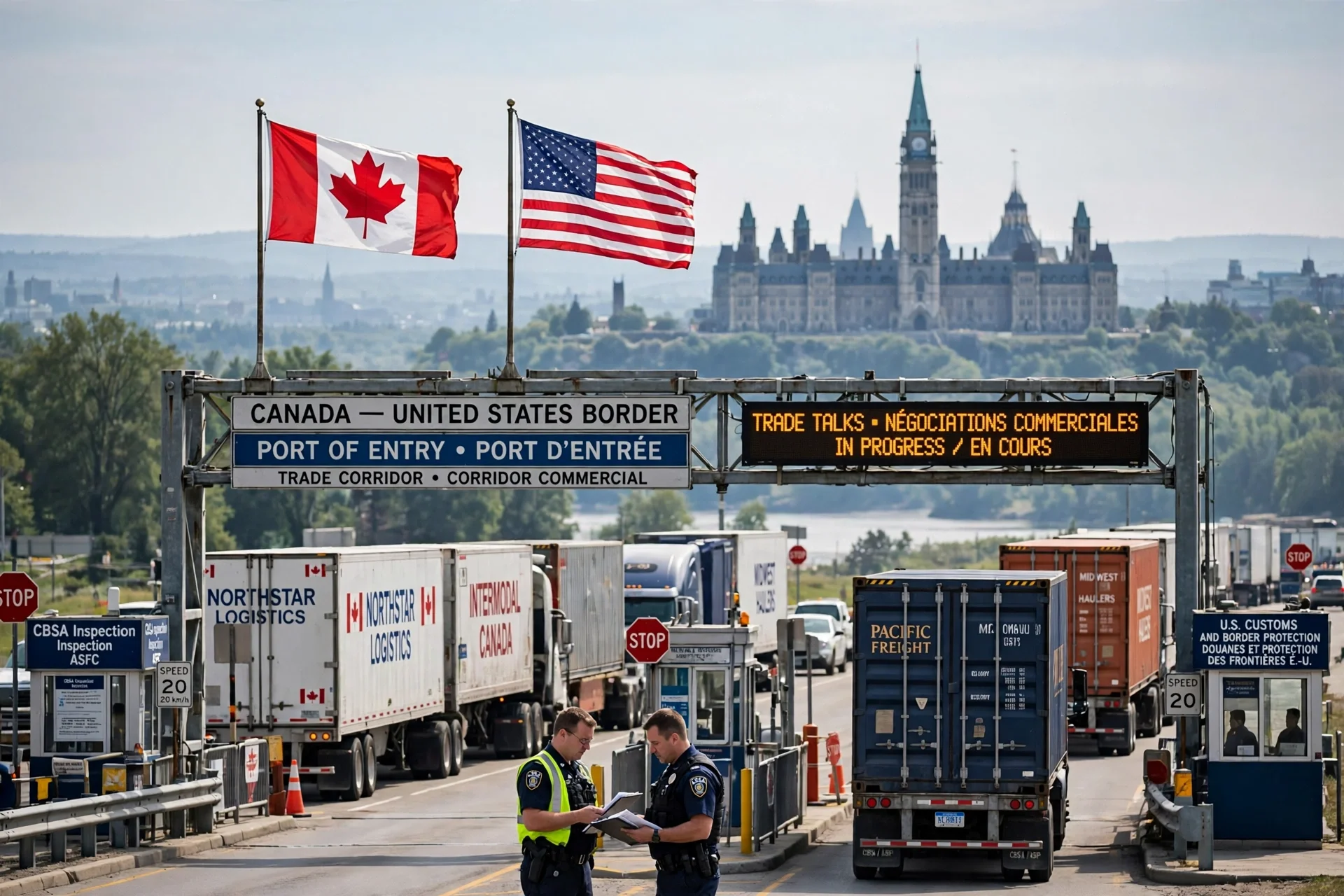
Ilustración alusiva a las negociaciones comerciales entre Canadá y Estados Unidos. · Imagen generada por EPM
Canada and the United States move toward a new trade deal
Mark Carney confirmed on Sunday a conversation with Donald Trump and said Canada and the United States will work in the coming weeks toward a mutually…
Carney seeks the right trade deal with Trump in coming weeks
After walking away in August, Canada will work again with the United States in the coming weeks toward a trade deal, while Carney insists on the right deal and…
--- The context ---
Canada and the United States are talking about trade again after months of friction and a breakdown that left steep tariffs in place. Prime Minister Mark Carney confirmed on Sunday that he had spoken with President Donald Trump and said teams from both countries will work in the coming weeks to deliver a mutually beneficial deal for workers and families on both sides of the border.
--- The facts ---
Carney said the effort builds on recent constructive discussions about a deal that would create jobs, boost affordability for families and fully respect Canada's languages, culture and sovereignty. Canada walked away from talks in August after, in his account, the United States pushed last-minute language that would limit Canada's ability to enter trade deals with other countries, water down French language requirements and hurt the auto industry. That breakdown brought 50% tariffs and dollar-for-dollar retaliation.
The announcement comes just days before the Canadian federal government is set to present its new budget on Thursday. Carney told reporters on Wednesday that his government was not yet in a position to close an agreement, adding that they are after the right deal.
--- The positions ---
On Wednesday, Carney told reporters his government was not at that position on reaching a deal and said they are after the right deal. Trump said on Thursday at a rally in South Carolina that Canada had been treating them extremely nicely recently and that his tariffs had improved relations. By Sunday, Trump had yet to comment on Carney's remarks. The announcement also comes days before the federal budget set for Thursday.
--- What remains unknown ---
The concrete terms to be negotiated in the coming weeks have not been disclosed, nor whether the issues that caused the August walkout will be revised. It also remains unclear what will happen to the 50% tariffs while talks proceed, and what room Canada will have to protect its auto industry and French language requirements inside any final text that emerges from this renewed process.
--- Unanswered questions ---
Will both governments manage to close in the coming weeks the deal Carney announced on Sunday? Will the 50% tariffs stay in place until a signed text exists between the two sides? Will Washington drop the language that sought to limit Canada's deals with other countries? What concrete protections will the Canadian auto industry obtain in the negotiation now opening?
--- EPM analysis ---
The shift matters because it puts economics and sovereignty on the same table. For families, the promise is jobs and better affordability; for Ottawa, the condition is not giving ground on language, culture or the freedom to choose trade partners. Timing also matters, because the announcement suggests no deal will be reached before the United States midterm elections on Tuesday, moving the outcome into a different political setting.
📌 EPM Take: In EPM's view, Carney's announcement opens a real but still fragile opportunity, because resuming dialogue does not by itself resolve the reasons talks broke down in August. Its value lies in setting clear public conditions on jobs, families, language and sovereignty against which any final text can be measured. If the coming weeks produce verifiable progress without surrendering those principles, the negotiation will have been worthwhile for both countries involved and for the confidence of workers and families on both sides of the border.
--- The context ---
Trade relations between Canada and the United States enter a decisive phase after the August breakdown and the measures that made cross-border commerce more expensive. Prime Minister Mark Carney confirmed on Sunday that he spoke with President Donald Trump and that both countries will work in the coming weeks toward a mutually beneficial deal, with their teams now tasked with delivering that outcome.
--- The facts ---
Carney said recent discussions were constructive and that the goal is to create jobs, boost affordability for families and fully respect Canada's languages, culture and sovereignty. In August, Canada left because, according to his explanation, the United States sought language that would limit its deals with other countries, water down French language requirements and harm the auto industry. That rupture was followed by 50% tariffs on Canadian goods and dollar-for-dollar retaliatory duties from Ottawa.
Trump, speaking on Thursday at a rally in South Carolina, said Canada had been treating them extremely nicely recently. Asked on Wednesday whether Canada was being set up as the fall guys if the United States loses, Carney replied that his side is seeking the right deal.
--- The positions ---
On Wednesday, Carney told reporters his government was not at that position in terms of reaching a deal and that they are after the right deal. Trump said on Thursday, at a rally in South Carolina, that Canada had been treating them extremely nicely recently and credited his tariffs with improving relations. On Sunday, Trump had yet to comment on Carney's remarks. Canada's government will also announce its budget on Thursday.
--- What remains unknown ---
It has not been reported what concessions each side is willing to make or how the issues that caused the rupture will be handled. It remains to be seen whether the new effort will hold firm lines on French and the auto sector, whether a public meeting schedule will appear, and whether tariffs will remain in force throughout the process announced for the coming weeks ahead.
--- Unanswered questions ---
Will Ottawa defend its French language requirements and its auto industry without dilution in this new round? Will the United States withdraw the language that sought to limit Canada's deals with third countries? Will there be tariff relief before a complete deal or will everything wait until the end? Will Carney present concrete results before debate advances on Thursday's budget?
--- EPM analysis ---
From a standpoint of order and responsibility, a good deal is measured not by speed but by its terms. Canada needs predictable access and respect for its sovereignty; the United States has used tariffs as leverage and now values a smoother relationship. If the negotiation protects production, jobs and clear rules, it can stabilize the partnership. If it is signed for political haste, the problems of August will return.
📌 EPM Take: In EPM's view, Carney is right to insist that he seeks the right deal rather than any deal, because sovereignty and industry are not minor bargaining chips. The conversation with Trump and the work of the coming weeks should be judged by tangible results, not gestures. A text that respects Canada's language, culture and trade capacity, with verifiable mutual benefits, would be the only solid basis for closing this chapter with clear and lasting rules for bilateral trade between the two countries.
Canadá y Estados Unidos retoman el rumbo hacia un acuerdo comercial
Mark Carney confirmó el domingo una conversación con Donald Trump y anunció que Canadá y Estados Unidos trabajarán en las próximas semanas hacia un acuerdo…
Carney busca un acuerdo con Trump sin ceder soberanía canadiense
Tras abandonar las negociaciones en agosto, Canadá volverá a trabajar con Estados Unidos en las próximas semanas hacia un acuerdo comercial, mientras Carney…
--- El contexto ---
Canadá y Estados Unidos vuelven a hablar de comercio después de meses de fricción y de una ruptura que dejó aranceles elevados en vigor. El primer ministro Mark Carney confirmó el domingo una conversación con el presidente Donald Trump y anunció que los equipos de ambos países trabajarán en las próximas semanas para cerrar un acuerdo que describió como mutuamente beneficioso para trabajadores y familias.
--- Los hechos ---
Según Carney, ese trabajo busca crear empleos, mejorar la capacidad de compra de las familias y respetar plenamente las lenguas, la cultura y la soberanía de Canadá. Canadá abandonó las negociaciones en agosto, cuando, según explicó entonces, Estados Unidos impulsó a último momento un lenguaje que limitaría acuerdos canadienses con otros países, diluiría requisitos del francés y afectaría a la industria automotriz. Esa ruptura activó aranceles del 50 % sobre bienes canadienses y una respuesta canadiense con represalias dólar por dólar.
El anuncio se produce días antes de que el gobierno federal canadiense presente su nuevo presupuesto el jueves, un dato que sitúa la negociación en un momento fiscal clave. Carney reiteró el miércoles que busca el acuerdo correcto y Trump valoró el jueves que Canadá los ha tratado extremadamente bien últimamente.
--- Las posiciones ---
Carney sostuvo el miércoles que su gobierno no estaba en esa posición respecto de un acuerdo y que busca el acuerdo correcto, no uno apresurado. Trump, por su parte, dijo el jueves en un mitin en Carolina del Sur que Canadá los ha tratado extremadamente bien últimamente y que sus aranceles mejoraron la relación. Hasta el domingo, Trump aún no comentaba lo anunciado por Carney, mientras el anuncio llega días antes del presupuesto federal previsto para el jueves.
--- Lo que falta saber ---
Todavía no se conocen los términos concretos que se negociarán en las próximas semanas ni si se revisarán los puntos que provocaron la salida de agosto. Tampoco está claro qué pasará con los aranceles del 50 % mientras duren las conversaciones, ni qué margen tendrá Canadá para proteger su industria automotriz y sus requisitos lingüísticos dentro del texto final que eventualmente se presente.
--- Preguntas sin respuesta ---
¿Lograrán ambos gobiernos cerrar en las próximas semanas el acuerdo que Carney anunció el domingo? ¿Se mantendrán los aranceles del 50 % hasta que exista un texto firmado por ambas partes? ¿Aceptará Washington retirar el lenguaje que limitaba acuerdos de Canadá con otros países? ¿Qué protecciones concretas obtendrá la industria automotriz canadiense en la negociación que ahora se abre?
--- Análisis EPM ---
El giro es relevante porque combina economía y soberanía en una misma mesa. Para las familias, la promesa es empleo y precios más llevaderos; para Ottawa, la condición es no ceder en lengua, cultura ni capacidad de decidir sus alianzas comerciales. El calendario también pesa, porque el anuncio sugiere que no habrá acuerdo antes de las elecciones intermedias del martes en Estados Unidos, lo que desplaza la definición a un escenario político distinto.
📌 Conclusion EPM: A juicio de EPM, el anuncio de Carney abre una oportunidad real pero todavía frágil, porque retomar el diálogo no equivale a resolver los motivos que rompieron las talks en agosto. El valor del paso está en fijar condiciones públicas claras sobre empleo, familias, lengua y soberanía, que servirán para medir cualquier texto final. Si las próximas semanas producen avances verificables sin ceder esos principios, la negociación habrá valido la pena para ambas partes y para la confianza de trabajadores y familias en ambos países.
--- El contexto ---
La relación comercial entre Canadá y Estados Unidos entra en una fase decisiva tras la ruptura de agosto y la entrada en vigor de medidas que encarecieron el intercambio. El primer ministro Mark Carney confirmó el domingo que conversó con el presidente Donald Trump y que ambos países trabajarán en las próximas semanas hacia un acuerdo mutuamente beneficioso, con los equipos ya encargados de entregar ese resultado.
--- Los hechos ---
Carney afirmó que las discusiones recientes fueron constructivas y que el objetivo es crear empleos, impulsar la asequibilidad para las familias y respetar las lenguas, la cultura y la soberanía de Canadá. En agosto, Canadá se retiró porque, según su explicación, Estados Unidos buscó lenguaje que limitaría sus acuerdos con otros países, diluiría requisitos del francés y dañaría a la industria automotriz. Después llegaron aranceles del 50 % y represalias dólar por dólar de Ottawa.
En la secuencia inmediata, el gobierno federal canadiense presentará su nuevo presupuesto el jueves, pocos días después de este anuncio. Consultado el miércoles sobre si Canadá sería el chivo expiatorio si Estados Unidos pierde, Carney respondió que su gobierno busca el acuerdo correcto y que aún no estaba en posición de cerrarlo.
--- Las posiciones ---
El miércoles, Carney dijo ante reporteros que su gobierno no estaba en esa posición sobre un acuerdo y que persigue el acuerdo correcto. Trump afirmó el jueves, en un mitin en Carolina del Sur, que Canadá los ha tratado extremadamente bien últimamente y atribuyó a sus aranceles una mejora en la relación. El domingo, Trump aún no comentaba las palabras de Carney. El gobierno canadiense, además, presentará su presupuesto el jueves.
--- Lo que falta saber ---
No se ha informado qué concesiones está dispuesto a hacer cada lado ni cómo se tratarán los temas que causaron la ruptura. Falta saber si el nuevo esfuerzo mantendrá firmes las líneas sobre el francés y el sector automotriz, si habrá un calendario público de reuniones y si los aranceles seguirán vigentes durante todo el proceso anunciado para las próximas semanas.
--- Preguntas sin respuesta ---
¿Defenderá Ottawa sin rebajas sus requisitos del francés y su industria automotriz en esta nueva ronda? ¿Retirará Estados Unidos el lenguaje que buscaba limitar los acuerdos de Canadá con terceros países? ¿Habrá alivio arancelario antes de un acuerdo completo o todo quedará para el final? ¿Presentará Carney resultados concretos antes de que avance el debate del presupuesto del jueves?
--- Análisis EPM ---
Desde una mirada de orden y responsabilidad, un buen acuerdo no se mide por la rapidez sino por sus términos. Canadá necesita acceso predecible y respeto a su soberanía; Estados Unidos ha usado los aranceles como palanca y ahora valora una relación más fluida. Si la negociación protege producción, empleo y reglas claras, puede estabilizar el vínculo. Si se firma por prisa política, los problemas de agosto volverán a aparecer.
📌 Conclusion EPM: A juicio de EPM, Carney hace bien en insistir en que busca el acuerdo correcto y no cualquier acuerdo, porque la soberanía y la industria no son monedas de cambio menores. La conversación con Trump y el trabajo de las próximas semanas deben juzgarse por resultados tangibles, no por gestos. Un texto que respete lengua, cultura y capacidad comercial de Canadá, con beneficios mutuos comprobables, sería la única base sólida para cerrar este capítulo con reglas claras y duraderas para el comercio bilateral.