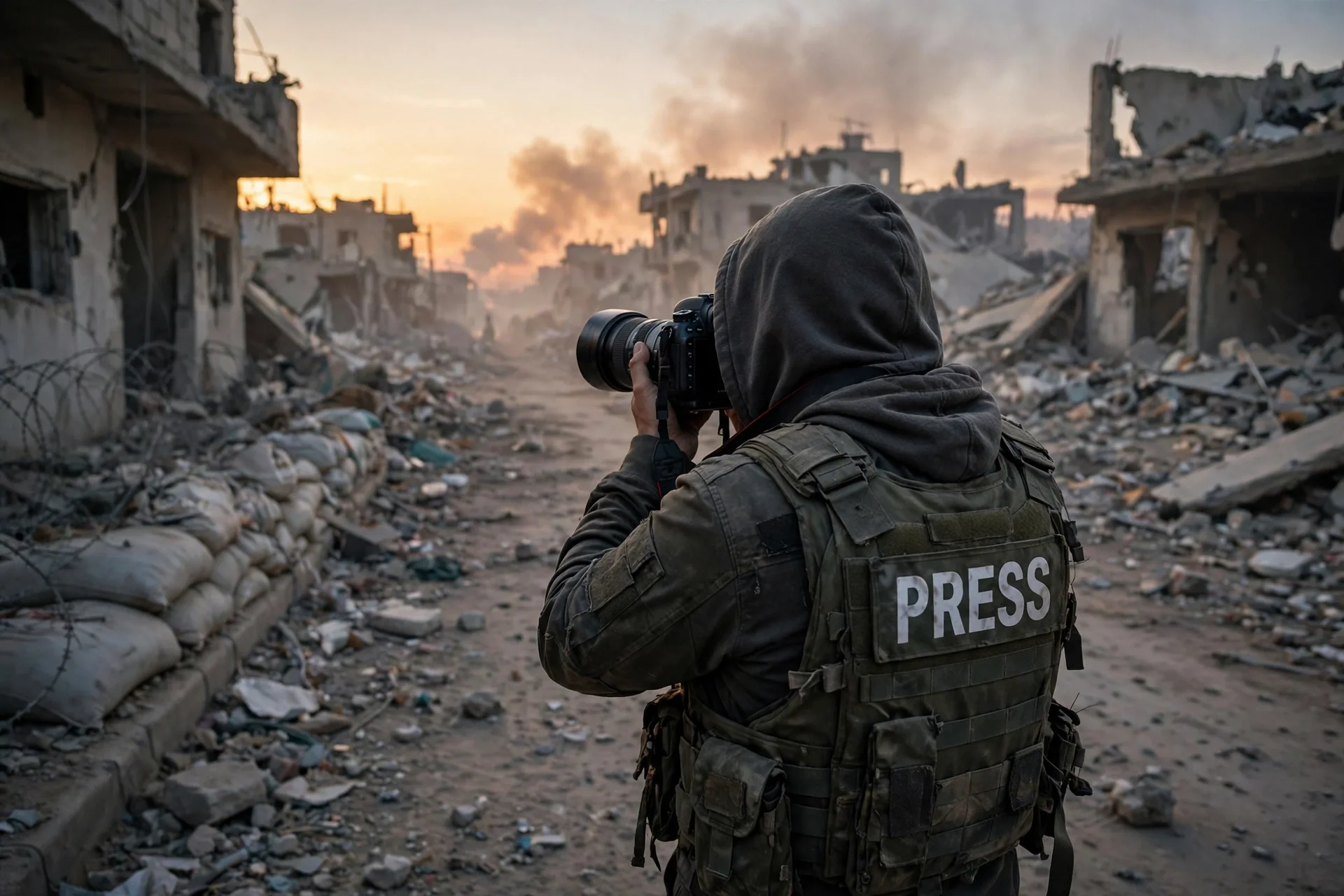
Un corresponsal de prensa trabaja en una zona de conflicto al atardecer. · Imagen generada por EPM
Six in seven journalist murders go unpunished, UNESCO report warns
UNESCO's biennial report puts impunity for journalist killings at 86 per cent in 2024-2025, with 189 media workers dead, 127 of them in conflict zones, and…
Impunity for crimes against journalists reaches 86 per cent worldwide
UNESCO records 189 journalists and media workers killed in 2024-2025 and global impunity of 86 per cent, close to 100 per cent in conflicts, while impunity…
--- The context --- Reporting from a war has become a mortal risk, and a judicial response remains the exception. UNESCO has measured since 2012 what share of journalist killings goes unpunished, and its new biennial report, released for the International Day to End Impunity for Crimes against Journalists on 2 November, shows a picture that is getting worse, not better.
--- The facts --- A confirmed total of 189 journalists and other media workers lost their lives in 2024-2025, 20 per cent more than in the previous biennium and the highest number since 2014-2015. 127 were killed in conflict zones, 67 per cent of the death toll. Global impunity reached 86 per cent, meaning six in seven murders went unpunished, and in war settings that rate is close to 100 per cent.
Verified cases were recorded in every region: 97 in the Arab States, 37 in Latin America and the Caribbean, 34 in Asia-Pacific, 14 in Central and Eastern Europe, 6 in Africa and 1 in Western Europe and North America. Palestine recorded the highest numbers in both years, 30 and 32. A disturbing new threat stands out: drone strikes killed 50 journalists, 40 per cent of those killed in conflict, across seven incidents with several victims in a single attack, while fifteen died wearing press vests or in vehicles clearly marked Press.
--- The positions --- UNESCO Director-General Khaled El-Enany said journalists are increasingly paying with their lives for frontline reporting while those responsible are rarely held accountable. He reiterated his call to respect Security Council Resolution 2222, adopted in 2015, which protects journalists as civilians in situations of armed conflict.
UN Secretary-General António Guterres said in his message for the Day that at least 34 journalists paid the ultimate price over the past year, and he described impunity as a heinous affront to the victims, their loved ones and everyone who depends on journalists to stay informed. In his view, silencing a reporter makes victims of everyone.
--- What remains unknown --- Away from conflict there is a different signal: impunity fell from 94 per cent in 2012 to 77 per cent in 2026, and the 85 killings outside war zones are the lowest in 18 years. Women journalists face particular risks: thirteen of the 14 killed were in countries experiencing armed conflict, and a 2025 study found that 75 per cent had experienced online or offline abuse and harassment, and more than 40 per cent reported offline violence linked to online attacks, up from 20 per cent in a 2020 survey.
--- Unanswered questions --- What effective penalty will face those who order a drone strike against an identified press crew? Why does impunity remain close to 100 per cent in conflicts despite Resolution 2222 being in force since 2015? When will governments turn protection into verifiable investigations and convictions instead of statements?
--- EPM analysis --- The contrast is stark: where governments invest in investigations and prosecutions, impunity retreats by one point a year; where war rules, it becomes almost total. The rise of drones deepens the problem, because it makes attacks cheaper and blurs responsibility for who ordered them.
📌 EPM Take: In EPM's view, an 86 per cent impunity rate is not a statistical failure but a practical licence to kill journalists, and reversing it requires treating every murder as what it is: an attack on everyone's right to know. The improvement outside conflicts proves justice works when states choose to pursue it; extending that choice to war zones, including drone attacks, is the outstanding debt that governments and armed actors still owe.
--- The context --- The law loses its force when a grave crime carries no consequence, and few areas show that erosion as clearly as the murder of journalists. UNESCO's biennial report on the safety of journalists and the danger of impunity, published for the International Day to End Impunity for Crimes against Journalists on 2 November, puts hard numbers on the breakdown of accountability.
--- The facts --- In 2024-2025, 189 journalists and other media workers were killed, 20 per cent more than in the previous period and the highest figure since 2014-2015. Conflict zones accounted for 127 of the deaths, 67 per cent of the total. Impunity reached 86 per cent worldwide, and in war settings it approaches 100 per cent: virtually no perpetrator was punished.
By region, the Arab States recorded 97 verified cases, Latin America and the Caribbean 37, Asia-Pacific 34, Central and Eastern Europe 14, Africa 6 and Western Europe and North America 1. Palestine topped the list in both years, with 30 and 32. It documents seven attacks with multiple victims and a growing threat: drones caused 50 deaths, 40 per cent of those in conflict, and fifteen of the dead wore press vests or travelled in vehicles clearly marked Press.
--- The positions --- Khaled El-Enany, UNESCO's Director-General, pointed out that journalists pay with their lives for frontline coverage without the guilty answering to justice, and he called for respect of Security Council Resolution 2222, from 2015, which recognises journalists as protected civilians in armed conflict.
António Guterres, the UN Secretary-General, noted that at least 34 journalists lost their lives over the past year and argued that impunity is an affront to the victims and to the society that depends on their work. His message demanded justice and warned that extinguishing reporting makes victims of everyone.
--- What remains unknown --- The report itself acknowledges progress where institutions work: outside conflicts, impunity fell from 94 per cent in 2012 to 77 per cent in 2026, and killings in non-conflict zones, 85, are the lowest in 18 years. Women journalists face particular risks: thirteen of the 14 killed were in countries experiencing armed conflict, and a 2025 study found that 75 per cent had experienced online or offline abuse and harassment, and more than 40 per cent reported offline violence linked to online attacks, up from 20 per cent in a 2020 survey. What it does not specify is what real investigative capacity exists in territories at war, or who answers when the weapon used is a drone.
--- Unanswered questions --- Who bears criminal responsibility when a drone kills a journalist identified as press? What concrete consequences will follow from breaching Resolution 2222 of 2015? Are governments willing to fund investigations and criminal proceedings that deliver results, as those that already reduced impunity outside conflicts have done?
--- EPM analysis --- The lesson is direct: impunity falls where investigation, prosecution and protection are sustained, one point a year since 2012. It is not inevitable; it is the difference between states that function and states overwhelmed by war. Without authority to enforce the law, resolutions remain paper.
📌 EPM Take: In EPM's view, the central figure is one of public order: at 86 per cent impunity, murdering a journalist is practically free of cost, and no system of freedoms survives when crime carries no punishment. UNESCO's own evidence shows the right path, stronger investigative capacity, firm prosecutions and effective protection, and applying it inside conflicts as well, with courts able to punish those who order or carry out such attacks, is a duty of states, not a rhetorical aspiration.
Seis de cada siete asesinatos de periodistas quedan impunes, alerta la UNESCO
El informe bienal de la UNESCO eleva la impunidad por asesinatos de periodistas al 86 % en 2024-2025, con 189 muertos, 127 de ellos en zonas de conflicto, y…
La impunidad por crímenes contra periodistas llega al 86 % en el mundo
La UNESCO registra 189 periodistas y trabajadores de medios muertos en 2024-2025 y una impunidad global del 86 %, cercana al 100 % en conflictos, aunque en…
--- El contexto --- Informar desde una guerra es hoy un riesgo mortal, y la respuesta judicial sigue siendo excepcional. La UNESCO mide desde 2012 qué proporción de asesinatos queda sin castigo, y su informe bienal, publicado con motivo del Día Internacional para Poner Fin a la Impunidad de los Crímenes contra Periodistas, el 2 de noviembre, el panorama empeora.
--- Los hechos --- En 2024-2025 murieron 189 periodistas y otros trabajadores de medios, un 20 % más que en el bienio anterior y la cifra más alta desde 2014-2015. 127 perdieron la vida en zonas de conflicto, el 67 % del total. La impunidad global alcanzó el 86 %: seis de cada siete asesinatos quedaron sin castigo, y en guerra roza el 100 %.
Los casos verificados por región: 97 en los Estados árabes, 37 en América Latina y el Caribe, 34 en Asia-Pacífico, 14 en Europa central y oriental, 6 en África y 1 en Europa occidental y América del Norte. Palestina registró el mayor número en ambos años, con 30 y 32. Una amenaza nueva: los drones mataron a 50 periodistas, el 40 % de los caídos en conflicto, en siete incidentes con varias víctimas por ataque; quince murieron con chaleco de prensa o en vehículos marcados «Press».
--- Las posiciones --- El director general de la UNESCO, Khaled El-Enany, sostuvo que los periodistas pagan cada vez más con su vida el trabajo en primera línea, sin que los responsables rindan cuentas. Reiteró su llamamiento a respetar la Resolución 2222 del Consejo de Seguridad, adoptada en 2015, que protege a los periodistas como civiles en conflicto.
El secretario general de la ONU, António Guterres, afirmó en su mensaje que al menos 34 periodistas pagaron el precio último en el último año y calificó la impunidad de afrenta atroz para las víctimas, sus familias y quienes dependen del periodismo para estar informados. A su juicio, silenciar a un periodista victimiza a la sociedad entera.
--- Lo que falta saber --- Fuera de los conflictos hay una señal distinta: la impunidad bajó del 94 % en 2012 al 77 % en 2026, y los 85 asesinatos son la cifra menor en 18 años. Las periodistas afrontan riesgos particulares: trece de las 14 muertas lo fueron en países en conflicto armado, y un estudio de 2025 halló que el 75 % sufrió abuso o acoso, y más del 40 % violencia fuera de línea ligada a ataques en línea, frente al 20 % de la encuesta de 2020.
--- Preguntas sin respuesta --- ¿Qué sanción efectiva enfrentará quien ordene un ataque con drones contra un equipo de prensa identificado? ¿Por qué la impunidad se mantiene cerca del 100 % en los conflictos pese a la Resolución 2222 vigente desde 2015? ¿Cuándo convertirán los Estados la protección en investigaciones y condenas verificables?
--- Análisis EPM --- El contraste es nítido: donde los gobiernos invierten en investigar, la impunidad retrocede un punto por año; donde manda la guerra, desaparece por completo. Los drones agravan el problema: abaratan el ataque y diluyen la responsabilidad.
📌 Conclusion EPM: A juicio de EPM, un 86 % de impunidad no es una falla estadística sino una licencia práctica para matar periodistas, y revertirla exige tratar cada asesinato como lo que es: un ataque contra el derecho de todos a saber. La mejora fuera de los conflictos demuestra que la justicia funciona cuando hay voluntad estatal; extenderla a las zonas de guerra, incluidos los ataques con drones, es la deuda pendiente que queda por saldar.
--- El contexto --- La ley pierde fuerza cuando un crimen grave queda sin consecuencia, y pocos ámbitos lo muestran tan claro como los asesinatos de periodistas. El informe de la UNESCO sobre seguridad de periodistas e impunidad, difundido por el Día Internacional para Poner Fin a la Impunidad de los Crímenes contra Periodistas, el 2 de noviembre, cuantifica esa erosión del orden.
--- Los hechos --- En 2024-2025 fueron asesinados 189 periodistas y otros trabajadores de medios, un 20 % más que en el período anterior y el registro más alto desde 2014-2015. En zonas de conflicto murieron 127, el 67 % del total. La impunidad llegó al 86 %, y en los frentes de guerra se aproxima al 100 %: prácticamente ningún responsable fue castigado.
Por regiones: Estados árabes 97 casos verificados, América Latina y el Caribe 37, Asia-Pacífico 34, Europa central y oriental 14, África 6 y Europa occidental y América del Norte 1. Palestina encabezó la lista en los dos años, con 30 y 32. Documenta siete ataques con múltiples víctimas y una amenaza creciente: los drones causaron 50 muertes, el 40 % de las registradas en conflicto; quince llevaban chaleco de prensa o viajaban en vehículos marcados «Press».
--- Las posiciones --- Khaled El-Enany, director general de la UNESCO, señaló que los periodistas pagan con su vida la cobertura en primera línea sin que los culpables respondan, y pidió respetar la Resolución 2222 del Consejo de Seguridad, de 2015, que reconoce a los periodistas como civiles protegidos en conflicto.
António Guterres, secretario general de la ONU, indicó que en el último año al menos 34 periodistas perdieron la vida y sostuvo que la impunidad es una afrenta para las víctimas y para la sociedad que depende de su trabajo. Reclamó justicia y advirtió que extinguir una cobertura convierte en víctimas a todos.
--- Lo que falta saber --- Hay un avance donde las instituciones funcionan: fuera de los conflictos, la impunidad cayó del 94 % en 2012 al 77 % en 2026, y los asesinatos en zonas sin guerra, 85, son los menos en 18 años. Las periodistas afrontan riesgos particulares: trece de las 14 muertas lo fueron en países en conflicto armado, y un estudio de 2025 halló que el 75 % sufrió abuso o acoso, y más del 40 % violencia fuera de línea ligada a ataques en línea, frente al 20 % de 2020. No precisa qué capacidad real de investigación existe en los territorios en guerra ni quién responde cuando el arma empleada es un dron.
--- Preguntas sin respuesta --- ¿Quién asume la responsabilidad cuando un dron mata a un periodista identificado como prensa? ¿Qué consecuencias concretas tendrá incumplir la Resolución 2222 de 2015? ¿Financiarán los gobiernos investigaciones y procesos con resultados, como los que ya redujeron la impunidad fuera de los conflictos?
--- Análisis EPM --- La lección es directa: la impunidad baja donde hay investigación, procesamiento y protección sostenidos, un punto anual desde 2012. No es inevitable: es el resultado de Estados que funcionan frente a Estados desbordados por la guerra. Sin autoridad que haga cumplir la ley, las resoluciones quedan en papel.
📌 Conclusion EPM: A juicio de EPM, el dato central es de orden público: con un 86 % de impunidad, el asesinato de periodistas sale prácticamente gratis, y ningún sistema de libertades sobrevive cuando el crimen no tiene castigo. La experiencia muestra el camino correcto, más capacidad investigadora, procesos firmes y protección, y aplicarlo en los conflictos, con tribunales que castiguen a quien ordene o ejecute estos ataques, es una obligación de los Estados, no una aspiración retórica.