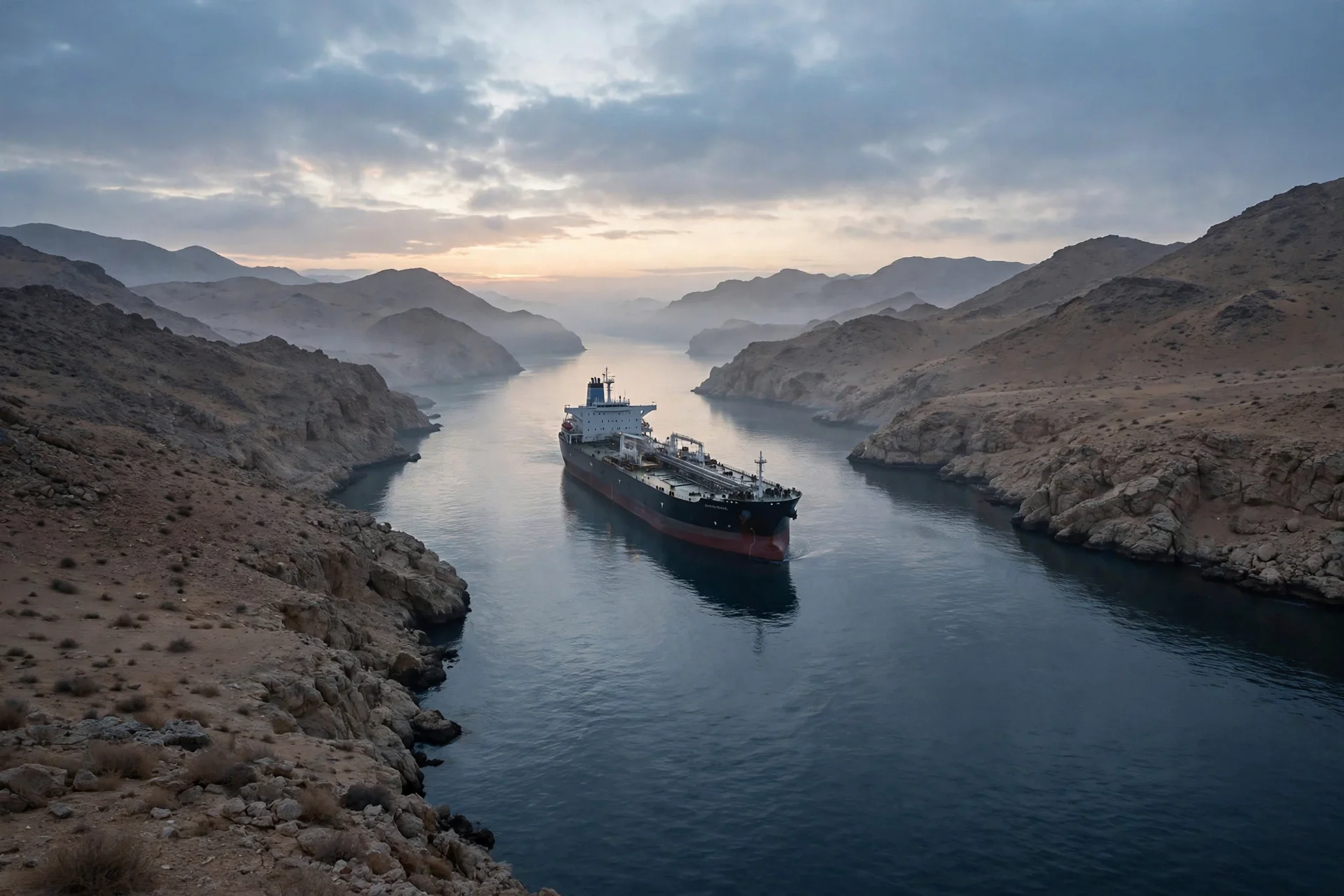
Un petrolero en un estrecho entre costas áridas al amanecer. · Imagen generada para EPM
Washington and Tehran negotiate to prevent a new regional escalation
The United States and Iran are holding indirect contacts with active mediation by Qatar and Pakistan.
Iran ties reopening Hormuz to concessions demanded from Washington
Tehran offered to reopen the Strait of Hormuz within 48 hours if Washington accepts its list of demands, while Trump and Vance mentioned progress in the…
--- The context ---
Indirect negotiations between the United States and Iran aim to prevent a resumption of hostilities after a conflict that has already lasted eight months. Tehran reported intense diplomatic consultations and Washington spoke of progress, at a moment marked by the gravity of the situation.
The signs of rapprochement coincided with the eve of the midterm legislative elections in the United States, where the president's party seeks to keep control of Congress. That calendar adds immediate political pressure to every decision on the conflict.
--- The facts ---
President Donald Trump said on Monday on his social media platform that a deal with Iran could happen and maintained that Tehran wants an agreement as soon as possible, referring to contacts through intermediaries. Vice President JD Vance also expressed optimism and said that some progress had been made in the talks.
Before the report about a presumed attack spread, international oil prices fell by more than 7% during Monday's trading, driven by expectations of a possible end to the conflict. Hours later, a press report citing anonymous United States officials reported a presumed United States attack on Qeshm, the largest island in the strait.
--- The positions ---
Iranian Foreign Minister Abbas Araqchi confirmed that his country is holding indirect talks with Washington through mediators and highlighted the very active mediation role of Qatar and Pakistan. A senior Iranian official said Tehran is willing to reopen the Strait of Hormuz within 48 hours, provided the United States accepts its demands.
Iranian demands include a ceasefire on all fronts in the region, the unblocking of its assets abroad, the lifting of oil sanctions and an end to the United States naval blockade against its ports. On Sunday, in a television interview, Araqchi added that Washington should accept the new route agreed between Iran and Oman for transit through the strait.
--- What remains unknown ---
The presumed attack on Qeshm is still unconfirmed, because United States Central Command did not immediately respond to requests for comment, while Iranian state media reported five explosions in rapid succession on the island. It is also unknown whether Washington will accept the Iranian conditions or when maritime circulation through the strait could be restored.
--- Unanswered questions ---
Will Washington accept the conditions set by Tehran to reopen the strait within 48 hours? Will the presumed attack on Qeshm be confirmed and what effect would it have on the indirect talks now under way? Can the mediators turn the progress cited by Trump and Vance into a verifiable agreement?
--- EPM analysis ---
The Iranian proposal contemplates restoring circulation, changing transit conditions and economic and military commitments by the United States. In September, Tehran presented through Qatar a seven-day plan to restore circulation, which Trump rejected while leaving indirect negotiations open.
📌 EPM Take: In EPM's view, diplomacy deserves a real chance because the alternative is an escalation with immediate energy and human costs across the region. The progress cited by Washington and Iran's willingness to reopen Hormuz show a narrow but usable window, provided mediators sustain the intense pace of consultations and every step is verified on the ground. Without confirmation of the reported attack or a United States response to the conditions, optimism should remain prudent, active and grounded in verifiable facts.
--- The context ---
The United States and Iran are holding indirect contacts to prevent a resumption of hostilities after a conflict that has already lasted eight months, with the Strait of Hormuz at the center of the negotiation. That waterway is strategic for Gulf energy exports.
The diplomatic signals coincided with the eve of the midterm legislative elections in the United States, where the president's party seeks to keep control of Congress. In that context, any concession to Tehran engages energy security and Washington's credibility.
--- The facts ---
President Donald Trump said on Monday on his social media platform that a deal with Iran could happen and maintained that Tehran wants an agreement as soon as possible, through contacts with intermediaries. Vice President JD Vance expressed optimism and said some progress had been made, while noting more progress remains to be seen.
Before the report about a presumed attack spread, international oil prices fell by more than 7% on Monday, driven by expectations of a possible end to the conflict. According to a press report citing anonymous United States officials, Washington had attacked Qeshm, the largest island in the strait, in an action described as part of limited operations.
--- The positions ---
Iranian Foreign Minister Abbas Araqchi confirmed indirect talks with Washington through mediators and highlighted the very active mediation role of Qatar and Pakistan. A senior Iranian official said Tehran would reopen the Strait of Hormuz within 48 hours only if the United States accepts its list of demands, shifting all the pressure onto Washington.
Tehran demands a ceasefire on all fronts in the region, the unblocking of its assets abroad, an end to oil sanctions and to the United States naval blockade against its ports. On Sunday, in a television interview, Araqchi added that Washington should accept the new route agreed between Iran and Oman for transit through the Strait of Hormuz.
--- What remains unknown ---
The presumed attack on Qeshm is not confirmed: United States Central Command did not immediately respond to requests for comment, while Iranian state media reported five explosions in rapid succession on the island. There is also no record that Washington has accepted any of the Iranian conditions or a fixed timetable to reopen the route.
--- Unanswered questions ---
Will Washington grant any economic or military concession without verifiable guarantees on transit through the Strait of Hormuz? Will the presumed attack on Qeshm be confirmed and will that report change the balance of the ongoing negotiation? Will the United States hold its position of strength while Tehran conditions reopening on its full list of demands?
--- EPM analysis ---
The immediate precedent counsels caution: in September, Tehran presented through Qatar a seven-day plan to restore circulation and Trump rejected it, while leaving indirect negotiations open. Spokesman Esmail Baqhaei maintained that everything now depends on Washington, even though Tehran sets the conditions.
📌 EPM Take: In EPM's view, no agreement will be solid if Washington grants asset unfreezing and oil relief without verifiable guarantees on Hormuz and on a complete halt to hostilities. Iran's willingness to reopen the strait within 48 hours may be a useful signal, but it is also leverage in the middle of a negotiation. Firmness, verification and clarity on the new transit route must come before any economic or military concession by the United States.
Washington y Teherán negocian para frenar una nueva escalada regional
Estados Unidos e Irán mantienen contactos indirectos con mediación activa de Qatar y Pakistán.
Irán condiciona la reapertura de Ormuz a concesiones de Washington
Teherán ofreció reabrir el estrecho de Ormuz en un plazo de 48 horas si Washington acepta su lista de demandas, mientras Trump y Vance mencionaron avances en…
--- El contexto ---
Las negociaciones indirectas entre Estados Unidos e Irán buscan evitar una reanudación de las hostilidades tras un conflicto que ya lleva ocho meses. Teherán informó de consultas diplomáticas intensas y Washington habló de avances.
Las señales de acercamiento coincidieron con la víspera de las elecciones legislativas de mitad de mandato en Estados Unidos, donde el partido del presidente busca conservar el control del Congreso. Ese calendario añade presión política inmediata a cada decisión sobre el conflicto.
--- Los hechos ---
El presidente Donald Trump afirmó el lunes en su red social que un acuerdo con Irán podría producirse y sostuvo que Teherán quiere un acuerdo lo antes posible, por los contactos mediante intermediarios. El vicepresidente JD Vance también expresó optimismo y afirmó que se lograron algunos avances en las conversaciones.
Antes de difundirse el reporte sobre un presunto ataque, los precios internacionales del petróleo cayeron más de 7% durante la jornada del lunes, impulsados por las expectativas de un posible final del conflicto. Horas después, un reporte de prensa citando a funcionarios estadounidenses anónimos señaló un presunto ataque estadounidense contra Qeshm, la mayor isla del estrecho.
--- Las posiciones ---
El canciller iraní, Abbas Araqchi, confirmó que su país mantiene conversaciones indirectas con Washington mediante mediadores y destacó el papel de mediación muy activo de Qatar y Pakistán. Un alto responsable iraní señaló que Teherán está dispuesto a reabrir el estrecho de Ormuz en un plazo de 48 horas, siempre que Estados Unidos acepte sus demandas.
Entre las exigencias iraníes figuran un alto el fuego en todos los frentes de la región, el desbloqueo de sus activos en el extranjero, el levantamiento de las sanciones petroleras y el fin del bloqueo naval estadounidense contra sus puertos. El domingo, en una entrevista televisiva, Araqchi sumó que Washington acepte la nueva ruta acordada entre Irán y Omán para el tránsito por el estrecho.
--- Lo que falta saber ---
Todavía no está confirmado el presunto ataque contra Qeshm, porque el Comando Central de Estados Unidos no respondió de inmediato a pedidos de comentarios, mientras medios estatales iraníes informaron de cinco explosiones en rápida sucesión en la isla. Tampoco se conoce si Washington aceptará las condiciones iraníes ni cuándo podría restablecerse la circulación marítima por el estrecho.
--- Preguntas sin respuesta ---
¿Aceptará Washington las condiciones planteadas por Teherán para reabrir el estrecho en un plazo de 48 horas? ¿Se confirmará el presunto ataque contra Qeshm y qué efecto tendría sobre las conversaciones indirectas en curso? ¿Convertirán los mediadores los avances citados por Trump y Vance en un acuerdo verificable?
--- Análisis EPM ---
La propuesta iraní contempla restablecer la circulación, modificar las condiciones de tránsito y compromisos económicos y militares de Estados Unidos. En septiembre, Teherán presentó vía Catar un plan de siete días para restablecer la circulación, que Trump rechazó aunque dejó abiertas las negociaciones indirectas.
📌 Conclusion EPM: A juicio de EPM, la vía diplomática merece una oportunidad real porque la alternativa es una escalada con costos energéticos y humanos inmediatos para toda la región. Los avances mencionados por Washington y la disposición iraní a reabrir Ormuz muestran una ventana estrecha pero aprovechable, si los mediadores mantienen las consultas intensas y cada paso se verifica. Sin confirmación del presunto ataque ni respuesta estadounidense a las condiciones, el optimismo debe ser prudente, activo y sostenido por hechos comprobables.
--- El contexto ---
Estados Unidos e Irán mantienen contactos indirectos para evitar una reanudación de las hostilidades tras un conflicto que ya lleva ocho meses, con el estrecho de Ormuz como punto central. Esa vía es estratégica para las exportaciones energéticas del Golfo.
Las señales coincidieron con la víspera de las elecciones legislativas de mitad de mandato en Estados Unidos. En ese contexto, cualquier concesión a Teherán compromete la seguridad energética y la credibilidad de Washington.
--- Los hechos ---
El presidente Donald Trump afirmó el lunes en su red social que un acuerdo con Irán podría producirse y sostuvo que Teherán quiere un acuerdo lo antes posible, por los contactos mediante intermediarios. El vicepresidente JD Vance expresó optimismo y afirmó que se lograron algunos avances, aunque se verá si pueden lograrse otros más.
Antes de difundirse el reporte sobre un presunto ataque, los precios internacionales del petróleo cayeron más de 7% el lunes, impulsados por las expectativas de un posible final del conflicto. Según un reporte de prensa citando a funcionarios estadounidenses anónimos, Estados Unidos habría atacado Qeshm, la mayor isla del estrecho, en una acción descrita como parte de operaciones limitadas.
--- Las posiciones ---
El canciller iraní, Abbas Araqchi, confirmó conversaciones indirectas con Washington mediante mediadores y destacó el papel de mediación muy activo de Qatar y Pakistán. Un alto responsable iraní afirmó que Teherán reabriría el estrecho de Ormuz en un plazo de 48 horas solo si Estados Unidos acepta su lista de demandas, trasladando toda la presión a Washington.
Teherán exige un alto el fuego en todos los frentes, el desbloqueo de sus activos en el extranjero, el fin de las sanciones petroleras y del bloqueo naval estadounidense contra sus puertos. El domingo, en una entrevista televisiva, Araqchi añadió que Washington acepte la nueva ruta Irán-Omán para el tránsito por Ormuz.
--- Lo que falta saber ---
El presunto ataque contra Qeshm no está confirmado: el Comando Central de Estados Unidos no respondió de inmediato a una solicitud de comentarios sobre el reporte, mientras medios estatales iraníes informaron de cinco explosiones en rápida sucesión en la isla. Tampoco consta que Washington haya aceptado las condiciones iraníes ni un calendario para reabrir la ruta.
--- Preguntas sin respuesta ---
¿Aceptará Washington alguna concesión económica o militar sin garantías verificables sobre el tránsito por el estrecho de Ormuz? ¿Se confirmará el presunto ataque contra Qeshm y cambiará ese reporte el equilibrio de la negociación en curso? ¿Mantendrá Estados Unidos su firmeza mientras Teherán condiciona la reapertura a todas sus demandas?
--- Análisis EPM ---
El antecedente inmediato aconseja cautela: en septiembre, Teherán presentó vía Catar un plan de siete días para restablecer la circulación y Trump lo rechazó, aunque dejó abiertas las negociaciones indirectas. El portavoz Esmail Baqhaei sostuvo que todo depende ahora de Washington, pese a que las condiciones las fija Teherán.
📌 Conclusion EPM: A juicio de EPM, ningún acuerdo será sólido si Washington concede desbloqueo de activos y alivio petrolero sin garantías verificables sobre Ormuz y sobre el cese completo de las hostilidades. La disposición iraní a reabrir el estrecho en un plazo de 48 horas puede ser una señal útil, pero también una palanca de presión en plena negociación. La firmeza, la verificación y la claridad sobre la nueva ruta de tránsito deben preceder a cualquier concesión económica o militar estadounidense.