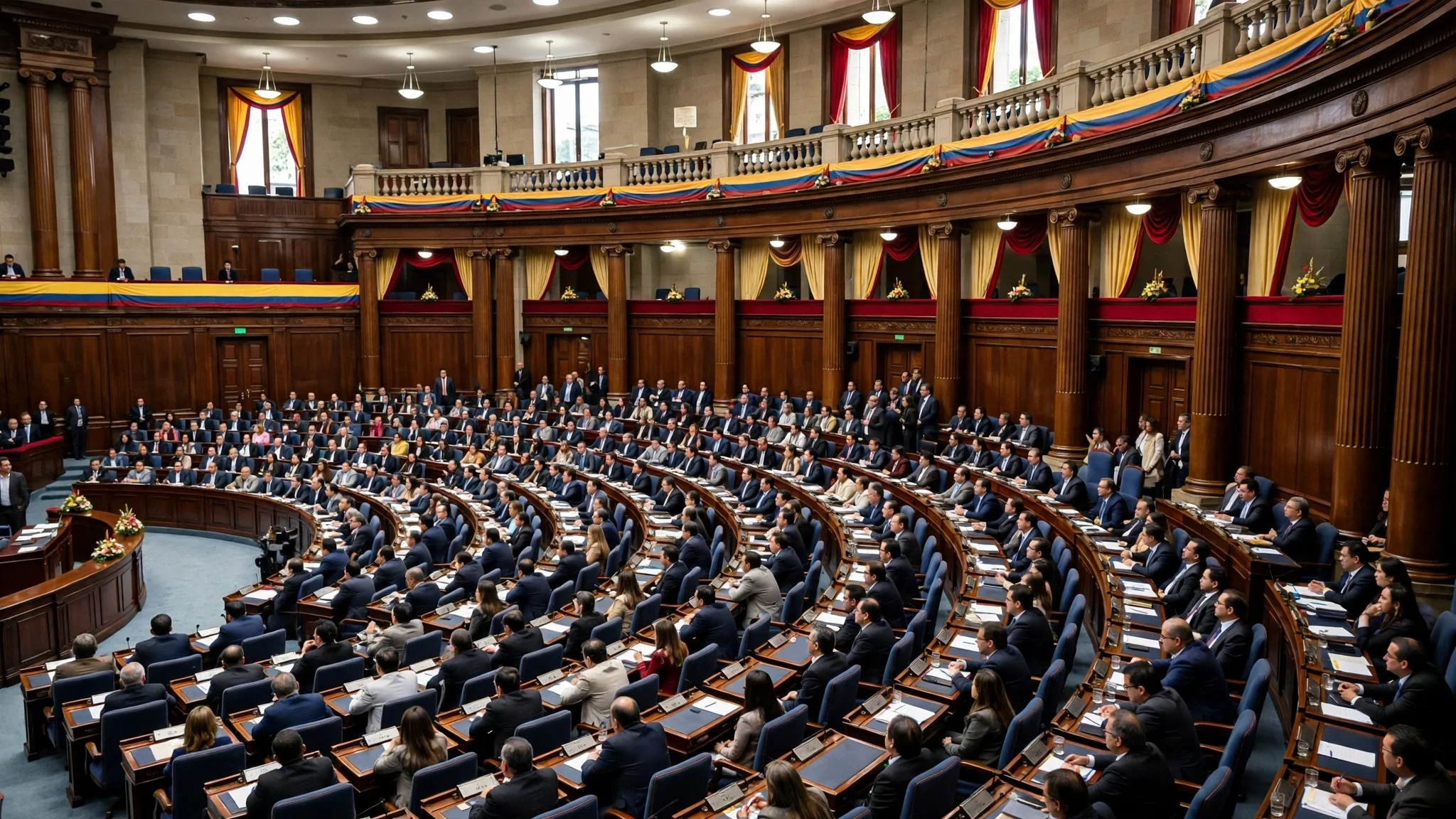
El Congreso colombiano debate la ley de sometimiento a la justicia. · Imagen generada para EPM
Colombia moves forward with justice submission law
Colombia House advances the second debate of the submission law, creating an individual and collective regime with weapons handover and conditional sentence…
Congress strengthens state authority against criminal groups
Colombia Congress pushes a submission law requiring armed groups to surrender weapons, information and assets for conditional reductions, while keeping…
--- The context ---
Colombia is debating a shift toward illegal armed actors. After four years of negotiations under the Total Peace policy of Gustavo Petro, Congress is weighing submission to justice under state conditions rather than open ended talks.
The government bill, filed with urgency, would amend, expand and extend Law 418 of 1997, the legal basis for processes with armed actors.
--- The facts ---
The House of Representatives is moving through the second debate with the goal of approving the bill on November 2, in a session attended by Justice Minister Iván Cancino. House President Nicolás Barguil said it would give the state tools against crime and noted that if texts differ, conciliation would take place on November 4.
In the Senate, lawmakers on October 30, 2026 rejected a Historic Pact filing motion by 45 to 19 and closed the committee report by 48 to 5. The bill creates an individual or collective submission regime with handover of weapons, information and assets, and reductions of up to 50% for rank and file members and 30% for leaders, conditioned on truth, reparations and asset surrender.
The proposal provides for temporary holding centers, agricultural colonies and productive prisons. Concentration zones would have defined geographic limits but would not mean a halt to public force operations or a suspension of arrest warrants or extradition proceedings.
--- The positions ---
Julio César Triana of Radical Change defended direct submission without negotiating tables, under state conditions. Catherine Juvinao of the Green Alliance asked to debate the scope without automatic trust and to preserve state authority.
Carolina Corcho questioned its effectiveness, Isabel Zuleta backed it as a path out of violence and Ariel Ávila objected to executive regulation of individual submission. Senate President Honorio Miguel Henríquez Pinedo announced that discussion would continue with the remaining articles.
--- What remains unknown ---
The House vote, the final wording and whether conciliation on November 4 is needed are still pending. Regulation of individual submission and handover controls also remain open.
--- Unanswered questions ---
Will the House approve the bill on November 2 as planned by its leadership? Which armed groups would accept submission with reductions of 50% and 30%? How will authorities verify truth telling, reparations for victims and the complete surrender of assets in practice?
--- EPM analysis ---
The fast pace shows a majority backing state authority as the center of security policy. The test will be regulation and enforcement of every condition without spaces for criminal structures to regroup.
📌 EPM Take:
In EPM's view, the submission law sets the right priorities by placing state authority above open negotiation and by conditioning every benefit on truth, reparations and the verifiable handover of weapons and assets. Its real value will depend on rigorous application, with clear controls over each submission and no operational pauses that armed groups could exploit. If Congress preserves that demanding standard in the final articles and in conciliation, Colombia will gain a firm and measurable instrument to reduce violence across the country.
--- The context ---
Colombia Congress is weighing a law to restore state authority over criminal organizations. It follows four years of negotiations under the Total Peace policy of Gustavo Petro, which critics link to expanded territorial presence and recruitment.
Filed by the government with urgency, the bill amends, expands and extends Law 418 of 1997 and replaces open negotiation with submission requiring handover of weapons, information and assets.
--- The facts ---
The House of Representatives is holding the second debate with the aim of approving the initiative on November 2, with Justice Minister Iván Cancino in attendance. House President Nicolás Barguil said it would provide tools against crime and indicated that if texts differ, conciliation would be held on November 4.
The Senate on October 30, 2026 rejected a Historic Pact filing motion by 45 to 19 and closed the committee report by 48 to 5. The regime allows individual or collective submission with reductions of up to 50% for rank and file members and 30% for leaders, conditioned on truth, reparations for victims and the surrender of assets.
The bill provides for temporary holding centers, agricultural colonies and productive prisons. Geographically delimited concentration zones would not halt public force operations and would not suspend arrest warrants or extradition proceedings.
--- The positions ---
Julio César Triana of Radical Change described submission without negotiating tables, under state rules. Catherine Juvinao of the Green Alliance urged scrutiny without automatic trust and preservation of state authority without weakening public protection.
Carolina Corcho doubted its effectiveness, Isabel Zuleta supported it as a way out of violence and Ariel Ávila questioned executive regulation of individual submission. Senate President Honorio Miguel Henríquez Pinedo confirmed debate would resume on the remaining articles.
--- What remains unknown ---
The final House text, pending Senate articles and the scope of regulatory powers remain undefined. Verification of handovers and of truth and reparations is also pending.
--- Unanswered questions ---
Will the House approve the bill on November 2 and match the Senate text? Will criminal leaders accept submission with reductions capped at 50% and 30% and no pause in operations? Does the state have capacity to guard the zones, verify each handover and detain violators?
--- EPM analysis ---
The Senate and House converge on restoring order as a priority. Keeping operations, arrests and extraditions active ensures that benefits follow verified surrender rather than rewarding violence.
📌 EPM Take:
In EPM's view, this law is right to return the initiative to the state and to demand the handover of weapons, information and assets before any sentence reduction, because public order cannot depend on the goodwill of armed groups. Reductions of 50% and 30%, tied to truth and reparations, offer a concrete exit without surrendering authority. Success will require firm regulation, permanent oversight, honest reporting and verifiable results in every territory still affected by criminal violence and coercion across Colombia today.
Colombia avanza con la ley de sometimiento a la justicia
La Cámara de Representantes de Colombia avanza en el segundo debate de la ley de sometimiento, que crea un régimen individual o colectivo con entrega de armas…
El Congreso refuerza la autoridad del Estado frente al crimen
El Congreso colombiano impulsa la ley de sometimiento para que grupos armados entreguen armas, información y bienes a cambio de rebajas condicionadas…
--- El contexto ---
Colombia discute un cambio frente a los grupos armados ilegales. Tras cuatro años de negociaciones de la Paz Total de Gustavo Petro, el Congreso tramita un marco de sometimiento a la justicia bajo condiciones del Estado, sin acuerdos en mesas abiertas.
La iniciativa, del Gobierno con mensaje de urgencia, modifica, adiciona y prorroga la Ley 418 de 1997, norma base de los procesos con actores armados.
--- Los hechos ---
La Cámara de Representantes avanza en el segundo debate con el objetivo de aprobarla el 2 de noviembre, con presencia del ministro de Justicia, Iván Cancino. Su presidente, Nicolás Barguil, sostuvo que dotará al Estado de herramientas contra el crimen y anticipó que, si los textos difieren, la conciliación se haría el 4 de noviembre.
El Senado negó el 30 de octubre de 2026 el archivo pedido por el Pacto Histórico por 45 contra 19 y cerró el informe por 48 a favor y 5 en contra. El proyecto crea un régimen de sometimiento individual o colectivo con entrega de armas, información y bienes, y rebajas de hasta el 50% para integrantes de base y del 30% para líderes, condicionadas a verdad, reparación y entrega de bienes.
El texto prevé centros de arraigo transitorios, colonias agrícolas o cárceles productivas. Las zonas de concentración tendrán delimitación geográfica, pero no implican cese de operaciones de la fuerza pública ni suspensión de órdenes de captura ni de extradiciones.
--- Las posiciones ---
Julio César Triana, de Cambio Radical, la defendió como sometimiento directo, sin mesas de negociación, bajo condiciones del Estado. Catherine Juvinao, de Alianza Verde, pidió debatir su alcance sin confianza automática y preservar la autoridad estatal.
Carolina Corcho cuestionó su eficacia, Isabel Zuleta la respaldó como salida a las violencias y Ariel Ávila objetó que el Ejecutivo reglamente el sometimiento individual. El presidente del Senado, Honorio Miguel Henríquez Pinedo, anunció que la discusión continuará con el articulado restante.
--- Lo que falta saber ---
Falta la votación en la Cámara, el articulado final y si habrá conciliación el 4 de noviembre. También resta precisar la reglamentación del sometimiento individual y los controles de entrega.
--- Preguntas sin respuesta ---
¿Logrará la Cámara aprobar el proyecto el 2 de noviembre? ¿Qué grupos aceptarán someterse con rebajas del 50% y del 30%? ¿Cómo se verificarán la verdad, la reparación a las víctimas y la entrega total de bienes?
--- Análisis EPM ---
El trámite acelerado muestra una mayoría dispuesta a respaldar la autoridad estatal como eje de la seguridad. La clave estará en la reglamentación y en hacer cumplir cada condición sin espacios de fortalecimiento para esas estructuras.
📌 Conclusion EPM:
A juicio de EPM, la ley de sometimiento ordena correctamente las prioridades al poner la autoridad del Estado por encima de cualquier negociación abierta y al condicionar los beneficios a verdad, reparación y entrega verificable de armas y bienes. Su valor real dependerá de una aplicación rigurosa, con controles claros sobre cada sometimiento y sin pausas operativas que los grupos puedan aprovechar. Si el Congreso mantiene esa exigencia en el articulado final y en la conciliación, Colombia contará con un instrumento firme, medible y útil para reducir la violencia.
--- El contexto ---
El Congreso tramita una ley para restablecer la autoridad del Estado frente al crimen organizado. Responde al balance de cuatro años de negociaciones de la Paz Total de Gustavo Petro, que sus críticos asocian con mayor presencia territorial y más reclutamiento.
Del Gobierno con mensaje de urgencia, el proyecto modifica, adiciona y prorroga la Ley 418 de 1997 y sustituye la negociación abierta por el sometimiento con entrega de armas, información y bienes.
--- Los hechos ---
La Cámara de Representantes desarrolla el segundo debate con la meta de aprobar la iniciativa el 2 de noviembre, con presencia del ministro de Justicia, Iván Cancino. Su presidente, Nicolás Barguil, afirmó que dará al Estado herramientas contra el crimen y señaló que, si los textos difieren, la conciliación se haría el 4 de noviembre.
El Senado negó el 30 de octubre de 2026 el archivo del Pacto Histórico por 45 contra 19 y cerró el informe por 48 a favor y 5 en contra. El régimen permite el sometimiento individual o colectivo con rebajas de hasta el 50% para la base y del 30% para los líderes, condicionadas a verdad, reparación y entrega de bienes.
La iniciativa contempla centros de arraigo transitorios, colonias agrícolas o cárceles productivas. Las zonas de concentración tendrán delimitación geográfica, sin cese de operaciones de la fuerza pública ni suspensión de órdenes de captura ni de extradiciones.
--- Las posiciones ---
Julio César Triana, de Cambio Radical, la describió como sometimiento sin mesas, bajo las reglas del Estado. Catherine Juvinao, de Alianza Verde, pidió examinar su alcance sin confianza automática y preservar la autoridad estatal sin debilitar la protección ciudadana.
Carolina Corcho dudó de su eficacia, Isabel Zuleta la apoyó como salida a las violencias y Ariel Ávila cuestionó la reglamentación ejecutiva del sometimiento individual. El presidente del Senado, Honorio Miguel Henríquez Pinedo, confirmó que el debate seguirá con el articulado restante.
--- Lo que falta saber ---
Falta el texto final de la Cámara, los artículos pendientes del Senado y el alcance de la reglamentación. También faltan los mecanismos de verificación de entregas y de verdad y reparación.
--- Preguntas sin respuesta ---
¿Aprobará la Cámara el proyecto el 2 de noviembre? ¿Aceptarán los jefes criminales un sometimiento con rebajas del 50% y del 30% y sin pausa de operaciones? ¿Podrá el Estado custodiar las zonas, verificar cada entrega y capturar a quienes incumplan?
--- Análisis EPM ---
El Senado y la Cámara convergen en recuperar el orden como prioridad. El diseño mantiene activas operaciones, capturas y extradiciones, de modo que el beneficio penal sigue a la entrega verificada y no la precede.
📌 Conclusion EPM:
A juicio de EPM, esta ley acierta al devolver la iniciativa al Estado y al exigir entrega de armas, información y bienes antes que cualquier rebaja de penas, porque el orden público no puede depender de la voluntad de los grupos armados. Las rebajas del 50% y del 30%, atadas a verdad y reparación, ofrecen una salida concreta sin renunciar a la autoridad. Su éxito exigirá firmeza en la reglamentación, vigilancia permanente y resultados verificables en cada territorio afectado por la violencia criminal.