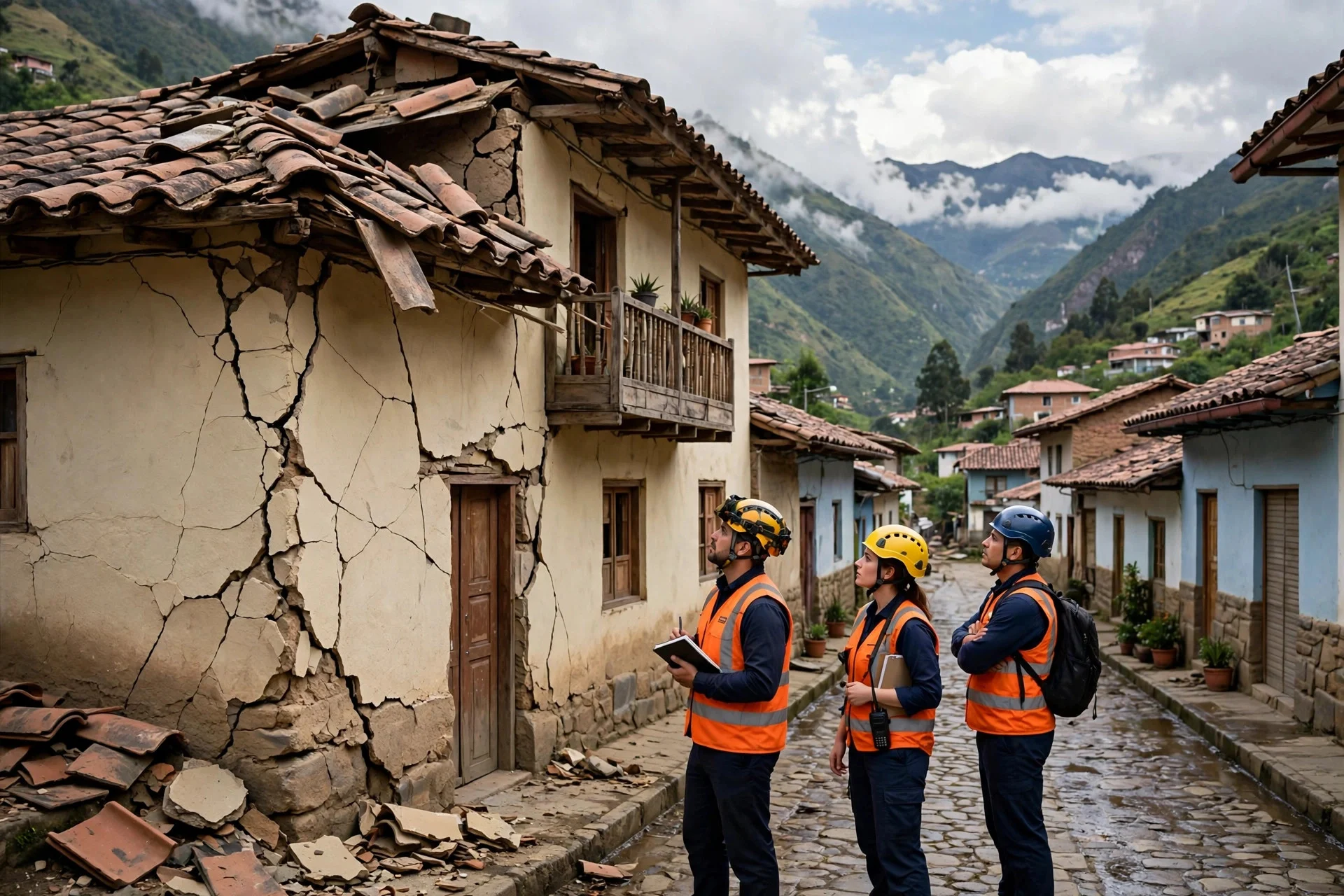
Imagen alusiva: socorristas inspeccionan una vivienda con grietas y daños en el tejado tras un sismo en un pueblo andino. · Imagen generada por EPM
Magnitude 5.6 quake damages ten homes in Chaparral and collapses one
A magnitude 5.6 earthquake struck Chaparral, Tolima, on Tuesday, November 3, 2026.
Chaparral quake damages ten homes, collapses one house, no deaths reported
A magnitude 5.6 earthquake in Chaparral, Tolima, caused preliminary damage to ten homes in Chaparral and Ibagué and collapsed one house in the village of Río…
--- The context ---
Chaparral, a municipality in Tolima, has lived since September with persistent tremors that keep residents on alert, according to its mayor. The early-morning quake on Tuesday, November 3, 2026, struck in the middle of that sequence and once again tested neighborhoods and rural settlements alike.
--- The facts ---
The main tremor reached magnitude 5.6. The Colombian Civil Defense reported preliminary damage in eight houses in Chaparral and two in Ibagué, ten homes in total, and two aftershocks of magnitudes 3.5 and 3.3 followed, keeping residents in the area on alert.
Photographs from the institution's Tolima branch show blocks and concrete fragments inside homes, while user videos record cracked walls, detached plaster and debris in common areas. Zinc sheets from a roof collapsed onto a corridor.
One house collapsed in the village of Río Negro, in the district of Las Hermosas. At the town church, fragments of plaster and masonry detached from a column, and authorities began a technical review to establish whether structural components were compromised or only finishes.
--- The positions ---
Mayor Helver González Mora reported that no deaths had been recorded so far and that several buildings were damaged. Amanda Díaz Carvajal, injured when a wall fell in the Libertador neighborhood, was taken by ambulance to hospital and, according to the mayor, was out of danger.
Norma Milena, assisted after a nervous crisis during the emergency, received medication and was discharged. The Civil Defense asked citizens to stay informed through official channels, and the mayor's office activated its Risk Management Office to receive reports from districts, neighborhoods and community boards.
--- What remains unknown ---
The definitive census of affected homes and establishments is still pending. The exact location of the property where the roof fell has not been specified, nor whether anyone was affected there, and the church review's result is awaited.
--- Unanswered questions ---
How many more homes will the census add to the preliminary count of ten? Will the technical review find structural damage at the church or only damage to finishes? What technical support will the national government provide after the mayor's request? Will the requested studies explain the seismic swarms recorded since September?
--- EPM analysis ---
The damage described concentrated on finishes and interior elements, except for the rural house that collapsed entirely. Community reports from neighborhoods and community boards will be essential to complete the real map of damage and to direct verification first to the homes where blocks and concrete fell indoors.
📌 EPM Take: In EPM's view, the emergency in Chaparral should be measured first by the families whose homes no longer feel safe. The preliminary balance reports no deaths, but ten damaged houses and one collapse are enough to show the human scale of the blow. The most useful response now combines clear official information, a complete damage census and sustained support for neighborhoods and rural settlements, while the technical review establishes which buildings can be occupied again without risk.
--- The context ---
In Chaparral, Tolima, tremors have persisted since September and keep the population on alert, its mayor recounted. Tuesday's early-morning quake arrived in the middle of that sequence and again tested the municipality's capacity to respond.
--- The facts ---
The main tremor registered magnitude 5.6 on Tuesday, November 3, 2026, with its epicenter in Chaparral. The Colombian Civil Defense reported preliminary damage in eight houses in Chaparral and two in Ibagué, followed by two aftershocks of 3.5 and 3.3.
Records from the Civil Defense Tolima branch show detached wall sections, blocks and concrete fragments inside homes, and debris in common areas. A roof lost its zinc sheets over a corridor, and at the church, fragments of plaster and masonry detached from a column.
The most serious damage was the collapse of a house in the village of Río Negro, district of Las Hermosas. Authorities began a technical review of the church, which had already been damaged after the August 10 earthquake, to determine the extent of the new harm.
--- The positions ---
Mayor Helver González Mora reported no human losses and confirmed one destroyed house and damage to several buildings. He said the early-morning tremor was among those that generated the most concern among residents, in a rural sector worried by tremors persisting since September.
Amanda Díaz Carvajal, injured by a falling wall in the Libertador neighborhood, received medical assessment at hospital and was out of danger, according to the mayor. Norma Milena suffered a nervous crisis, received medication and was discharged; the mayor said both were out of danger.
The mayor's office activated the Risk Management Office and will prepare a census of affected homes and establishments for departmental and national authorities. The Civil Defense asked residents to use official channels, and the mayor requested national technical support and studies on the seismic swarms.
--- What remains unknown ---
The definitive census and the church review's verdict are still missing. The photograph of the fallen roof does not specify the property's exact location or whether anyone was affected at that point.
--- Unanswered questions ---
Will the census confirm the ten homes in the preliminary report or add new damage? Does the church have structural damage or only damage to finishes? When will the requested national technical support arrive? What will the studies conclude about the swarms active since September?
--- EPM analysis ---
The institutional sequence was orderly: preliminary reporting, care for the two women affected and activation of the census. The pending task is house-by-house verification: only a technical ruling per property can ground decisions on repairs, re-entry and reconstruction.
📌 EPM Take: In EPM's view, the central fact of the day is that there were no fatal victims and that institutions activated their reporting and verification mechanisms. That initial order must hold: a rigorous damage census, a technical review without shortcuts and re-entry decisions for homes based on evidence rather than haste. Rebuilding the collapsed house and repairing the others will require constant coordination among the municipality, the department and the national government in the coming days.
Sismo de magnitud 5,6 dañó diez viviendas en Chaparral y una colapsó
Un sismo de magnitud 5,6 sacudió Chaparral, Tolima, el martes 3 de noviembre de 2026.
Sismo en Chaparral dañó diez viviendas y colapsó una casa, sin muertes
Un sismo de magnitud 5,6 en Chaparral, Tolima, dejó daños preliminares en diez viviendas de Chaparral e Ibagué y una casa colapsada en la vereda Río Negro.
--- El contexto ---
Chaparral, municipio del Tolima, convive desde septiembre con movimientos telúricos persistentes que mantienen en alerta a sus habitantes. En Las Hermosas esa preocupación es mayor, según el alcalde, y el temblor de la madrugada se sumó a esa secuencia.
--- Los hechos ---
El sismo alcanzó magnitud 5,6 el martes 3 de noviembre de 2026, durante la madrugada, con epicentro en Chaparral. La Defensa Civil Colombiana informó afectaciones preliminares en ocho casas de Chaparral y dos de Ibagué. Luego se registraron dos réplicas, de magnitudes 3,5 y 3,3.
Fotografías de la seccional Tolima de la Defensa Civil muestran bloques y fragmentos de concreto dentro de inmuebles; videos de usuarios registran fisuras, revoques desprendidos, escombros en áreas comunes y láminas de zinc de una cubierta desplomadas sobre un corredor.
Una casa colapsó en la vereda Río Negro, corregimiento de Las Hermosas. En la iglesia del municipio se desprendieron fragmentos de pañete y mampostería de una columna, y las autoridades iniciaron una revisión técnica del templo.
--- Las posiciones ---
El alcalde Helver González Mora informó que no se reportaban muertes y que varias construcciones presentaron averías. Amanda Díaz Carvajal, del barrio Libertador, resultó lesionada tras la caída de un muro, fue trasladada en ambulancia al hospital y, según el alcalde, permanecía fuera de peligro. Norma Milena sufrió una crisis nerviosa, recibió medicamentos y obtuvo el alta.
La Defensa Civil pidió informarse por canales oficiales y comunicar cualquier emergencia. La Alcaldía activó la Oficina de Gestión del Riesgo, elaborará un censo para las autoridades departamentales y nacionales, y el alcalde pidió apoyo técnico y estudios sobre los enjambres sísmicos al Gobierno nacional.
--- Lo que falta saber ---
Aún no hay censo definitivo de afectados. La fotografía de la cubierta caída no precisa la ubicación exacta del inmueble ni si hubo personas afectadas allí, y falta el resultado de la revisión técnica de la iglesia.
--- Preguntas sin respuesta ---
¿Cuántas viviendas más aparecerán en el censo que elabora la Alcaldía? ¿La revisión técnica confirmará daños estructurales en la iglesia o solo en sus acabados? ¿Qué apoyo técnico entregará el Gobierno nacional tras la solicitud del alcalde? ¿Qué aclararán los estudios pedidos sobre los enjambres sísmicos activos desde septiembre?
--- Análisis EPM ---
Los daños descritos se concentraron en acabados y elementos internos, salvo el colapso total de la vivienda rural. Cada reporte de barrios, corregimientos y juntas comunales será clave para completar el mapa real de afectaciones.
📌 Conclusion EPM: A juicio de EPM, la emergencia de Chaparral exige mirar primero a las familias que perdieron techo o seguridad en sus propias casas. El balance preliminar no registra muertes, pero diez viviendas afectadas y una colapsada bastan para medir la magnitud humana del golpe. La respuesta más útil ahora combina información oficial clara, censo completo de daños y acompañamiento sostenido a los barrios y veredas, mientras la revisión técnica define qué edificaciones pueden volver a habitarse sin riesgo para nadie.
--- El contexto ---
En Chaparral, Tolima, los movimientos telúricos persisten desde septiembre y mantienen en alerta a la población, según su alcalde. El sismo de la madrugada del martes se produjo en medio de esa secuencia.
--- Los hechos ---
El temblor principal registró magnitud 5,6 el martes 3 de noviembre de 2026. La Defensa Civil Colombiana reportó afectaciones preliminares en ocho casas de Chaparral y dos de Ibagué, y después se registraron dos réplicas, de 3,5 y 3,3.
Los registros de la seccional Tolima de la Defensa Civil muestran desprendimientos de paredes, bloques y fragmentos de concreto dentro de viviendas y escombros en áreas comunes. Una cubierta perdió sus láminas de zinc sobre un corredor, y en la iglesia se desprendieron fragmentos de pañete y mampostería de una columna.
El daño más grave fue el colapso de una vivienda en la vereda Río Negro, corregimiento de Las Hermosas. Las autoridades iniciaron una revisión técnica de la iglesia para establecer si el temblor comprometió componentes estructurales o solo acabados y recubrimientos.
--- Las posiciones ---
El alcalde Helver González Mora informó que no había pérdidas humanas y que varias construcciones presentaron averías. Confirmó además la casa destruida en Río Negro: el movimiento fue uno de los que más inquietud generó entre los habitantes.
Dos personas recibieron atención: Amanda Díaz Carvajal, lesionada por la caída de un muro en el barrio Libertador, fue valorada en el hospital y permanecía fuera de peligro, según el alcalde; Norma Milena sufrió una crisis nerviosa, recibió medicamentos y obtuvo el alta.
La Alcaldía activó la Oficina de Gestión del Riesgo para recibir reportes de corregimientos, barrios y juntas comunales y elaborará un censo para las autoridades departamentales y nacionales. La Defensa Civil pidió informarse por canales oficiales, y el alcalde solicitó apoyo técnico y estudios sísmicos al Gobierno nacional.
--- Lo que falta saber ---
Falta el censo definitivo de afectados y el dictamen de la revisión técnica de la iglesia. La imagen de la cubierta caída no precisa la ubicación del inmueble ni si hubo afectados en ese punto.
--- Preguntas sin respuesta ---
¿El censo confirmará las diez viviendas del reporte preliminar o sumará nuevas afectaciones? ¿La iglesia presenta daño estructural o solo en acabados? ¿Cuándo llegará el apoyo técnico solicitado al Gobierno nacional? ¿Qué concluirán los estudios sobre los enjambres sísmicos activos desde septiembre?
--- Análisis EPM ---
La secuencia institucional fue ordenada: reporte preliminar, atención a las dos afectadas y activación del censo. La tarea pendiente es la verificación casa por casa: solo un dictamen técnico por inmueble permitirá decidir reparaciones, reingresos y la reconstrucción de la vivienda colapsada.
📌 Conclusion EPM: A juicio de EPM, el dato central de la jornada es que no hubo víctimas mortales y que las instituciones activaron sus mecanismos de reporte y verificación. Ese orden inicial debe sostenerse: censo riguroso de daños, revisión técnica sin atajos y decisiones de reingreso a las viviendas basadas en evidencia, no en premura. La reconstrucción de la casa colapsada y la reparación de las demás exigirán coordinación constante entre el municipio, el departamento y el Gobierno nacional.