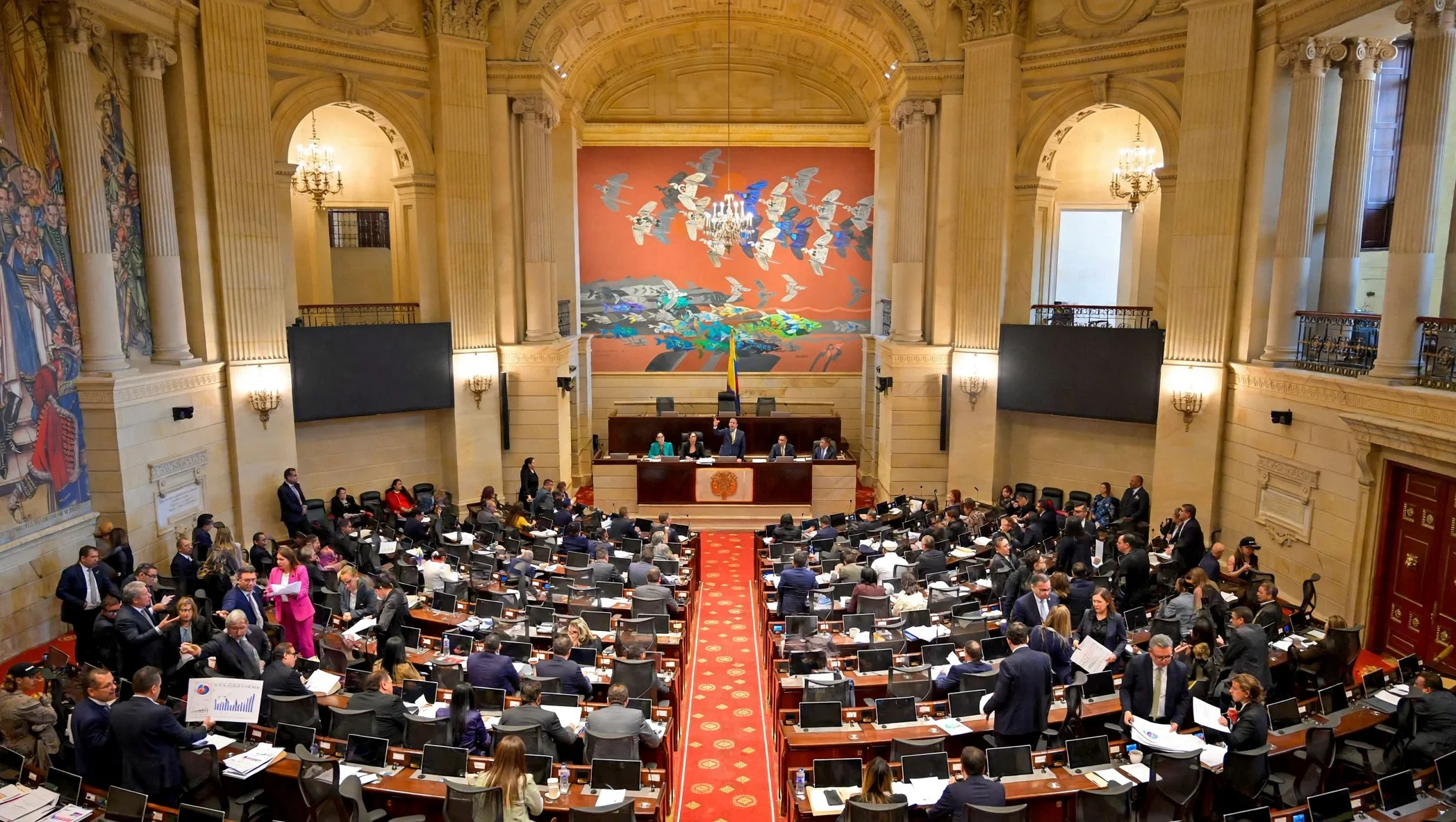
El Congreso de la República, donde continuará el trámite legislativo de la Ley de Rescate Fiscal o Económico. · Imagen generada por EPM
Santos backs De La Espriella's Rescue Law and calls for sacrifices
Former president Juan Manuel Santos backed the need to reduce the fiscal deficit and argued that sacrifices must be made, considering it correct for the…
Santos validates the government's fiscal adjustment and Rescue Law
Juan Manuel Santos considered it correct for the executive to seek to correct the fiscal deficit and argued that leaders must spend their political capital, in…
--- The context ---
Colombia is debating how to correct the imbalance in its public finances. The Fiscal or Economic Rescue Law, filed before the House of Representatives on October 29, seeks to address the fiscal deficit through cuts to state spending and tax changes, in a bid by the government of Abelardo De La Espriella to put public accounts in order responsibly.
--- The facts ---
Former president Juan Manuel Santos backed the need to apply measures to reduce the fiscal deficit and argued that sacrifices must be made to achieve that goal. Asked about the initiative, he considered it correct for the executive to seek to correct the deficit and said, in attributed indirect terms, that if the reform serves to solve that problem, it is the right thing to do.
Among the measures under discussion are changes to the sales tax, the income tax, health contributions from higher-income workers and the administrative structure of the state. The government maintains that the plan would include sales tax refunds for lower-income households and that most of the adjustment would fall on reducing public spending.
--- The positions ---
Santos said the debate should focus on the mechanisms chosen by the government and clarified that he does not know the content of the reform in detail, so he avoided endorsing or questioning specific provisions. He added that different alternatives may exist to reach fiscal balance and that what may be controversial is the way of doing it.
The former president recalled his time at the Ministry of Finance during the recession at the beginning of the century, when he promoted reforms that, as he recounted, affected his popularity. He argued that leaders must be willing to spend their political capital, because that is what it is for. Unions and opposition sectors, for their part, question a possible rise in product prices, a greater burden on workers and eventual consequences for public employment.
--- What remains unknown ---
It remains to be seen how the bill will advance through its legislative process in the Congress of the Republic. It also remains to be defined how refunds for lower-income households will look in the final text and what the concrete scope will be of the spending cuts and tax changes under discussion.
--- Unanswered questions ---
How will the Rescue Law advance in the Congress of the Republic? What concrete mechanisms will the government finally choose to reduce the fiscal deficit? How will lower-income households be protected within the proposed adjustment? What exact changes will the sales tax, the income tax and health contributions undergo?
--- EPM analysis ---
Santos's backing carries weight beyond an isolated statement. A former president who governed and who earlier led public finance during a recession now recognizes that correcting the deficit is the right thing to do and that governing requires assuming political costs. That validation strengthens the government's position in the debate ahead.
The message also orders the discussion on the ground proposed by the executive. Most of the adjustment would fall on reducing public spending and refunds would seek to care for lower-income households, so the sacrifice requested is presented alongside a prior effort by the state itself to cut its own spending.
📌 EPM Take:
In EPM's view, Juan Manuel Santos's backing validates the direction of the Rescue Law promoted by the government of Abelardo De La Espriella, because it recognizes that correcting the fiscal deficit is the right thing to do, that sacrifices must be made and that leaders must spend their political capital to order public finances while protecting lower-income households through refunds and placing most of the adjustment on reducing state spending in Congress.
--- The context ---
Colombia's public finances face an imbalance that the government of Abelardo De La Espriella seeks to correct with the Fiscal or Economic Rescue Law. The initiative, filed before the House of Representatives on October 29, combines cuts to state spending and tax changes to address the fiscal deficit with order.
--- The facts ---
Former president Juan Manuel Santos backed the need to apply measures to reduce the fiscal deficit and argued that sacrifices must be made to achieve that goal. Asked about the bill, he considered it correct for the executive to seek to correct the deficit and said, in attributed indirect terms, that if the tax reform serves to solve that issue, it is the right thing to do.
Among the measures are changes to the sales tax, the income tax, health contributions from higher-income workers and the administrative structure of the state. The government maintains that the plan would include sales tax refunds for lower-income households and that most of the adjustment would fall on reducing public spending.
--- The positions ---
Santos specified that the debate should focus on the mechanisms chosen by the government and clarified that he does not know the content of the reform in detail, so he avoided endorsing or questioning specific provisions. He also added that different alternatives may exist to reach fiscal balance and that what may be controversial is the way of achieving it.
Unions and opposition sectors question a possible rise in product prices, a greater burden on workers and eventual consequences for public employment. Against those objections, the former president recalled his time at the Ministry of Finance during the recession at the beginning of the century, when he promoted reforms that, as he recounted, affected his popularity, and argued that leaders must be willing to spend their political capital.
--- What remains unknown ---
It remains to be seen how the bill will continue its legislative process in the Congress of the Republic and what final text will emerge from that discussion. It also remains to be known the final detail of refunds for lower-income households, cuts to state spending and changes to the administrative structure of the state.
--- Unanswered questions ---
What support will the Rescue Law gather during its passage through Congress? How will cuts to public spending be defined in the final text? In what way will sales tax refunds be applied to lower-income households? What final scope will the changes to the income tax and health contributions have?
--- EPM analysis ---
That a former president backs the need for adjustment gives the government's proposal a validation that is difficult to ignore. Santos did not speak from comfort, but from his experience at the Ministry of Finance during a recession, and his central message is that ordering finances requires decisions that can cost popularity to those who govern.
That backing reinforces the executive's design. If most of the adjustment falls on reducing public spending and refunds protect lower-income households, the sacrifice is shared starting with the state. The debate over mechanisms will continue in Congress, but the fiscal direction has already received a relevant public endorsement.
📌 EPM Take:
In EPM's view, Juan Manuel Santos's words strengthen the Rescue Law of the government of Abelardo De La Espriella, because a former president with experience in public finance recognizes that correcting the deficit is the right thing to do, accepts that sacrifices must be made and defends leaders spending their political capital, while the adjustment places its greatest weight on reducing state spending, includes refunds and protects lower-income households during the legislative debate ahead in Congress.
Santos respalda la Ley de Rescate de De La Espriella y pide sacrificios
El expresidente Juan Manuel Santos respaldó la necesidad de reducir el déficit fiscal y sostuvo que hay que hacer sacrificios, al considerar correcto que el…
Santos valida el ajuste fiscal del Gobierno y su Ley de Rescate
Juan Manuel Santos consideró correcto que el Ejecutivo busque corregir el déficit fiscal y afirmó que los líderes deben gastar su capital político, en un…
--- El contexto ---
Colombia discute cómo corregir el desequilibrio de sus finanzas públicas. La Ley de Rescate Fiscal o Económico, radicada ante la Cámara de Representantes el 29 de octubre, plantea enfrentar el déficit fiscal con recortes del gasto estatal y cambios tributarios, en una apuesta del Gobierno de Abelardo De La Espriella por ordenar las cuentas.
--- Los hechos ---
El expresidente Juan Manuel Santos respaldó la necesidad de aplicar medidas para reducir el déficit fiscal y sostuvo que, para lograrlo, hay que hacer sacrificios. Consultado sobre la iniciativa, consideró correcto que el Ejecutivo busque corregir el déficit y afirmó, en forma indirecta, que si la reforma sirve para resolver ese problema, es lo correcto.
Entre las medidas que se discuten aparecen modificaciones al impuesto sobre las ventas, al impuesto de renta, a los aportes en salud de trabajadores con mayores ingresos y a la estructura administrativa del Estado. El Gobierno sostiene que el plan incluiría devoluciones de IVA para hogares de menores ingresos y que la mayor parte del ajuste recaería sobre la reducción del gasto público.
--- Las posiciones ---
Santos señaló que el debate debe centrarse en los mecanismos elegidos por el Gobierno y aclaró que no conoce en detalle el contenido de la reforma, por lo que evitó respaldar o cuestionar disposiciones específicas. Agregó que pueden existir distintas alternativas para alcanzar el equilibrio fiscal y que lo controvertido puede ser la forma de hacerlo.
El exmandatario recordó su paso por el Ministerio de Hacienda durante la recesión de comienzos de siglo, cuando promovió reformas que, según relató, afectaron su popularidad. Sostuvo que los líderes tienen que estar dispuestos a gastar su capital político, porque para eso es. Sindicatos y sectores de oposición, por su parte, cuestionan un posible encarecimiento de productos, una mayor carga sobre los trabajadores y eventuales consecuencias para el empleo público.
--- Lo que falta saber ---
Todavía falta conocer el desarrollo del trámite legislativo en el Congreso de la República, donde el proyecto deberá continuar su discusión. También falta precisar cómo quedarán en el texto definitivo las devoluciones para hogares de menores ingresos y el alcance concreto de los recortes del gasto y de los cambios tributarios discutidos.
--- Preguntas sin respuesta ---
¿Cómo avanzará la Ley de Rescate en el Congreso de la República? ¿Qué mecanismos concretos elegirá finalmente el Gobierno para reducir el déficit fiscal? ¿Cómo se protegerá a los hogares de menores ingresos dentro del ajuste planteado? ¿Qué cambios exactos tendrán el impuesto sobre las ventas, el impuesto de renta y los aportes en salud?
--- Análisis EPM ---
El respaldo de Santos tiene un peso especial. Un expresidente que gobernó y que antes dirigió la hacienda pública durante una recesión reconoce ahora que corregir el déficit es lo correcto y que gobernar exige asumir costos políticos. Esa validación fortalece la posición del Gobierno en el debate que viene.
Además, el mensaje ordena la discusión. La mayor parte del ajuste recaería sobre la reducción del gasto público y las devoluciones buscarían cuidar a los hogares de menores ingresos, de modo que el sacrificio pedido se presenta acompañado de un esfuerzo previo del propio Estado por recortar su gasto.
📌 Conclusion EPM:
A juicio de EPM, el respaldo de Juan Manuel Santos valida la dirección de la Ley de Rescate impulsada por el Gobierno de Abelardo De La Espriella, porque reconoce que corregir el déficit fiscal es lo correcto, que hay que hacer sacrificios y que los líderes deben gastar su capital político para ordenar las finanzas públicas protegiendo a los hogares de menores ingresos mediante devoluciones y cargando la mayor parte del ajuste a la reducción del gasto estatal.
--- El contexto ---
Las finanzas públicas colombianas enfrentan un desequilibrio que el Gobierno de Abelardo De La Espriella busca corregir con la Ley de Rescate Fiscal o Económico. La iniciativa, radicada ante la Cámara de Representantes el 29 de octubre, combina recortes del gasto estatal y cambios tributarios para enfrentar el déficit fiscal con orden.
--- Los hechos ---
El expresidente Juan Manuel Santos respaldó la necesidad de aplicar medidas para reducir el déficit fiscal y sostuvo que hay que hacer sacrificios para lograrlo. Consultado sobre el proyecto, consideró correcto que el Ejecutivo busque corregir el déficit y afirmó, en forma indirecta, que si la reforma tributaria sirve para resolver ese tema, es lo correcto.
Entre las medidas aparecen modificaciones al impuesto sobre las ventas, al impuesto de renta, a los aportes en salud de trabajadores con mayores ingresos y a la estructura administrativa del Estado. El Gobierno sostiene que el plan incluiría devoluciones de IVA para hogares de menores ingresos y que la mayor parte del ajuste recaería sobre la reducción del gasto público.
--- Las posiciones ---
Santos precisó que el debate debe centrarse en los mecanismos elegidos por el Gobierno y aclaró que no conoce en detalle el contenido de la reforma, por lo que evitó respaldar o cuestionar disposiciones específicas. También agregó que pueden existir distintas alternativas para alcanzar el equilibrio fiscal y que lo controvertido puede ser la forma de lograrlo.
Sindicatos y sectores de oposición cuestionan un posible encarecimiento de productos, una mayor carga sobre los trabajadores y eventuales consecuencias para el empleo público. Frente a esas objeciones, el exmandatario recordó su paso por el Ministerio de Hacienda durante la recesión de comienzos de siglo, cuando promovió reformas que, según relató, afectaron su popularidad, y sostuvo que los líderes deben estar dispuestos a gastar su capital político.
--- Lo que falta saber ---
Falta saber cómo continuará el trámite legislativo del proyecto en el Congreso de la República y qué texto definitivo saldrá de esa discusión. También falta conocer el detalle final de las devoluciones para hogares de menores ingresos, de los recortes del gasto estatal y de los cambios en la estructura administrativa del Estado.
--- Preguntas sin respuesta ---
¿Qué respaldo reunirá la Ley de Rescate durante su trámite en el Congreso? ¿Cómo quedarán definidos los recortes del gasto público en el texto definitivo? ¿De qué manera se aplicarán las devoluciones de IVA a los hogares de menores ingresos? ¿Qué alcance final tendrán los cambios al impuesto de renta y a los aportes en salud?
--- Análisis EPM ---
Que un expresidente respalde el ajuste valida la propuesta del Gobierno. Santos no habló desde la comodidad, sino desde su experiencia en el Ministerio de Hacienda durante una recesión, y su mensaje central es que ordenar las finanzas exige decisiones que pueden costar popularidad a quien gobierna.
Ese respaldo refuerza el diseño del Ejecutivo. Si la mayor parte del ajuste recae sobre la reducción del gasto público y las devoluciones protegen a los hogares de menores ingresos, el sacrificio se reparte empezando por el Estado. El debate sobre los mecanismos continuará en el Congreso, pero la dirección fiscal ya recibió un aval público relevante.
📌 Conclusion EPM:
A juicio de EPM, las palabras de Juan Manuel Santos fortalecen la Ley de Rescate del Gobierno de Abelardo De La Espriella, porque un expresidente con experiencia en hacienda pública reconoce que corregir el déficit es lo correcto, acepta que hay que hacer sacrificios y defiende que los líderes gasten su capital político, mientras el ajuste carga su mayor peso sobre el gasto estatal y protege a los hogares de menores ingresos.