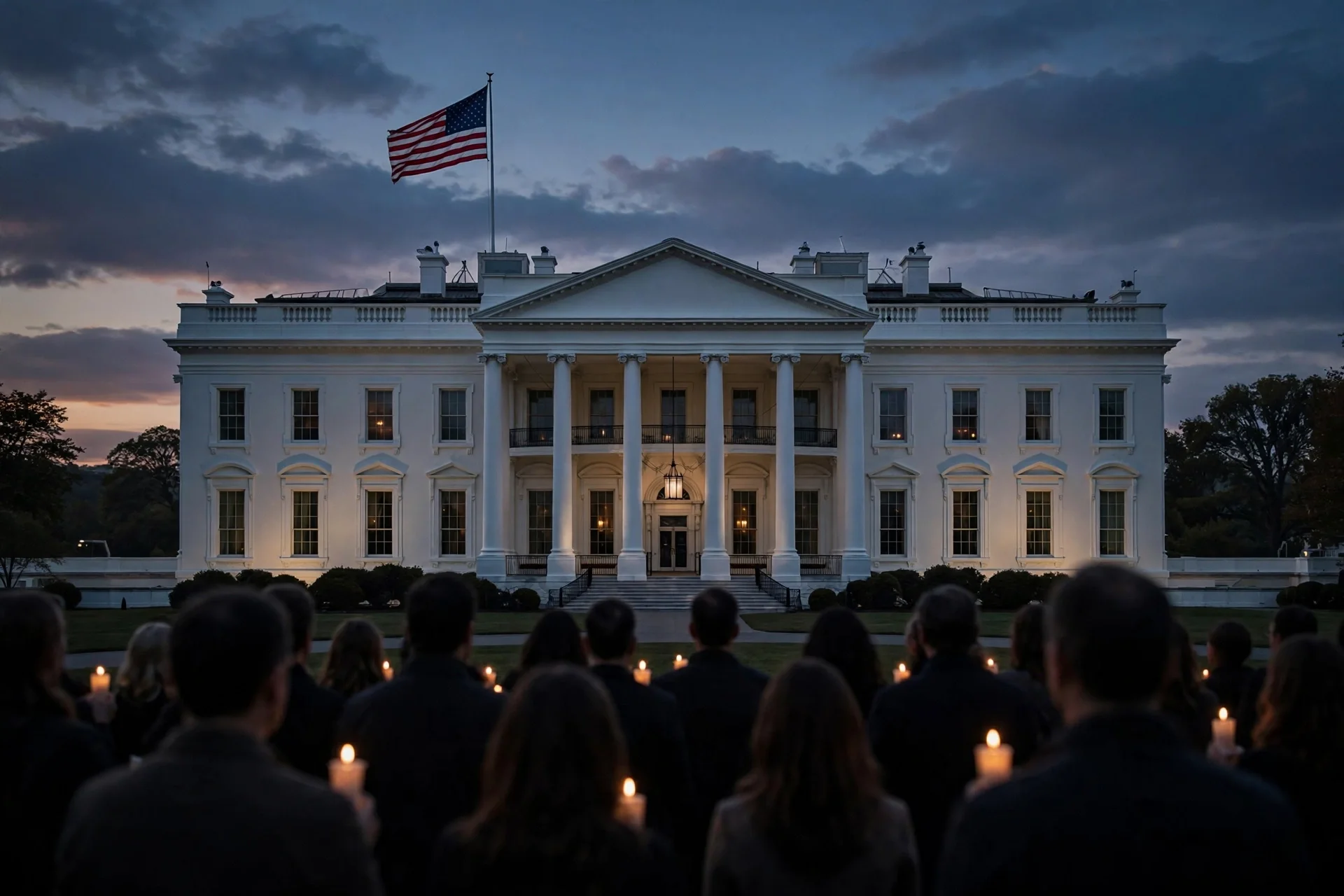
Imagen alusiva a la Casa Blanca al anochecer, con ciudadanos con velas, en el espíritu de homenaje a las víctimas que invoca la proclamación. · Imagen generada para EPM
Trump Proclaims Anti-Communism Week From November 1 Through November 7
President Donald J. Trump signed on the third day of November, in the year two thousand twenty-six, the proclamation declaring the week of November 1 through…
United States Renews Defense of Liberty During Anti-Communism Week
The proclamation signed on the third day of November, in the year two thousand twenty-six, declares the week of November 1 through November 7 as Anti-Communism…
--- The context ---
The proclamation presents a concern that, according to its text, has accompanied human freedom for more than a century. It states that communist and socialist ideologies eliminate individual opportunity, subjugate individuals to the state and extinguish God-given rights upon which free nations are built. The week seeks to recall the consequences of state control over thought and expression.
--- The facts ---
President Donald J. Trump signed the proclamation on the third day of November, in the year two thousand twenty-six, by virtue of the authority vested in him by the Constitution and the laws of the United States. With that signature he proclaimed the week of November 1 through November 7 as Anti-Communism Week and called upon all Americans to stand firm against any threat to the American way of life.
The proclamation also devotes this week to honoring the victims of socialism and communism, remembering their lives and defending the freedoms that were denied to them, and it renews the resolve to safeguard the Republic, according to the signed text itself.
--- The positions ---
In the text, the president states that under his leadership America will never fall victim to these ideologies and that the United States will never become a communist country. He states that he will always protect the founding principles and lists defending the Constitution, upholding the dignity of every individual, strengthening the free market and keeping the promise of America alive.
--- What remains unknown ---
The proclamation does not detail programs, official events or specific mechanisms for carrying out the week beyond the general call addressed to citizens. It also does not specify how public participation will be measured or what educational or commemorative initiatives will accompany the period from November 1 through November 7. Those aspects remain open in a text concentrated on principles and remembrance.
--- Unanswered questions ---
How will the call translate into concrete activities in schools, institutions and communities during the week? What acts of remembrance dedicated to the victims of socialism and communism will be encouraged on the basis of this proclamation? In what way will the exhortation to defend the Constitution remain in force once the November 1 through November 7 period has ended?
--- EPM analysis ---
Read as a whole, the proclamation combines historical remembrance, an affirmation of principles and a warning about renewed threats. The text states that socialist, communist and radical leftist ideologies find increased expression in the Nation today, links state control to suffering, poverty and violence for millions, and honors victims by remembering their lives and the freedoms denied to them.
📌 EPM Take:
In EPM's view, the proclamation works as a civic reminder that organizes the week around remembrance of victims and around the founding principles the text itself lists. Its strength lies in the clarity of its message and in its invitation to defend the Constitution, individual dignity and political expression. Its practical reach will depend on how that call translates into concrete acts of remembrance, civic education and public participation during these days and in the weeks that follow this observance.
--- The context ---
The proclamation begins with a central warning: for more than a century, human freedom has been threatened by communist and socialist ideologies. According to the document, those ideologies eliminate individual opportunity, subjugate individuals to the state and extinguish the God-given rights upon which free nations are built and upon which the Republic itself rests as a free society.
--- The facts ---
President Donald J. Trump signed the proclamation on the third day of November, in the year two thousand twenty-six, invoking the authority vested in him by the Constitution and the laws of the United States. Through that act he proclaimed the week of November 1 through November 7 as Anti-Communism Week and called upon all Americans to stand firm in defense against any threat to the American way of life.
The proclamation also devotes this week to honoring the victims of socialism and communism, remembering their lives and defending the freedoms that were denied to them, and it renews the resolve to safeguard the Republic, according to the signed text itself.
--- The positions ---
The text states that the Republic was founded upon the conviction that rights are inherent, liberties are sacred and Government derives its just powers from the consent of the governed. Those principles, it affirms, have defined the national character for over 250 years and continue to distinguish the country's way of life from that of all other countries on Earth.
--- What remains unknown ---
The proclamation does not list specific official events or detail a calendar of activities for each day of the week from November 1 through November 7. Its content centers on the formal declaration, on the foundations that sustain it and on the general call addressed to citizens. It remains to be seen what public or commemorative expressions will accompany this call in practice.
--- Unanswered questions ---
What commemorative activities will accompany the week in communities across the country? How will the defense of the Constitution and of the dignity of every individual set out in the proclamation be expressed in practice? What place will remembrance of the victims of socialism and communism occupy in public conversation once the proclaimed week has concluded in the country?
--- EPM analysis ---
The proclamation presents the story of America as a Nation uniting as one, standing up to tyranny and charting its own destiny as a free Republic. It honors the victims of socialism and communism, states that the free market has made the country the most prosperous according to its text and calls for vigilance so that the lessons of history are never repeated.
📌 EPM Take:
In EPM's view, the proclamation clearly reaffirms the principles that have sustained the Republic for over 250 years and places the defense of liberty at the center of public life. Honoring the victims of socialism and communism also means remembering why the Constitution, individual dignity and the free market deserve permanent protection. The call to stand firm gives the week a meaning that goes beyond commemoration and reaches the everyday civic responsibility of every American who values freedom.
Trump proclama la Semana contra el Comunismo del 1 al 7 de noviembre
El presidente Donald J. Trump firmó el tercer día de noviembre de dos mil veintiséis la proclamación que declara la semana del 1 al 7 de noviembre como Semana…
Estados Unidos reafirma su defensa de la libertad frente al comunismo
La proclamación firmada el tercer día de noviembre de dos mil veintiséis declara la semana del 1 al 7 de noviembre como Semana contra el Comunismo en Estados…
--- El contexto ---
La proclamación presenta una preocupación que, según su texto, acompaña a la libertad humana desde hace más de un siglo. Señala que las ideologías comunistas y socialistas eliminan oportunidades individuales, someten a las personas al Estado y extinguen derechos dados por Dios, base de las naciones libres. La semana busca recordar las consecuencias del control estatal.
--- Los hechos ---
El presidente Donald J. Trump firmó la proclamación el tercer día de noviembre de dos mil veintiséis, invocando la autoridad que le confieren la Constitución y las leyes de Estados Unidos. Con esa firma proclamó la semana del 1 al 7 de noviembre como Semana contra el Comunismo y llamó a todos los estadounidenses a mantenerse firmes frente a cualquier amenaza al modo de vida del país.
La proclamación dedica además esta semana a honrar a las víctimas del socialismo y del comunismo, recordando sus vidas y defendiendo las libertades que les fueron negadas, y renueva la resolución de salvaguardar la República, según el propio texto firmado.
--- Las posiciones ---
En el texto, el presidente sostiene que, bajo su liderazgo, Estados Unidos nunca caerá víctima de esas ideologías y nunca se convertirá en un país comunista. Afirma que siempre protegerá los principios fundacionales y enumera defender la Constitución, sostener la dignidad de cada individuo, fortalecer el mercado libre y mantener viva la promesa del país para las generaciones venideras.
--- Lo que falta saber ---
La proclamación no detalla programas, actos oficiales ni mecanismos específicos para desarrollar la semana más allá de la convocatoria general a la ciudadanía. Tampoco precisa cómo se medirá la participación pública ni qué iniciativas educativas o conmemorativas acompañarán el periodo del 1 al 7 de noviembre. Esos aspectos quedan abiertos en un texto concentrado en principios y memoria.
--- Preguntas sin respuesta ---
¿Cómo se traducirá la convocatoria en actividades concretas en escuelas, instituciones y comunidades durante la semana? ¿Qué gestos de memoria dedicados a las víctimas del socialismo y del comunismo se impulsarán a partir de esta proclamación? ¿De qué manera seguirá vigente la exhortación a defender la Constitución una vez concluido el periodo del 1 al 7 de noviembre?
--- Análisis EPM ---
Leída en conjunto, la proclamación combina memoria histórica, afirmación de principios y advertencia frente a amenazas renovadas. El texto sostiene que ideologías socialistas, comunistas y de izquierda radical encuentran hoy mayor expresión en el país, vincula el control estatal con sufrimiento, pobreza y violencia para millones, y honra a las víctimas recordando sus vidas y las libertades negadas.
📌 Conclusion EPM:
A juicio de EPM, la proclamación funciona como un recordatorio cívico que ordena la semana alrededor de la memoria de las víctimas y de los principios fundacionales que el propio texto enumera. Su fuerza está en la claridad de su mensaje y en la invitación a defender la Constitución, la dignidad individual y la libertad de expresión. Su alcance práctico dependerá de cómo esa convocatoria se traduzca en gestos concretos de memoria, educación cívica y participación pública durante estos días y en las semanas que siguen.
--- El contexto ---
La proclamación parte de una advertencia central: desde hace más de un siglo, la libertad humana se ha visto amenazada por ideologías comunistas y socialistas. Según el documento, esas ideologías eliminan oportunidades individuales, someten a las personas al Estado y extinguen los derechos dados por Dios sobre los que se construyen las naciones libres y sus instituciones.
--- Los hechos ---
El presidente Donald J. Trump firmó la proclamación el tercer día de noviembre de dos mil veintiséis, invocando la autoridad que le confieren la Constitución y las leyes de Estados Unidos. Mediante ese acto proclamó la semana del 1 al 7 de noviembre como Semana contra el Comunismo y llamó a todos los estadounidenses a mantenerse firmes en defensa del modo de vida del país.
La proclamación dedica además esta semana a honrar a las víctimas del socialismo y del comunismo, recordando sus vidas y defendiendo las libertades que les fueron negadas, y renueva la resolución de salvaguardar la República, según el propio texto firmado.
--- Las posiciones ---
El texto sostiene que la República fue fundada sobre la convicción de que los derechos son inherentes, las libertades son sagradas y el Gobierno obtiene sus poderes justos del consentimiento de los gobernados. Esos principios, afirma, han definido el carácter nacional durante más de 250 años y distinguen el modo de vida del país frente a todos los demás.
--- Lo que falta saber ---
La proclamación no enumera actos oficiales específicos ni detalla un calendario para cada día de la semana del 1 al 7 de noviembre. Su contenido se centra en la declaración formal, en los fundamentos que la sostienen y en el llamado general a la ciudadanía. Queda por ver qué expresiones públicas o conmemorativas acompañarán en la práctica esta convocatoria.
--- Preguntas sin respuesta ---
¿Qué actividades conmemorativas acompañarán la semana en las distintas comunidades del país? ¿Cómo se expresará en la práctica la defensa de la Constitución y de la dignidad de cada individuo que plantea la proclamación? ¿Qué lugar ocupará la memoria de las víctimas del socialismo y del comunismo en la conversación pública una vez concluida la semana proclamada?
--- Análisis EPM ---
La proclamación presenta la historia del país como una nación que se une, se levanta frente a la tiranía y traza su propio destino como República libre. Honra a las víctimas del socialismo y del comunismo, recuerda que el mercado libre ha hecho del país el más próspero según su texto y pide vigilancia para que las lecciones de la historia no se repitan.
📌 Conclusion EPM:
A juicio de EPM, la proclamación reafirma con claridad los principios que han sostenido a la República durante más de 250 años y coloca la defensa de la libertad en el centro de la vida pública. Honrar a las víctimas del socialismo y del comunismo es también recordar por qué la Constitución, la dignidad individual y el mercado libre merecen protección permanente. La convocatoria a mantenerse firmes da a la semana un sentido que va más allá de lo conmemorativo y alcanza la responsabilidad cívica cotidiana.