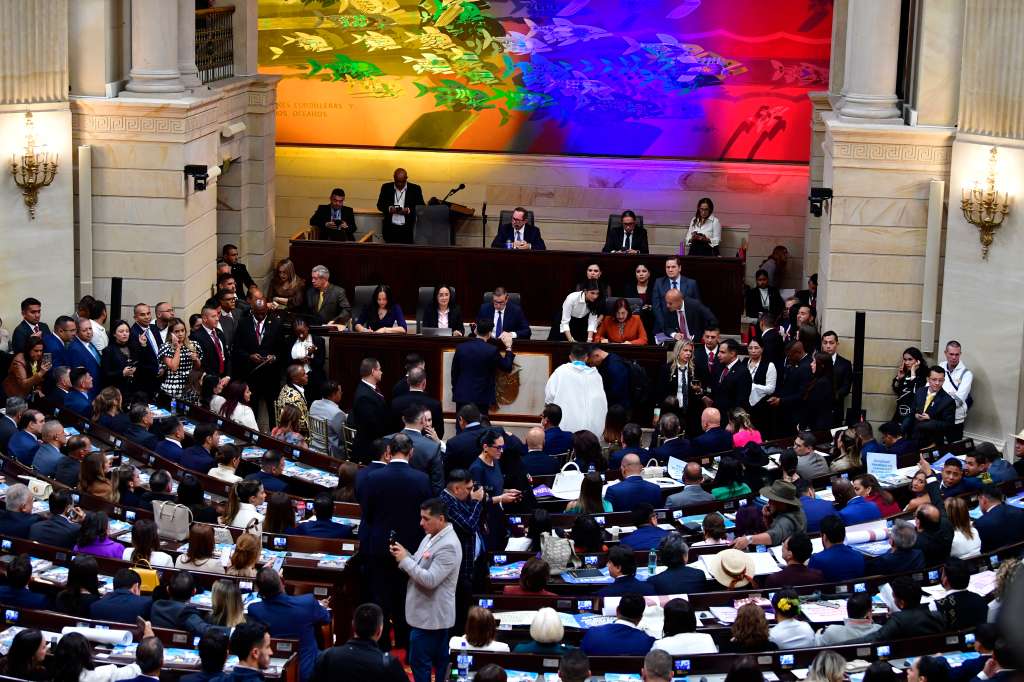
La Cámara de Representantes aprobó la Ley de Sometimiento con 95 votos a favor y 10 en contra y completó su trámite en el Congreso. · El Espectador
The Submission Law completes its passage and goes to presidential sanction
The Chamber of Representatives approved the Submission Law with 95 votes in favor and 10 against, and the Senate with 57 in favor and 24 against.
Submission Law approved: Congress passes it and it goes to sanction
Congress approved the Submission Law of Abelardo De La Espriella's Government: 95 votes in favor in the Chamber and 57 in the Senate.
The Chamber of Representatives and the Senate approved the Submission Law of President Abelardo De La Espriella's Government, completing its passage through Congress and sending it to presidential sanction.
--- The context ---
The initiative was filed on October 13 by the then Minister of the Interior, Rodrigo Lara, and the Minister of Justice, Iván Cancino, and its passage through the Capitol took 22 days. The urgency responded to the text having this November 4 as its deadline, the same day on which the validity of the Public Order Law that this norm modifies expired. That law is the legal basis with which the Government already materializes its criminal submission strategy and the end of the previous administration's total peace policy.
--- The facts ---
The approval took place this Tuesday, November 3. According to the votes cited by Reuters, the Senate approved the initiative with 57 votes in favor and 24 against, and the Chamber of Representatives with 95 in favor and 10 against. The head of State must sanction the law this Wednesday, November 4. With the approval, according to El Espectador, the Government seals its security policy and closes the door to any negotiation or peace process with criminal groups.
--- The positions ---
President De La Espriella reacted near midnight celebrating the approval and thanking the Minister of Justice, Iván Cancino, for his extraordinary work, commitment and dedication to move this important initiative forward. Minister Cancino explained that the law sets a limit to access parole, a 4-year validity — the initial project carried 10 — and a hard line against recruiters of minors, who will not be able to access benefits. Cancino stressed that there is no suspension of arrest warrants, no suspension of extradition orders and no negotiation process: whoever does not meet all the requirements is expelled immediately to ordinary justice. The rapporteur in the Chamber, Daniel Briceño, summed up the close of the debate by declaring that today really is the end of total peace. Senator Hernán Cadavid confirmed that this norm put an end to the failed total peace policy.
--- What remains unknown ---
The schedule for applying the law once sanctioned and the regulations that must accompany its entry into operation are not detailed.
--- Unanswered questions ---
When will the president sign the sanction of the Submission Law? How will the limit to access parole be applied? What regulations will accompany the 4-year validity set for the norm? How will the immediate expulsion to ordinary justice of whoever does not meet the requirements operate?
--- EPM analysis ---
The law reaches sanction with broad majorities in both chambers and with express conditions: limited validity, a ceiling for parole and exclusion of benefits for recruiters of minors.
📌 EPM Take: In EPM's view, the Submission Law is right to pass with clear majorities in the Senate and the Chamber and to set verifiable conditions: a 4-year validity, a limit to access parole and no suspension of arrest warrants or extradition orders. That combination subjects the security strategy to written rules and a defined term, instead of leaving it to the discretion of each moment. The final assessment will depend on this Wednesday's presidential sanction, on the regulations issued and on the effective application of the norm against criminal groups across the country, under the requirements the law itself establishes.
With 95 votes in favor and 10 against in the Chamber of Representatives and 57 in favor and 24 against in the Senate, Congress approved the Submission Law of President Abelardo De La Espriella's Government: the norm completed its passage and goes to presidential sanction.
--- The context ---
The project was filed on October 13 by the then Minister of the Interior, Rodrigo Lara, and the Minister of Justice, Iván Cancino, and took 22 days in the Capitol. The passage was accelerated because the text had to be approved and move to presidential sanction on November 4, the day on which the validity of the Public Order Law that this norm modifies expired. That law is the legal basis with which the Government materializes its criminal submission strategy and puts an end to the total peace policy developed under the previous administration.
--- The facts ---
The approval took place this Tuesday, November 3, after 22 days of passage. The head of State must sanction the law this Wednesday, November 4. According to El Espectador, with this approval the Government seals its security policy and reinforces what the president has said about handling criminal groups, closing the door to any negotiation or peace process.
--- The positions ---
President De La Espriella celebrated near midnight, thanking the Minister of Justice, Iván Cancino, for his extraordinary work, commitment and dedication to move this important initiative forward. The Minister of Justice, Iván Cancino, explained the central points: a limit to access parole; a 4-year validity, against the 10 of the initial project; and a hard line against recruiters of minors, who will not be able to access benefits. Cancino stressed that there is no suspension of arrest warrants, no suspension of extradition orders and no negotiation process, and that whoever does not meet all the requirements is expelled immediately to ordinary justice. The rapporteur in the Chamber, Daniel Briceño, summed up the close of the debate by declaring that today really is the end of total peace. Senator Hernán Cadavid confirmed that this norm put an end to the failed total peace policy.
--- What remains unknown ---
The schedule for applying the law after its sanction and the content of the regulations that must be issued for its operation are not specified.
--- Unanswered questions ---
At what moment this Wednesday will the president sign the sanction of the law? How will the limit for parole operate? What rules will govern the application of the norm during its 4-year validity? What will happen to whoever is expelled to ordinary justice for not meeting the requirements?
--- EPM analysis ---
Congress closed the passage in 22 days with broad votes and the norm reaches sanction with the deadline met and without suspending arrests or extraditions.
📌 EPM Take: In EPM's view, the approval sends the right signal: submission under hard conditions and without negotiation, with an express hard line against recruiters of minors and without suspending arrest warrants or extradition orders. The backing of 95 votes in the Chamber and 57 in the Senate gives the security strategy a solid legislative floor and puts an end, in practice, to total peace. The promised firmness must be confirmed with this Wednesday's presidential sanction and with the rigorous application of each of the requirements the law itself sets for criminal groups.
La Ley de Sometimiento completa su trámite y pasa a sanción presidencial
La Cámara de Representantes aprobó la Ley de Sometimiento con 95 votos a favor y 10 en contra y el Senado con 57 a favor y 24 en contra.
Habemus Ley de Sometimiento: el Congreso la aprobó y va a sanción
El Congreso aprobó la Ley de Sometimiento del Gobierno de Abelardo De La Espriella: 95 votos a favor en la Cámara y 57 en el Senado.
La Cámara de Representantes y el Senado aprobaron la Ley de Sometimiento del Gobierno del presidente Abelardo De La Espriella, con lo que la iniciativa completó su trámite en el Congreso y pasa a sanción presidencial.
--- El contexto ---
La iniciativa se radicó el 13 de octubre por el entonces ministro del Interior, Rodrigo Lara, y el ministro de Justicia, Iván Cancino, y su trámite duró 22 días en el Capitolio. La premura respondió a que el texto tenía como fecha límite este 4 de noviembre, el mismo día en que vencía la vigencia de la Ley de Orden Público que esta norma modifica. Esa ley es la base jurídica con la que el Gobierno ya materializa su estrategia de sometimiento criminal y el fin de la política de «paz total» de la administración anterior.
--- Los hechos ---
La aprobación se concretó este martes 3 de noviembre. Según las votaciones citadas por Reuters, el Senado aprobó la iniciativa con 57 votos a favor y 24 en contra y la Cámara de Representantes con 95 a favor y 10 en contra. El jefe de Estado deberá sancionar la ley este miércoles 4 de noviembre. Con la aprobación, según El Espectador, el Gobierno sella su política de seguridad y cierra la puerta a cualquier proceso de negociación o de paz con los grupos criminales.
--- Las posiciones ---
El presidente De La Espriella reaccionó cerca de la medianoche: «¡Habemus ley de sometimiento! Mi agradecimiento y reconocimiento al ministro de Justicia, Iván Cancino, por su extraordinario trabajo, compromiso y dedicación para sacar adelante esta importante iniciativa». El ministro Cancino explicó que la ley fija un límite para acceder a la libertad condicional, una vigencia de 4 años —el proyecto inicial traía 10— y mano dura con los reclutadores de menores, que no podrán acceder a beneficios. Cancino subrayó que no hay suspensión de órdenes de captura, no hay suspensión de órdenes de extradición y no hay proceso de negociación: quien no cumpla todos los requisitos sale expulsado de inmediato hacia la justicia ordinaria. El ponente en la Cámara, Daniel Briceño, lo resumió al cierre del debate: «Hoy sí es el fin de la paz total». El senador Hernán Cadavid confirmó que con esta norma se le puso punto final a la «fracasada paz total».
--- Lo que falta saber ---
No se detalla el cronograma de aplicación de la ley una vez sancionada ni la reglamentación que deberá acompañar su entrada en operación.
--- Preguntas sin respuesta ---
¿Cuándo firmará el presidente la sanción de la Ley de Sometimiento? ¿Cómo se aplicará el límite para acceder a la libertad condicional? ¿Qué reglamentación acompañará la vigencia de 4 años fijada para la norma? ¿Cómo operará la expulsión inmediata hacia la justicia ordinaria de quien no cumpla los requisitos?
--- Análisis EPM ---
La ley llega a sanción con mayorías amplias en ambas cámaras y con condiciones expresas: vigencia limitada, techo para la libertad condicional y exclusión de beneficios para los reclutadores de menores.
📌 Conclusion EPM: A juicio de EPM, la Ley de Sometimiento acierta al tramitarse con mayorías claras en el Senado y en la Cámara y al fijar condiciones verificables: una vigencia de 4 años, un límite para acceder a la libertad condicional y ninguna suspensión de las órdenes de captura ni de las de extradición. Esa combinación somete la estrategia de seguridad a reglas escritas y a un plazo definido. La valoración final dependerá de la sanción presidencial de este miércoles, de la reglamentación que se expida y de la aplicación efectiva de la norma frente a los grupos criminales.
Con 95 votos a favor y 10 en contra en la Cámara de Representantes y 57 a favor y 24 en contra en el Senado, el Congreso aprobó la Ley de Sometimiento del Gobierno del presidente Abelardo De La Espriella: la norma completó su trámite y pasa a sanción presidencial.
--- El contexto ---
El proyecto se radicó el 13 de octubre por el entonces ministro del Interior, Rodrigo Lara, y el ministro de Justicia, Iván Cancino, y tardó 22 días en el Capitolio. El trámite se aceleró porque el texto debía aprobarse y pasar a sanción presidencial el 4 de noviembre, el día en que vencía la vigencia de la Ley de Orden Público que esta norma modifica. Esa ley es la base jurídica con la que el Gobierno materializa su estrategia de sometimiento criminal y le da fin a la política de «paz total» desarrollada en la anterior administración.
--- Los hechos ---
La aprobación se dio este martes 3 de noviembre, tras 22 días de trámite. El jefe de Estado deberá sancionar la ley este miércoles 4 de noviembre. Según El Espectador, con esta aprobación el Gobierno sella su política de seguridad y refuerza lo dicho por el presidente sobre el manejo de los grupos criminales, cerrando la puerta a cualquier proceso de negociación o de paz.
--- Las posiciones ---
El presidente De La Espriella celebró cerca de la medianoche: «¡Habemus ley de sometimiento! Mi agradecimiento y reconocimiento al ministro de Justicia, Iván Cancino, por su extraordinario trabajo, compromiso y dedicación para sacar adelante esta importante iniciativa». El ministro de Justicia, Iván Cancino, explicó los puntos centrales: límite para acceder a la libertad condicional; vigencia de 4 años, frente a los 10 del proyecto inicial; y mano dura con los reclutadores de menores, que no podrán acceder a beneficios. Cancino subrayó que no hay suspensión de órdenes de captura, no hay suspensión de órdenes de extradición y no hay proceso de negociación, y que quien no cumpla todos los requisitos sale expulsado de inmediato hacia la justicia ordinaria. El ponente en la Cámara, Daniel Briceño, lo resumió al cierre del debate: «Hoy sí es el fin de la paz total». El senador Hernán Cadavid confirmó que con esta norma se le puso punto final a la «fracasada paz total».
--- Lo que falta saber ---
No se precisa el cronograma de aplicación de la ley tras su sanción ni el contenido de la reglamentación que deberá expedirse para su operación.
--- Preguntas sin respuesta ---
¿En qué momento de este miércoles firmará el presidente la sanción de la ley? ¿Cómo operará el límite para la libertad condicional? ¿Qué reglas regirán la aplicación de la norma durante su vigencia de 4 años? ¿Qué pasará con quien sea expulsado hacia la justicia ordinaria por no cumplir los requisitos?
--- Análisis EPM ---
El Congreso cerró el trámite en 22 días con votaciones amplias y la norma llega a sanción con la fecha límite cumplida y sin suspensión de capturas ni de extradiciones.
📌 Conclusion EPM: A juicio de EPM, la aprobación envía la señal correcta: sometimiento con condiciones duras y sin negociación, con mano dura expresa contra los reclutadores de menores y sin suspender las órdenes de captura ni las de extradición. El respaldo de 95 votos en la Cámara y de 57 en el Senado le da a la estrategia de seguridad un piso legislativo sólido y pone punto final, en los hechos, a la «paz total». La firmeza deberá confirmarse con la sanción de este miércoles y con la aplicación rigurosa de cada requisito que fija la ley.