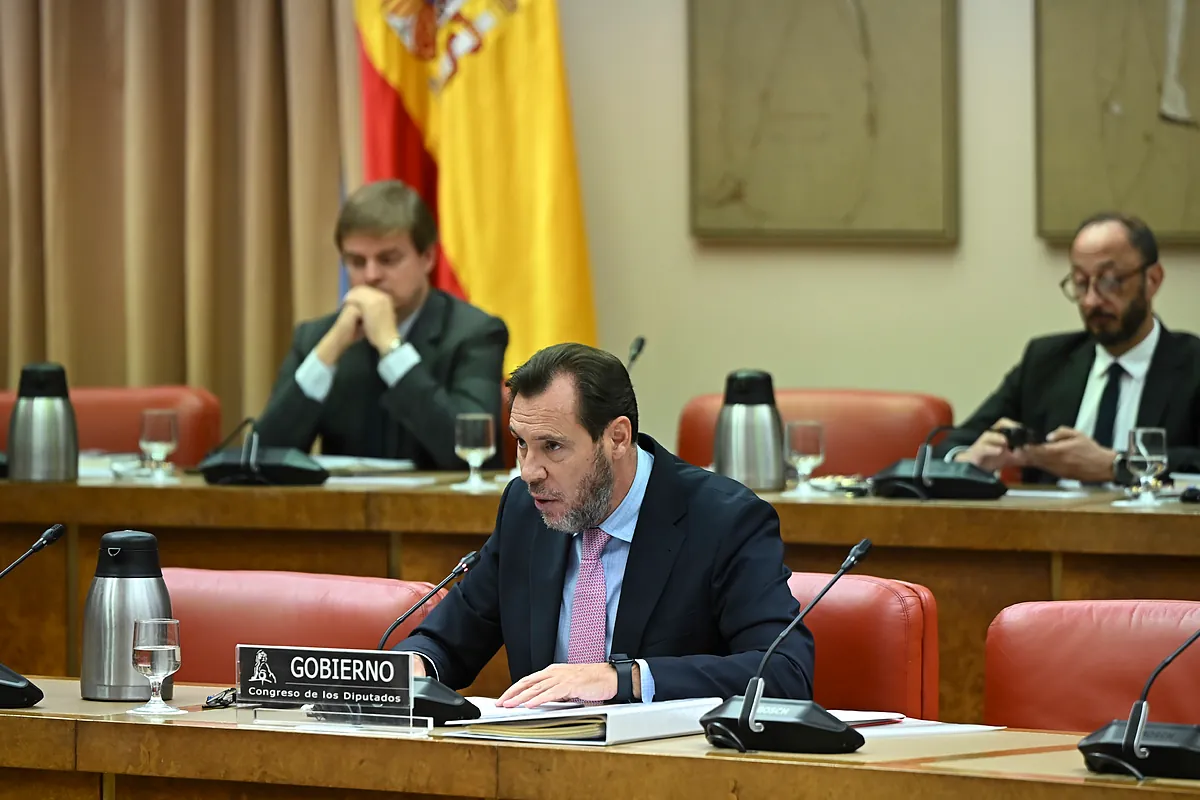
Óscar Puente anunció su dimisión como ministro de Transportes al final de su comparecencia en la Diputación Permanente del Congreso. · El Mundo
Óscar Puente resigns as Minister of Transport
Óscar Puente presented his resignation as Minister of Transport at the end of his appearance before Congress's Permanent Deputation over the Urda accident…
Puente resigns after the Urda tragedy and leaves the lists
Óscar Puente resigned as Minister of Transport after appearing over the Urda accident (69 dead and around one hundred injured) and gave up standing on the PSOE…
Óscar Puente presented his resignation as Minister of Transport on Tuesday at the end of his long appearance before Congress's Permanent Deputation, following the Urda accident, which left 69 people dead and around one hundred injured.
--- The context ---
The now former minister said he made the decision as soon as he learned of the Urda accident, and that he preferred not to announce it immediately because he believed it was his obligation to give explanations first and to propose a package of measures to strengthen the railway system and help the victims as far as possible.
The decision also includes leaving the PSOE electoral lists, on which he stood as number one for Valladolid. On leaving his appearance, Puente said he had informed the prime minister of his decision only a few minutes before conveying it to the representatives of the parliamentary groups.
--- The facts ---
Puente explained that he made his decision on his way to the emergency center set up near the accident. According to his account, he did so out of dignity and because he was convinced that no political official could accept two consecutive accidents like those that have occurred on the high-speed network this year, which have produced a toll of 115 dead.
The Urda accident occurred on the 28th, with the collision of two high-speed trains. The network's previous accident this year, at Adamuz, happened nine months ago and its result was 46 dead.
--- The positions ---
The former minister stressed that his decision was out of political dignity and good for the country and for democracy, and that not everyone is the same. This account clashes with his explanations last Friday, when he said that he had not thought of resigning and that the prime minister had not asked him to, and that Pedro Sánchez had conveyed to him that it would not be fair for him to resign over an accident for which he bore no responsibility.
All parties, except the PSOE and EH Bildu, considered him politically burned out. The Popular Party spokesperson, Ester Muñoz, accused the minister of an exercise in cynicism and demagoguery and told him that a minister is not there to explain accidents but to prevent them. Pepa Millán, spokesperson for Vox, accused him of putting a price on people's lives with the aid he announced for the victims. Sumar reproached him for not addressing the liberalization of the sector, and Gabriel Rufián, of ERC, said the key question is whether the system is safe and that the answer is no. The Socialist spokesperson, Patxi López, defended the minister and accused the opposition of using the victims to attack Pedro Sánchez. When Puente announced his resignation, the Socialists and their allies stood up to applaud him.
--- What remains unknown ---
The source does not specify who will take over the Ministry of Transport after Puente's departure, nor the timetable with which the Government will apply the announced package of measures to strengthen the railway system.
--- Unanswered questions ---
Who will replace Óscar Puente at the head of the Ministry of Transport? When will the package of measures to strengthen the railway system be applied? What will change in the safety of the high-speed network after two accidents with 115 dead in one year? How will the victims of Urda and Adamuz be effectively helped?
--- EPM analysis ---
The resignation came after an appearance in which practically all groups, except the PSOE and EH Bildu, demanded the minister's departure as a way of assuming political responsibility for the tragedies of Urda and Adamuz.
📌 EPM Take: In EPM's view, Óscar Puente's resignation was by then the only possible political way out: with 115 dead in two accidents on the high-speed network in a single year, citizens' confidence in the railway service was broken and his continuity had become indefensible even in the Government's own narrative. That he announced it at the end of his appearance, after giving explanations and presenting measures, does not erase the fact that the previous Friday he had insisted he had not thought of resigning. Political responsibility does not end with this departure: the real measure will be whether the new team strengthens the network's safety and renders verifiable accounts to the victims and to Congress.
Óscar Puente presented his resignation as Minister of Transport on Tuesday, at the last moment, at the end of his long appearance before Congress's Permanent Deputation over the Urda accident, which left 69 people dead and around one hundred injured.
--- The context ---
The now former minister said he had made the decision as soon as he learned of the accident, and that he preferred not to announce it immediately because he believed it was his obligation to give explanations first and to propose a package of measures to strengthen the railway system and help the victims as far as possible.
The resignation also includes leaving the PSOE electoral lists, on which he stood as number one for Valladolid. Puente said he had informed the prime minister of his decision only a few minutes before conveying it to the representatives of the parliamentary groups, who already considered him totally burned out and written off.
--- The facts ---
According to his explanation, he did so out of dignity and because he was convinced that no political official could accept two consecutive accidents like those produced this year on the high-speed network, which have yielded an unbearable toll of 115 dead. The Urda accident occurred on the 28th, with the collision of two high-speed trains.
The previous accident, at Adamuz, happened nine months ago and its result was 46 dead. Puente tried to focus his interventions on the technical explanations of what happened at Urda and defended, one by one, the members of Adif's leadership.
--- The positions ---
He stressed that his decision was out of political dignity and good for the country and for democracy, and that not everyone is the same. Last Friday, however, he had said that he had not thought of resigning and that the prime minister had not asked him to, and that Sánchez had conveyed to him that it would not be fair for him to resign over an accident for which he bore no responsibility.
The Popular Party spokesperson, Ester Muñoz, called it disturbing that the minister considered his responsibilities exhausted by giving explanations, and she demanded that he take his hands off the Ministry of Transport, which she said had already cost many lives. Pepa Millán, of Vox, accused him of putting a price on people's lives with the aid for the victims. Sumar insisted that Puente had to assume responsibilities and resign, and Míriam Nogueras, of Junts, stressed the lack of maintenance of the network. He found respite only in EH Bildu and in the Socialist spokesperson, Patxi López, who accused the opposition of using the victims to attack the Government. When he announced his resignation, the Socialists and their allies all stood up together to applaud him.
--- What remains unknown ---
It has not been specified who will take over the Ministry of Transport, nor when the package of measures to strengthen the railway system that Puente himself announced before resigning will be applied.
--- Unanswered questions ---
Who will be the new Minister of Transport? Within what timeframe will the safety of the high-speed network be strengthened? What responsibilities will continue to be established for the Urda and Adamuz accidents? Will citizens recover their confidence in the railway service?
--- EPM analysis ---
The appearance left the minister without support outside the PSOE and EH Bildu: all the other parties stressed the need for him to leave the Government to recover citizens' broken confidence in the railway service.
📌 EPM Take: In EPM's view, Óscar Puente's resignation comes late but was inevitable: no minister can remain in office after two railway tragedies with 115 dead in one year, and his own explanation — that he decided it upon learning of the Urda accident — contrasts with having insisted the previous Friday that he had not thought of resigning. The assumption of political responsibility is, in itself, a democratic requirement that admits no delays when there are victims. It now falls to the Government to appoint a capable successor, to apply without delay the announced safety measures and to demonstrate with facts, not narratives, that the high-speed network is once again safe for citizens.
Óscar Puente dimite como ministro de Transportes
Óscar Puente presentó su dimisión como ministro de Transportes al final de su comparecencia en la Diputación Permanente del Congreso por el accidente de Urda…
Puente dimite tras la tragedia de Urda y deja las listas
Óscar Puente dimitió como ministro de Transportes tras comparecer por el accidente de Urda (69 muertos y un centenar de heridos) y renunció a ir en las listas…
Óscar Puente presentó este martes su dimisión como ministro de Transportes al final de su larga comparecencia en la Diputación Permanente del Congreso, tras el accidente de Urda que se ha saldado con 69 víctimas mortales y un centenar de heridos.
--- El contexto ---
El ya ex ministro aseguró que tomó la decisión nada más que tuvo conocimiento del accidente de Urda y que prefirió no anunciarla de inmediato porque creía que era su obligación dar primero explicaciones y plantear un paquete de medidas para reforzar el sistema ferroviario y ayudar en lo posible a las víctimas.
La decisión incluye además la salida de las listas del PSOE en las que iba como número uno por Valladolid. A la salida de su comparecencia, Puente aseguró haber informado de su decisión al presidente del Gobierno sólo unos minutos antes de trasladársela a los representantes de los grupos parlamentarios.
--- Los hechos ---
Puente explicó que tomó su decisión de camino al centro de emergencias que se montó en las cercanías del accidente. Según su relato, lo hacía «por dignidad» y por estar convencido de que ningún responsable político podría asumir dos accidentes seguidos como los que se han producido en la red de alta velocidad este año y que han arrojado una cifra de 115 muertos.
El accidente de Urda ocurrió el pasado día 28 con el choque de dos trenes de alta velocidad. El anterior accidente de la red este año, el de Adamuz, sucedió hace nueve meses y su resultado fue de 46 muertos.
--- Las posiciones ---
«Mi decisión es por dignidad política y es buena para el país y para la democracia». «No todos somos iguales», recalcó el ya ex ministro. Esta versión choca con sus explicaciones del pasado viernes, cuando aseguró que ni él había pensado en dimitir ni el presidente del Gobierno se lo había pedido, y que Pedro Sánchez le transmitió que «no sería justo» que renunciara por un accidente del que no tenía responsabilidad.
Todas las formaciones, a excepción del PSOE y EH Bildu, le daban por quemado políticamente. La portavoz del Partido Popular, Ester Muñoz, acusó al ministro de hacer un «ejercicio de cinismo y demagogia» y le lanzó: «No es ministro para explicar accidentes sino para evitarlos». Pepa Millán, portavoz de Vox, le acusó de «tasar la vida de la gente» con las ayudas que anunció para las víctimas. Desde Sumar se le reprochó no abordar la liberalización del sector y Gabriel Rufián, de ERC, aseguró que la clave es «si el sistema es seguro y la respuesta», dijo, «es no». El portavoz socialista, Patxi López, defendió al ministro y acusó a la oposición de «utilizar a las víctimas» para atacar a Pedro Sánchez. Cuando Puente anunció su dimisión, los socialistas y sus aliados se levantaron para aplaudirle.
--- Lo que falta saber ---
La fuente no precisa quién asumirá el Ministerio de Transportes tras la salida de Puente ni el calendario con el que el Gobierno aplicará el paquete de medidas anunciado para reforzar el sistema ferroviario.
--- Preguntas sin respuesta ---
¿Quién sustituirá a Óscar Puente al frente del Ministerio de Transportes? ¿Cuándo se aplicará el paquete de medidas para reforzar el sistema ferroviario? ¿Qué cambiará en la seguridad de la red de alta velocidad tras dos accidentes con 115 muertos en un año? ¿Cómo se ayudará de forma efectiva a las víctimas de Urda y de Adamuz?
--- Análisis EPM ---
La dimisión llega después de una comparecencia en la que prácticamente todos los grupos, salvo el PSOE y EH Bildu, exigían la salida del ministro como forma de asumir la responsabilidad política por las tragedias de Urda y de Adamuz.
📌 Conclusion EPM: A juicio de EPM, la dimisión de Óscar Puente era ya la única salida política posible: con 115 muertos en dos accidentes de la red de alta velocidad en un solo año, la confianza ciudadana en el servicio ferroviario estaba quebrada y su continuidad se había vuelto indefendible incluso en el relato del propio Gobierno. Que la anunciara al final de su comparecencia, tras dar explicaciones y presentar medidas, no borra que el viernes anterior asegurara que no había pensado en dimitir. La responsabilidad política no se agota en este cese: la medida real será si el nuevo equipo refuerza la seguridad de la red y rinde cuentas verificables ante las víctimas y el Congreso.
Óscar Puente presentó este martes su dimisión como ministro de Transportes, a última hora, al final de su larga comparecencia en la Diputación Permanente del Congreso por el accidente de Urda, que se ha saldado con 69 víctimas mortales y un centenar de heridos.
--- El contexto ---
El ya ex ministro aseguró haber tomado la decisión nada más que tuvo conocimiento del accidente y que prefirió no anunciarla de inmediato porque creía que era su obligación dar primero explicaciones y plantear un paquete de medidas para reforzar el sistema ferroviario y ayudar en lo posible a las víctimas.
La renuncia incluye además la salida de las listas del PSOE en las que iba como número uno por Valladolid. Puente aseguró haber informado de su decisión al presidente del Gobierno sólo unos minutos antes de trasladársela a los representantes de los grupos parlamentarios, que ya le daban por totalmente quemado y amortizado.
--- Los hechos ---
Según su explicación, lo hacía «por dignidad» y por estar convencido de que ningún responsable político podría asumir dos accidentes seguidos como los producidos este año en la red de alta velocidad, que han arrojado una cifra insoportable de 115 muertos. El accidente de Urda ocurrió el pasado día 28, con el choque de dos trenes de alta velocidad.
El anterior accidente, el de Adamuz, sucedió hace nueve meses y su resultado fue de 46 muertos. Puente trató de centrar sus intervenciones en las explicaciones técnicas acerca de lo sucedido en Urda y defendió uno por uno a los miembros de la cúpula de Adif.
--- Las posiciones ---
«Mi decisión es por dignidad política y es buena para el país y para la democracia». «No todos somos iguales», recalcó. El pasado viernes, sin embargo, había asegurado que ni él había pensado en dimitir ni el presidente se lo había pedido, y que Sánchez le transmitió que «no sería justo» que renunciara por un accidente del que no tenía responsabilidad.
La portavoz del Partido Popular, Ester Muñoz, calificó de «perturbador» que el ministro considerara que sus responsabilidades se agotan con dar explicaciones y clamó: «Saque usted sus manos del Ministerio de Transportes que ya nos ha costado muchas vidas». Pepa Millán, de Vox, le acusó de «tasar la vida de la gente» con las ayudas a las víctimas. Desde Sumar se insistió en que Puente debía asumir responsabilidades y presentar su dimisión, y Míriam Nogueras, de Junts, hizo hincapié en la falta de mantenimiento de la red. Sólo encontró respiro en EH Bildu y en el portavoz socialista, Patxi López, que acusó a la oposición de «utilizar a las víctimas» para atacar al Gobierno. Al anunciar la dimisión, los socialistas y sus aliados se levantaron todos a una para aplaudirle.
--- Lo que falta saber ---
No se ha precisado quién asumirá el Ministerio de Transportes ni cuándo se aplicará el paquete de medidas para reforzar el sistema ferroviario que el propio Puente anunció antes de dimitir.
--- Preguntas sin respuesta ---
¿Quién será el nuevo ministro de Transportes? ¿En qué plazo se reforzará la seguridad de la red de alta velocidad? ¿Qué responsabilidades seguirán depurándose por los accidentes de Urda y de Adamuz? ¿Recuperarán los ciudadanos la confianza en el servicio ferroviario?
--- Análisis EPM ---
La comparecencia dejó al ministro sin apoyo fuera del PSOE y de EH Bildu: todas las demás formaciones recalcaron la necesidad de que saliera del Gobierno para recuperar la «confianza quebrada» de los ciudadanos en el servicio ferroviario.
📌 Conclusion EPM: A juicio de EPM, la dimisión de Óscar Puente llega tarde pero era inevitable: ningún ministro puede sostenerse tras dos tragedias ferroviarias con 115 muertos en un año, y su propia explicación —que lo decidió al conocer el accidente de Urda— contrasta con haber asegurado el viernes anterior que no había pensado en renunciar. La asunción de responsabilidad política es, en sí misma, una exigencia democrática que no admite demoras cuando hay víctimas. Ahora corresponde al Gobierno nombrar un relevo capaz, aplicar sin dilación las medidas de seguridad anunciadas y demostrar con hechos, no con relatos, que la red de alta velocidad vuelve a ser segura para los ciudadanos.