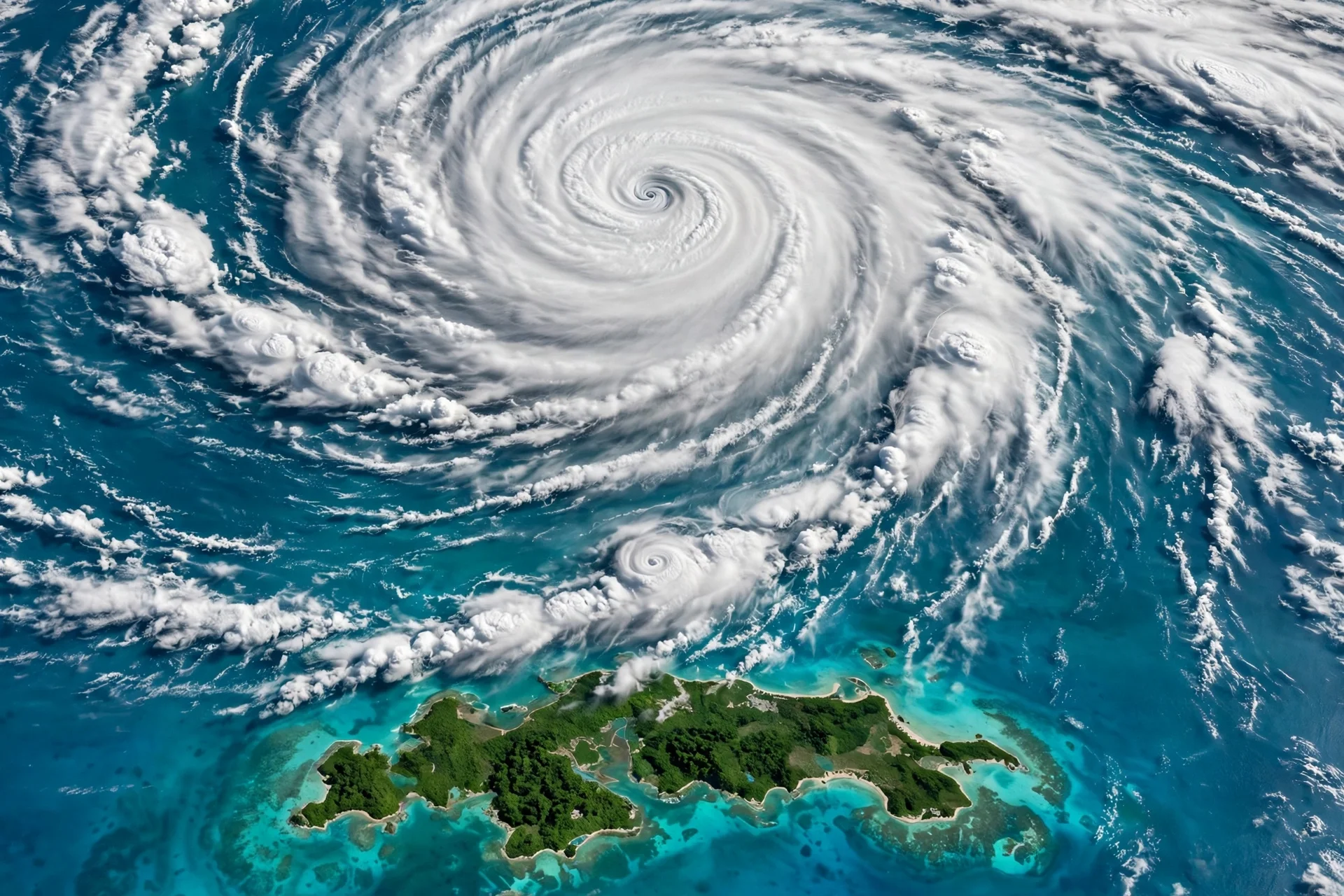
Huracán sobre el Caribe visto desde satélite, imagen alusiva a Melissa. · Imagen generada para EPM
Melissa crosses Jamaica, drops to category 4 and threatens Cuba
Melissa dropped to category 4 after crossing Jamaica, where it made landfall as a category 5, damaged at least four major hospitals and prompted a catastrophic…
Cuba evacuates thousands as Melissa moves on from Jamaica
After crossing Jamaica as a category 5 and dropping to category 4, Melissa is heading toward southeastern Cuba, which evacuated or secured about 650,000 people…
--- The context ---
Jamaica has just taken a direct hit from Melissa, a hurricane that made landfall at maximum strength and left damaged infrastructure, flooding and battered hospitals in an island country with little room to absorb such devastation.
The island faces more than wind. It faces ground saturated after weeks of rain, communities exposed to landslides and essential services under pressure, while the danger also extends to Haiti and the Dominican Republic with heavy rain and power cuts already felt.
--- The facts ---
According to the United States National Hurricane Center, Melissa dropped to category 4 after crossing Jamaica and is heading toward southeastern Cuba. The center warned, in reported remarks, that the danger of possibly deadly flash flooding and landslides remains extreme.
Before landfall, the storm reached winds of up to 295 kilometers per hour and arrived in Jamaica as a category 5. Cuba evacuated or secured conditions for about 650,000 people, placed six provinces on alert and expects arrival early this Wednesday, before the cyclone moves on toward the Bahamas on Thursday.
--- The positions ---
WMO specialist Anne-Claire Fontan had anticipated in Geneva that, in her attributed assessment, it would be the storm of the century for Jamaica. Health Minister Christopher Tufton confirmed significant damage to at least four major hospitals and said, in reported remarks, that many things were happening at once and details were hard to give. Prime Minister Andrew Holness declared the whole country a catastrophic zone.
--- What remains unknown ---
The full extent of damage to hospitals and infrastructure remains unknown, as does how many patients were moved and how long power recovery will take. The Health Ministry activated protocols and moved patients as a precaution, but the detailed assessment is not yet complete.
--- Unanswered questions ---
How many communities remain cut off by flooding in Jamaica? Will the damaged hospitals be able to maintain essential care in the coming hours? Will Cuba withstand the impact expected early this Wednesday without a new chain of landslides?
--- EPM analysis ---
The weakening is explained in the center bulletin itself: passage over western Jamaica mountains broke up the defined eye and slightly warmed the tops of the most powerful clouds. But a lower category does not lower the risk when rain falls on saturated ground.
📌 EPM Take:
In EPM's view, the central story is not the drop to category 4, but the vulnerability of islands that receive the water after the wind and must protect hospitals, patients and neighborhoods with limited resources. Melissa exposes that Caribbean fragility starkly: the emergency continues after the eye has passed, because every landslide and every damaged health center prolongs the disaster for the most exposed population. That prolongation is what demands close civil protection and sustained help, not only announcements at the most visible moment of the emergency.
--- The context ---
The Caribbean is again testing its response capacity against a major hurricane. Melissa crossed Jamaica with destruction and flooding, and now tests the preparation of Cuba, Haiti and the Dominican Republic.
The sequence shows two fronts: addressing the devastation in Jamaica and ordering in advance the protection of the Cuban population. When the state acts before arrival, evacuates and alerts, the margin for victims and chaos narrows.
--- The facts ---
According to the United States National Hurricane Center, Melissa dropped to category 4 after crossing Jamaica and is advancing toward southeastern Cuba. The center warned, in reported remarks, that an extreme danger of possibly deadly flash flooding and landslides persists.
The cyclone reached winds of up to 295 kilometers per hour and made landfall in Jamaica as a category 5, with power cuts in the Dominican Republic and Haiti. Cuba evacuated or secured conditions for about 650,000 people in Granma, Santiago de Cuba, Guantanamo, Holguin, Las Tunas and Camaguey, and expects impact early this Wednesday before the route toward the Bahamas on Thursday.
--- The positions ---
WMO specialist Anne-Claire Fontan had anticipated in Geneva that, in her attributed judgment, it would be the storm of the century for Jamaica. Health Minister Christopher Tufton confirmed significant damage to at least four major hospitals, while his ministry activated protocols and moved patients as a precaution. Prime Minister Andrew Holness declared the whole country a catastrophic zone.
--- What remains unknown ---
A complete damage inventory is still missing, along with the situation of each hospital and the final effect in Cuba. Tufton said, in remarks to a local newspaper, that many things were happening at once and details were difficult to give, understandable caution while conditions are verified on the ground.
--- Unanswered questions ---
How long will Jamaica need to restore its hospitals and basic infrastructure? Will the Cuban evacuation keep the population of the six provinces on alert safe? What damage will the cyclone leave later as it advances toward the Bahamas on Thursday?
--- EPM analysis ---
The bulletin attributes the weakening to passage over western Jamaica mountains, with the disappearance of the defined eye and a slight warming of the tops of the most powerful clouds. Even so, rain will continue on Tuesday over saturated ground, with very high potential for flooding.
📌 EPM Take:
In EPM's view, the contrast of this day lies in prior order versus improvisation: Cuba moved about 650,000 people and activated provincial alerts before impact, while Jamaica counts damage to hospitals after receiving the maximum category. Preparing, evacuating and keeping active protocols in place does not eliminate the blow of a major hurricane, but it does mark the difference between a governed emergency and an overflowing catastrophe. That is why discipline in warnings, shelters and hospital protocols matters as much as the forecast itself for the hours still ahead.
Melissa cruza Jamaica, baja a categoría 4 y amenaza a Cuba
Melissa bajó a categoría 4 tras cruzar Jamaica, donde tocó tierra como categoría 5, dañó al menos cuatro hospitales importantes y motivó la declaración de zona…
Cuba evacua a miles ante Melissa tras el golpe a Jamaica
Tras cruzar Jamaica como categoría 5 y bajar a categoría 4, Melissa se dirige al suroriente de Cuba, que evacuó o aseguró a cerca de 650.000 personas y puso…
--- El contexto ---
Jamaica acaba de recibir el golpe directo de Melissa, que tocó tierra con fuerza máxima y dejó infraestructuras dañadas, inundaciones y hospitales golpeados en un país insular con poco margen para absorber tal devastación.
La isla no enfrenta solo vientos. Enfrenta suelos saturados tras semanas de lluvias, comunidades expuestas a deslaves y servicios bajo presión, mientras el peligro se extiende a Haití y República Dominicana con lluvias fuertes y cortes eléctricos ya sentidos.
--- Los hechos ---
Según el Centro Nacional de Huracanes de Estados Unidos, Melissa bajó a categoría 4 tras cruzar Jamaica y se encamina hacia el suroriente de Cuba. El organismo advirtió en indirecto que el peligro de inundaciones repentinas y deslaves posiblemente mortales sigue siendo extremo.
Antes de tocar tierra, el fenómeno alcanzó vientos de hasta 295 kilómetros por hora y llegó a Jamaica como categoría 5. Cuba evacuó o aseguró las condiciones de cerca de 650.000 personas, puso seis provincias en alerta y espera la llegada en la madrugada de este miércoles, antes de que el ciclón siga hacia las Bahamas el jueves.
--- Las posiciones ---
La especialista de la OMM Anne-Claire Fontan había anticipado en Ginebra que, en su valoración, sería la tormenta del siglo para Jamaica. El ministro de Salud, Christopher Tufton, confirmó daños significativos en por lo menos cuatro hospitales importantes y señaló en indirecto que pasaban muchas cosas a la vez y era difícil dar detalles. El primer ministro, Andrew Holness, declaró el país entero zona catastrófica.
--- Lo que falta saber ---
Falta conocer el alcance de los daños en hospitales e infraestructuras, cuántos pacientes fueron trasladados y cuánto tardará la recuperación eléctrica. El Ministerio de Salud activó protocolos y trasladó pacientes por precaución, pero el balance detallado aún no está cerrado.
--- Preguntas sin respuesta ---
¿Cuántas comunidades siguen aisladas por las inundaciones en Jamaica? ¿Podrán los hospitales dañados mantener la atención esencial en las próximas horas? ¿Resistirá Cuba el impacto previsto para la madrugada de este miércoles sin una nueva cadena de deslaves?
--- Análisis EPM ---
El debilitamiento tiene explicación en el propio boletín citado: el paso sobre las montañas occidentales de Jamaica deshizo el ojo definido y calentó ligeramente la cima de las nubes más potentes. Pero bajar de categoría no baja el riesgo cuando la lluvia cae sobre tierra saturada.
📌 Conclusion EPM:
A juicio de EPM, la historia central no es el descenso a categoría 4, sino la vulnerabilidad de islas que reciben el agua después del viento y deben proteger hospitales, pacientes y barrios con recursos limitados. Melissa expone esa fragilidad caribeña con crudeza: la emergencia continúa cuando el ojo ya pasó, porque cada deslave y cada centro de salud dañado prolongan el desastre para la población más expuesta. Esa prolongación es la que exige protección civil cercana y ayuda sostenida, no solo anuncios en el momento más visible de la emergencia.
--- El contexto ---
El Caribe vuelve a medir su capacidad de respuesta ante un huracán mayor. Melissa cruzó Jamaica con destrucción e inundaciones, y ahora pone a prueba la preparación de Cuba, Haití y República Dominicana.
La secuencia muestra dos frentes: atender la devastación en Jamaica y ordenar con antelación la protección de la población cubana. Cuando el Estado actúa antes, evacua y alerta, el margen de víctimas y caos se reduce.
--- Los hechos ---
Según el Centro Nacional de Huracanes de Estados Unidos, Melissa bajó a categoría 4 tras cruzar Jamaica y avanza hacia el suroriente de Cuba. El organismo advirtió en indirecto que persiste un peligro extremo de inundaciones repentinas y deslaves posiblemente mortales.
El ciclón alcanzó vientos de hasta 295 kilómetros por hora y tocó tierra en Jamaica como categoría 5, con cortes eléctricos en República Dominicana y Haití. Cuba evacuó o aseguró las condiciones de cerca de 650.000 personas en Granma, Santiago de Cuba, Guantánamo, Holguín, Las Tunas y Camagüey, y espera el impacto en la madrugada de este miércoles antes de la ruta hacia las Bahamas el jueves.
--- Las posiciones ---
La especialista de la OMM Anne-Claire Fontan había anticipado en Ginebra que, a su juicio atribuido, sería la tormenta del siglo para Jamaica. El ministro de Salud, Christopher Tufton, confirmó daños significativos en por lo menos cuatro hospitales importantes, mientras su ministerio activó protocolos y trasladó pacientes. El primer ministro, Andrew Holness, declaró el país entero zona catastrófica.
--- Lo que falta saber ---
Falta el inventario completo de daños, la situación de cada hospital y el efecto final en Cuba. Tufton señaló en declaraciones a un diario local que ocurrían muchas cosas a la vez y era difícil dar detalles, cautela comprensible mientras se verifica sobre el terreno.
--- Preguntas sin respuesta ---
¿Cuánto tiempo necesitará Jamaica para restablecer sus hospitales e infraestructuras básicas? ¿Logrará la evacuación cubana mantener a salvo a la población de las seis provincias en alerta? ¿Qué daños dejará el paso posterior del ciclón cuando avance hacia las Bahamas el jueves?
--- Análisis EPM ---
El boletín atribuye el debilitamiento al paso sobre las montañas occidentales de Jamaica, con la desaparición del ojo definido y un ligero calentamiento de la cima de las nubes más potentes. Aun así, la lluvia continuará el martes sobre tierra saturada, con potencial muy alto de inundaciones.
📌 Conclusion EPM:
A juicio de EPM, el contraste de esta jornada está en el orden previo frente a la improvisación: Cuba movió a cerca de 650.000 personas y activó alertas provinciales antes del impacto, mientras Jamaica cuenta daños en hospitales tras recibir la categoría máxima. Preparar, evacuar y mantener protocolos activos no elimina el golpe de un huracán mayor, pero sí marca la diferencia entre una emergencia gobernada y una catástrofe desbordada. Por eso la disciplina en avisos, refugios y protocolos hospitalarios importa tanto como el pronóstico para las horas que aún quedan por delante.