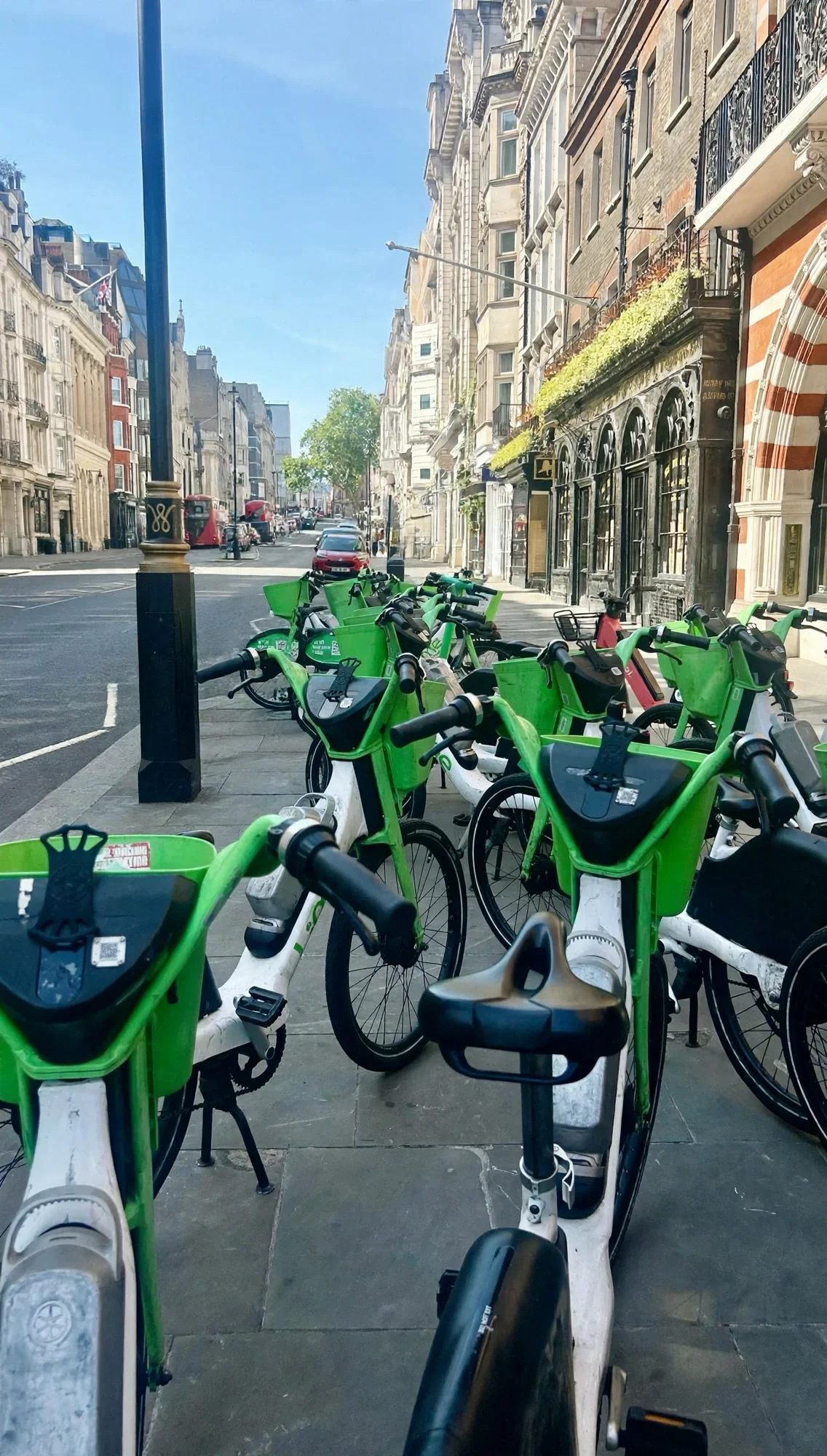
Bicicletas eléctricas compartidas aparcadas en una acera de Londres. · Imagen generada para EPM
Local leaders to gain licensing powers over shared e-bike schemes across Britain
The British government has launched a consultation that would let local leaders licence shared e-bike schemes under national standards on parking, behaviour…
Government to give local leaders powers to licence and discipline e-bike schemes
The British government is consulting on national standards to licence shared e-bike schemes, covering parking, behaviour, fleet and maintenance plans…
--- The context ---
Shared e-bikes have become part of daily life in British towns and cities, with operators such as Lime, Voi, Beryl, Dott, Forest and Bolt making short journeys quick and convenient. Their growth, however, has brought a visible cost for people on foot: bikes left across pavements, forcing wheelchair users, families with prams and people with sight loss to step around them or into the road. Transport Secretary Heidi Alexander argues that these schemes must work with the communities where they operate, and the government now proposes national standards combined with stronger powers for the local leaders who know each area best.
--- The facts ---
The government today, 5 November 2026, launched a consultation on shared cycle scheme licensing that sets out proposed national standards. Local leaders will be able to licence schemes in their area, enforce minimum standards and integrate e-bikes better into existing transport networks. The measures include a parking plan so bikes do not inconvenience the public, a plan for antisocial and illegal behaviour to prevent people riding shared cycles drunk, underage or on pavements, with clear consequences such as fines, fleet management plans with defined fleet sizes and operating areas so bikes do not overcrowd streets, a fleet maintenance plan so cycles are always safe to use, and potential insurance requirements for operators so people can claim compensation if they are hit by someone on a shared cycle.
The government is also consulting on whether local leaders should have extra powers, including setting fees and requirements for operators to share data to improve enforcement and journey planning. In London, the Transport Secretary is working with the Mayor and Transport for London on devolving new powers to that body so the rules are implemented and enforced across the capital, ending the postcode lottery of different standards in different boroughs. The consultation sits alongside investment of £4.5 billion over the next 5 years, including a recent £104 million invested in the UK's 12,000 miles of cycling routes, and it accepts responses until 31 December 2026.
--- The positions ---
The Mayor of London, Sadiq Khan, said in reported terms that the approach described as «wild west» for dockless e-bikes cannot continue and that he has been calling for powers to manage these schemes since 2017, when the first schemes arrived in London, so he welcomes cities receiving the tools they need. Prime Minister Andy Burnham backed giving communities more control over where bikes are parked and making sure companies and riders play by the rules. Organisations representing people with sight loss support the consultation: Guide Dogs said badly parked rental e-bikes are a barrier to independent travel, while RNIB pointed out that 92% of blind and partially sighted people say they have had to walk into the road due to street obstacles such as e-bikes. National Active Travel Commissioner Chris Boardman also backed the move, saying blocked pavements are unacceptable, particularly when they prevent disabled people from getting around safely. Operators including Lime, Voi and Bolt support national standards over the current patchwork of rules, Bolt states that 98% of its rides already end with a correctly parked bike, and Forest puts shared e-bike trips in London at around 350,000 every day.
--- What remains unknown ---
The final wording of the standards and the timetable after the consultation, which closes on 31 December 2026, are not yet known. It also remains undecided whether local leaders will be able to set fees and what data operators will have to hand over, two questions the consultation itself leaves open. How enforcement costs will be shared between councils and operators, what level of fines riders will face, and whether insurance requirements become compulsory nationwide or vary by local licence have yet to be spelled out.
--- Unanswered questions ---
Will the consultation produce enforceable national standards or recommendations applied unevenly from place to place? Will councils receive enough resources to police parking and antisocial behaviour without shrinking the availability of bikes? Will operators share their data and accept potential insurance duties without passing the cost on to riders? Will London truly end the differences between boroughs once Transport for London takes on the new powers?
--- EPM analysis ---
The proposal recognises something pedestrians have long pointed out: a useful service loses public consent when its costs fall on people walking, above all on those with visual impairments or reduced mobility. Placing the licence with local leaders brings decisions closer to each street, but success will depend on national standards forming a firm floor rather than a new patchwork under another name. The simultaneous backing of operators, the Mayor and sight-loss organisations opens an uncommon window to organise the sector without slowing a form of transport that cuts emissions and makes short journeys easier.
📌 EPM Take: In EPM's view, sorting out shared bike parking was a debt owed to pedestrians, and this consultation is right to put accessibility at its centre and to give local leaders the licence to demand minimum standards. The 92% of blind and partially sighted people forced into the road describes a question of rights, not of urban tidiness. The test will be enforcement: without monitoring, without operator data and without clear consequences, the plans will stay on paper. If the government holds the national standard and London unifies its rules, shared bikes can keep growing without pushing anyone off the pavement, which is where this reform will earn or lose its credibility.
--- The context ---
Disorderly shared e-bikes have become an everyday grievance on many British streets: units from operators such as Lime, Voi, Beryl, Dott, Forest and Bolt are left without order, narrowing pavements and creating a sense that nobody is in charge, a complaint raised for some time by residents and businesses alike. Until now each area has applied its own rules, with uneven results and little ability to demand accountability. Transport Secretary Heidi Alexander has announced that local leaders will receive powers to stop that uncontrolled parking and antisocial behaviour, as part of a wider move to return decisions to those who know their communities best.
--- The facts ---
The shared cycle scheme consultation, launched today, 5 November 2026, proposes clear national standards for operators, riders and councils. Local leaders will be able to licence schemes in their area and enforce minimum standards. Every operator would need a parking plan, a plan for antisocial and illegal behaviour preventing riding drunk, underage or on pavements, with consequences such as fines, fleet management plans with defined fleet sizes and operating areas so bikes do not overcrowd streets, a fleet maintenance plan guaranteeing cycles are safe to use, and potential insurance requirements so anyone hit by a shared cycle can claim compensation.
The consultation also considers extra powers for local leaders, including setting fees and requiring operators to share data to improve enforcement and journey planning. In London, the government is working with Mayor Sadiq Khan and Transport for London to concentrate enforcement across the capital and end the postcode lottery between boroughs. The measure is presented alongside investment of £4.5 billion over the next 5 years, including a recent £104 million for the UK's 12,000 miles of cycling routes, and the deadline for responses to the consultation is 31 December 2026.
--- The positions ---
Prime Minister Andy Burnham said in reported terms that e-bikes make getting around easier, but that when they block pavements or are used irresponsibly they become a real frustration, and he defended giving communities more control over parking. Mayor Khan said in reported terms that the approach labelled «wild west» cannot continue and that he has sought these powers since 2017. Operators support the change: Lime said the current patchwork confuses riders, councils and companies; Voi backed consistent national standards supported by local licensing; Bolt stated that 98% of its rides end with a correctly parked bike and that this standard should apply across the country; and Forest estimated around 350,000 shared e-bike trips a day in London. Guide Dogs and RNIB support the consultation, with RNIB noting that 92% of blind and partially sighted people have had to walk into the road because of obstacles such as e-bikes, while warning against a fresh patchwork of regulations. National Active Travel Commissioner Chris Boardman also backed giving local leaders these powers.
--- What remains unknown ---
The final content of the licence and whether insurance requirements will apply nationwide remain to be defined. The consultation does not settle whether local leaders will be able to set fees or the exact scope of the data operators must provide. The full penalty regime for riders and companies has not been detailed either, nor how monitoring will be funded in each locality once the new framework takes effect after the consultation closes on 31 December 2026.
--- Unanswered questions ---
Will fines and licence conditions be firm enough to change the behaviour of riders and operators alike? Will the national standard prevent each council from building its own patchwork of rules, as the sight-loss sector warns? Will operators absorb the cost of insurance and maintenance without cutting fleets in less profitable areas? Will councils have the staff and resources to enforce the rules from the very first day?
--- EPM analysis ---
At heart this announcement is about authority and order in public space: the pavement belongs to everyone and cannot be left to the last rider who abandons a bike. Rather than an indiscriminate ban, the government has chosen licences, clear rules and local responsibility, a formula that punishes the offender without punishing a service millions use to get to work and move around. The risk lies not in the idea but in its execution: standards without inspection or sanction become paper, and local powers without resources become frustration for residents.
📌 EPM Take: In EPM's view, the street sends a simple message: innovation yes, disorder no, and this consultation moves in the right direction by giving local leaders the power to licence, to demand and to sanction. That an operator such as Bolt can point to 98% of rides ending correctly parked shows good behaviour is achievable when rules and management exist. The task now is to turn the announcement into an enforceable rulebook, with uniform national standards, shared data and real consequences for anyone who blocks a pavement or rides where they should not. Order in public space is not a minor detail: it is the condition for shared bikes to last.
Londres y los municipios podrán licenciar las bicicletas eléctricas compartidas
El Gobierno británico lanzó una consulta para que los líderes locales licencien los esquemas de bicicletas eléctricas compartidas con estándares nacionales de…
El Gobierno dará a los líderes locales poder para ordenar las e-bikes compartidas
El Gobierno británico consulta desde hoy unos estándares nacionales para licenciar los esquemas de bicicletas eléctricas compartidas, con planes de…
--- El contexto ---
Las bicicletas eléctricas compartidas se han convertido en parte del paisaje diario de las ciudades británicas, con operadores como Lime, Voi, Beryl, Dott, Forest y Bolt ofreciendo viajes cortos y rápidos. Ese crecimiento convive con una queja repetida por peatones, personas usuarias de sillas de ruedas y familias con carritos de bebé: bicicletas dejadas en mitad de la acera que obligan a rodearlas o a bajar a la calzada. La secretaria de Transporte, Heidi Alexander, sostiene que los esquemas deben funcionar con las comunidades donde operan, y no a costa de ellas, y el Gobierno ha decidido intervenir con estándares nacionales y más poder para quienes gobiernan cada territorio.
--- Los hechos ---
El Gobierno lanzó hoy, 5 de noviembre de 2026, una consulta sobre licencias para esquemas de bicicletas compartidas que propone estándares nacionales. Con el nuevo marco, los líderes locales podrán licenciar los esquemas de su zona, exigir estándares mínimos y integrar mejor las bicicletas en las redes de transporte existentes. La propuesta incluye un plan de aparcamiento para que las bicicletas no incomoden al público, un plan contra la conducta antisocial e ilegal que evite circular en estado de ebriedad, siendo menor de edad o por las aceras, con consecuencias claras como multas, planes de gestión con tamaños de flota definidos y zonas de operación, un plan de mantenimiento para que las bicicletas sean siempre seguras y posibles requisitos de seguro para los operadores, de modo que una persona atropellada por alguien en una bicicleta compartida pueda reclamar una compensación.
La consulta pregunta además si los líderes locales deben tener poderes adicionales, como fijar tarifas y exigir a los operadores que compartan datos para mejorar el control y la planificación de los viajes. En Londres, la secretaria de Transporte trabaja con el alcalde y Transport for London para devolver poderes a ese organismo y aplicar las reglas en toda la capital, poniendo fin a la lotería de códigos postales de estándares distintos entre distritos. El Ejecutivo vincula la medida con una inversión de £4.5 billion en los próximos 5 años, incluida una inversión reciente de £104 million en las 12,000 millas de rutas ciclistas del país, y la consulta acepta respuestas hasta el 31 de diciembre de 2026.
--- Las posiciones ---
El alcalde de Londres, Sadiq Khan, afirmó en indirecto que el enfoque descrito como «wild west» para las bicicletas sin estación no puede continuar y que lleva pidiendo poderes para gestionar estos esquemas desde 2017, cuando llegaron los primeros a la capital, por lo que celebra que las ciudades reciban las herramientas que necesitan. El primer ministro, Andy Burnham, respaldó en indirecto dar a las comunidades más control sobre dónde se aparcan las bicicletas y asegurar que empresas y usuarios cumplan las reglas. Organizaciones de personas con pérdida de visión apoyan la consulta: desde Guide Dogs se señaló que las bicicletas mal aparcadas son una barrera para desplazarse con independencia, y desde RNIB se subrayó que el 92% de las personas ciegas o con baja visión dice haber tenido que bajar a la calzada por obstáculos como estas bicicletas. El comisionado nacional de viaje activo, Chris Boardman, respaldó la medida y afirmó que las aceras bloqueadas son inaceptables, sobre todo cuando impiden desplazarse con seguridad a personas con discapacidad. Operadores como Lime, Voi y Bolt respaldan estándares nacionales frente al mosaico actual de reglas, y Bolt afirma que el 98% de sus viajes ya termina con la bicicleta bien aparcada, mientras Forest cifra en unos 350,000 los viajes diarios en bicicleta eléctrica compartida en Londres.
--- Lo que falta saber ---
Todavía no se conoce el texto definitivo de los estándares ni el calendario de aprobación tras la consulta, que cierra el 31 de diciembre de 2026. Tampoco está definido si los líderes locales podrán fijar tarifas ni qué datos deberán entregar los operadores, dos cuestiones que la propia consulta deja abiertas. Falta saber cómo se repartirán los costes de aplicación entre ayuntamientos y operadores, qué nivel de multas se aplicará a los usuarios que incumplan y si los posibles requisitos de seguro serán obligatorios en todo el país o dependerán de cada licencia local.
--- Preguntas sin respuesta ---
¿Convertirá la consulta en norma unos estándares exigibles en todo el país o quedará en recomendaciones con aplicación desigual? ¿Tendrán los ayuntamientos recursos suficientes para vigilar el aparcamiento y sancionar la conducta antisocial sin reducir la disponibilidad de bicicletas? ¿Aceptarán los operadores compartir sus datos y asumir posibles seguros sin trasladar el coste a los usuarios? ¿Logrará Londres acabar de verdad con las diferencias entre distritos cuando Transport for London asuma los nuevos poderes?
--- Análisis EPM ---
La propuesta reconoce algo que los peatones llevan tiempo señalando: un servicio útil pierde legitimidad cuando su coste lo pagan quienes caminan, en especial las personas con discapacidad visual o movilidad reducida. Dar la licencia a los líderes locales acerca la decisión a quien conoce cada calle, pero el acierto dependerá de que los estándares nacionales sean un suelo firme y no otro mosaico con otro nombre. El respaldo simultáneo de operadores, alcalde y organizaciones de personas ciegas abre una ventana poco frecuente para ordenar el sector sin frenar un modo de transporte que reduce emisiones y facilita viajes cortos.
📌 Conclusion EPM: A juicio de EPM, ordenar el aparcamiento de las bicicletas compartidas era una deuda con los peatones, y esta consulta acierta al poner la accesibilidad en el centro y al dar a los líderes locales la licencia para exigir estándares mínimos. El 92% de personas ciegas o con baja visión obligadas a bajar a la calzada describe un problema de derechos, no de estética urbana. La prueba estará en la aplicación: sin vigilancia, sin datos de los operadores y sin consecuencias claras, los planes quedarán en papel. Si el Gobierno sostiene el estándar y Londres unifica sus reglas, la bicicleta compartida puede crecer sin expulsar a nadie de la acera.
--- El contexto ---
El desorden con las bicicletas eléctricas compartidas se ha vuelto un problema cotidiano en muchas calles británicas: unidades de operadores como Lime, Voi, Beryl, Dott, Forest y Bolt aparecen aparcadas sin criterio, estrechan las aceras y generan una sensación de desgobierno que vecinos y comerciantes llevan tiempo denunciando. Hasta ahora, cada zona aplicaba sus propias reglas, con resultados desiguales y poca capacidad de exigir responsabilidades. La secretaria de Transporte, Heidi Alexander, ha anunciado que los líderes locales recibirán poderes para frenar ese aparcamiento descontrolado y la conducta antisocial, dentro de una estrategia más amplia de devolver decisiones a quienes conocen cada comunidad.
--- Los hechos ---
La consulta sobre licencias para esquemas de bicicletas compartidas, lanzada hoy, 5 de noviembre de 2026, propone estándares nacionales claros para operadores, usuarios y ayuntamientos. Los líderes locales podrán licenciar los esquemas de su área y exigir estándares mínimos. Cada operador deberá presentar un plan de aparcamiento, un plan contra la conducta antisocial e ilegal que impida circular en estado de ebriedad, siendo menor de edad o por las aceras, con consecuencias como multas, planes de gestión de flota con tamaños definidos y zonas de operación para que las bicicletas no saturen las calles, un plan de mantenimiento que garantice unidades seguras y posibles requisitos de seguro para que quien resulte atropellado por una bicicleta compartida pueda reclamar una compensación.
La consulta valora también poderes adicionales para los líderes locales, entre ellos fijar tarifas y obligar a los operadores a compartir datos que mejoren el control y la planificación. En Londres, el Gobierno trabaja con el alcalde Sadiq Khan y Transport for London para concentrar la aplicación de las reglas en toda la capital y terminar con la lotería de códigos postales entre distritos. La medida se presenta junto a una inversión de £4.5 billion en los próximos 5 años, con £104 million recientes destinados a las 12,000 millas de rutas ciclistas, y el plazo para responder a la consulta termina el 31 de diciembre de 2026.
--- Las posiciones ---
El primer ministro, Andy Burnham, afirmó en indirecto que las bicicletas eléctricas facilitan los desplazamientos, pero que cuando bloquean las aceras o se usan de forma irresponsable se convierten en una verdadera frustración, y defendió dar a las comunidades más control sobre el aparcamiento. El alcalde Khan sostuvo en indirecto que el enfoque calificado como «wild west» no puede continuar y que reclama estos poderes desde 2017. Los operadores respaldan el cambio: Lime señaló que el mosaico actual confunde a usuarios, ayuntamientos y empresas; Voi defendió estándares nacionales coherentes respaldados por licencias locales; Bolt afirmó que el 98% de sus viajes termina con la bicicleta correctamente aparcada y que ese estándar debe aplicarse en todo el país; y Forest estimó en unos 350,000 los viajes diarios en bicicleta compartida en Londres. Desde el ámbito de la discapacidad visual, Guide Dogs y RNIB apoyan la consulta, y RNIB recordó que el 92% de las personas ciegas o con baja visión ha tenido que caminar por la calzada por obstáculos como estas bicicletas, aunque advirtió contra un nuevo mosaico de regulaciones. El comisionado nacional de viaje activo, Chris Boardman, también respaldó dar estos poderes a los líderes locales.
--- Lo que falta saber ---
Queda por definir el contenido final de la licencia y si los requisitos de seguro serán exigibles en todo el país. La consulta no cierra si los líderes locales podrán fijar tarifas ni el alcance exacto de los datos que deberán entregar los operadores. Tampoco se ha detallado el régimen sancionador completo para usuarios y empresas, ni cómo se financiará la vigilancia en cada municipio una vez que el nuevo marco entre en vigor tras el cierre de la consulta el 31 de diciembre de 2026.
--- Preguntas sin respuesta ---
¿Serán las multas y las condiciones de licencia lo bastante firmes para cambiar la conducta de usuarios y operadores? ¿Evitará el estándar nacional que cada municipio cree su propio mosaico de reglas, como advierte el sector de la discapacidad visual? ¿Asumirán los operadores el coste del seguro y del mantenimiento sin reducir flotas en las zonas menos rentables? ¿Dispondrán los ayuntamientos de personal y recursos para hacer cumplir las normas desde el primer día?
--- Análisis EPM ---
El fondo del anuncio es una cuestión de autoridad y de orden en el espacio público: la acera es de todos y no puede quedar al arbitrio del último usuario que abandona una bicicleta. Frente a la prohibición indiscriminada, el Gobierno opta por licencias, reglas claras y responsabilidad local, una fórmula que permite sancionar al infractor sin castigar a un servicio que millones de personas usan para trabajar y moverse. El riesgo no está en la idea, sino en la ejecución: estándares sin inspección ni sanción se convierten en papel, y poderes locales sin recursos, en frustración para los vecinos.
📌 Conclusion EPM: A juicio de EPM, la calle manda una señal sencilla: innovación sí, desorden no, y esta consulta va en la dirección correcta al dar a los líderes locales la potestad de licenciar, exigir y sancionar. Que operadores como Bolt presuman de un 98% de viajes bien aparcados demuestra que el buen comportamiento es posible cuando hay reglas y gestión. Ahora toca convertir el anuncio en norma exigible, con estándares nacionales uniformes, datos compartidos y consecuencias reales para quien bloquee una acera o circule por donde no debe. El orden en el espacio público no es un detalle menor: es la condición para que la bicicleta compartida dure.