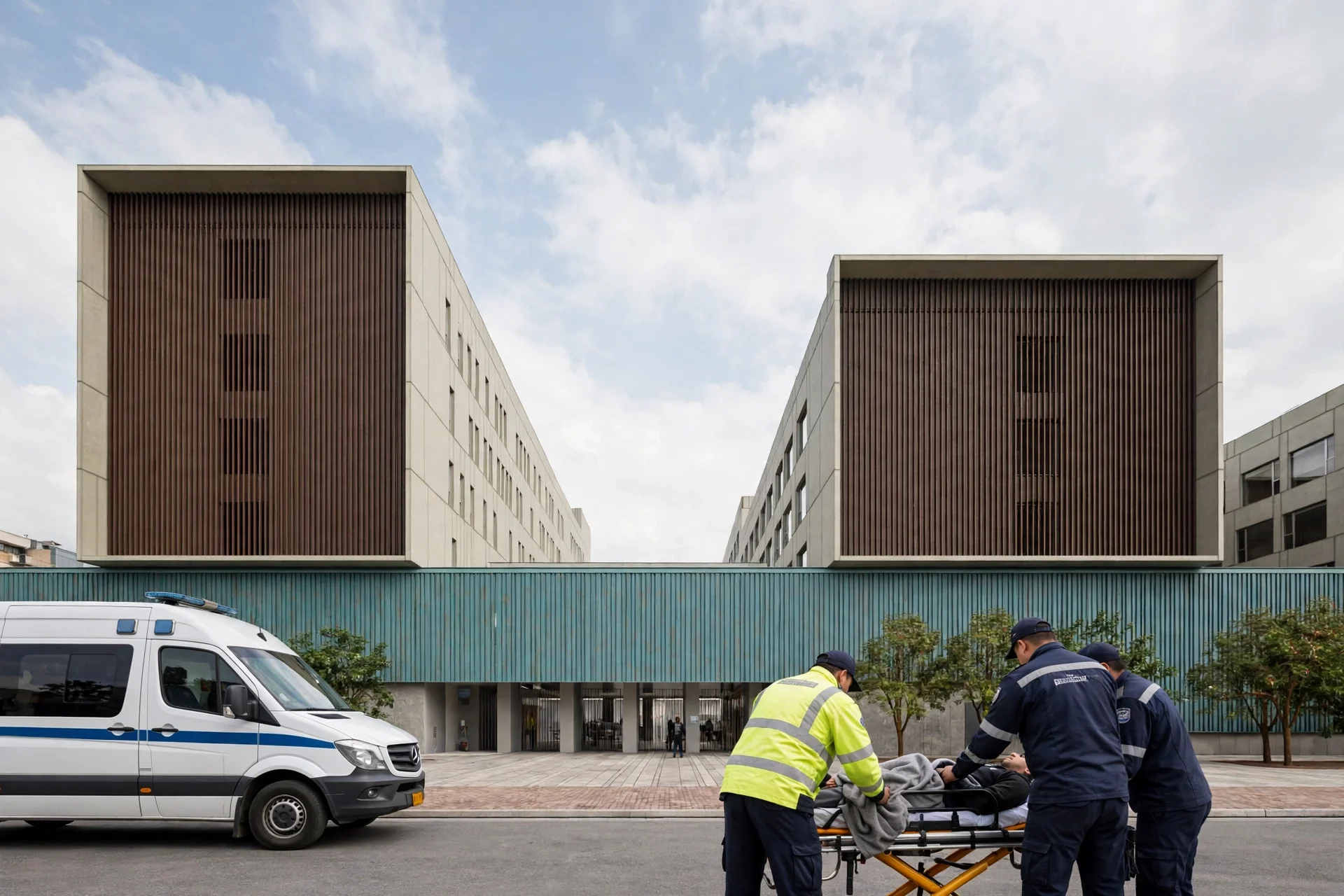
Imagen alusiva: atención de emergencias frente a un hospital de Bogotá. · EPM
Former U.S. Marine found alive in Bogotá after more than three months missing
Aditya Jaikarran, a 32-year-old U.S. citizen and former Marine, was found alive in Bogotá after more than three months missing.
Hospital identification confirms missing former Marine is alive in Bogotá
An official from Migración Colombia recognized Aditya Jaikarran, 32, at Hospital Simón Bolívar after he had been missing since July 9 following his arrival on…
--- The context ---
Aditya Jaikarran, a 32-year-old United States citizen and former member of the U.S. Navy, arrived in Colombia on June 12, 2026, apparently for work reasons. From July 9, his relatives lost all contact with him, starting a search that lasted several weeks with the support of a legal representative.
--- The facts ---
According to the information known about the case, during his disappearance Jaikarran reportedly remained in different areas of Bogotá, even in vulnerable conditions and living on the street. Some people said they had seen him near Parque Nacional and in other parts of the city.
He was found after he suffered a medical emergency inside a supermarket in the capital. According to the account given by his lawyer, Valeria Ponce, he suffered a seizure, emergency services intervened, and he was taken to Hospital Simón Bolívar for care.
--- The positions ---
According to lawyer Valeria Ponce, an official from Migración Colombia was able to recognize him at the hospital by matching his features with information that had circulated publicly about his disappearance. The official contacted the family's legal representative, who went to the hospital to confirm his identity and facilitate contact with his loved ones.
The lawyer also said he was stable and had received care for both his physical condition and his emotional state, and she avoided giving further medical details in view of his right to privacy.
--- What remains unknown ---
The information gathered indicates that Jaikarran reportedly faced different difficulties after losing his job and running out of money to support himself in Colombia. A robbery in the Santa Fe area, where he allegedly lost his personal documents, reportedly made it harder for him to identify himself and contact his family.
He also does not speak Spanish, which reportedly complicated his interaction with others and his chance of receiving help. A prior police procedure in the Los Lagartos neighborhood, related to an incident in a commercial establishment, also became known, without leading his family to his location at the time.
--- Unanswered questions ---
What happened during the months he was missing in Bogotá? How did he manage without documents, without resources and without speaking Spanish? What support will he receive now to protect his recovery and his privacy?
--- EPM analysis ---
His relatives traveled from the United States to Colombia and searched areas such as Santa Fe and Las Cruces, and also went to Medicina Legal seeking information. With no results and facing economic difficulties, they had to return to their country while the lawyer continued the efforts. Public dissemination of the case was decisive in making more citizens aware of his story and alert to any information.
📌 EPM Take: In EPM's view, this outcome shows the extreme vulnerability of a person who loses a job, documents and a common language in an unfamiliar city, and how that combination can push someone onto the street within weeks. It also underlines the value of protecting medical privacy when the source itself calls for restraint, without turning family relief into unnecessary exposure. Recognition at the hospital ended the search, but it leaves a clear lesson about accompaniment, emotional support and timely help networks for someone left unprotected far from home.
--- The context ---
The disappearance of Aditya Jaikarran, a 32-year-old United States citizen and former member of the U.S. Navy, kept his family in uncertainty for more than three months. He had arrived in Colombia on June 12, 2026, apparently for work reasons, and all contact with him was lost from July 9.
--- The facts ---
During that time, Jaikarran reportedly remained in different areas of Bogotá, even in vulnerable conditions and living on the street, according to the information known about the case. Some people said they had seen him near Parque Nacional and in other parts of the city.
The breakthrough began when he suffered a medical emergency inside a supermarket in the capital. According to the account given by his lawyer, Valeria Ponce, he suffered a seizure, emergency services intervened, and he was taken to Hospital Simón Bolívar, where he received medical care.
--- The positions ---
At the hospital, an official from Migración Colombia was able to recognize him by matching his features with information that had circulated publicly about his disappearance. That institutional identification made it possible to notify the family's legal representative, who went to the hospital to confirm that it was Jaikarran and facilitate contact with his loved ones.
The lawyer said the citizen was stable and had received care for his physical condition and his emotional state, without giving additional medical details because of his right to privacy.
--- What remains unknown ---
Among the factors that reportedly influenced his situation were losing his job and lacking economic resources to support himself in Colombia. He also reportedly suffered a robbery in the Santa Fe area, where he allegedly lost his personal documents, which reportedly made it harder to identify himself and communicate.
In addition, he does not speak Spanish, a barrier that reportedly complicated receiving help. A prior police procedure in the Los Lagartos neighborhood, related to an incident in a commercial establishment, also became known, without allowing his family to establish his location at that time.
--- Unanswered questions ---
Why was his whereabouts not established earlier despite that prior record? How will his full identification and reunion with his family now be coordinated? What institutional follow-up will his case receive after this confirmation?
--- EPM analysis ---
The family traveled from the United States, searched areas such as Santa Fe and Las Cruces, and went to Medicina Legal seeking information. With no results and facing economic difficulties, they returned to their country while lawyer Valeria Ponce continued the efforts. Family cooperation and public dissemination of the case kept his search visible until the final recognition.
📌 EPM Take: In EPM's view, the hospital identification demonstrates the practical weight of responsibly disseminating the details of a missing person and of having officials able to cross-check that information at the decisive moment. Without that chain, linking family, legal representation and institution, the discovery could have taken even longer. The case also shows that losing documents abroad cuts off communication and help, so an orderly response and constant cooperation proved decisive in closing three months of uncertainty.
Exmarine estadounidense hallado con vida en Bogotá tras tres meses sin contacto
Aditya Jaikarran, ciudadano estadounidense de 32 años, fue encontrado con vida en Bogotá tras más de tres meses desaparecido.
Reconocen en hospital a exmarine desaparecido en Bogotá y confirman que está vivo
Un funcionario de Migración Colombia reconoció en el Hospital Simón Bolívar a Aditya Jaikarran, de 32 años, desaparecido desde el 9 de julio tras llegar el 12…
--- El contexto ---
Aditya Jaikarran, ciudadano estadounidense de 32 años y antiguo integrante de la Marina de Estados Unidos, llegó a Colombia el 12 de junio de 2026, aparentemente por motivos laborales. Desde el 9 de julio, sus familiares perdieron todo contacto con él y comenzó una búsqueda que se extendió durante varias semanas con apoyo de una representante legal.
--- Los hechos ---
De acuerdo con la información conocida, durante su desaparición Jaikarran habría permanecido en diferentes sectores de Bogotá, incluso en condiciones de vulnerabilidad y habitabilidad en calle. Algunas personas aseguraron haberlo visto en inmediaciones del Parque Nacional y en otros puntos de la ciudad.
El hallazgo ocurrió después de que presentara una emergencia médica al interior de un supermercado. Según el relato entregado por su abogada, Valeria Ponce, el hombre sufrió una convulsión y fue necesaria la intervención de los servicios de emergencia, que lo trasladaron al Hospital Simón Bolívar.
--- Las posiciones ---
Según indicó la abogada Valeria Ponce, en el hospital un funcionario de Migración Colombia logró reconocerlo al relacionar sus características con la información que había circulado públicamente sobre su desaparición. El funcionario se comunicó con la representante legal, quien acudió al centro asistencial para confirmar su identidad y facilitar el contacto con sus seres queridos.
La abogada señaló además que el ciudadano se encontraba estable y que había recibido atención tanto por su condición física como por su estado emocional, y evitó entregar detalles adicionales sobre su situación médica teniendo en cuenta su derecho a la privacidad.
--- Lo que falta saber ---
La información recopilada señala que Jaikarran habría atravesado diferentes dificultades después de perder su empleo y quedarse sin recursos económicos para mantenerse en Colombia. Un robo ocurrido en el sector de Santa Fe, donde presuntamente perdió sus documentos personales, habría dificultado sus posibilidades de identificarse y comunicarse con su familia.
A ello se sumó que no habla español, lo que habría complicado su interacción con otras personas y la posibilidad de recibir ayuda. También se conoció que había tenido un procedimiento policial en el barrio Los Lagartos, relacionado con un incidente en un establecimiento comercial, sin que ese antecedente permitiera ubicarlo en ese momento.
--- Preguntas sin respuesta ---
¿Qué ocurrió durante los meses que estuvo desaparecido en Bogotá? ¿Cómo logró sostenerse sin documentos, sin recursos y sin hablar español? ¿Qué apoyos recibirá ahora para proteger su recuperación y su privacidad?
--- Análisis EPM ---
Sus familiares viajaron desde Estados Unidos hasta Colombia y recorrieron sectores como Santa Fe y Las Cruces, además de acudir a Medicina Legal en busca de información. Ante la falta de resultados y las dificultades económicas, tuvieron que regresar a su país, mientras la abogada continuó las gestiones. La difusión pública del caso fue determinante para que más ciudadanos conocieran su historia y estuvieran atentos.
📌 Conclusion EPM: A juicio de EPM, este desenlace muestra la vulnerabilidad extrema de una persona que pierde empleo, documentos e idioma en una ciudad ajena, y cómo esa combinación puede empujarla a la calle en pocas semanas. También subraya el valor de proteger la privacidad médica cuando la propia fuente pide reserva, sin convertir el alivio familiar en exposición innecesaria. El reconocimiento en el hospital cerró la búsqueda, pero deja una lección clara sobre acompañamiento, apoyo emocional y redes de ayuda oportunas para quien queda desprotegido lejos de casa.
--- El contexto ---
La desaparición de Aditya Jaikarran, ciudadano estadounidense de 32 años y antiguo integrante de la Marina de Estados Unidos, mantuvo en incertidumbre a su familia durante más de tres meses. Había llegado a Colombia el 12 de junio de 2026, aparentemente por motivos laborales, y desde el 9 de julio se perdió todo contacto con él.
--- Los hechos ---
Durante ese tiempo, Jaikarran habría permanecido en diferentes sectores de Bogotá, incluso en condiciones de vulnerabilidad y habitabilidad en calle, según la información conocida sobre el caso. Algunas personas aseguraron haberlo visto en inmediaciones del Parque Nacional y en otros puntos de la ciudad.
El desenlace comenzó cuando presentó una emergencia médica al interior de un supermercado de la capital. Según el relato entregado por su abogada, Valeria Ponce, sufrió una convulsión, intervinieron los servicios de emergencia y fue trasladado al Hospital Simón Bolívar, donde recibió atención médica.
--- Las posiciones ---
En el hospital, un funcionario de Migración Colombia logró reconocerlo al relacionar sus características con la información que había circulado públicamente sobre su desaparición. Esa identificación institucional permitió avisar a la representante legal de la familia, quien acudió al centro asistencial para confirmar que se trataba de Jaikarran y facilitar el contacto con sus seres queridos.
La abogada indicó que el ciudadano se encontraba estable y que había recibido atención por su condición física y por su estado emocional, sin entregar detalles médicos adicionales por su derecho a la privacidad.
--- Lo que falta saber ---
Entre los factores que habrían influido figura la pérdida de su empleo y la falta de recursos económicos para mantenerse en Colombia. También habría sufrido un robo en el sector de Santa Fe, donde presuntamente perdió sus documentos personales, lo que habría dificultado identificarse y comunicarse.
Además, no habla español, barrera que habría complicado recibir ayuda. Se conoció igualmente un procedimiento policial previo en el barrio Los Lagartos, relacionado con un incidente en un establecimiento comercial, que no permitió a sus familiares establecer su ubicación en ese momento.
--- Preguntas sin respuesta ---
¿Qué falló para que su paradero no se estableciera antes pese a ese antecedente? ¿Cómo se coordinará ahora su identificación plena y el reencuentro con su familia? ¿Qué seguimiento institucional tendrá su caso tras la confirmación?
--- Análisis EPM ---
La familia viajó desde Estados Unidos, recorrió sectores como Santa Fe y Las Cruces y acudió a Medicina Legal buscando información. Sin resultados y con dificultades económicas, regresó a su país mientras la abogada Valeria Ponce continuó las gestiones. La cooperación familiar y la difusión pública del caso mantuvieron visible su búsqueda hasta el reconocimiento final.
📌 Conclusion EPM: A juicio de EPM, la identificación en el hospital demuestra el peso práctico de difundir con responsabilidad los datos de una persona desaparecida y de contar con funcionarios capaces de cruzar esa información en el momento decisivo. Sin esa cadena, entre familia, representación legal e institución, el hallazgo pudo tardar aún más. El caso también recuerda que perder documentos en el extranjero corta la comunicación y la ayuda, por lo que la respuesta ordenada y la cooperación constante resultaron determinantes para cerrar tres meses de incertidumbre.