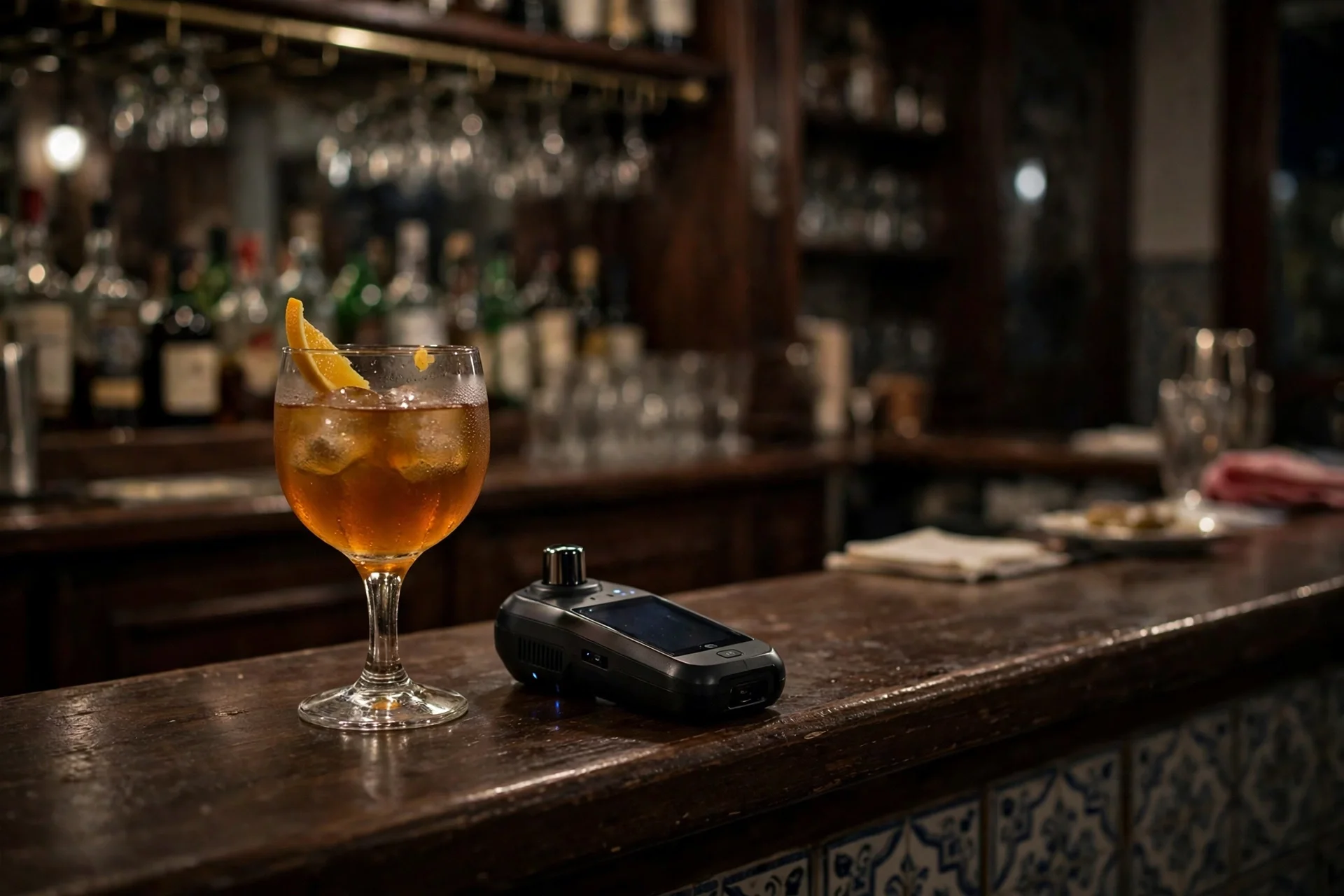
Imagen alusiva: una copa sobre la barra de un local nocturno junto a un dispositivo detector, en referencia a las nuevas herramientas de prevención frente a la sumisión química en el ocio nocturno en España. · EPM
Spain nightlife seeks new tools against chemical submission
Chemical submission is rising in Spain and nightlife is responding with nail stickers that detect GHB, an ice-cube-shaped device that traps the substance and…
Spain strengthens prevention against drink spiking at night
Spain recorded 357 reported sexual assaults involving chemical submission in 2025 and the nightlife sector is responding with nail detectors, a smart ice cube…
--- The context ---
Chemical submission, the use of drugs or medication without consent to override a person's will, alter their consciousness or reduce their capacity to resist in order to commit a crime, usually of a sexual nature, has increased in Spain in recent years. It mainly affects women in party settings, where a drink can slip out of sight for a few moments.
--- The facts ---
Counting the cases is difficult because not all victims report what happened and because, after a certain time, the substance can no longer be detected through laboratory analysis. According to the Ministry of the Interior, 357 sexual assaults involving chemical submission were reported in Spain in 2025. The turning point came in 2022, with 315 cases compared with 65 the previous year, and the figures do not include Catalonia or the Basque Country, where regional police forces run their own systems.
--- The facts ---
Among the responses arriving is Spy nails by Freshia, a decorative nail sticker that changes from yellow to green when it comes into contact with liquid ecstasy or GHB. It comes from the Korean laboratory Philmedi and will be distributed in Spain by the Valencian company Grupo Lizne. It comes in ten designs, is in production after a laboratory at the University of Valladolid certified it as a generic product, and is due to be sold in pharmacies, parapharmacies, perfume shops, drugstores, music festivals, violet points and online.
--- The facts ---
Another initiative is NarXcube, from the Madrid company NarXcup: a device shaped like an ice cube that detects drugs in a drink. On a positive result, its membrane breaks and an absorbent polymer makes the drink bitter, turns it an intense blue colour and gels it into a solid block that traps the substance for analysis. Research began in 2022, it also reacts to scopolamine or burundanga, its sale is expected in 2027 and it has been tested at parties in Pozuelo de Alarcón, Alcorcón, El Casar and Alovera. At the Málaga Fair, more than 3,000 wristbands with sensors were also handed out.
--- The positions ---
The Valencian company itself notes that the sticker is a preliminary test specific to GHB, that it does not detect other drugs and that it does not replace laboratory analysis. It warns that a negative result does not guarantee a drink has not been tampered with and recommends not consuming it at any suspicion and seeking emergency services if necessary.
--- The positions ---
Research carried out this year by the University Observatory of Drug-Facilitated Sexual Violence shows the scale of the silence: 95.7% of young victims who suffered sexual violence through chemical submission in a party or nightlife context do not communicate the fact to health services, psychological services or authorities. Many never report, and others do so late, when the substance is already undetectable.
--- What remains unknown ---
The effective arrival date of the sticker at the announced points of sale is still unknown, as is that of the smart ice cube, expected in 2027. There is no complete picture of the country either, because the official figures exclude Catalonia and the Basque Country, and the real scale remains hidden behind underreporting.
--- Unanswered questions ---
How many assaults remain outside the statistics because the victim never tells anyone? Will these devices be widely available in festivals and venues? What health and psychological support does a person receive when they detect in time that their drink was tampered with?
--- EPM analysis ---
What is new is not only the technology but the shift in approach: detection no longer depends on symptoms afterwards and instead seeks an immediate signal in the drink itself, where time works against the victim. The manufacturers themselves limit their scope and make clear that a preliminary test is not a guarantee.
📌 EPM Take: In EPM's view, shielding nightlife is a necessary response to a form of violence that is growing and that thrives on silence and on the rapid disappearance of evidence. The stickers, wristbands and smart ice cube could give many young women a chance to react in time, but their real value will depend on accessible health care, clear protocols in venues and a party culture where speaking up does not place an extra burden on the victim. Without that support, the technology risks leaving each person alone with the responsibility of defending herself.
--- The context ---
Chemical submission consists of using drugs or medication without consent to override a person's will, alter their consciousness or reduce their capacity to resist and thereby commit a crime, usually of a sexual nature. In Spain it has increased and particularly affects women in party settings, prompting companies and organisers to strengthen nighttime safety.
--- The facts ---
Measurement is incomplete: not all victims report, and after a certain time the substance can no longer be detected through laboratory analysis. Figures from the Ministry of the Interior record 357 sexual assaults involving chemical submission reported in 2025. The jump came in 2022, with 315 cases compared with 65 the previous year, and the official series does not include Catalonia or the Basque Country, with their own regional police systems.
--- The facts ---
One solution on its way is Spy nails by Freshia, a nail sticker that changes from yellow to green on contact with liquid ecstasy or GHB. It comes from the Korean laboratory Philmedi and will be distributed in Spain by the Valencian company Grupo Lizne. As a decorative sticker with ten designs, it is in production after a laboratory at the University of Valladolid certified it as a generic product and is due to be sold in pharmacies, parapharmacies, perfume shops, drugstores, music festivals, violet points and online.
--- The facts ---
In parallel, the Madrid company NarXcup has developed NarXcube, a device shaped like an ice cube that detects drugs in a drink and, on a positive result, breaks its membrane: an absorbent polymer makes the drink bitter, turns it intense blue and gels it into a solid block trapping the substance. Its research began in 2022, it also reacts to scopolamine or burundanga, it has been tested at parties in Pozuelo de Alarcón, Alcorcón, El Casar and Alovera and its sale is expected in 2027. The Málaga Fair also handed out more than 3,000 wristbands with sensors.
--- The positions ---
The Valencian company itself sets out the limits clearly, noting that the sticker is a preliminary test specific to GHB, that it does not detect other drugs and that it does not replace laboratory analysis. It warns that a negative does not guarantee a drink has not been tampered with, so at any suspicion it recommends not consuming it and seeking emergency services if necessary.
--- The positions ---
The other front is late or nonexistent reporting. Research carried out this year by the University Observatory of Drug-Facilitated Sexual Violence concludes that 95.7% of young victims who suffered sexual violence through chemical submission in a party or nightlife context do not communicate the fact to health services, psychological services or authorities. After several hours, the substance becomes undetectable and proving what happened becomes far harder.
--- What remains unknown ---
The effective arrival date of the sticker at the announced channels and the commercial release of the smart ice cube, planned for 2027, remain to be seen. A complete statistical picture is also missing, since state figures exclude Catalonia and the Basque Country, nor how much of the increase is real incidence and how much is cases lost without a report.
--- Unanswered questions ---
Will venues and festivals take on the cost and organisation of making these detectors general? What protocol should venue staff follow when a device flags a positive in the middle of the night? Will preserving the substance in a gelled drink help sustain more reports backed by evidence?
--- EPM analysis ---
Their practical value lies in acting at the only moment when harm can still be prevented: before drinking. A colour change or a drink turned solid and bitter are hard signals to ignore and, in the second case, preserve the substance for analysis, decisive in crimes where evidence fades within hours. Prudence should govern: they are early warning tools, not a free pass.
📌 EPM Take: In EPM's view, Spain is right to take prevention in nightlife seriously, but the order of priorities matters: first the effective safety of people, then the technology that supports it. Detectors can deter, alert and preserve evidence, and they deserve to be extended with honest information about what they do and what they do not do. Ultimate responsibility still lies in pursuing whoever tampers with a drink, in venues acting under firm protocols and in the victim finding a fast and credible response when she asks for help.
El ocio nocturno en España busca blindarse ante la sumisión química
La sumisión química crece en España y el ocio nocturno responde con adhesivos para las uñas que detectan GHB, un dispositivo con forma de cubito de hielo que…
España refuerza la prevención frente a la sumisión química nocturna
España registró 357 agresiones sexuales con sumisión química denunciadas en 2025 y el sector del ocio responde con detectores en las uñas, un cubito de hielo…
--- El contexto ---
La sumisión química, el uso de drogas o fármacos sin consentimiento para anular la voluntad, alterar la conciencia o reducir la capacidad de resistencia de una persona y cometer un delito, normalmente de carácter sexual, ha aumentado en España en los últimos años. Golpea sobre todo a mujeres en contextos festivos, donde una copa puede quedar fuera de la vista unos instantes.
--- Los hechos ---
Contar los casos es difícil porque no todas las víctimas denuncian y porque, pasado cierto tiempo, la sustancia deja de ser detectable mediante análisis de laboratorio. Según el Ministerio del Interior, en 2025 se denunciaron en España 357 agresiones sexuales con sumisión química. La inflexión llegó en 2022, con 315 casos frente a los 65 del año anterior, y las cifras no incorporan a Cataluña ni el País Vasco, con sistemas policiales propios.
--- Los hechos ---
Entre las respuestas que llegan figura Spy nails by Freshia, un adhesivo decorativo para las uñas que cambia de amarillo a verde cuando entra en contacto con éxtasis líquido o GHB. Procede del laboratorio coreano Philmedi y será distribuido en España por la empresa valenciana Grupo Lizne. Cuenta con diez diseños, está en fabricación tras ser certificado como producto genérico por un laboratorio de la Universidad de Valladolid y su venta está prevista en farmacias, parafarmacias, perfumerías, droguerías, festivales de música, puntos violetas e internet.
--- Los hechos ---
Otra iniciativa es NarXcube, de la empresa madrileña NarXcup: un dispositivo con apariencia de cubito de hielo que detecta droga en la copa. Ante un positivo, su membrana se rompe y un polímero absorbente amarga la bebida, la tiñe de un color azul intenso y la gelifica hasta convertirla en un bloque sólido que atrapa la sustancia para su análisis. La investigación comenzó en 2022, reacciona también ante escopolamina o burundanga, su venta se espera en 2027 y ya se ha probado en fiestas de Pozuelo de Alarcón, Alcorcón, El Casar y Alovera. En la Feria de Málaga se repartieron además más de 3.000 pulseras con sensores.
--- Las posiciones ---
Desde la empresa valenciana se recuerda que el adhesivo es una prueba preliminar específica para GHB, que no detecta el resto de drogas y que no sustituye a los análisis de laboratorio. Advierte de que un resultado negativo no garantiza que la bebida no haya sido adulterada y recomienda no consumirla ante cualquier sospecha y acudir a los servicios de emergencia si es necesario.
--- Las posiciones ---
Una investigación de este año del Observatorio Universitario de Violencia Sexual Facilitada por Drogas refleja la dimensión del silencio: el 95,7 % de las víctimas jóvenes que han sufrido violencia sexual por sumisión química en un contexto de fiesta u ocio nocturno no comunica este hecho a los servicios sanitarios, psicológicos o autoridades. Muchas no denuncian y otras lo hacen tarde, cuando ya es indetectable.
--- Lo que falta saber ---
No se conoce aún cuándo llegará el adhesivo a los puntos de venta ni el cubito inteligente, previsto para 2027. Tampoco existe una fotografía completa del país, porque las cifras oficiales excluyen a Cataluña y el País Vasco, y la magnitud real sigue oculta tras la falta de denuncias.
--- Preguntas sin respuesta ---
¿Cuántas agresiones quedan fuera de las estadísticas porque la víctima nunca llega a contarlo? ¿Estarán estos dispositivos disponibles de forma generalizada en festivales y locales? ¿Qué acompañamiento sanitario y psicológico recibe quien detecta a tiempo que su bebida ha sido alterada?
--- Análisis EPM ---
La novedad no está solo en la tecnología, sino en el enfoque: la detección deja de depender de los síntomas posteriores y busca una señal inmediata en la propia copa, donde el tiempo juega en contra de la víctima. Los propios fabricantes acotan su alcance y dejan claro que una prueba preliminar no equivale a una garantía.
📌 Conclusion EPM: A juicio de EPM, el blindaje del ocio nocturno es una respuesta necesaria ante una violencia que crece y se beneficia del silencio y de la desaparición rápida de las pruebas. Adhesivos, pulseras y cubito inteligente pueden dar a muchas jóvenes una oportunidad de reaccionar a tiempo, pero su valor real dependerá de una atención sanitaria accesible, de protocolos claros en los locales y de una cultura de fiesta donde contarlo no sea una carga más para la víctima. Sin ese apoyo, la tecnología corre el riesgo de trasladar a cada persona, en solitario, la responsabilidad de defenderse.
--- El contexto ---
La sumisión química consiste en emplear drogas o fármacos sin consentimiento para anular la voluntad, alterar la conciencia o reducir la capacidad de resistencia de una persona y cometer un delito, normalmente de carácter sexual. En España ha aumentado y afecta especialmente a mujeres en contextos festivos, lo que ha llevado a empresas y organizadores a reforzar la seguridad nocturna.
--- Los hechos ---
La medición es incompleta: no todas las víctimas denuncian y, pasado cierto tiempo, la sustancia ya no puede detectarse mediante análisis de laboratorio. Los datos del Ministerio del Interior recogen 357 agresiones sexuales con sumisión química denunciadas en 2025. El salto se produjo en 2022, con 315 casos frente a los 65 del año anterior, y la serie oficial no incorpora a Cataluña ni el País Vasco, con policías autonómicas y sistemas propios.
--- Los hechos ---
Una solución en camino es Spy nails by Freshia, un adhesivo para las uñas que cambia de amarillo a verde al entrar en contacto con éxtasis líquido o GHB. Procede del laboratorio coreano Philmedi y lo distribuirá en España la empresa valenciana Grupo Lizne. Como pegatina decorativa con diez diseños, está en fabricación tras certificarlo como producto genérico un laboratorio de la Universidad de Valladolid y su venta está prevista en farmacias, parafarmacias, perfumerías, droguerías, festivales de música, puntos violetas e internet.
--- Los hechos ---
En paralelo, la empresa madrileña NarXcup ha desarrollado NarXcube, un dispositivo con apariencia de cubito de hielo que detecta droga en la copa y, ante un positivo, rompe su membrana: un polímero absorbente amarga la bebida, la tiñe de azul intenso y la gelifica en un bloque sólido que atrapa la sustancia. Su investigación comenzó en 2022, reacciona también ante escopolamina o burundanga, se ha probado en fiestas de Pozuelo de Alarcón, Alcorcón, El Casar y Alovera y su venta se espera en 2027. La Feria de Málaga repartió además más de 3.000 pulseras con sensores.
--- Las posiciones ---
La empresa valenciana pone los límites con claridad al señalar que el adhesivo es una prueba preliminar específica para GHB, que no detecta el resto de drogas y que no sustituye a los análisis de laboratorio. También advierte de que un negativo no garantiza que la bebida no haya sido adulterada, por lo que ante cualquier sospecha recomienda no consumirla y acudir a emergencias si es necesario.
--- Las posiciones ---
El otro frente es la denuncia tardía o inexistente. Una investigación de este año del Observatorio Universitario de Violencia Sexual Facilitada por Drogas concluye que el 95,7 % de las víctimas jóvenes que han sufrido violencia sexual por sumisión química en un contexto de fiesta u ocio nocturno no comunica este hecho a los servicios sanitarios, psicológicos o autoridades. Pasadas varias horas, la sustancia se vuelve indetectable y acreditar lo ocurrido se complica.
--- Lo que falta saber ---
Queda por ver cuándo llegará el adhesivo a los canales anunciados y el cubito inteligente, previsto para 2027. Falta también una fotografía estadística completa, dado que las cifras estatales excluyen a Cataluña y el País Vasco, y qué parte del aumento es incidencia real y qué parte son casos perdidos sin denuncia.
--- Preguntas sin respuesta ---
¿Asumirán locales y festivales el coste y la organización de generalizar estos detectores? ¿Qué protocolo debe seguir el personal de un local cuando un dispositivo marca un positivo? ¿Servirá conservar la sustancia en la bebida gelificada para sostener más denuncias con prueba?
--- Análisis EPM ---
Su valor práctico está en actuar en el único momento en que el daño aún puede evitarse: antes de beber. Un cambio de color o una bebida sólida y amarga son señales difíciles de ignorar y, en el segundo caso, conservan la sustancia para su análisis, decisivo en delitos donde la prueba se desvanece en horas. La prudencia debe mandar: son alerta temprana, no un salvoconducto.
📌 Conclusion EPM: A juicio de EPM, España acierta al tomarse en serio la prevención en el ocio nocturno, pero el orden de prioridades importa: primero la seguridad efectiva de las personas, después la tecnología que la apoya. Los detectores pueden disuadir, alertar y conservar pruebas, y merecen extenderse con información honesta sobre lo que hacen y lo que no hacen. La responsabilidad última sigue estando en perseguir a quien adultera una bebida, en que los locales actúen con protocolos firmes y en que la víctima encuentre una respuesta rápida y creíble cuando pide ayuda.