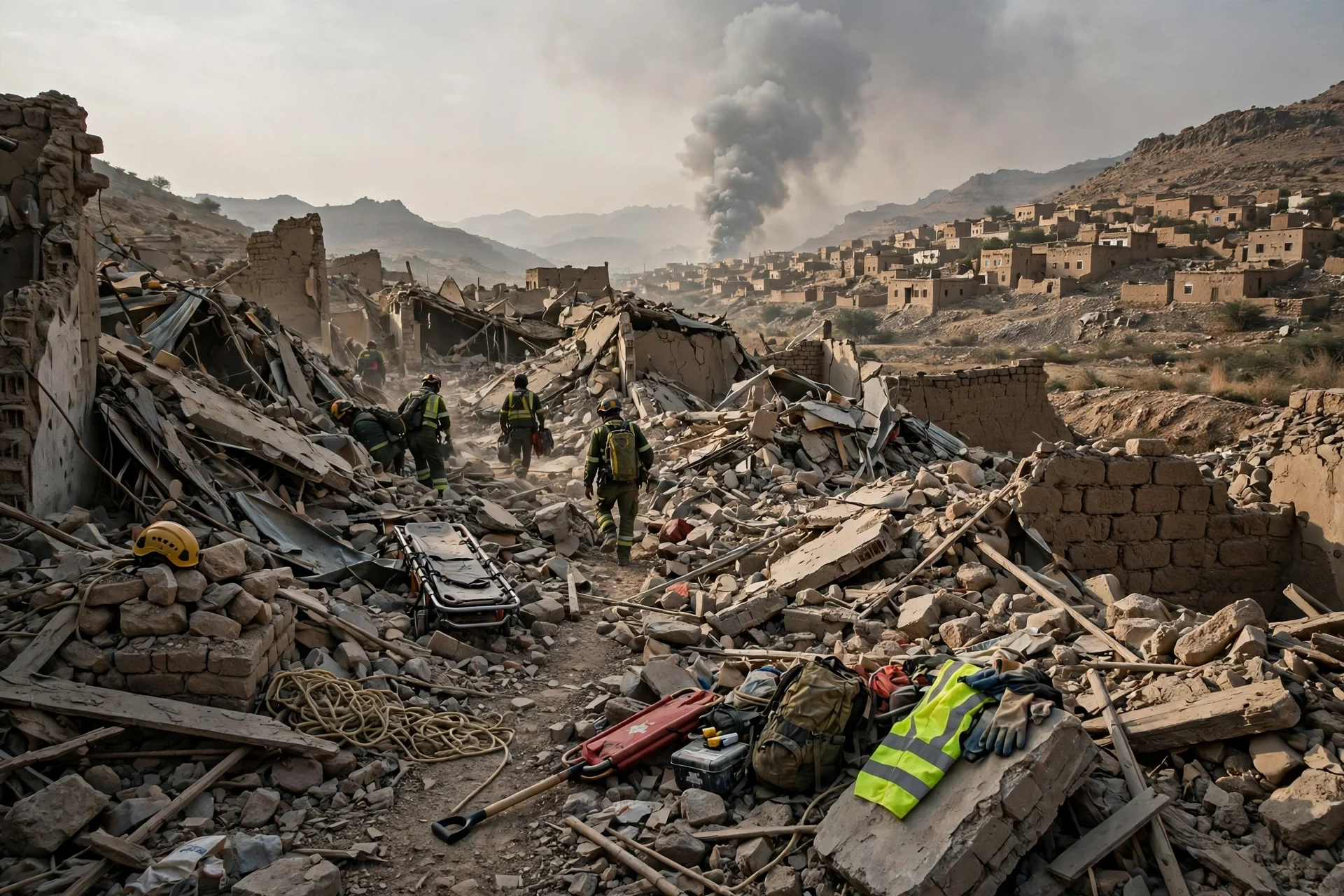
Imagen alusiva: labores de rescate entre escombros tras un bombardeo en Yemen. · EPM
Bombings in Yemen: Houthis raise Al Shariya death toll to 33
Houthi authorities raised to 33 dead and 39 wounded the toll from bombings attributed to the Saudi-led coalition against the village of Al Shariya, in Sanaa…
Yemen: 33 dead in Al Shariya as the civil war flares again
The Houthi health ministry raised to 33 dead and 39 wounded the toll from bombings attributed to the Saudi-led coalition in Al Shariya, Sanaa province, with 12…
--- The context ---
Yemen's civil war, begun in 2014, pits the Houthis, backed by Iran, against government forces supported by Riyadh. Since fighting resumed, the country is again recording episodes of high civilian mortality. According to the UN, more than 1.600 people have died and more than 300.000 have been displaced since hostilities resumed in this impoverished country.
--- The facts ---
Houthi authorities reported on Sunday that bombings attributed to the Saudi-led coalition against the village of Al Shariya, in Sanaa province, left 33 dead and 39 wounded. Anees Alasbahi, spokesman for the Houthi health ministry, detailed that, according to nearly final figures, the dead include 12 men, eight women and 13 children. The previous toll was 27 dead.
The Houthi agency reported on Saturday that work continued to recover victims from the rubble and that aircraft attacked emergency teams twice. A channel linked to the group broadcast images showing smoke over a bombed site, piles of rubble and wounded people in a hospital.
--- The positions ---
On Friday, dozens of people died in a bombing against a market in Taiz, a city besieged for weeks by the Houthis, and government forces and Houthi fighters accused each other of that attack. In September, the Houthis launched an offensive in the west of the country that strengthened their control of the Bab el Mandeb strait, through which merchant ships from Asia bound for Europe transit. Since then, Saudi Arabia has bombed Houthi positions and they have responded with attacks on Saudi soil, including Riyadh's airport.
--- What remains unknown ---
There is no independent confirmation of the toll released by the Houthi authorities, who are a party to the conflict. Nor is responsibility established for the bombing of the Taiz market, the subject of mutual accusations. As long as recovery work continues amid the rubble of Al Shariya, the victim count could change.
--- Unanswered questions ---
Will there be independent verification of the Al Shariya victim toll? Who will answer for the bombing of the Taiz market and for the attacks on emergency teams? Can international pressure halt an escalation that, according to the UN, already leaves more than 1.600 dead and more than 300.000 displaced?
--- EPM analysis ---
The pattern repeats itself: each ground offensive draws an air response and each air response raises the civilian cost. Houthi control of Bab el Mandeb adds a risk that transcends Yemen, because part of the trade between Asia and Europe circulates through that strait. Without a credible mechanism of verification and protection, tolls will keep arriving from a single source and civilians will keep paying the bill for a war begun in 2014.
📌 EPM Take: In EPM's view, the toll reported by the Houthi authorities must be read with the caution that any unverified wartime figure deserves, but also with the gravity it warrants: the reported dead include women and children, and emergency teams were allegedly attacked while rescuing victims. When rescue work becomes a target, war loses every limit. The international community cannot limit itself to counting the dead: it must demand effective protection for Yemen's civilian population.
--- The context ---
Since 2014, Yemen has endured a civil war between the Houthis, backed by Iran, and government forces supported by Riyadh. The resumption of fighting has returned the country to a spiral of bombings and reprisals. According to the UN, more than 1.600 people have died and more than 300.000 have been displaced since hostilities resumed.
--- The facts ---
Anees Alasbahi, spokesman for the Houthi health ministry, reported that bombings attributed to the Saudi-led coalition against the village of Al Shariya, in Sanaa province, left 33 dead and 39 wounded. According to the nearly final figures he released, the dead include 12 men, eight women and 13 children. Earlier, 27 dead had been reported.
The Houthi agency said on Saturday that work to recover victims from the rubble continued and that aircraft attacked emergency teams twice. A channel linked to the group showed images of smoke over a bombed site, piles of rubble and wounded people in a hospital.
--- The positions ---
The escalation has a recent origin: in September, the Houthis launched an offensive in the west of the country and strengthened their control of the Bab el Mandeb strait, the route of merchant ships from Asia to Europe. Since then, Saudi Arabia has bombed Houthi positions and they have responded with attacks on Saudi soil, including Riyadh's airport. On Friday, dozens of people died in a bombing against a market in Taiz, a besieged city for weeks, and both sides accused each other.
--- What remains unknown ---
The toll comes from the Houthi authorities, a belligerent party, and has not been independently confirmed. Responsibility for the attack on the Taiz market is not established either. With recovery work still under way in Al Shariya, the nearly final figures could still be adjusted.
--- Unanswered questions ---
Will the toll of 33 dead and 39 wounded in Al Shariya be confirmed with independent verification? Who attacked the Taiz market and the emergency teams working amid the rubble? How far will the escalation go around Bab el Mandeb, an essential route for trade between Asia and Europe?
--- EPM analysis ---
When an armed group entrenches itself in a strait through which world trade passes and responds with attacks against a civilian airport, a military response becomes predictable. That does not lower the standard for each bombing: precision and the protection of civilians are obligations, not options. But a lasting way out requires dismantling the threat over Bab el Mandeb and cutting the Houthi capacity to turn Yemen into a platform for regional attacks.
📌 EPM Take: In EPM's view, firmness in the face of the Houthi offensive and the protection of civilians are not opposite paths: they are the two obligations of any serious response. The Al Shariya toll, attributed to the Houthi authorities, demands rigorous verification and accountability for every attack, including those committed against emergency teams. And it demands, at the same time, no yielding to a group that threatens a world maritime route and attacks Saudi soil.
Bombardeos en Yemen: hutíes elevan a 33 los muertos en Al Shariya
Las autoridades hutíes elevaron a 33 muertos y 39 heridos el balance de los bombardeos atribuidos a la coalición liderada por Arabia Saudita contra la aldea de…
Yemen: 33 muertos en Al Shariya y una guerra que se reaviva
El Ministerio de Salud hutí elevó a 33 muertos y 39 heridos el balance de los bombardeos atribuidos a la coalición liderada por Arabia Saudita en Al Shariya…
--- El contexto ---
La guerra civil de Yemen, iniciada en 2014, enfrenta a los hutíes, respaldados por Irán, con las fuerzas gubernamentales apoyadas por Riad. Tras la reanudación de los combates, el país vuelve a registrar episodios de alta mortalidad civil. Según la ONU, más de 1.600 personas han muerto y más de 300.000 han sido desplazadas desde que se reanudaron las hostilidades en este empobrecido país.
--- Los hechos ---
Las autoridades hutíes informaron este domingo que los bombardeos atribuidos a la coalición liderada por Arabia Saudita contra la aldea de Al Shariya, en la provincia de Saná, dejaron 33 muertos y 39 heridos. El portavoz del Ministerio de Salud hutí, Anees Alasbahi, detalló que, según las cifras casi definitivas, entre los muertos hay 12 hombres, ocho mujeres y 13 niños. El balance anterior era de 27 muertos.
La agencia hutí informó el sábado que continuaban las labores para recuperar a las víctimas entre los escombros y que aviones atacaron dos veces a los equipos de emergencia. Una cadena vinculada al grupo difundió imágenes en las que se veía humo sobre un lugar bombardeado, montones de escombros y personas heridas en un hospital.
--- Las posiciones ---
El viernes, decenas de personas murieron en un bombardeo contra un mercado de Taiz, ciudad cercada desde hace semanas por los hutíes, y las fuerzas gubernamentales y los combatientes hutíes se acusaron mutuamente de ese ataque. En septiembre, los hutíes lanzaron una ofensiva en el oeste del país que reforzó su control del estrecho de Bab el Mandeb, por donde transitan los buques mercantes de Asia hacia Europa. Desde entonces, Arabia Saudita bombardea posiciones hutíes y estos han respondido con ataques en suelo saudita, incluido el aeropuerto de Riad.
--- Lo que falta saber ---
No existe confirmación independiente del balance difundido por las autoridades hutíes, que son parte del conflicto. Tampoco está establecida la autoría del bombardeo del mercado de Taiz, objeto de acusaciones cruzadas. Mientras sigan las labores de recuperación entre los escombros de Al Shariya, el número de víctimas podría variar.
--- Preguntas sin respuesta ---
¿Habrá una verificación independiente del balance de víctimas de Al Shariya? ¿Quién responderá por el bombardeo del mercado de Taiz y por los ataques contra los equipos de emergencia? ¿Puede la presión internacional frenar una escalada que, según la ONU, ya deja más de 1.600 muertos y más de 300.000 desplazados?
--- Análisis EPM ---
El patrón se repite: cada ofensiva sobre el terreno recibe una respuesta aérea y cada respuesta aérea eleva el coste civil. El control hutí de Bab el Mandeb añade un riesgo que trasciende a Yemen, porque por ese estrecho circula parte del comercio entre Asia y Europa. Sin un mecanismo creíble de verificación y protección, los balances seguirán llegando desde una sola fuente y los civiles seguirán pagando la factura de una guerra iniciada en 2014.
📌 Conclusion EPM: A juicio de EPM, el balance atribuido a las autoridades hutíes debe leerse con la cautela que exige toda cifra de guerra sin verificación independiente, pero también con la gravedad que merece: entre los muertos reportados hay mujeres y niños, y los equipos de emergencia habrían sido atacados mientras rescataban víctimas. Cuando el rescate se convierte en objetivo, la guerra pierde cualquier límite. La comunidad internacional no puede limitarse a contar muertos: debe exigir protección efectiva para la población civil yemení.
--- El contexto ---
Yemen arrastra desde 2014 una guerra civil entre los hutíes, respaldados por Irán, y las fuerzas gubernamentales apoyadas por Riad. La reanudación de los combates ha devuelto al país a una espiral de bombardeos y represalias. Según la ONU, más de 1.600 personas han muerto y más de 300.000 han sido desplazadas desde que se reanudaron las hostilidades.
--- Los hechos ---
El portavoz del Ministerio de Salud hutí, Anees Alasbahi, informó que los bombardeos atribuidos a la coalición liderada por Arabia Saudita contra la aldea de Al Shariya, en la provincia de Saná, dejaron 33 muertos y 39 heridos. Según las cifras casi definitivas que difundió, entre los muertos hay 12 hombres, ocho mujeres y 13 niños. Antes se habían reportado 27 muertos.
La agencia hutí señaló el sábado que seguían las labores de recuperación de víctimas entre los escombros y que aviones atacaron dos veces a los equipos de emergencia. Una cadena vinculada al grupo mostró imágenes de humo sobre un lugar bombardeado, montones de escombros y personas heridas en un hospital.
--- Las posiciones ---
La escalada tiene un origen reciente: en septiembre, los hutíes lanzaron una ofensiva en el oeste del país y reforzaron su control del estrecho de Bab el Mandeb, ruta de los buques mercantes de Asia hacia Europa. Desde entonces, Arabia Saudita bombardea posiciones hutíes y estos han respondido con ataques en suelo saudita, incluido el aeropuerto de Riad. El viernes, decenas de personas murieron en un bombardeo contra un mercado de Taiz, ciudad cercada desde hace semanas, y ambos bandos se acusaron mutuamente.
--- Lo que falta saber ---
El balance procede de las autoridades hutíes, parte beligerante, y no ha sido confirmado de forma independiente. La autoría del ataque contra el mercado de Taiz tampoco está establecida. Con las labores de recuperación aún en curso en Al Shariya, las cifras casi definitivas podrían sufrir ajustes.
--- Preguntas sin respuesta ---
¿Se confirmará con verificación independiente el balance de 33 muertos y 39 heridos en Al Shariya? ¿Quién atacó el mercado de Taiz y a los equipos de emergencia que trabajaban entre los escombros? ¿Hasta dónde llegará la escalada en torno a Bab el Mandeb, una ruta esencial para el comercio entre Asia y Europa?
--- Análisis EPM ---
Cuando un grupo armado se atrinchera en un estrecho por el que pasa el comercio mundial y responde con ataques contra un aeropuerto civil, la respuesta militar se vuelve previsible. Eso no rebaja la exigencia sobre cada bombardeo: la precisión y la protección de civiles son obligaciones, no opciones. Pero la salida de fondo exige desarmar la amenaza sobre Bab el Mandeb y cortar la capacidad hutí de convertir Yemen en plataforma de ataques regionales.
📌 Conclusion EPM: A juicio de EPM, la firmeza frente a la ofensiva hutí y la protección de los civiles no son caminos opuestos: son las dos obligaciones de cualquier respuesta seria. El balance de Al Shariya, atribuido a las autoridades hutíes, exige verificación rigurosa y rendición de cuentas por cada ataque, incluidos los cometidos contra equipos de emergencia. Y exige, al mismo tiempo, no ceder ante un grupo que amenaza una ruta marítima mundial y ataca suelo saudita.