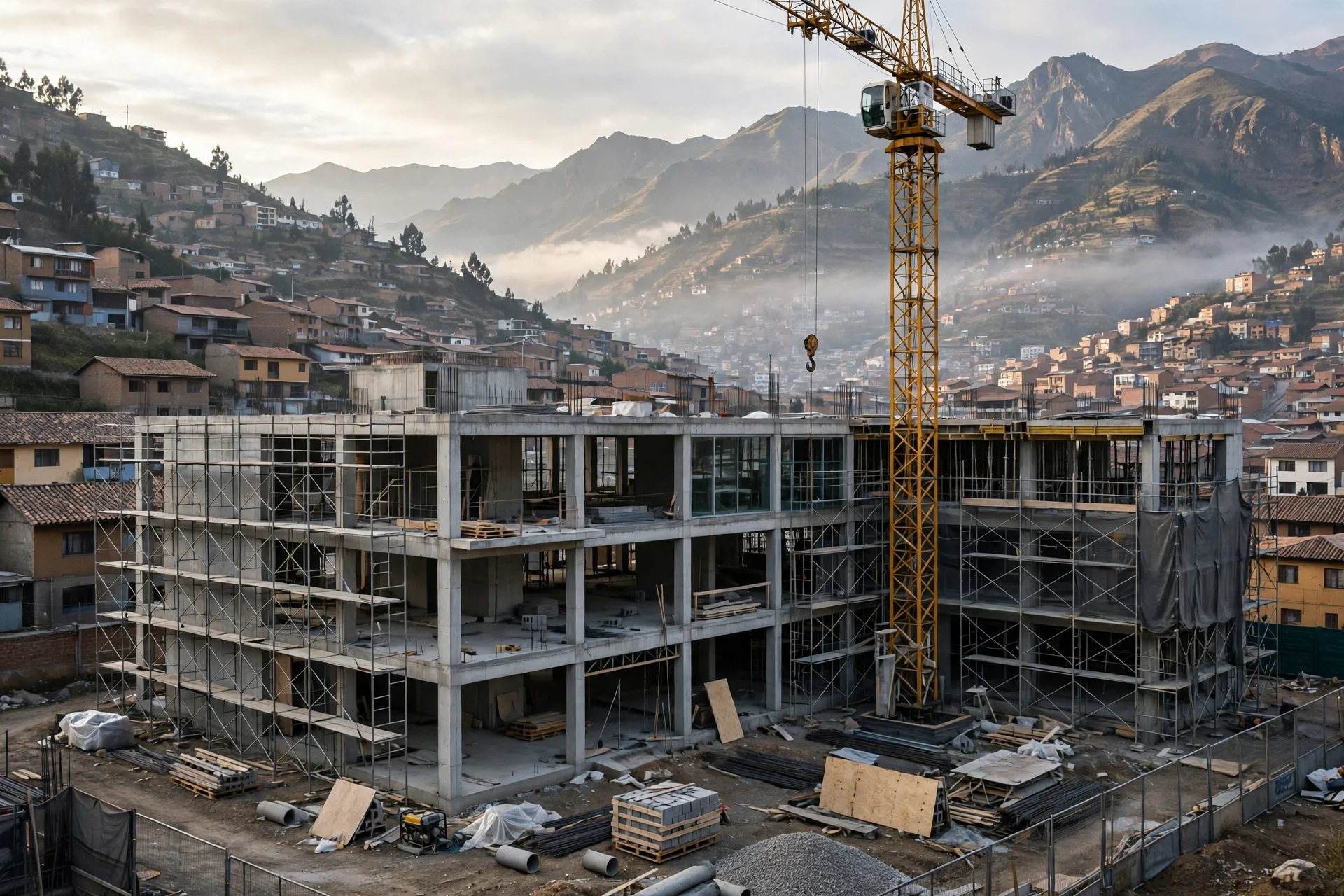
Imagen alusiva de un colegio nuevo en construcción. · EPM
Agreement worth 887.000 millones for 13 schools in Soacha and Cali
The National Government confirmed an agreement between the ANI and the Ministry of Education to structure 13 schools in Soacha and Cali for 887.000 millones de…
ANI and Education to structure 13 schools in Soacha and Cali
The ANI and the Ministry of Education signed an agreement worth 887.000 millones de pesos for six new schools in Soacha and the reconstruction of seven in Cali…
--- The context ---
Educational gaps in Colombia are also gaps in buildings: some territories lack new schools while others need existing campuses rebuilt. Soacha needs new capacity for preschool, primary and secondary education, and Cali needs to replace existing institutions. Against that backdrop, the National Government confirmed an alliance between the National Infrastructure Agency (ANI) and the Ministry of Education.
--- The facts ---
The National Government, in a statement led by spokesperson Miller Soto, confirmed the agreement between the National Infrastructure Agency (ANI) and the Ministry of Education to structure 13 schools in Soacha and Cali, with an estimated investment of 887.000 millones de pesos. The agreement was signed on October 21 by ANI president Ricardo Ayerbe and Education Minister Ilba Miriam Hoyos, in order to close educational gaps.
The project will be carried out under a Public-Private Partnership scheme, known as APP: a private actor will design, build and maintain the schools, and the State will pay over the years for each building ready and in good condition. In Soacha, six new schools are planned, among them Prado Vega, Torrentes and Ciudadela Sucre, with 467.000 millones de pesos, benefit for 7.680 students and impact on more than 100.000 people nearby. In Cali, seven existing institutions will be rebuilt, among them Juan Pablo II and La Buitrera, with 420.000 millones de pesos and 6.700 student beneficiaries. In total, more than 14.300 young people will benefit.
--- The positions ---
The Government's position is that the agreement begins joint work between the ANI and the Ministry of Education to close educational gaps. The Government also emphasized that it will not sell false illusions: technical structuring, contract signing and execution still lie ahead, and delivery dates will be announced when real timelines exist.
--- What remains unknown ---
The technical structuring, the signing of the contracts and the start of execution are still pending. No delivery dates were announced, and schedules school by school were not detailed.
--- Unanswered questions ---
When will the contracts be signed? In what order will the Soacha schools be built and the Cali schools rebuilt? When will the real delivery dates be announced? How will it be verified that every building remains in good condition?
--- EPM analysis ---
What matters is the pairing of capacities: an infrastructure agency structures schools together with the education ministry, and public payment is tied to buildings that are ready and well maintained. For families, the effect will be measured in school places and surroundings reaching more than 100.000 people.
📌 EPM Take: In EPM's view, this agreement places educational infrastructure at the center of public investment with a concrete figure, 887.000 millones de pesos, and with counted beneficiaries in Soacha and Cali. The Public-Private Partnership scheme can work if maintenance is protected as firmly as construction and if every contract is signed with verifiable timelines. The promise not to sell false illusions calls for strict tracking, school by school, until more than 14.300 young people are actually studying in the announced new and rebuilt campuses.
--- The context ---
The quality of a school also begins with its building: safe classrooms, complete facilities and permanent maintenance. Soacha needs new campuses for preschool, primary and secondary education, while Cali needs existing institutions replaced and rebuilt. With that double need, the National Government confirmed an agreement between the National Infrastructure Agency (ANI) and the Ministry of Education to structure 13 schools.
--- The facts ---
According to the statement led by spokesperson Miller Soto, the agreement was signed on October 21 by ANI president Ricardo Ayerbe and Education Minister Ilba Miriam Hoyos, with an estimated investment of 887.000 millones de pesos. It will be carried out under a Public-Private Partnership scheme, known as APP: a private actor will design, build and maintain the schools, and the State will pay over the years for each building ready and in good condition.
In Soacha, six new schools will be built, among them Prado Vega, Torrentes and Ciudadela Sucre, with 467.000 millones de pesos, benefit for 7.680 students and impact on more than 100.000 people nearby. In Cali, seven existing institutions will be rebuilt, among them Santa Rosa and Santo Tomás, with 420.000 millones de pesos and 6.700 student beneficiaries. Combined, more than 14.300 young people will benefit.
--- The positions ---
The National Government held that the agreement seeks to close educational gaps and marks the start of joint work between the two entities. It also set out a position of prudence: although the agreement is already signed and the resources secured, it will not sell false illusions to citizens, because technical structuring and signed contracts come first.
--- What remains unknown ---
The process will continue with technical structuring, the signing of the contracts and the physical execution of the works. Delivery dates will be announced only when the contracts are signed and real execution timelines are available. The announcement did not detail the individual schedule of each school.
--- Unanswered questions ---
When will the contracts be signed and with what real execution timelines? Which Soacha campus will be built first and which Cali school will be rebuilt first? What controls will guarantee maintenance during every year of the scheme? When will families learn the definitive delivery dates?
--- EPM analysis ---
The value of the scheme lies in its discipline: whoever builds also maintains, and the State pays for a building that is ready and in good condition over the years, not merely for an inaugurated work. That rule aligns incentives and protects the investment over time.
📌 EPM Take: In EPM's view, the agreement between the ANI and the Ministry of Education is an orderly decision because it joins investment, maintenance and prudence in announcements. The 467.000 millones de pesos for Soacha and the 420.000 millones de pesos for Cali must result in finished, cared-for schools measured by their 14.300 direct young beneficiaries. Follow-up must be firm and public, contract by contract, so that the discipline of the scheme is honored from technical structuring to the last verified delivery on the ground.
Acuerdo por 887.000 millones para 13 colegios en Soacha y Cali
El Gobierno Nacional confirmó el acuerdo entre la ANI y el Ministerio de Educación para estructurar 13 colegios en Soacha y Cali con 887.000 millones de pesos…
ANI y Educación estructurarán 13 colegios en Soacha y Cali
La ANI y el Ministerio de Educación firmaron un acuerdo por 887.000 millones de pesos para seis colegios nuevos en Soacha y la reconstrucción de siete en Cali…
--- El contexto ---
Colombia arrastra brechas educativas que también se notan en los edificios: en unos territorios faltan colegios nuevos y en otros los planteles necesitan reconstrucción. Soacha requiere más capacidad para preescolar, básica primaria y media, y Cali necesita reponer instituciones existentes. En ese escenario, el Gobierno Nacional confirmó una alianza entre la Agencia Nacional de Infraestructura y el Ministerio de Educación.
--- Los hechos ---
El Gobierno Nacional, en un pronunciamiento liderado por el vocero Miller Soto, confirmó el acuerdo entre la Agencia Nacional de Infraestructura (ANI) y el Ministerio de Educación para estructurar 13 colegios en Soacha y Cali, con una inversión estimada de 887.000 millones de pesos. El acuerdo lo suscribieron el pasado 21 de octubre el presidente de la ANI, Ricardo Ayerbe, y la ministra de Educación, Ilba Miriam Hoyos, para cerrar brechas educativas.
El proyecto se ejecutará bajo el esquema de Asociación Público-Privada (APP): un actor particular diseñará, construirá y mantendrá los colegios, y el Estado pagará a lo largo de los años por la edificación lista y en buen estado. En Soacha se proyectan seis colegios nuevos, entre ellos Prado Vega, Torrentes y Ciudadela Sucre, con 467.000 millones de pesos, beneficio para 7.680 estudiantes e impacto en más de 100.000 personas del entorno. En Cali se reconstruirán siete instituciones, entre ellas Juan Pablo II y La Buitrera, con 420.000 millones de pesos y 6.700 estudiantes beneficiados. En total serán más de 14.300 jóvenes beneficiados.
--- Las posiciones ---
La posición del Gobierno es que el acuerdo inicia un trabajo articulado entre la ANI y el Ministerio de Educación para cerrar brechas educativas. El Gobierno enfatizó que no venderá falsas ilusiones: todavía siguen la estructuración técnica, la firma de los contratos y la ejecución, y las fechas se anunciarán cuando existan tiempos reales.
--- Lo que falta saber ---
Faltan la estructuración técnica, la firma de los contratos y el inicio de la ejecución. Las fechas de entrega no fueron anunciadas y tampoco se detallaron cronogramas por colegio.
--- Preguntas sin respuesta ---
¿Cuándo se firmarán los contratos? ¿En qué orden se construirán los colegios de Soacha y se reconstruirán los de Cali? ¿Cuándo se anunciarán las fechas reales de entrega? ¿Cómo se verificará que cada edificación se mantiene en buen estado?
--- Análisis EPM ---
Lo relevante es el cruce de capacidades: una agencia de infraestructura estructura colegios junto al Ministerio de Educación y el pago estatal queda ligado a edificios listos y bien mantenidos. Para las familias, el efecto se medirá en cupos y entornos que impactan a más de 100.000 personas.
📌 Conclusion EPM: A juicio de EPM, este acuerdo pone la infraestructura educativa en el centro de la inversión pública con una cifra concreta, 887.000 millones de pesos, y con beneficiarios contados en Soacha y en Cali. El esquema de Asociación Público-Privada puede servir si el mantenimiento queda tan protegido como la construcción y si cada contrato se firma con tiempos verificables. La promesa de no vender falsas ilusiones obliga a un seguimiento estricto, colegio por colegio, hasta que más de 14.300 jóvenes estudien efectivamente en las nuevas y reconstruidas sedes anunciadas.
--- El contexto ---
La calidad de un colegio también empieza por su edificio: aulas seguras, espacios completos y mantenimiento permanente. Soacha necesita planteles nuevos para preescolar, básica primaria y media, y Cali necesita reponer instituciones existentes. Con esa doble necesidad, el Gobierno Nacional confirmó un acuerdo entre la Agencia Nacional de Infraestructura (ANI) y el Ministerio de Educación.
--- Los hechos ---
Según el pronunciamiento liderado por el vocero Miller Soto, el acuerdo fue suscrito el pasado 21 de octubre por el presidente de la ANI, Ricardo Ayerbe, y la ministra de Educación, Ilba Miriam Hoyos, con una inversión estimada de 887.000 millones de pesos. Se ejecutará bajo el esquema de Asociación Público-Privada (APP): un actor particular diseñará, construirá y mantendrá los colegios, y el Estado pagará a lo largo de los años por la edificación lista y en buen estado.
En Soacha se construirán seis colegios nuevos, entre ellos Prado Vega, Torrentes y Ciudadela Sucre, con 467.000 millones de pesos, beneficio para 7.680 estudiantes e impacto en más de 100.000 personas del entorno. En Cali se reconstruirán siete instituciones, entre ellas Santa Rosa y Santo Tomás, con 420.000 millones de pesos y 6.700 estudiantes beneficiados. Sumadas ambas ciudades, más de 14.300 jóvenes se verán beneficiados.
--- Las posiciones ---
El Gobierno Nacional sostuvo que el acuerdo busca cerrar las brechas educativas y marca el inicio de un trabajo articulado entre las dos entidades. También dejó una posición de prudencia: aunque el acuerdo ya está firmado y los recursos asegurados, no se venderán falsas ilusiones a los ciudadanos, porque primero vienen la estructuración técnica y los contratos firmados.
--- Lo que falta saber ---
El proceso continuará con la estructuración técnica, la firma de los contratos y la ejecución física. Las fechas de entrega se anunciarán únicamente cuando los contratos estén firmados y se cuente con tiempos reales de ejecución. El anuncio no detalló el cronograma individual de cada colegio.
--- Preguntas sin respuesta ---
¿Cuándo estarán firmados los contratos y con qué tiempos reales de ejecución? ¿Qué plantel de Soacha se construirá primero y cuál de Cali se reconstruirá primero? ¿Qué controles garantizarán el mantenimiento durante todos los años del esquema? ¿Cuándo conocerán las familias las fechas definitivas de entrega?
--- Análisis EPM ---
El valor del esquema está en su disciplina: quien construye también mantiene, y el Estado paga por una edificación lista y en buen estado a lo largo de los años, no solo por una obra inaugurada. Esa regla alinea incentivos y protege la inversión en el tiempo.
📌 Conclusion EPM: A juicio de EPM, el acuerdo entre la ANI y el Ministerio de Educación es una decisión ordenada porque une inversión, mantenimiento y prudencia en los anuncios. Los 467.000 millones de pesos para Soacha y los 420.000 millones de pesos para Cali deben traducirse en colegios terminados, cuidados y medibles por sus 14.300 jóvenes beneficiados directos. El seguimiento debe ser firme y público, contrato por contrato, para que la disciplina del esquema se cumpla desde la estructuración técnica hasta la última entrega verificada en territorio.