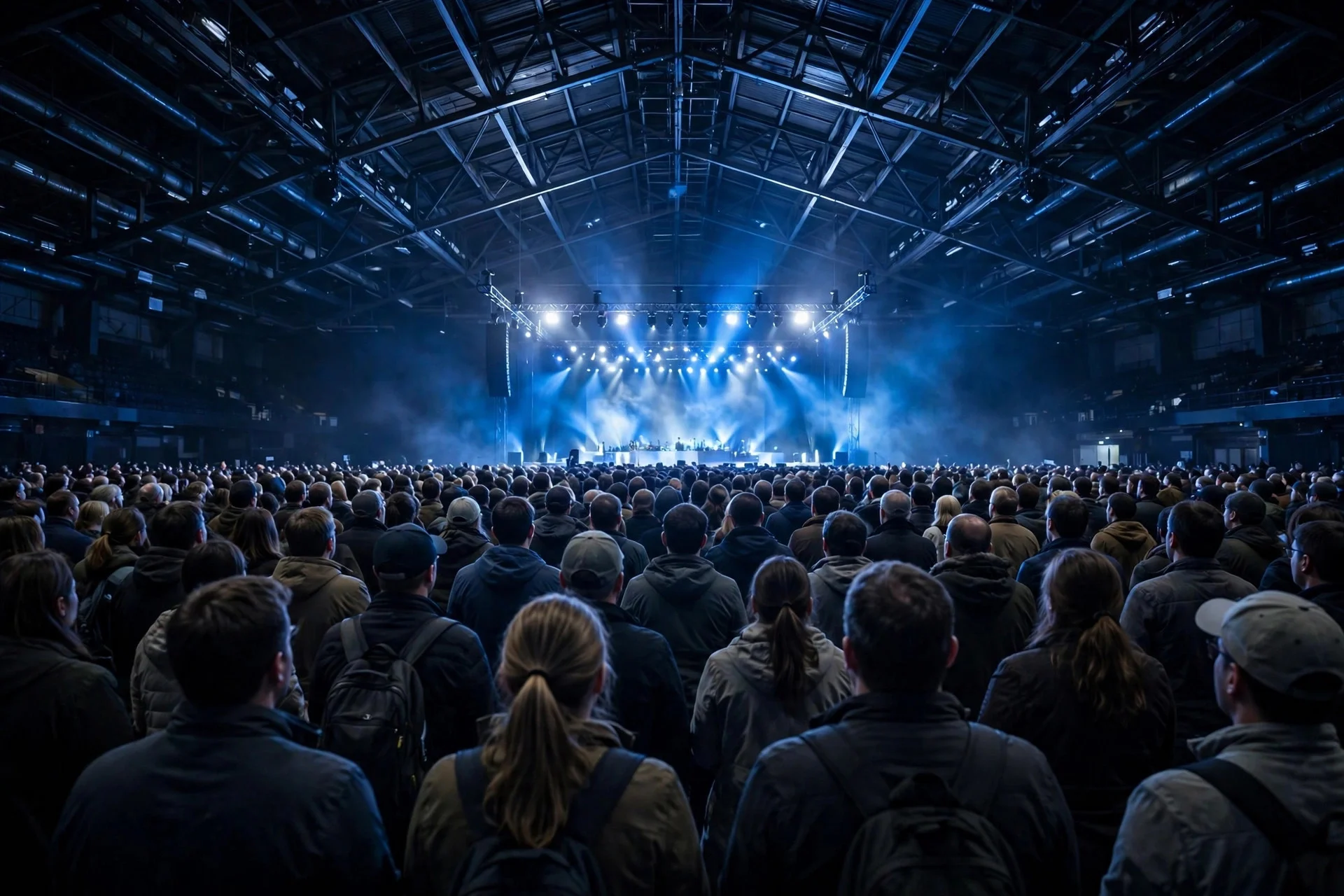
Imagen alusiva de un mitin en un pabellón cubierto. · Imagen generada por EPM
Feijóo fills Málaga hall and pledges rail review
Alberto Núñez Feijóo drew 6,000 people at the Carranque pavilion in Málaga, remembered the 115 victims of Urda and Adamuz, promised a full rail review and…
Feijóo sells management record in Málaga rally
Feijóo drew 6,000 people at Carranque, defended his 30 years of management, guaranteed pensions and demanded the return of money from resigned Adif executives…
--- The context ---
Spain heads into the pre-campaign for the 29-N elections with the rail accidents at Urda and Adamuz at the center of public debate. In nine months, two high-speed disasters left 115 victims and opened an argument about network safety, infrastructure management and the responsibility of those who run it. In that climate, the PP candidate for prime minister, Alberto Núñez Feijóo, chose Málaga and its Carranque pavilion for a mass rally in a region that will be decisive at the ballot box.
--- The facts ---
The event drew 6,000 people this Sunday at the Carranque pavilion in the Málaga capital. Feijóo kept up his line of criticism over the Urda and Adamuz accidents, which he described as continued negligence, remembered the 115 victims of the two disasters and offered a special condolence for former minister Fátima Báñez, from Huelva, who died in the latest rail accident. The candidate proclaimed that he had come to lift Spain up and presented himself as a manager against a progressive term that he identified with corruption, waste and decadence.
On rail policy, he promised to review rail transport inch by inch so that fear disappears and safety returns, and said he would check every sleeper on the network. After criticizing the money given to the resigned executives of Adif, the company responsible for rail infrastructure, he demanded that they return it and that the money be used to compensate the victims of the disasters. He also replied that Spain must look less abroad and more at its own problems, look less at Brazil and more at how to fill the fridge with basic food, and look less at Trump and more at the trains, because the country, he argued, is collapsed and does not work.
--- The positions ---
Feijóo defended his record as his best speech: 30 years managing public affairs at the head of the Xunta de Galicia and previously in the administration. He said he wants to give the country back its hope, that he knows how to govern for those who vote for him and those who do not, and that voters should expect work, service and honesty from him, without frivolity or raised voices. To disarm left-wing arguments against the PP, he insisted that he will maintain and revalue pensions, and reproached the left for drawing parallels between the 29-N vote and the defeats of Donald Trump's party in the United States or the victory of Lula da Silva in Brazil.
The Andalusian president, Juan Manuel Moreno, backed the candidate and asked for the support of socialists disappointed with the government, appealing to patriotism, ethics and honesty, and asking whether Pedro Sánchez deserves four more years at the head of Spain. Moreno also argued that the socialist government has punished Andalusia for voting PP in the last five years and that the shortcomings in investment and infrastructure are no coincidence. Feijóo, for his part, identified Sánchez's term with corruption and immorality and named Koldo García, José Luis Ábalos, Santos Cerdán, Leire Díez, José Luis Rodríguez Zapatero and Óscar Puente as the protagonists of the most relevant cases, promising that everything will be known and cleaned up.
--- What remains unknown ---
It is still unknown how the full rail review promised by Feijóo would be carried out, what timetable or cost checking every sleeper would have, or whether the resigned Adif executives will return the money demanded for the victims. Nor is the concrete scope of his proposals on housing, inflation and fair taxation clear, beyond the priorities listed at the rally.
--- Unanswered questions ---
Will the promised rail review become a plan with deadlines, a budget and identifiable responsibility before 29-N? Will the resigned Adif executives return the money demanded and will it reach the families of the 115 victims as compensation? Will Moreno's appeal to disappointed socialists move votes in an Andalusia that elects 60 deputies and 32 senators?
--- EPM analysis ---
Andalusia holds the largest electoral prize of 29-N, with 60 deputies and 32 senators at stake, and Málaga is a PP stronghold where the party has won the last five elections and governs the region since 2019. Also present was Francisco de la Torre, who has spent 26 of his 84 years as mayor of Málaga. The PP looks left and right: it aims to grow against the PSOE while defending its space against the growth of Vox shown by the polls, the party with which Moreno governs in the Junta and which he avoided mentioning.
📌 EPM Take: In EPM's view, the Carranque rally organizes Feijóo's campaign around two measurable promises, rail safety after 115 victims and management as a guarantee after 30 years of record, and that raises the bar of his own demands. If the network review and the return of the Adif executives' money remain mere proclamation, the discourse of efficiency will turn against its author. If they take shape as a plan and a timetable, the candidate will have turned the pain of Urda and Adamuz into a verifiable commitment before the voters.
--- The context ---
The Málaga rally sets the tone with which the PP faces the 29-N pre-campaign: order, management and clear accounts against a term that its candidate identifies with corruption, waste and decadence. The chosen venue, the Carranque pavilion, and the moment, with the Urda and Adamuz accidents still present after leaving 115 victims in nine months, make rail safety the first credibility test for any alternative government that aspires to make things work.
--- The facts ---
Alberto Núñez Feijóo drew 6,000 people this Sunday at the Carranque pavilion in Málaga. The PP candidate remembered the 115 victims of the two high-speed disasters in nine months and offered a special condolence for former minister Fátima Báñez, from Huelva, who died in the latest rail accident. He described the Urda and Adamuz accidents as continued negligence and proclaimed that he had come to lift Spain up, presenting himself as a manager against the outgoing progressive term.
His rail commitment was concrete: he promised to review rail transport inch by inch so that there is no fear and safety returns, and to check every sleeper on the network. In the same passage he demanded that the resigned executives of Adif, the company responsible for rail infrastructure, return the money received and that it be used to compensate the victims. And he replied to those who look abroad that Spain's own problems must come first, looking less at Brazil and more at how to fill the fridge with basic food, and less at Trump and more at the trains, because the country is collapsed and does not work.
--- The positions ---
The candidate grounded his offer in his trajectory: 30 years managing public affairs, at the head of the Xunta de Galicia and previously in the administration. He said that record is his speech, that he wants to give the country back its hope, that he knows how to govern for those who vote for him and those who do not, and that the more he governed, the more support he received. He asked to be held to account and to be expected to deliver work, service and honesty, without frivolity or raised voices. On the economy, he defended proposals to tackle the housing problem, fight inflation and establish fair taxation, rebutted the official macroeconomic data by arguing that GDP cannot be eaten, and stressed the need to recover household economies and make ends meet.
His listed priorities were ordering the borders, safety to go out into the streets, finding out how far the plunder of these years has gone, more doctors, credibility, making things work and safe trains. He also guaranteed that he will maintain and revalue pensions, to disarm left-wing arguments against the PP. And he again identified Pedro Sánchez's term with corruption and immorality, naming Koldo García, José Luis Ábalos, Santos Cerdán, Leire Díez, José Luis Rodríguez Zapatero and Óscar Puente, with the promise that everything will be known and cleaned up, and that everything will be repaired so that it works again.
--- What remains unknown ---
It remains to be known with what instruments and in what timeframe the full network review would be carried out, and whether the resigned Adif executives will return the money demanded for victim compensation. The concrete content of the housing, inflation and fair taxation proposals announced in Málaga has not yet been detailed either. Those developments separate a government program from a list of intentions.
--- Unanswered questions ---
Will the PP present before 29-N the complete rail plan backing the promise to check every sleeper? Will the resigned Adif executives agree to return the money and will it effectively go to compensate the victims of Urda and Adamuz? Will Andalusia, which elects 60 deputies and 32 senators, keep the support that has the PP governing since 2019 against the push of Vox shown by the polls?
--- EPM analysis ---
The Andalusian dimension is not minor: the region elects 60 deputies and 32 senators, the most seats at stake on 29-N, and Málaga is a PP stronghold, winner in the last five elections in the province. Juan Manuel Moreno, the Andalusian president and an influential baron in Génova, asked for the support of disappointed socialists, avoided mentioning Vox, with whom he governs in the Junta, and demanded an end to the mistreatment he attributes to the socialist government toward Andalusia. Beside him, Francisco de la Torre has spent 26 of his 84 years as mayor of Málaga.
📌 EPM Take: In EPM's view, the strength of the Málaga message lies in its order of priorities, first the victims and safety, then management and the accounts, and that is the order a serious government must keep once the campaign is over. The demand on the Adif executives and the inch-by-inch review of the network are checkable commitments, not slogans, and the candidate's credibility will be decided there. If 29-N gives him victory, Spain will be able to measure his word with facts, sleeper by sleeper and euro by euro returned.
Feijóo llena Carranque y promete revisar el ferrocarril
Alberto Núñez Feijóo congregó a 6.000 personas en el pabellón de Carranque de Málaga, recordó a las 115 víctimas de Urda y Adamuz, prometió revisar la red…
Feijóo vende gestión en Málaga y exige cuentas por Adif
Feijóo reunió a 6.000 personas en Carranque, defendió sus 30 años de gestión, garantizó las pensiones y exigió la devolución del dinero de los directivos…
--- El contexto ---
España llega a la precampaña de las elecciones del 29-N con los accidentes ferroviarios de Urda y Adamuz convertidos en uno de los ejes centrales del debate público. En nueve meses, dos siniestros de la alta velocidad dejaron 115 víctimas y abrieron una discusión sobre la seguridad de la red, la gestión de la infraestructura y la responsabilidad de quienes la dirigen. En ese clima, el candidato del PP, Alberto Núñez Feijóo, eligió Málaga para un mitin multitudinario en una comunidad decisiva en las urnas.
--- Los hechos ---
El acto congregó este domingo a 6.000 personas en el pabellón de Carranque de la capital malagueña. Feijóo mantuvo la línea de crítica por los accidentes de Urda y Adamuz, que calificó de negligencia continuada, recordó a las 115 víctimas de los dos siniestros y dedicó una condolencia singular a la exministra onubense Fátima Báñez, fallecida en el último accidente de ferrocarril. El candidato proclamó que había venido a levantar España y se presentó como gestor frente a una legislatura progresista que identificó con la corrupción, el despilfarro y la decadencia.
En materia ferroviaria, prometió revisar el transporte ferroviario palmo a palmo para que desaparezca el miedo y vuelva la seguridad, y aseguró que revisaría cada traviesa de la red. Tras criticar el dinero destinado a los directivos dimitidos de Adif, la empresa responsable de la infraestructura ferroviaria, exigió que lo devuelvan y que ese dinero se destine a indemnizar a las víctimas de los siniestros. También replicó que hay que mirar menos fuera y ocuparse más de los problemas de España, mirar menos a Brasil y más cómo se llena la nevera con los alimentos básicos, y mirar menos a Trump y más a los trenes, porque el país, sostuvo, está colapsado y no funciona.
--- Las posiciones ---
Feijóo defendió su bagaje como su mejor discurso: 30 años de gestión de cosas públicas al frente de la Xunta de Galicia y previamente en la Administración. Aseguró que quiere devolver la esperanza al país, que sabe gobernar para quienes le votan y para quienes no, y que de él cabe esperar trabajo, servicio y honestidad, sin frivolidad ni levantar la voz. Para desarmar los argumentos de la izquierda contra el PP, insistió en que mantendrá y revalorizará las pensiones, y afeó a la izquierda que busque paralelismos entre el 29-N y las derrotas del partido de Donald Trump en Estados Unidos o la victoria de Lula da Silva en Brasil.
El presidente andaluz, Juan Manuel Moreno, pidió el apoyo de los socialistas decepcionados, apelando al patriotismo, la ética y la honestidad, y planteando si merece la pena que Pedro Sánchez tenga cuatro años más al frente de España. Moreno sostuvo que el Gobierno socialista ha castigado a Andalucía por votar al PP en los últimos cinco años. Feijóo identificó el mandato de Sánchez con la corrupción y la inmoralidad y nombró a Koldo García, José Luis Ábalos, Santos Cerdán, Leire Díez, José Luis Rodríguez Zapatero y Óscar Puente, con la promesa de que todo se sabrá y se limpiará.
--- Lo que falta saber ---
Todavía no se conoce cómo se ejecutaría la revisión completa de la red que promete Feijóo, ni qué plazos o coste tendría revisar cada traviesa, ni si los directivos dimitidos de Adif devolverán el dinero reclamado para indemnizar a las víctimas. Tampoco está claro el alcance concreto de sus propuestas sobre vivienda, inflación y fiscalidad justa, más allá de las prioridades enumeradas en el mitin.
--- Preguntas sin respuesta ---
¿Se traducirá la revisión ferroviaria prometida en un plan con plazos, presupuesto y responsables identificables antes del 29-N? ¿Devolverán los directivos dimitidos de Adif el dinero exigido y llegará ese dinero a indemnizar a las familias de las 115 víctimas? ¿Conseguirá el llamamiento de Moreno a los socialistas decepcionados mover voto en una Andalucía donde se eligen 60 diputados y 32 senadores?
--- Análisis EPM ---
Andalucía concentra el mayor botín electoral del 29-N, con 60 diputados y 32 senadores en juego, y Málaga es uno de los principales bastiones populares, donde el PP ha ganado las últimas cinco elecciones y gobierna desde 2019. En el mitin estuvo Francisco de la Torre, que lleva 26 de sus 84 años como alcalde de Málaga. El PP mira a izquierda y derecha: aspira a crecer frente al PSOE y defiende su espacio ante el crecimiento de Vox que apuntan las encuestas, partido con el que Moreno gobierna en la Junta y al que evitó aludir.
📌 Conclusion EPM: A juicio de EPM, el mitin de Carranque ordena la campaña de Feijóo alrededor de dos promesas medibles, la seguridad ferroviaria tras 115 víctimas y la gestión como aval tras 30 años de trayectoria, y eso eleva el listón de su propia exigencia. Si la revisión de la red y la devolución del dinero de los directivos de Adif quedan en proclama, el discurso de la eficacia se volverá contra su autor. Si se concretan en plan y calendario, el candidato habrá convertido el dolor de Urda y Adamuz en un compromiso verificable ante los votantes.
--- El contexto ---
El mitin de Málaga marca el tono con el que el PP afronta la precampaña del 29-N: orden, gestión y cuentas claras frente a una legislatura que su candidato identifica con la corrupción, el despilfarro y la decadencia. El escenario elegido, el pabellón de Carranque, y el momento, con los accidentes de Urda y Adamuz todavía presentes tras dejar 115 víctimas en nueve meses, convierten la seguridad ferroviaria en la primera prueba de credibilidad de cualquier alternativa de gobierno que aspire a que las cosas funcionen.
--- Los hechos ---
Alberto Núñez Feijóo congregó este domingo a 6.000 personas en el pabellón de Carranque de Málaga. El candidato del PP recordó a las 115 víctimas de los dos siniestros de la alta velocidad en nueve meses y dedicó una condolencia singular a la exministra onubense Fátima Báñez, fallecida en el último accidente de ferrocarril. Calificó los accidentes de Urda y Adamuz como negligencia continuada y proclamó que había venido a levantar España, presentándose como gestor frente a la legislatura progresista saliente.
Su compromiso ferroviario fue concreto: prometió revisar el transporte ferroviario palmo a palmo para que no haya miedo y vuelva la seguridad, y revisar cada traviesa de la red. En el mismo pasaje exigió a los directivos dimitidos de Adif, la empresa responsable de la infraestructura ferroviaria, que devuelvan el dinero recibido y que ese dinero se destine a indemnizar a las víctimas. Y replicó a quienes miran fuera que hay que ocuparse de los problemas de España, mirar menos a Brasil y más cómo se llena la nevera con los alimentos básicos, y mirar menos a Trump y más a los trenes, porque el país está colapsado y no funciona.
--- Las posiciones ---
El candidato sustentó su oferta en su trayectoria: 30 años de gestión de cosas públicas, al frente de la Xunta de Galicia y previamente en la Administración. Afirmó que su discurso es esa gestión, que quiere devolver la esperanza al país, que sabe gobernar para los que le votan y para los que no, y que cuanto más gobernó, más apoyos recibió. Pidió que se le exija y que se espere de él trabajo, servicio y honestidad, sin frivolidad ni levantar la voz. En el terreno económico, defendió propuestas para afrontar el problema de la vivienda, combatir la inflación y establecer una fiscalidad justa, rebatió los datos macroeconómicos oficiales asegurando que el PIB no se come y subrayó la necesidad de recuperar las economías familiares y llegar a fin de mes.
Sus prioridades enumeradas fueron ordenar las fronteras, seguridad para salir a las calles, saber hasta dónde ha llegado el saqueo de estos años, más médicos, credibilidad, que las cosas funcionen y trenes seguros. También garantizó que mantendrá y revalorizará las pensiones, para desarmar los argumentos de la izquierda contra el PP. Y volvió a identificar el mandato de Pedro Sánchez con la corrupción y la inmoralidad, nombrando a Koldo García, José Luis Ábalos, Santos Cerdán, Leire Díez, José Luis Rodríguez Zapatero y Óscar Puente, con la promesa de que todo se sabrá y se limpiará, y de que todo se reparará para que vuelva a funcionar.
--- Lo que falta saber ---
Falta por saber con qué instrumentos y en qué plazos se ejecutaría la revisión integral de la red, si los directivos dimitidos de Adif devolverán el dinero reclamado y cómo se destinaría a las indemnizaciones. Tampoco se ha detallado el contenido de las propuestas de vivienda, inflación y fiscalidad justa anunciadas en Málaga. Son los desarrollos que separan un programa de gobierno de una enumeración de intenciones.
--- Preguntas sin respuesta ---
¿Presentará el PP antes del 29-N el plan ferroviario completo que respalde la promesa de revisar cada traviesa? ¿Aceptarán los directivos dimitidos de Adif devolver el dinero y se destinará efectivamente a indemnizar a las víctimas de Urda y Adamuz? ¿Mantendrá Andalucía, que elige 60 diputados y 32 senadores, el respaldo que el PP gobierna desde 2019 frente al empuje de Vox que apuntan las encuestas?
--- Análisis EPM ---
La dimensión andaluza del acto no es menor: la comunidad elige 60 diputados y 32 senadores, la plaza con más escaños en juego el 29-N, y Málaga es un bastión del PP, vencedor en las últimas cinco elecciones en la provincia. Juan Manuel Moreno, presidente andaluz y barón influyente en Génova, pidió el apoyo de los socialistas decepcionados, evitó aludir a Vox, con quien gobierna en la Junta, y reclamó acabar con el maltrato que, a su juicio, el Gobierno socialista ha infligido a Andalucía. Junto a él, Francisco de la Torre suma 26 de sus 84 años como alcalde de Málaga.
📌 Conclusion EPM: A juicio de EPM, la fuerza del mensaje de Málaga está en su orden de prioridades, primero las víctimas y la seguridad, después la gestión y las cuentas, y ese orden es el que un gobierno serio debe mantener cuando pase la campaña. La exigencia a los directivos de Adif y la revisión palmo a palmo de la red son compromisos comprobables, no eslóganes, y ahí se jugará la credibilidad del candidato. Si el 29-N le da la victoria, España podrá medir su palabra con hechos, traviesa a traviesa y euro a euro devuelto.