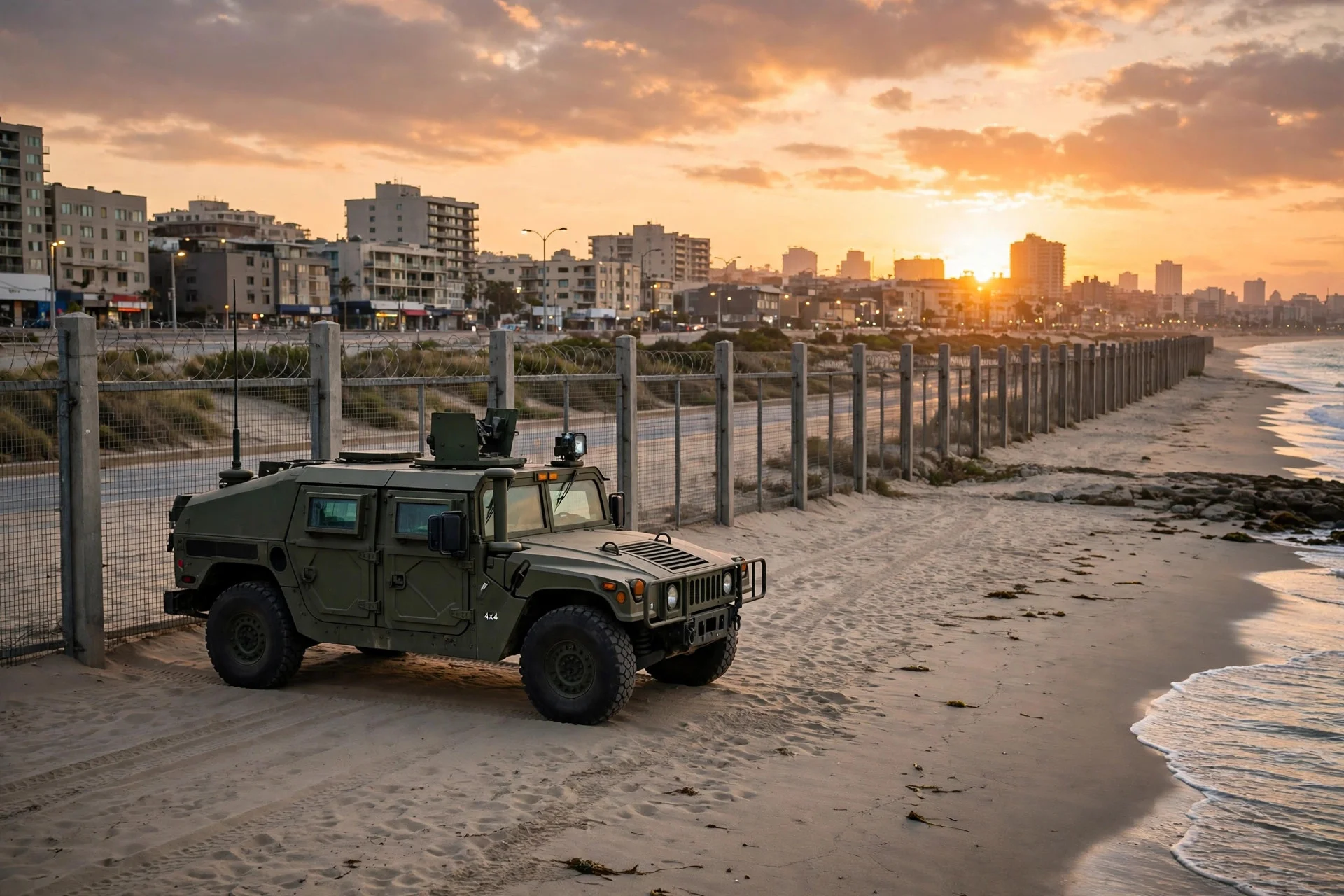
Imagen alusiva de un vehículo militar junto a un vallado fronterizo en una playa urbana al atardecer. · Imagen generada por EPM
More troops for Ceuta and Melilla, with clear legal safeguards
The Popular Party programme for the November 29 general election pledges more troops in Ceuta, Melilla, the Canary Islands and the rest of Spanish territories…
Popular Party pledges more troops in Ceuta, Melilla and Canaries
According to its electoral programme, the Popular Party will increase troops in Ceuta, Melilla, the Canary Islands and the rest of Spanish territories in North…
--- The context ---
Ceuta has still not returned to normal months after the mass assault on its border in late July. Thousands of migrants remain on the streets and residents have not recovered normal life. Spain now heads into a general election on November 29, in 20 days.
Melilla shares with Ceuta its status as a Spanish enclave in North Africa and similar pressure, and the Canary Islands are overwhelmed by a mass arrival of migrants. The debate combines territorial protection, a humanitarian response, and the legal framework of the border.
--- The facts ---
According to its electoral programme, the Popular Party pledges to increase troops in Ceuta, Melilla, the Canary Islands and the rest of Spanish territories in North Africa if it governs. Some 6,000 personnel are currently estimated between Ceuta and Melilla, with Legion, Regulares, Cavalry and Artillery units of the Army.
The great reduction came after the end of compulsory military service in 2001. According to the programme, troops would support at the border when national security requires it, with legal cover, clear rules and resources. In recent months they patrol Ceuta and suffered ambushes with several wounded.
The programme promises to modernise fences, breakwaters and surveillance with sensors, thermal cameras and drones, more officers at the southern border, permanent reinforcement of the Civil Guard and the National Police, a stable Frontex presence and cooperation with Europol, including the Balearic Islands, the Strait and airports under most pressure.
In the Canary Islands, in the first six days of November, more than 4,500 people arrived by small boats on El Hierro, an increase of more than 1,000% compared with last year. More patrol boats and maritime surveillance with naval and air resources, drones and satellites are promised.
--- The positions ---
Alberto Núñez Feijóo travelled several times to Ceuta to support its citizens and its president, Juan Jesús Vivas. According to the programme, the party will defend all the territory with its partners and allies, and it promises to reform immigration law so rejection at the border covers entries by swimming.
Pedro Sánchez described the assault in its first days, in indirect terms, as a violation of territorial integrity, although the Government later treated it as a migratory crisis. Margarita Robles attributed to the disinformation after the Supreme Court ruling in June the entry of more than 80,000 people into Ceuta on July 30 and 31. That ruling established that summary returns cannot be applied to migrants intercepted at sea entering by swimming.
--- What remains unknown ---
The programme does not specify how many more troops would arrive, on what timetable or at what cost, nor how military support would be coordinated with the Civil Guard and the National Police. Nor does it say how the reform would cover entries by swimming without colliding with the June ruling, or what reception would follow.
--- Unanswered questions ---
How many additional personnel would be deployed in Ceuta, Melilla and the Canary Islands, and within what timeframe? How would the reform ensure that rejection for entries by swimming respects what the Supreme Court established in June? What reception would accompany the reinforcement so that Ceuta returns to normal?
--- EPM analysis ---
The proposal places the southern border at the centre of the campaign with one merit that deserves recognition wherever it comes from: demanding legal cover, clear rules and resources for troops at the border. That protects personnel who patrol Ceuta and have suffered ambushes. But the June ruling is a reminder that no reform can ignore safeguards in force, and the Canary Islands also require humanitarian management, not only containment.
📌 EPM Take: In EPM's view, reinforcing Ceuta, Melilla and the Canary Islands is a legitimate response to pressure that overwhelmed the southern border, but its credibility will depend on full legal cover, respect for the June ruling and reception equal to what El Hierro is experiencing. Security without safeguards becomes litigation, and safeguards without presence become paper. The programme is right to bring troops, the Civil Guard, the National Police, Frontex and Europol together, and it must now specify numbers, deadlines and the treatment owed to every person intercepted.
--- The context ---
Spain heads into the November 29 general election, in 20 days, with its southern border under pressure since the mass assault on Ceuta in late July. Thousands of migrants remain on the streets and residents are far from normality.
Ceuta and Melilla are Spanish territory in North Africa and their defence admits no ambiguity. The Canary Islands are overwhelmed by a mass arrival of migrants, and other crossings face the same pressure, from the Strait to the Balearic Islands. The debate is whether the state keeps enough presence to deter illegal entries or only reacts once a crisis erupts.
--- The facts ---
According to its electoral programme, if it governs, the Popular Party will increase troops in Ceuta, Melilla, the Canary Islands and the rest of Spanish territories in North Africa. Some 6,000 personnel are currently estimated between Ceuta and Melilla, with Legion, Regulares, Cavalry and Artillery units. The great reduction came after the end of compulsory military service in 2001.
According to the programme, the armed forces will support at the border when national security requires it, with legal cover, clear rules and resources. In recent months soldiers patrol Ceuta and suffered ambushes with several wounded. Fences, breakwaters and surveillance will be modernised with sensors, thermal cameras and drones.
The approach covers every route: more officers at the southern border, permanent reinforcement of the Civil Guard and the National Police, a stable Frontex presence and cooperation with Europol, including the Canary Islands, the Balearic Islands, the Strait and airports under pressure. In the Canary Islands, in the first six days of November more than 4,500 people arrived on El Hierro, an increase of more than 1,000% compared with last year, and more patrol boats and maritime surveillance with naval and air resources, drones and satellites are promised.
--- The positions ---
Alberto Núñez Feijóo travelled several times to Ceuta to support its citizens and its president, Juan Jesús Vivas. According to the programme, the party will defend all the territory with its partners and allies, and the southern border will have more officers and military support. It also promises to reform immigration law so rejection covers entries by swimming.
Pedro Sánchez described the assault in its first days, in indirect terms, as a violation of territorial integrity, although the Government later treated it as a mere migratory crisis. The June ruling established that summary returns cannot be applied to migrants intercepted at sea entering by swimming, and Margarita Robles attributed to disinformation after that ruling the entry of more than 80,000 people into Ceuta on July 30 and 31.
--- What remains unknown ---
The programme does not detail how many more troops would be deployed, nor within what timeframe, nor the timetable for modernising fences and surveillance, nor how the reinforcement of the Civil Guard and the National Police would be funded. The legal reform must withstand court scrutiny after the June ruling.
--- Unanswered questions ---
How many more personnel will arrive in Ceuta and Melilla, and when will they be deployed if the Popular Party governs? Will the reform close the gap on entries by swimming without being blocked in the courts? Will the Canary Islands and El Hierro receive the promised patrol boats and surveillance in time?
--- EPM analysis ---
Defending Ceuta and Melilla is defending Spain, and a state with some 6,000 personnel between both cities after the reduction that followed 2001 cannot be surprised when its border is tested. The programme names the problem plainly and backs it with resources. Its weak point is the lack of figures and deadlines.
📌 EPM Take: In EPM's view, increasing the military presence in Ceuta, Melilla and the Canary Islands and shielding the southern border with more officers, better surveillance and a law covering entries by swimming is the response the situation demands, after an assault the president himself described as a violation of territorial integrity. Deterrence works when it is visible, permanent and legally solid. The pledge will be credible if after November 29 it becomes deployed personnel and clear rules, without the indefinition that allowed more than 80,000 people to enter in July.
Más militares en Ceuta y Melilla, con garantías jurídicas claras
El Partido Popular incluye en su programa para las elecciones generales del 29 de noviembre aumentar los militares en Ceuta, Melilla, Canarias y el resto de…
El PP promete reforzar Ceuta, Melilla y Canarias con más militares
Según su programa electoral, el Partido Popular aumentará los militares en Ceuta, Melilla, Canarias y el resto de territorios españoles del norte de África si…
--- El contexto ---
Ceuta sigue sin recuperar la normalidad meses después del asalto masivo a su frontera de finales de julio. Miles de inmigrantes continúan en las calles y los vecinos no han vuelto a la vida previa. En ese escenario llegan las elecciones generales del 29 de noviembre, dentro de 20 días.
Melilla comparte con Ceuta su condición de enclave español en el norte de África y una presión semejante, y Canarias está desbordada por la llegada masiva de inmigrantes. El debate combina protección del territorio, respuesta humanitaria y marco jurídico de la frontera.
--- Los hechos ---
Según el programa electoral, el Partido Popular se compromete a aumentar los militares en Ceuta, Melilla, Canarias y el resto de territorios españoles del norte de África si gobierna. Hoy se calculan unos 6.000 efectivos entre Ceuta y Melilla, con unidades de la Legión, Regulares, Caballería y Artillería del Ejército de Tierra.
La gran reducción llegó tras el fin del servicio militar obligatorio en 2001. Según el programa, los militares apoyarán en la frontera cuando lo exija la seguridad nacional, con cobertura jurídica, reglas claras y medios. En los últimos meses patrullan las calles de Ceuta y sufrieron emboscadas con varios heridos.
El programa promete modernizar vallas, espigones y vigilancia con sensores, cámaras térmicas y drones, más agentes en la frontera sur, refuerzo permanente de Guardia Civil y Policía Nacional, presencia estable de Frontex y cooperación con Europol, también en Baleares, el Estrecho y los aeropuertos con más presión.
En Canarias, en los primeros seis días de noviembre llegaron en cayucos a El Hierro más de 4.500 personas, un incremento superior al 1.000% frente al mismo periodo del año pasado. El programa promete más patrulleras y vigilancia marítima con medios navales y aéreos, drones y satélites.
--- Las posiciones ---
Alberto Núñez Feijóo viajó varias veces a Ceuta para apoyar a sus ciudadanos y a su presidente, Juan Jesús Vivas. Según el programa, el partido defenderá todo el territorio con sus socios y aliados, y promete reformar la Ley de Extranjería para que el rechazo en frontera cubra las entradas a nado.
Pedro Sánchez calificó en los primeros días el asalto, en indirecto, como violación de la integridad territorial, aunque el Gobierno después lo tratara como crisis migratoria. Margarita Robles atribuyó a la desinformación tras la sentencia del Tribunal Supremo de junio la entrada de más de 80.000 personas en Ceuta el 30 y el 31 de julio. Esa sentencia estableció que no caben devoluciones en caliente a migrantes interceptados en el mar entrando a nado.
--- Lo que falta saber ---
El programa no concreta cuántos militares más llegarían, con qué calendario ni con qué coste, ni cómo se coordinaría el apoyo militar con Guardia Civil y Policía Nacional. Tampoco precisa cómo cubriría la reforma las entradas a nado sin chocar con la sentencia de junio, ni qué acogida acompañaría al refuerzo.
--- Preguntas sin respuesta ---
¿Cuántos efectivos adicionales se desplegarían en Ceuta, Melilla y Canarias, y en qué plazo? ¿Cómo garantizaría la reforma que el rechazo por entradas a nado respete lo establecido por el Tribunal Supremo en junio? ¿Qué acogida acompañaría al refuerzo para que Ceuta recupere la normalidad?
--- Análisis EPM ---
La propuesta sitúa la frontera sur en el centro de la campaña con un acierto que merece reconocimiento venga de donde venga: exigir cobertura jurídica, reglas claras y medios para los militares. Eso protege a los uniformados que patrullan Ceuta y han sufrido emboscadas. Pero la sentencia de junio recuerda que ninguna reforma puede ignorar las garantías vigentes, y Canarias exige también gestión humanitaria, no solo contención.
📌 Conclusion EPM: A juicio de EPM, reforzar Ceuta, Melilla y Canarias es legítimo ante una presión que desbordó la frontera sur, pero su credibilidad dependerá de que llegue con cobertura jurídica plena, respeto a la sentencia de junio y acogida a la altura de lo que vive El Hierro. Seguridad sin garantías se vuelve litigio, y garantías sin presencia se vuelven papel. El programa acierta al unir militares, Guardia Civil, Policía Nacional, Frontex y Europol, y ahora debe concretar cifras, plazos y el trato debido a cada persona interceptada.
--- El contexto ---
España llega a las elecciones generales del 29 de noviembre, dentro de 20 días, con su frontera sur bajo presión desde el asalto masivo a Ceuta de finales de julio. Miles de inmigrantes siguen en las calles y sus vecinos están lejos de la normalidad.
Ceuta y Melilla son territorio español en el norte de África y su defensa no admite ambigüedad. Se suma Canarias, desbordada por la llegada masiva de inmigrantes, y el resto de pasos expuestos, desde el Estrecho hasta Baleares. El debate es si el Estado mantiene presencia para disuadir o sigue reaccionando tarde.
--- Los hechos ---
Según el programa electoral, si gobierna, el Partido Popular aumentará los militares en Ceuta, Melilla, Canarias y el resto de territorios españoles del norte de África. Hoy se calculan unos 6.000 efectivos entre Ceuta y Melilla, con unidades de la Legión, Regulares, Caballería y Artillería. La gran reducción llegó tras el fin del servicio militar obligatorio en 2001.
Según el programa, las Fuerzas Armadas apoyarán en la frontera cuando lo exija la seguridad nacional, con cobertura jurídica, reglas claras y medios. En los últimos meses los militares patrullan Ceuta y sufrieron emboscadas con varios heridos. Se promete modernizar vallas, espigones y vigilancia con sensores, cámaras térmicas y drones.
El plan abarca todas las vías: más agentes en la frontera sur, refuerzo permanente de Guardia Civil y Policía Nacional, presencia estable de Frontex y cooperación con Europol, también en Canarias, Baleares, el Estrecho y aeropuertos con más presión. En Canarias, en los primeros seis días de noviembre llegaron a El Hierro más de 4.500 personas, un incremento superior al 1.000% frente al año pasado, y se prometen más patrulleras y vigilancia marítima con medios navales y aéreos, drones y satélites.
--- Las posiciones ---
Alberto Núñez Feijóo viajó varias veces a Ceuta para apoyar a sus ciudadanos y a su presidente, Juan Jesús Vivas. Según el programa, el partido defenderá todo el territorio con sus socios y aliados, y la frontera sur tendrá más agentes y apoyo militar. También promete reformar la Ley de Extranjería para que el rechazo cubra las entradas a nado.
Pedro Sánchez calificó en los primeros días el asalto, en indirecto, como violación de la integridad territorial, aunque el Gobierno después lo tratara como mera crisis migratoria. La sentencia de junio estableció que no caben devoluciones en caliente a migrantes interceptados en el mar entrando a nado, y Margarita Robles atribuyó a la desinformación tras esa sentencia la entrada de más de 80.000 personas en Ceuta el 30 y el 31 de julio.
--- Lo que falta saber ---
El programa no detalla cuántos militares más se desplegarían, ni en qué plazo, ni el calendario de modernización de vallas y vigilancia, ni cómo se financiaría el refuerzo de Guardia Civil y Policía Nacional. La reforma legal deberá resistir el control de los tribunales tras la sentencia de junio.
--- Preguntas sin respuesta ---
¿Cuántos efectivos más llegarán a Ceuta y Melilla, y cuándo estarán desplegados si gobierna el Partido Popular? ¿Logrará la reforma cerrar el vacío de las entradas a nado sin quedar bloqueada en los tribunales? ¿Recibirán Canarias y El Hierro las patrulleras y la vigilancia prometidas a tiempo?
--- Análisis EPM ---
Defender Ceuta y Melilla es defender España, y un Estado con unos 6.000 efectivos entre ambas ciudades tras la reducción posterior a 2001 no puede sorprenderse cuando su frontera es puesta a prueba. El programa nombra el problema sin rodeos y lo acompaña de medios. Su punto débil es la falta de cifras y plazos.
📌 Conclusion EPM: A juicio de EPM, aumentar la presencia militar en Ceuta, Melilla y Canarias y blindar la frontera sur con más agentes, mejor vigilancia y una ley que cubra las entradas a nado es la respuesta que la situación exige, tras un asalto que el propio presidente calificó como violación de la integridad territorial. La disuasión funciona cuando es visible, permanente y jurídicamente sólida. El compromiso será creíble si tras el 29 de noviembre se traduce en efectivos desplegados y reglas claras, sin la indefinición que permitió la entrada de más de 80.000 personas en julio.