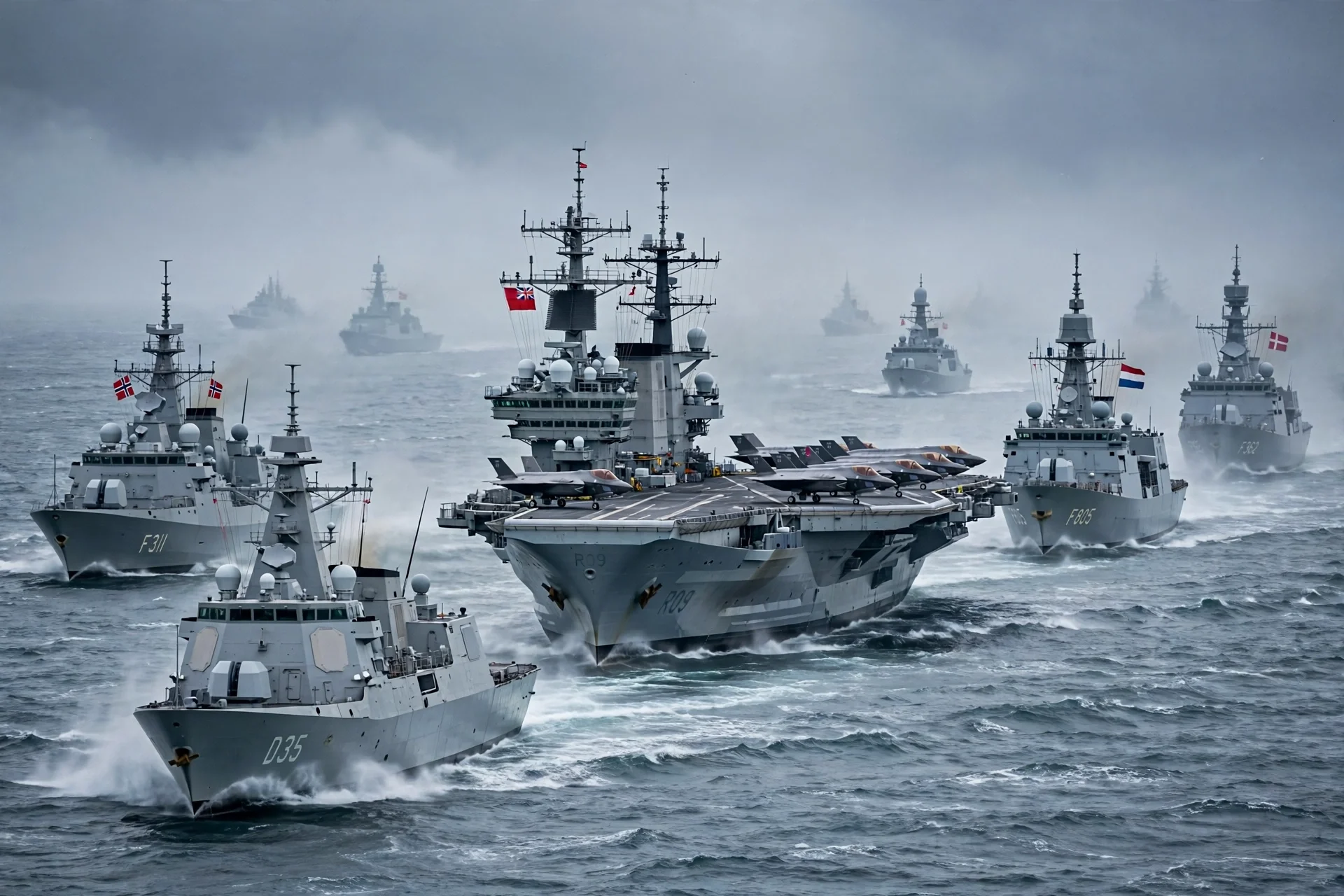
Imagen alusiva generada para EPM: armadas aliadas del norte de Europa navegando en formación. · EPM
Northern navies sign a London-led pact for the High North
The Royal Navy and the 10 JEF maritime nations signed the Northern Navies Initiative in Oslo to strengthen security across northern Europe, the North Atlantic…
London strengthens allied naval deterrence in the north
Britain and its JEF partners agreed a naval initiative in Oslo for the North Atlantic, the Baltic and the High North, backed by 280,000 tonnes of new steel and…
--- The context ---
Northern Europe, the North Atlantic and the Baltic Sea now sit at the centre of a growing collective security concern. The High North is changing fast, shaped by climate change, growing economic interest and increased geopolitical competition, and what happens there affects British weather, food supply and national security, according to the official case.
--- The facts ---
The Royal Navy and its Joint Expeditionary Force allies have signed the Northern Navies Initiative to increase security across northern Europe, the North Atlantic and the Baltic Sea. First Sea Lord General Sir Gwyn Jenkins signed the agreement on board HMS Prince of Wales during the International Sea Power Conference in Oslo.
The agreement follows nine months of work and delivers on a Statement of Intent proposed in London last April. Representatives of all 10 JEF maritime nations signed it, with the stated aim of strengthening maritime deterrence and defence and sending a signal of unity in response to a changing threat landscape.
--- The positions ---
The initiative seeks to make the JEF NATO's maritime vanguard in the North Atlantic, the High North and the Baltic, able to act early, combine quickly and transition seamlessly into NATO command if the Alliance needs to mobilise at scale. NATO provides the foundation, including the standards, plans and framework for collective defence.
Jenkins said in reported remarks that he was delighted the initiative had taken a huge step forward after nine months of hard work, and that like-minded nations united by a common purpose had shown what is possible. He also warned that the threats are multiplying and that the challenge must be met before a crisis arrives.
--- What remains unknown ---
How the agreement will work in daily practice remains to be seen. In practical terms, a Royal Navy frigate could transfer operational responsibility to another JEF member without losing momentum, one nation's task group could direct allied sensors and uncrewed vessels, and a warship could repair, refuel and resupply in an allied port rather than returning home.
--- Unanswered questions ---
When will these navies begin operating together under the new common procedures? Will interoperability by design really connect future autonomous platforms into shared command systems? How will Atlantic Net protect critical undersea infrastructure against hostile activity beneath the surface?
--- EPM analysis ---
The focus on hybrid threats below the threshold of armed conflict, including risks to critical undersea infrastructure and malicious seabed activity, widens the mission beyond conventional warfare. The first phase of Atlantic Net, part of Atlantic Bastion, will enter operation within months with Ocean Infinity to detect hostile underwater activity earlier.
📌 EPM Take: In EPM's view, the central value of this initiative is that it turns cooperation into routine before a crisis, rather than improvising it after damage is done. Sharing ports, sensors and command, learning together in the demanding High North, and protecting undersea infrastructure also protects the civilian life that depends on that stability. If interoperability holds in daily practice and in shared training over the coming years, the north will gain a faster, more credible and better prepared collective defence for everyone.
--- The context ---
Security on the Alliance's northern flank demands presence, order and the ability to respond without delay. The High North is changing fast through climate change, economic interest and geopolitical competition, while hybrid threats grow below the threshold of armed conflict, including risks to critical undersea infrastructure and malicious seabed activity.
--- The facts ---
The Royal Navy and its Joint Expeditionary Force allies have signed the Northern Navies Initiative to increase security across northern Europe, the North Atlantic and the Baltic Sea. First Sea Lord General Sir Gwyn Jenkins signed the agreement on board HMS Prince of Wales during the International Sea Power Conference in Oslo.
Representatives of all 10 JEF maritime nations signed the initiative after nine months of work, delivering on a Statement of Intent proposed in London last April. The agreement strengthens maritime deterrence and defence and aims to make the JEF NATO's maritime vanguard in the North Atlantic, the High North and the Baltic.
--- The positions ---
NATO remains the foundation, providing the standards, plans and framework for collective defence, while the JEF brings a smaller group of closely aligned navies together to work more closely, more routinely and at a higher state of readiness. The plan includes operating in the same way, training to the same standard and planning together before a crisis.
Jenkins said in reported remarks that like-minded nations united by a common purpose had shown what is possible, and welcomed the step forward after nine months of hard work. He also warned that the threats are multiplying and that the challenge must be risen to, with partners supporting one another and developing compatible equipment.
--- What remains unknown ---
The real reach of the promised interoperability remains to be proven. The plan would let allied navies transfer operational responsibility without losing momentum, repair, refuel and resupply in allied ports, and design equipment to be interoperable from the start, so autonomous platforms can plug into allied command and control systems as one large force.
--- Unanswered questions ---
Will all 10 nations sustain the promised state of readiness after the signing ceremony fades? Will Atlantic Net enter operation within months as announced? Will the fleet renewal keep pace with the competition now reshaping the High North?
--- EPM analysis ---
Material backing accompanies the agreement. The Royal Navy is embarking on its most extensive rebuilding programme since the Second World War, using 280,000 tonnes of new steel and rising to around 450,000 tonnes when planned programmes are included, alongside £100m to transform the UK Commando Force with a focus on the High North.
📌 EPM Take: In EPM's view, the strength of this pact will be measured in steel, readiness and staying power, not only in declarations signed on board a carrier. A JEF able to act early, sustain shared command and protect critical undersea infrastructure is exactly the kind of deterrence that prevents larger crises. The fleet renewal and the commando investment give the commitment credibility, provided the signatory nations sustain the effort, the funding and the readiness over time without exception.
Armadas del norte firman un pacto naval liderado por Londres
La Royal Navy y las 10 naciones marítimas de la JEF firmaron en Oslo la Northern Navies Initiative para reforzar la seguridad en el norte de Europa, el…
Londres refuerza la disuasión naval aliada en el norte
Reino Unido y sus socios de la JEF acordaron en Oslo una iniciativa naval para el Atlántico Norte, el Báltico y el Gran Norte, respaldada por 280.000 toneladas…
--- El contexto ---
El norte de Europa, el Atlántico Norte y el mar Báltico concentran una preocupación creciente por la seguridad colectiva. El Gran Norte cambia con rapidez por el clima, el interés económico y la competencia geopolítica, y lo que ocurre allí afecta al clima, al suministro de alimentos y a la seguridad nacional británica, según el planteamiento oficial.
--- Los hechos ---
La Royal Navy y sus aliados de la Joint Expeditionary Force firmaron el acuerdo Northern Navies Initiative para aumentar la seguridad en el norte de Europa, el Atlántico Norte y el Báltico. La firma la protagonizó el First Sea Lord, el general Sir Gwyn Jenkins, a bordo del HMS Prince of Wales durante la International Sea Power Conference celebrada en Oslo.
El acuerdo llega tras nueve meses de trabajo y cumple una Declaración de Intención propuesta en Londres el pasado abril. Lo firmaron representantes de las 10 naciones marítimas de la JEF, con el objetivo declarado de reforzar la disuasión y la defensa marítimas y de enviar una señal de unidad ante un panorama de amenazas en transformación.
--- Las posiciones ---
La iniciativa busca que la JEF sea la vanguardia marítima de la OTAN en el Atlántico Norte, el Gran Norte y el Báltico, capaz de actuar pronto, combinarse con rapidez y pasar sin fricciones al mando aliado si hiciera falta una movilización a gran escala. La OTAN aporta los estándares, los planes y el marco de defensa colectiva.
Jenkins valoró en indirecto el paso dado tras nueve meses de esfuerzo y sostuvo que naciones afines unidas por un propósito común pueden lograr avances relevantes. También advirtió de que las amenazas se multiplican y de que hay que responder al desafío, y defendió operar del mismo modo, entrenar con el mismo estándar y planificar juntos antes de una crisis.
--- Lo que falta saber ---
Queda por ver cómo se traducirá el acuerdo en rutinas concretas de mando compartido. En la práctica, una fragata británica podría transferir la responsabilidad operativa a otro miembro sin perder impulso, un grupo operativo podría dirigir sensores y buques no tripulados aliados, y un buque podría reparar, repostar y reabastecerse en un puerto aliado en lugar de volver a casa.
--- Preguntas sin respuesta ---
¿Cuándo empezarán a operar juntas estas armadas bajo los nuevos procedimientos comunes? ¿Logrará la interoperabilidad por diseño integrar las futuras plataformas autónomas en un solo sistema de mando? ¿Cómo protegerá Atlantic Net la infraestructura submarina crítica frente a la actividad hostil?
--- Análisis EPM ---
El énfasis en amenazas híbridas bajo el umbral del conflicto armado, como los riesgos para la infraestructura submarina crítica y la actividad maliciosa en el lecho marino, amplía el foco más allá de la guerra convencional. Atlantic Net, parte de Atlantic Bastion, entrará en operación en meses junto a Ocean Infinity para detectar antes la actividad submarina hostil.
📌 Conclusion EPM: A juicio de EPM, el valor central de esta iniciativa está en convertir la cooperación en rutina antes de que llegue la crisis, y no en improvisarla cuando el daño ya está hecho. Proteger cables e infraestructura submarina, compartir puertos, sensores y mando, y aprender juntos en un entorno tan exigente como el Gran Norte protege también la vida civil que depende de esa estabilidad. Si la interoperabilidad se cumple en la práctica diaria, el norte ganará una defensa colectiva más rápida, más creíble y mejor preparada.
--- El contexto ---
La seguridad del flanco norte aliado exige presencia, orden y capacidad de respuesta. El Gran Norte se transforma por el cambio climático, el interés económico y la competencia geopolítica, mientras crecen las amenazas híbridas bajo el umbral del conflicto, incluidos los riesgos sobre la infraestructura submarina crítica y la actividad maliciosa en el lecho marino.
--- Los hechos ---
La Royal Navy y sus aliados de la Joint Expeditionary Force firmaron la Northern Navies Initiative para aumentar la seguridad en el norte de Europa, el Atlántico Norte y el Báltico. El First Sea Lord, el general Sir Gwyn Jenkins, firmó el acuerdo a bordo del HMS Prince of Wales durante la International Sea Power Conference de Oslo.
Firmaron representantes de las 10 naciones marítimas de la JEF, tras nueve meses de trabajo y en cumplimiento de una Declaración de Intención propuesta en Londres el pasado abril. El acuerdo refuerza la disuasión y la defensa marítimas y busca que la JEF actúe como vanguardia marítima de la OTAN en esas tres zonas estratégicas.
--- Las posiciones ---
La OTAN sigue siendo la base, con sus estándares, planes y marco de defensa colectiva, y la JEF reúne a un grupo reducido de armadas afines para trabajar más de cerca, con mayor rutina y en un estado de preparación más alto. La propuesta incluye operar igual, entrenar con el mismo estándar y planificar juntos antes de cualquier crisis.
Jenkins destacó en indirecto el avance logrado tras nueve meses de trabajo conjunto y afirmó que las naciones afines unidas por un propósito común han mostrado lo que es posible. A la vez, advirtió de que las amenazas se multiplican y de que corresponde responder al desafío, apoyándose mutuamente y desarrollando equipos compatibles entre aliados.
--- Lo que falta saber ---
Falta comprobar el alcance real de la interoperabilidad prometida. El planteamiento prevé transferir la responsabilidad operativa entre armadas sin perder impulso, reparar, repostar y reabastecerse en puertos aliados, y diseñar el equipo compatible desde el origen para que las plataformas autónomas se conecten a los sistemas de mando aliados como una sola fuerza.
--- Preguntas sin respuesta ---
¿Mantendrán las 10 naciones el nivel de preparación prometido cuando pase la firma? ¿Entrará Atlantic Net en operación en meses como está anunciado? ¿Acompañará la renovación de la flota el ritmo que exige la competencia en el Gran Norte?
--- Análisis EPM ---
El respaldo material acompaña al acuerdo. La Royal Navy impulsa su mayor programa de reconstrucción desde la Segunda Guerra Mundial, con 280.000 toneladas de acero nuevo y hasta unas 450.000 toneladas si se incluyen los programas previstos, además de 100 millones de libras para transformar la UK Commando Force con foco en el Gran Norte.
📌 Conclusion EPM: A juicio de EPM, la firmeza de este pacto se medirá en acero, preparación y permanencia, no solo en declaraciones firmadas a bordo de un portaaviones. Que la JEF pueda actuar pronto, sostener el mando compartido y proteger la infraestructura submarina crítica es exactamente la clase de disuasión que evita crisis mayores. La renovación de la flota y la inversión en la fuerza de comandos dan credibilidad al compromiso, siempre que las naciones firmantes mantengan el esfuerzo en el tiempo.