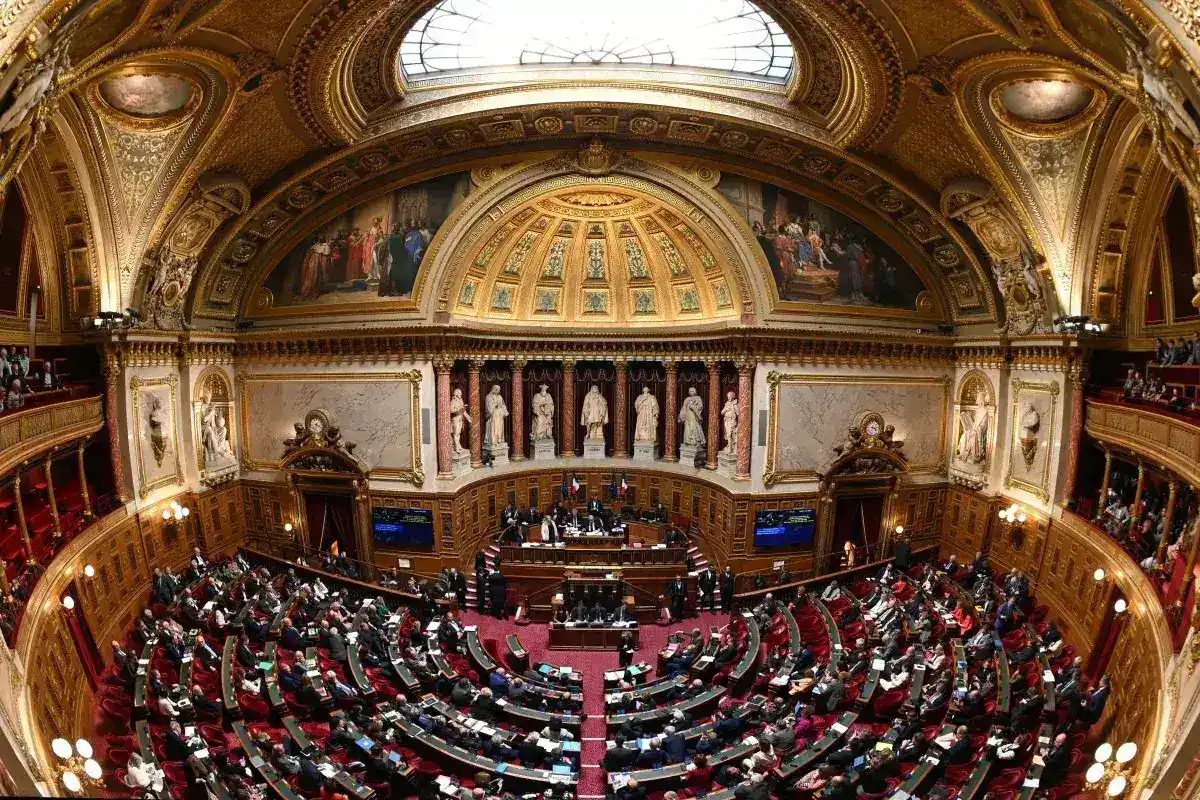
Le Pen's party enters the French Senate as a group for the first time, eyes Élysée
The National Rally of Marine Le Pen will form a parliamentary group in the French Senate for the first time, reaching at least 15 seats with ally UDR.
France's far right secures a Senate foothold and Le Pen leads every presidential poll
The National Rally and its UDR ally secured at least 15 Senate seats, allowing Le Pen's party to form a parliamentary group in France's upper house for the…
Marine Le Pen's National Rally will for the first time form a parliamentary group in the French Senate, election results confirmed Monday, giving a party that campaigns on restricting immigration formal access to the committees that shape laws governing workers, welfare and public services for tens of millions of French citizens.
--- THE CONTEXT ---
The Senate does not answer to universal suffrage. Local elected officials choose senators to six-year terms, renewing half the chamber every three years. The RN entered the Senate for the first time in 2014 under the name National Front, winning two seats. It gained three seats in 2023, a result that still fell short of the ten-member threshold required to form a faction.
--- THE FACTS ---
Weekend results confirmed nine new seats for RN candidates. Three additional seats from ally Eric Ciotti's Union of the Right for the Republic (UDR) brought the far-right bloc to at least 15 in a 348-seat chamber, clearing the ten-member floor for group status. Le Pen declared the result a historic victory on X. RN party leader Jordan Bardella, who has positioned himself as a future prime minister, said the result confirms the momentum of the movement as the presidential election approaches, and added that the party will very soon govern France if citizens so desire. A Toluna-Harris poll for RTL and M6 published Monday placed Le Pen at 35 to 36 percent in the first round of the presidential vote, scheduled for April 18. The same survey showed her comfortably ahead in the second round on May 2, beating both hard-left France Unbowed leader Jean-Luc Mélenchon and centrist frontrunner Edouard Philippe. Meanwhile, the traditional right-wing Republicans (LR) are set to retain overall Senate dominance despite the loss of seats.
--- THE POSITIONS ---
Le Pen and Bardella framed the Senate breakthrough explicitly as momentum toward the presidency. Senate speaker Gérard Larcher, 77, France's constitutional number two, is expected to retain his post. This source does not include a formal response from the Macron government or left-wing parties to the Senate results.
--- WHAT REMAINS UNKNOWN ---
The source does not specify which Senate committees the new RN group will seek to join, what legislative priorities it will pursue from that position, or whether centrist or left-wing senators will attempt coalition-building to limit its influence.
--- UNANSWERED QUESTIONS ---
• Which Senate committees will the RN group target, and how will that reshape debates on immigration, labor and social protection legislation?
• Will the Republican-led Senate majority negotiate with the new RN group or pursue a strategy of systematic exclusion?
• If Le Pen wins the presidency and Bardella becomes prime minister, how would a government that now controls both legislative chambers govern a country where RN's 15 Senate seats still represent a small minority?
• What response will centrist parties consolidate around Edouard Philippe or another candidate to counter Le Pen's poll lead before the presidential vote?
--- EPM ANALYSIS ---
Group status in the Senate is not ceremonial. It means guaranteed speaking time, committee seats and institutional resources — tools that translate into direct influence over draft legislation affecting wages, housing and public services. 📌
📌 EPM Take:
In EPM's view, the RN's jump from three senators to a full parliamentary group in a single cycle is the clearest sign yet that the French far right has moved from protest movement to governing project. EPM notes, as editorial opinion, that the poll figures cited in the source — 35 to 36 percent in round one — would make Le Pen the dominant force in any presidential field. The human consequences of that scenario, particularly for immigrant communities and social welfare recipients, deserve the same scrutiny that EPM has applied to France's other fractures.
Marine Le Pen's National Rally has achieved a milestone with strategic and institutional weight: for the first time in the party's history, it will form a parliamentary group in the French Senate, the chamber that sits at the center of France's legislative order and has historically been a bastion of the republican right. The development lands less than seven months before the presidential election.
--- THE CONTEXT ---
The French Senate is not elected by universal suffrage. Local officials choose senators to six-year terms in staggered elections, renewing half the chamber every three years. The RN first entered the Senate in 2014 — then called the National Front — with two seats, and added three in 2023, still below the ten-member threshold for group recognition.
--- THE FACTS ---
Weekend election results showed RN candidates winning nine seats. Three more from ally Eric Ciotti's Union of the Right for the Republic (UDR) brought the far-right total to at least 15 in the 348-seat chamber, surpassing the ten-seat minimum for a parliamentary group. Group status grants access to the influential committees where legislation is drafted — a concrete expansion of institutional leverage. Le Pen called the result a historic victory on X. Jordan Bardella, RN party leader and self-declared candidate for prime minister in a Le Pen presidency, said the outcome confirms the movement's momentum and that the party will very soon govern France if citizens so desire. A Toluna-Harris poll for RTL and M6, published Monday, placed Le Pen at 35 to 36 percent in the first presidential round on April 18 and as the clear winner in the second round on May 2 — ahead of both hard-left leader Mélenchon and centrist Edouard Philippe. The Republicans (LR) are expected to retain Senate dominance overall. Senate speaker Gérard Larcher, 77 and France's constitutional number two, is expected to hold his post.
--- THE POSITIONS ---
Le Pen and Bardella explicitly linked the Senate result to the presidential race, framing them as a single political campaign. No formal response from the Macron government or the parliamentary left appears in this source.
--- WHAT REMAINS UNKNOWN ---
The source does not clarify which Senate committees the RN will seek to join, whether the LR leadership will pursue coalition arrangements or confrontation with the new bloc, or what formal electoral alliance, if any, centrist parties intend to build before April.
--- UNANSWERED QUESTIONS ---
• Will the LR-led Senate majority negotiate with the RN group on security and immigration legislation, or adopt a cordon sanitaire strategy?
• How does RN's simultaneous dominance in the National Assembly and new Senate presence affect the institutional balance between the two chambers?
• What candidate or coalition configuration could realistically deny Le Pen the Élysée given the polling margins cited in the source?
• Does the Bardella candidacy for prime minister reflect a formal RN decision or a personal declaration, and how does that shape the party's governance plans?
--- EPM ANALYSIS ---
The Senate's role in shaping security, immigration and budget legislation makes RN's committee access strategically significant, not merely symbolic. The immediate losers are the Republicans, whose long dominance of the upper house now faces a structured far-right challenge from within the chamber's own rules. 📌
📌 EPM Take:
In EPM's view, the RN has now secured institutional footholds in both French legislative chambers, a trajectory that the republican establishment consistently underestimated at each electoral cycle. EPM reads Bardella's simultaneous claim to the prime ministership as a deliberate signal that the party is governing, not merely protesting. For Western allies watching France, the question is no longer whether the RN can win but whether European institutions have the strategic coherence to manage a far-right government in Paris.
El Reagrupamiento Nacional llega al Senado francés con grupo propio por primera vez
El Reagrupamiento Nacional de Marine Le Pen formará por primera vez un grupo parlamentario en el Senado francés tras sumar al menos 15 escaños con su aliado…
El RN logra grupo parlamentario en el Senado francés con miras presidenciales
El RN de Le Pen formará grupo parlamentario en el Senado francés por primera vez, alcanzando al menos 15 escaños con su aliado UDR.
El Reagrupamiento Nacional (RN) de Marine Le Pen consiguió el lunes lo que nunca había logrado en su historia: constituir un grupo parlamentario en el Senado francés, la cámara que moldea las leyes que afectan el salario mínimo, los derechos laborales y el acceso a servicios públicos de millones de ciudadanos. El avance institucional llega a menos de siete meses de las elecciones presidenciales.
--- EL CONTEXTO ---
El RN entró al Senado por primera vez en 2014, cuando aún se llamaba Frente Nacional, con dos escaños. En 2023 obtuvo tres. La cámara alta no se elige por sufragio universal: son los cargos electos locales quienes designan a los senadores, renovando la mitad de los escaños cada tres años para mandatos de seis.
--- LOS HECHOS ---
Los resultados del fin de semana confirmaron que el RN ganó nueve escaños. La formación aliada Unión de la Derecha por la República (UDR) de Eric Ciotti sumó tres, elevando el bloque ultra a un mínimo de 15 senadores en una cámara de 348. El umbral para constituir grupo es de 10 miembros. Le Pen calificó el resultado como «una victoria histórica» en su cuenta de X. El líder del RN, Jordan Bardella, declaró que los resultados confirman el impulso del movimiento de cara a la elección presidencial y añadió que, si los ciudadanos lo desean, el partido gobernará Francia muy pronto. Una encuesta de Toluna-Harris para RTL y M6 publicada el lunes sitúa a Le Pen entre el 35 y el 36 por ciento en la primera vuelta prevista para el 18 de abril.
--- LAS POSICIONES ---
Le Pen y Bardella presentaron el resultado como un trampolín hacia la presidencia. La encuesta Toluna-Harris la proyecta ganadora también en la segunda vuelta del 2 de mayo, tanto frente a Jean-Luc Mélenchon como frente al centrista Edouard Philippe. Ni el gobierno de Macron ni los partidos de izquierda han emitido, según esta fuente, una respuesta pública articulada al resultado del Senado.
--- LO QUE FALTA SABER ---
La fuente no detalla qué comités del Senado podrá integrar el nuevo grupo del RN ni qué agenda legislativa priorizará. También se desconoce si algún senador del centro o la izquierda buscará acuerdos o bloqueos con el bloque ultra.
--- PREGUNTAS SIN RESPUESTA ---
• ¿En qué comités legislativos específicos buscará asiento el grupo del RN y qué proyectos de ley impulsará desde esa posición?
• ¿Cómo afectará la mayor presencia ultraderechista en el Senado a la negociación de leyes laborales y de protección social antes de las presidenciales?
• ¿Qué candidato del centroizquierda o del partido Republicano podría competir eficazmente contra Le Pen en la segunda vuelta si Mélenchon no llega al balotaje?
• ¿Cambiará la irrupción ultraderechista en la cámara alta la relación de fuerzas entre el Senado y la Asamblea Nacional?
--- ANÁLISIS EPM ---
Formarse como grupo en el Senado no es un detalle protocolar: otorga al RN acceso a las comisiones donde se redactan las leyes, recursos institucionales y tiempo de palabra garantizado. 📌
📌 Conclusion EPM:
A juicio de EPM, el salto del RN de tres senadores a grupo parlamentario propio no es solo un hito simbólico: es una adquisición de poder institucional real que llega en el momento más favorable para Le Pen en toda su carrera política. El dato que EPM subraya como editorial opinion es que Francia se enfrenta a la posibilidad, apoyada en los sondeos citados en la fuente, de que su próximo presidente surja de un partido que hasta hace diez años no tenía representación en la cámara alta. Esa velocidad de ascenso exige un escrutinio democrático riguroso.
El orden institucional francés registró el lunes un cambio de fondo: el Reagrupamiento Nacional (RN) de Marine Le Pen constituyó por primera vez un grupo parlamentario en el Senado, la cámara que controla la agenda legislativa junto a la Asamblea Nacional y que es considerada baluarte de la derecha republicana. El momento no es menor: quedan menos de siete meses para la elección presidencial.
--- EL CONTEXTO ---
El Senado francés no se elige por sufragio universal directo; son los cargos electos locales quienes eligen a senadores en mandatos de seis años, renovando la mitad de los escaños cada tres. El RN accedió a la cámara por primera vez en 2014, entonces como Frente Nacional, con dos escaños, y obtuvo tres en 2023.
--- LOS HECHOS ---
Los resultados del fin de semana confirmaron que los candidatos del RN obtuvieron nueve escaños nuevos. Los tres escaños del aliado Eric Ciotti y su Unión de la Derecha por la República (UDR) elevaron el total ultra a un mínimo de 15 en una cámara de 348. Con el umbral fijado en 10 miembros, el bloque puede ahora integrar las comisiones que dan forma a la legislación. Le Pen calificó el resultado de «victoria histórica» en X. Bardella, quien aspira a primer ministro si Le Pen gana la presidencia, declaró que el resultado confirma el impulso del movimiento y que el partido gobernará Francia muy pronto si los ciudadanos lo desean. Una encuesta Toluna-Harris publicada el lunes para RTL y M6 proyecta a Le Pen entre el 35 y el 36 por ciento en primera vuelta, el 18 de abril, y ganadora en la segunda, el 2 de mayo, frente al izquierdista Mélenchon y el centrista Philippe.
--- LAS POSICIONES ---
Le Pen y Bardella enmarcan el resultado del Senado como palanca hacia el Elíseo. El presidente del Senado, Gérard Larcher, de 77 años, número dos constitucional de Francia, mantendría su cargo según los primeros resultados. El gobierno y los partidos de centro no emitieron, según esta fuente, una respuesta formal.
--- LO QUE FALTA SABER ---
La fuente no precisa qué comités reclamará el nuevo grupo del RN ni cuál será la respuesta formal de los republicanos del Partido Republicano (LR), que según los primeros resultados retiene la dominancia del Senado pese a la pérdida de escaños.
--- PREGUNTAS SIN RESPUESTA ---
• ¿Adoptará la dirección del Partido Republicano una estrategia de contención, cohabitación o confrontación con el nuevo grupo ultraderechista en el Senado?
• ¿Qué margen de maniobra legislativa real obtendrá el RN en las comisiones, dado que sigue siendo minoría en una cámara de 348 escaños?
• ¿Cambiará la irrupción del RN en el Senado la coalición de partidos que respaldará a Edouard Philippe o a otro candidato centrista en la segunda vuelta presidencial?
• ¿Cómo afecta este resultado a la autoridad institucional del Senado frente a la Asamblea Nacional, donde el RN es ya el primer partido?
--- ANÁLISIS EPM ---
Acceder a las comisiones senatoriales supone influir en la redacción de la ley antes de que llegue al pleno: seguridad nacional, inmigración y presupuesto son las áreas de mayor potencial para el RN. 📌
📌 Conclusion EPM:
A juicio de EPM, la llegada del RN al Senado cierra el ciclo de normalización institucional de la ultraderecha francesa: ya es primera fuerza en la Asamblea y ahora tiene palanca en la cámara alta. Que Bardella haya mencionado explícitamente la presidencia en el mismo comunicado que celebra el Senado revela que el partido trata ambos frentes como una sola campaña. En términos de orden e institucionalidad occidentales, el resultado importa más allá de Francia: señala que el ascenso de la derecha nacional en Europa tiene raíces electorales cada vez más sólidas y difíciles de revertir.