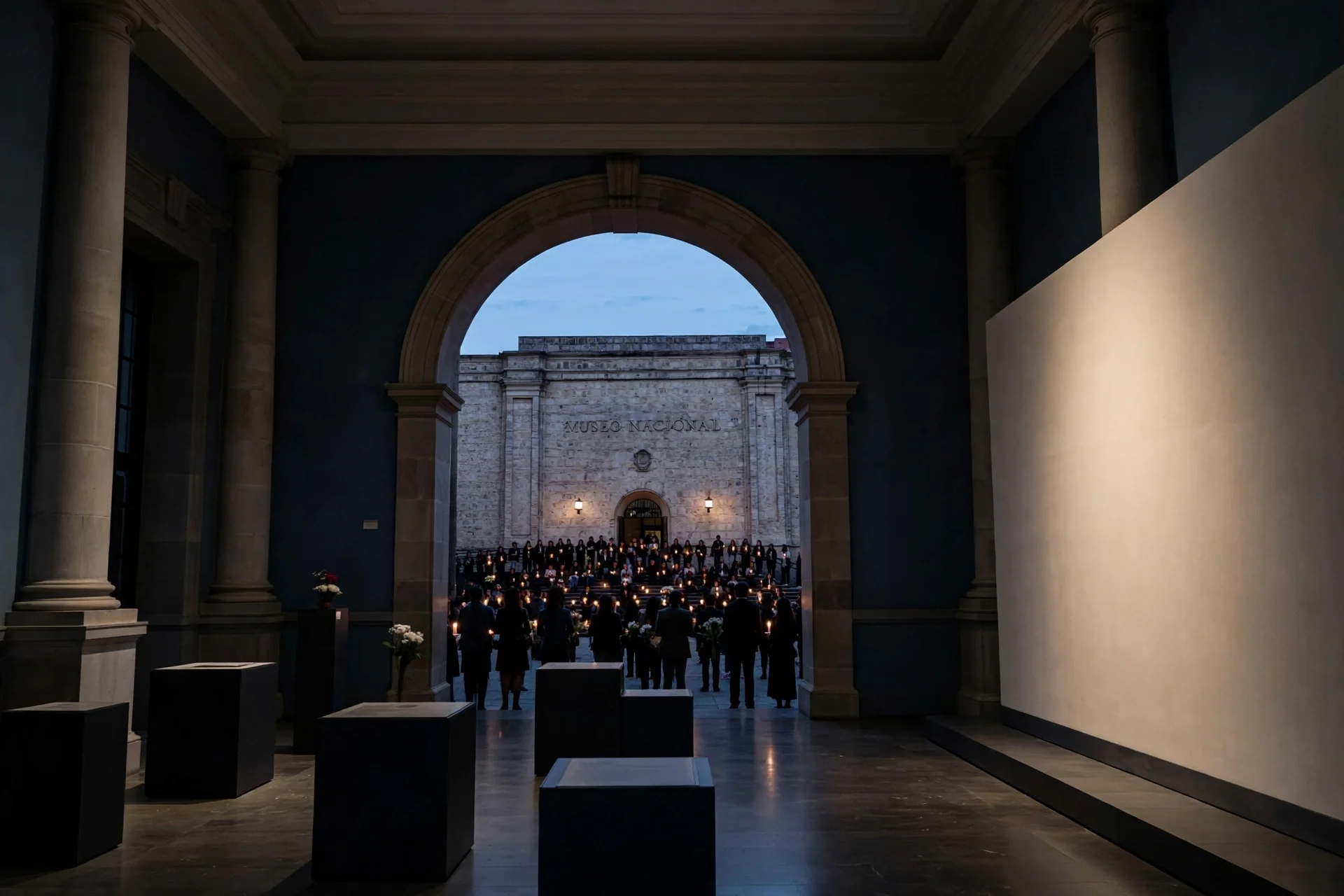
Imagen alusiva al Museo Nacional de Colombia y a la disputa por la memoria de Carlos Pizarro. · Erick Prometeo Media
Pizarro holds Abelardo responsible for her family's safety
Former senator María José Pizarro held President Abelardo De La Espriella responsible for any event affecting her family, after the president's statements…
Carlos Pizarro's memory: Abelardo orders withdrawals and his daughter answers
President Abelardo De La Espriella ordered the withdrawal from public places of what he called an ode to terrorism surrounding Carlos Pizarro.
--- The context ---
The memory of Carlos Pizarro, the M-19 commander assassinated on April 26, 1990 during his presidential candidacy for the Democratic Alliance, returned to the center of Colombia's political dispute. His daughter, former senator María José Pizarro of the Historic Pact, answered President Abelardo De La Espriella's statements against her father in a video.
--- The facts ---
De La Espriella said that the art manifestations backing Carlos Pizarro are an ode to terrorism. The former senator held him responsible for any event that might affect her family and criticised what she described as an attempt to eliminate her father's figure from public memory.
In the video she argued that the debate goes beyond her family history and would represent a threat against leftist ideology. She said Carlos Pizarro is more alive than ever and that the attempt to proscribe his memory only makes his legacy of peace in Colombia greater.
The publication closed with a direct warning: she held the president responsible for anything that might happen. She also announced that the film Pizarro, directed by Simón Hernández, will circulate openly again on her YouTube channel, and she called on followers to organise screenings.
--- The positions ---
Pizarro linked her denunciations to the mobilisations registered in the country and accused the president of fearing the mobilised people and of not accepting criticism or opposition. She added that they will not allow the memory and the thought of the left to be persecuted in Colombia.
She also questioned the modification of National Museum content by government order, in her account without technical curatorship, in exhibitions meant to contribute to peace and reconciliation. She said the threat is not only against her father's figure and memory, but also against his whole family.
The presidential message was recorded during his first official visit to the Ministry of Culture and Heritage, on October 15, 2026. De La Espriella said terrorism will not be allowed to be promoted, announced instructions to the minister for that ode to terrorism to disappear from public places, and stated that he does not accept apology for terrorism.
--- What remains unknown ---
The source does not record a government response to the warning about the Pizarro family's safety, nor does it specify which National Museum contents will be modified or under what procedure.
--- Unanswered questions ---
Will the government respond to Pizarro's warning about her family's safety? Which National Museum contents will the Ministry of Culture withdraw and under what technical criteria? Will the film Pizarro circulate again on the channel the former senator announced?
--- EPM analysis ---
The clash sets two readings of memory against each other: for Pizarro, withdrawing references to her father proscribes a legacy of peace and persecutes leftist thought; for De La Espriella, keeping them in public places is apology for terrorism. Between the two stands the National Museum and its exhibitions.
📌 EPM Take: In EPM's view, the gravest line in this exchange is not the dispute over a museum, but Pizarro's warning: holding the president responsible for anything that happens to her family raises the tone to a terrain where the government should answer with verifiable protection guarantees, not silence. At the same time, the presidential order to withdraw content would gain legitimacy if the Ministry published an inventory of what is withdrawn and the criteria applied, piece by piece, before the country.
--- The context ---
President Abelardo De La Espriella ordered the withdrawal from public places of manifestations he considers an apology for terrorism, among them those backing Carlos Pizarro, the M-19 commander assassinated on April 26, 1990. The answer came from his daughter, former senator María José Pizarro of the Historic Pact, in a video published on her social media.
--- The facts ---
Pizarro held the president responsible for any event that might affect her family and criticised what she described as an attempt to eliminate her father's figure from public memory. She also argued that the debate goes beyond her family history and would represent a threat against leftist ideology.
She said Carlos Pizarro is more alive than ever and that the attempt by De La Espriella to proscribe his memory only makes his legacy of peace in Colombia greater. She described her father as a symbol of rebellion against tyranny and as a man who laid down his arms voluntarily and risked his life for peace.
The publication closed with a direct warning, holding the president responsible for anything that might happen. Pizarro also announced that the film Pizarro, directed by Simón Hernández, will circulate openly again on her YouTube channel, and she called on her followers to spread it and organise screenings.
--- The positions ---
The former senator accused the president of fearing the mobilised people and of not accepting any criticism of his government or the opposition, and she said they will not allow the memory and the thought of the left to be persecuted in Colombia. She also questioned the modification of National Museum content by government order, in her account without technical curatorship.
Against that, the presidential message was recorded during his first official visit to the Ministry of Culture and Heritage, on October 15, 2026. De La Espriella said that the promotion of terrorism will not be allowed and that terrorists will never again have a place as if they were heroes of the homeland.
The president announced that he had instructed the minister so that what he called that ode to terrorism, in which Pizarro and other terrorists appear, disappears from public places, and he closed by stating that he does not accept apology for terrorism and that under his government it is over.
--- What remains unknown ---
The source does not record a government response to Pizarro's warning about her family's safety, nor the inventory of content the Ministry of Culture will withdraw from public places or the procedure it will follow.
--- Unanswered questions ---
Will the government respond to Pizarro's warning about her family's safety? Which contents will the Ministry of Culture withdraw and under what criteria will each withdrawal be decided? Will the film Pizarro circulate again on the channel the former senator announced?
--- EPM analysis ---
The government set a line of principle: the State will not keep in public places manifestations its president considers an apology for terrorism. Pizarro answered with a defence of her father's memory and a warning about her family. The source records two different planes, with neither side giving ground.
📌 EPM Take: In EPM's view, the decision not to turn a guerrilla commander into a hero from State spaces is a position the government can defend with arguments, and Pizarro's defence of her father is legitimate in public debate. What should not remain without an institutional answer is her warning about her family's safety: it falls to the State to guarantee it and say so expressly, while the Ministry gains transparency if it publishes what it withdraws and why, instead of leaving the measure to each side's interpretation.
Pizarro hace responsable a Abelardo de la seguridad de su familia
La exsenadora María José Pizarro responsabilizó al presidente Abelardo De La Espriella de cualquier hecho que afecte a su familia, tras las declaraciones del…
Memoria de Carlos Pizarro: Abelardo ordena retiros y su hija responde
El presidente Abelardo De La Espriella ordenó retirar de los lugares públicos la que llamó una «oda al terrorismo» en torno a Carlos Pizarro.
--- El contexto ---
La memoria de Carlos Pizarro, comandante del M-19 asesinado el 26 de abril de 1990 durante su candidatura presidencial por la Alianza Democrática, volvió al centro de la disputa política. Su hija, la exsenadora del Pacto Histórico María José Pizarro, respondió en un video a las declaraciones del presidente Abelardo De La Espriella contra su padre.
--- Los hechos ---
De La Espriella afirmó que las manifestaciones de arte que respaldan a Carlos Pizarro son «una oda al terrorismo». La dirigente lo responsabilizó de cualquier hecho que pudiera afectar a su familia y criticó lo que describió como un intento de «eliminar de la memoria pública la figura de su padre».
En el video sostuvo que el debate trasciende su historia familiar y representaría una amenaza contra la ideología izquierdista. «Carlos Pizarro está más vivo que nunca y el intento de Abelardo de la Espriella por proscribir su memoria, su figura, solo está haciendo más grande su legado de paz en Colombia», afirmó.
La publicación cerró con una advertencia directa: «Lo hacemos responsable de cualquier cosa que pueda pasar». También anunció que la película Pizarro, dirigida por Simón Hernández, volverá a circular de forma abierta en su canal de YouTube, y convocó a organizar encuentros para verla.
--- Las posiciones ---
Pizarro vinculó sus denuncias con las movilizaciones registradas en el país y acusó al presidente de temer al pueblo movilizado y de no aceptar la crítica ni la oposición. Afirmó además que no permitirán «que la memoria, la vida de la dirigencia y del pensamiento de izquierda sea perseguido en Colombia».
También cuestionó la modificación de contenidos del Museo Nacional por orden del Gobierno, según ella sin «curaduría técnica», en unas exposiciones llamadas a contribuir a la paz y la reconciliación. «Esta no es solamente una amenaza contra su figura y su memoria, sino también contra toda su familia», expresó.
El mensaje presidencial se registró durante su primera visita oficial al Ministerio de Cultura y del Patrimonio, el 15 de octubre de 2026. «No vamos a permitir que se promueva el terrorismo», dijo De La Espriella, y anunció instrucciones a la ministra para que esa «oda al terrorismo» desaparezca de los lugares públicos: «No acepto la apología al terrorismo. En este Gobierno se acabó».
--- Lo que falta saber ---
La fuente no registra una respuesta del Gobierno a la advertencia sobre la seguridad de la familia Pizarro, ni precisa qué contenidos del Museo Nacional serán modificados ni con qué procedimiento.
--- Preguntas sin respuesta ---
¿Responderá el Gobierno a la advertencia de Pizarro sobre la seguridad de su familia? ¿Qué contenidos del Museo Nacional retirará el Ministerio de Cultura y con qué criterio técnico? ¿La película Pizarro volverá a circular en el canal anunciado por la exsenadora?
--- Análisis EPM ---
El choque opone dos lecturas de la memoria: para Pizarro, retirar las referencias a su padre proscribe un legado de paz y persigue al pensamiento de izquierda; para De La Espriella, mantenerlas en lugares públicos es apología al terrorismo. En medio quedan el Museo Nacional y sus exposiciones.
📌 Conclusion EPM: A juicio de EPM, la frase más grave del cruce no es la disputa por un museo, sino la advertencia de Pizarro: hacer responsable al presidente de cualquier cosa que le pase a su familia eleva el tono a un terreno en el que el Gobierno debería responder con garantías verificables de protección, no con silencio. Al mismo tiempo, la orden presidencial de retirar contenidos ganaría legitimidad si el Ministerio publicara el inventario de lo que se retira y el criterio aplicado, pieza por pieza, ante el país.
--- El contexto ---
El presidente Abelardo De La Espriella ordenó retirar de los lugares públicos las manifestaciones que considera apología al terrorismo, incluidas las que respaldan a Carlos Pizarro, comandante del M-19 asesinado el 26 de abril de 1990. La respuesta llegó de su hija, la exsenadora del Pacto Histórico María José Pizarro, en un video en redes sociales.
--- Los hechos ---
Pizarro responsabilizó al presidente de cualquier hecho que pudiera afectar a su familia y criticó lo que describió como un intento de «eliminar de la memoria pública la figura de su padre». Sostuvo además que el debate trasciende su historia familiar y representaría una amenaza contra la ideología izquierdista.
«Carlos Pizarro está más vivo que nunca y el intento de Abelardo de la Espriella por proscribir su memoria, su figura, solo está haciendo más grande su legado de paz en Colombia», afirmó la exsenadora, que describió a su padre como «un símbolo de rebeldía contra la tiranía» y como un hombre que «dejó las armas por voluntad y se jugó la vida por la paz».
La publicación cerró con una advertencia directa: «Lo hacemos responsable de cualquier cosa que pueda pasar». Pizarro anunció además que la película Pizarro, dirigida por Simón Hernández, volverá a circular de forma abierta en su canal de YouTube, y convocó a difundirla y a organizar encuentros para verla.
--- Las posiciones ---
La dirigente acusó al presidente de temer al pueblo movilizado y de no aceptar la crítica ni la oposición, y afirmó que no permitirán «que la memoria, la vida de la dirigencia y del pensamiento de izquierda sea perseguido en Colombia». También cuestionó la modificación de contenidos del Museo Nacional por orden del Gobierno, según ella sin «curaduría técnica».
El mensaje presidencial se registró en su primera visita oficial al Ministerio de Cultura y del Patrimonio, el 15 de octubre de 2026. «No vamos a permitir que se promueva el terrorismo. Aquí nunca más los terroristas tendrán un lugar como si de próceres de la patria se tratara», dijo De La Espriella.
El mandatario anunció instrucciones a la ministra para que «toda esa oda al terrorismo, en la que aparece Pizarro y demás terroristas, desaparezca de los lugares públicos», y cerró: «No acepto la apología al terrorismo. En este Gobierno se acabó».
--- Lo que falta saber ---
La fuente no registra una respuesta del Gobierno a la advertencia de Pizarro sobre la seguridad de su familia, ni el inventario de contenidos que el Ministerio retirará de los lugares públicos ni el procedimiento que seguirá.
--- Preguntas sin respuesta ---
¿Responderá el Gobierno a la advertencia de Pizarro sobre la seguridad de su familia? ¿Qué contenidos retirará el Ministerio de Cultura y con qué criterio se decidirá cada retiro? ¿La película Pizarro volverá a circular en el canal anunciado por la exsenadora?
--- Análisis EPM ---
El Gobierno fijó una línea: el Estado no mantendrá en lugares públicos manifestaciones que su presidente considera apología al terrorismo. Pizarro respondió con una defensa de la memoria de su padre y con una advertencia sobre su familia. Son dos planos distintos que la fuente registra sin que ningún lado haya cedido.
📌 Conclusion EPM: A juicio de EPM, la decisión de no convertir a un comandante guerrillero en prócer desde los espacios del Estado es una posición que el Gobierno puede defender con argumentos, y la defensa que Pizarro hace de su padre es legítima en el debate público. Lo que no debería quedar sin respuesta institucional es su advertencia sobre la seguridad de su familia: corresponde al Estado garantizarla y decirlo expresamente, mientras el Ministerio gana transparencia si publica qué retira y por qué, en lugar de dejar la medida a la interpretación de cada bando.