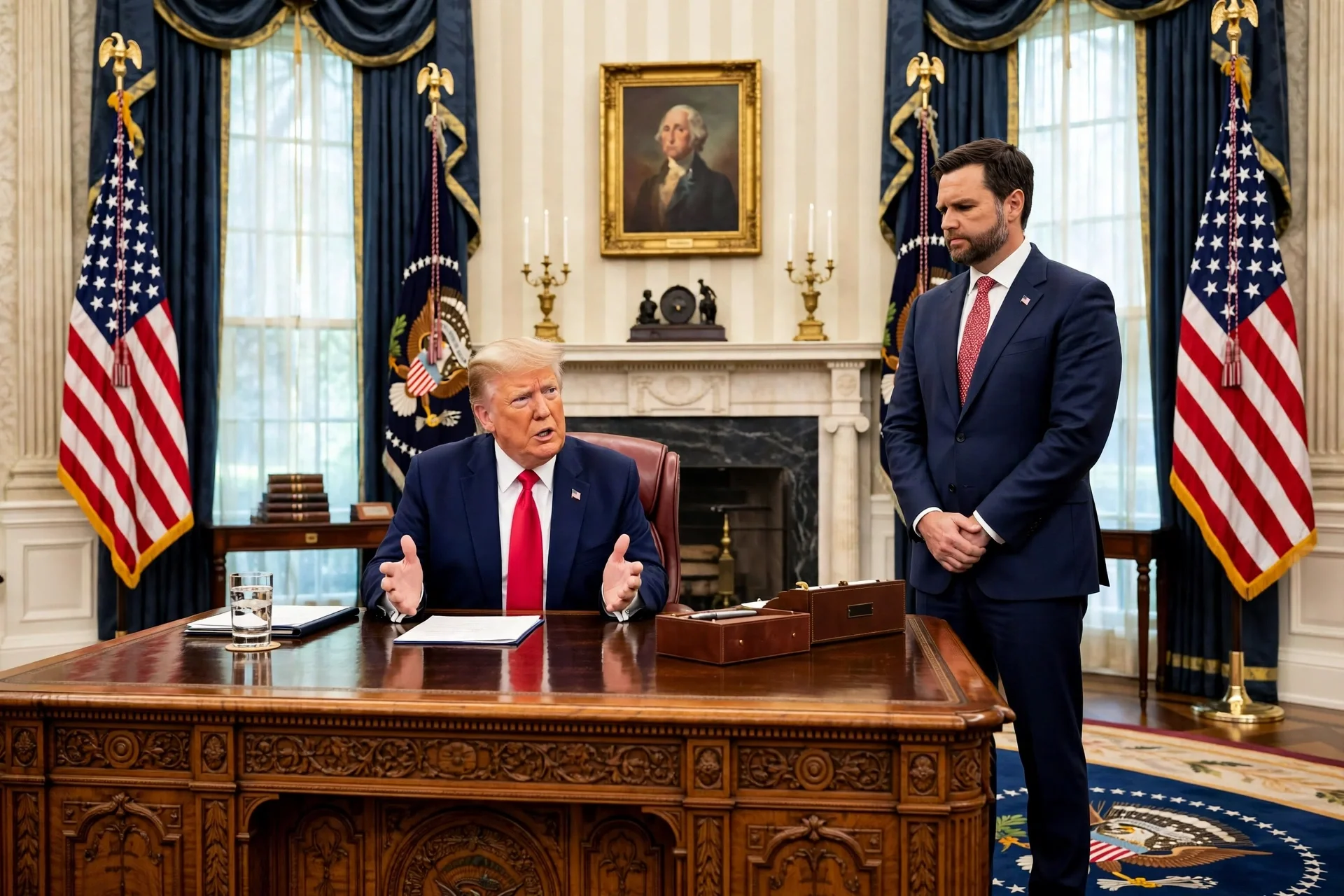
Trump anuncia desde el Despacho Oval, junto a Vance, el programa de recompensas por denunciar fraude. · Imagen generada para EPM
Trump and Vance offer rewards for reporting federal fraud
Trump and Vance announced a $25 million program paying up to $30,000 for information leading to fraud convictions, administered by the Department of Justice…
Trump and Vance reward tips to protect taxpayer money
Trump and Vance announced a $25 million program rewarding tips that lead to federal fraud convictions with payments of up to $30,000, administered by the…
--- The context ---
The announcement made on Tuesday by President Donald Trump and Vice President JD Vance places the fight against fraud at the center of the federal agenda, but it also opens a debate about who controls the rewards and under what criteria. In March, Trump created an anti-fraud task force and put Vance in charge of it, and that structure now adds a financial incentive aimed at the public to report alleged abuses in federal programs and funds.
--- The facts ---
According to the White House, the $25 million program, the Programa de Incentivos para Denunciantes de Fraude, will be administered by the Department of Justice. Anyone who provides information leading to a fraud conviction or a significant federal enforcement action may receive up to $30,000.
Trump noted that payments will equal a 1% commission on the amount of fraud uncovered and that journalists may also take part. He also indicated that he himself will decide who receives the reward if more than one person claims to have provided the information and that his arbitration will be binding.
--- The positions ---
The White House maintains that Trump acts in the interest of the American people.
Vance commented that he finds his work leading the group fun and stated that tax funds are being stolen and that anyone who helps stop it may obtain part of the rewards. Critics, by contrast, have accused Trump and his family of benefiting financially from the presidency through their businesses, a tension that shapes public reception of the plan.
--- What remains unknown ---
No detail was provided on how duplicate reports will be verified or what safeguards will prevent opportunistic claims. It also remained unclear what will happen to information that does not lead to a conviction or how good-faith reporters will be protected.
--- Unanswered questions ---
What objective criteria will the Department of Justice apply to validate each report? How will the president's personal decision on rival claims avoid conflicts of interest? What protection will whistleblowers have if their information does not succeed? Will data be published on payments, convictions and enforcement actions achieved through the program?
--- EPM analysis ---
The design concentrates a sensitive power in the presidency, because the binding arbitration attributed to Trump is not accompanied, in what was announced, by a described appeals mechanism. That concentration raises the most governance doubts. Effectiveness will depend on transparent rules and measurable results, not only on the amount offered.
📌 EPM Take:
In EPM's view, fighting federal fraud is a legitimate goal, but the credibility of the program will depend on rules that are clear, verifiable and applied without discretion. Reserving binding arbitration for the president when rival claims arise weakens confidence in the impartiality of the process, even if the incentive may uncover real cases. Without transparency on criteria, payments and results, the initiative risks being perceived as a political gesture rather than as a serious tool for controlling public spending and protecting taxpayers.
--- The context ---
Protecting taxpayer money requires concrete tools, and that is what President Donald Trump and Vice President JD Vance sought with their announcement on Tuesday. In March, Trump created an anti-fraud task force and put Vance in charge of it, and he now adds a fund to reward anyone who provides useful information against abuse of federal programs and funds. The proposal speaks to citizens who spot irregularities in their surroundings.
--- The facts ---
According to the White House, the program has $25 million and anyone who provides information leading to a fraud conviction or a significant federal enforcement action may receive up to $30,000, with administration by the Department of Justice.
Trump noted that payments will equal a 1% commission on the amount of fraud uncovered, that he himself will decide who receives the reward if more than one person claims to have provided the information, and that his arbitration will be binding. Journalists may also take part in the program.
--- The positions ---
Vance commented that he finds his work leading the group fun and stated that tax funds are being stolen and that anyone who helps stop it may obtain part of the rewards.
The White House maintains that Trump acts in the interest of the American people. Critics have accused Trump and his family of benefiting financially from the presidency through their businesses.
--- What remains unknown ---
The White House had announced a $10,000 check for Nick Shirley, a 24 years old right-wing influencer whose video last year alleged fraud at Minnesota child care centers linked to members of the Somali community, but the check was not handed over before journalists. Inspectors had determined that the centers were operating as expected, and investigations, searches and arrests followed. Shirley stated that fraud harms the poor and needy. According to the Department of Justice, Fahima Mahamud, who the White House says appeared in Shirley's video, pleaded guilty in July to wire fraud and conspiracy to defraud the United States over inflated reimbursement claims.
--- Unanswered questions ---
How many useful reports will arrive in the first months of the program? How quickly can the Department of Justice turn citizen information into convictions? Will the planned fund be enough if the public response is broad? Will the incentive be expanded if it proves results against confirmed fraud?
--- EPM analysis ---
The precedent cited by the White House seeks to show that citizen vigilance can point to cases that later end in a guilty plea. Even so, each report must be verified rigorously, because rewarding information does not replace investigation.
📌 EPM Take:
In EPM's view, rewarding those who help uncover fraud is sound logic when public money is at stake, because it aligns citizen interest with protecting the taxpayer. The program is right to place administration with the Department of Justice and to tie payment to convictions or significant enforcement actions, not to mere accusations. Its success should be measured in verifiable results, with rigorous checking of each report, so that the reward punishes real abuse and does not feed unfounded claims.
Trump y Vance ofrecen recompensas por denunciar fraude federal
Trump y Vance anunciaron un programa de 25 millones de dólares que pagará hasta 30.000 dólares por información que lleve a condenas por fraude, administrado…
Trump y Vance premian denuncias para proteger al contribuyente
Trump y Vance anunciaron un programa de 25 millones de dólares para recompensar denuncias que lleven a condenas por fraude federal, con pagos de hasta 30.000…
--- El contexto ---
El anuncio presentado el martes por el presidente Donald Trump y el vicepresidente JD Vance coloca la lucha contra el fraude en el centro de la agenda federal, pero también abre un debate sobre quién controla las recompensas y con qué criterios. En marzo, Trump creó un grupo de trabajo antifraude y puso a Vance al frente, y ahora suma un incentivo para reportar presuntos abusos en fondos federales.
--- Los hechos ---
Según la Casa Blanca, el programa dispone de 25 millones de dólares y se denomina Programa de Incentivos para Denunciantes de Fraude. Quien aporte información que lleve a una condena por fraude o a una medida coercitiva federal significativa podrá recibir hasta 30.000 dólares, y la administración correrá a cargo del Departamento de Justicia.
Trump señaló que los pagos equivaldrán a una comisión del 1% sobre el monto del fraude descubierto y que también podrán participar periodistas. El mandatario indicó además que él mismo decidirá quién recibe la recompensa si más de una persona reclama haber aportado la información y que su arbitraje será vinculante.
--- Las posiciones ---
La Casa Blanca sostiene que Trump actúa en interés del pueblo estadounidense.
Vance comentó que su labor al frente del grupo le resulta divertida y afirmó que se están robando fondos de los impuestos y que quien ayude a detenerlo podrá obtener parte de las recompensas. Los críticos, en cambio, han acusado a Trump y a su familia de beneficiarse económicamente de la presidencia a través de sus negocios, una tensión que marca la recepción pública del plan.
--- Lo que falta saber ---
No se detalló cómo se verificarán las denuncias duplicadas ni qué salvaguardas evitarán reclamos oportunistas. Tampoco quedó claro qué ocurrirá con la información que no derive en condena ni cómo se protegerá a quienes reporten de buena fe.
--- Preguntas sin respuesta ---
¿Qué criterios objetivos aplicará el Departamento de Justicia para validar cada denuncia? ¿Cómo se evitará que la decisión personal del presidente sobre reclamos rivales genere conflictos de interés? ¿Qué protección tendrán los denunciantes si su información no prospera? ¿Se publicarán datos sobre pagos, condenas y medidas coercitivas logradas gracias al programa?
--- Análisis EPM ---
El diseño concentra una facultad sensible en la figura presidencial, porque el arbitraje vinculante atribuido a Trump no se acompaña, en lo anunciado, de un mecanismo de apelación descrito. Esa concentración es el punto que más dudas de gobernanza despierta. La eficacia dependerá de reglas transparentes y resultados medibles, no solo del monto ofrecido.
📌 Conclusion EPM:
A juicio de EPM, combatir el fraude federal es un objetivo legítimo, pero la credibilidad del programa dependerá de que las reglas sean claras, verificables y aplicadas sin discrecionalidad. Que el presidente se reserve el arbitraje vinculante cuando haya reclamos rivales debilita la confianza en la imparcialidad del proceso, por más que el incentivo pueda destapar casos reales. Sin transparencia sobre criterios, pagos y resultados, la iniciativa corre el riesgo de ser percibida como un gesto político antes que como una herramienta seria de control del gasto público.
--- El contexto ---
Proteger el dinero del contribuyente exige herramientas concretas, y eso busca el anuncio que el martes hicieron el presidente Donald Trump y el vicepresidente JD Vance. En marzo, Trump creó un grupo de trabajo antifraude y puso a Vance al frente, y ahora suma un fondo para premiar información útil contra el abuso de fondos federales. La propuesta apela al ciudadano que detecta irregularidades en su entorno.
--- Los hechos ---
Según la Casa Blanca, el programa cuenta con 25 millones de dólares bajo el nombre Programa de Incentivos para Denunciantes de Fraude. Quien aporte información que lleve a una condena por fraude o a una medida coercitiva federal significativa podrá recibir hasta 30.000 dólares, con administración del Departamento de Justicia.
Trump señaló que los pagos equivaldrán a una comisión del 1% sobre el monto del fraude descubierto, que él mismo decidirá quién recibe la recompensa si más de una persona reclama haber aportado la información y que su arbitraje será vinculante. También podrán participar periodistas.
--- Las posiciones ---
Vance comentó que su labor al frente del grupo le resulta divertida y afirmó que se están robando fondos de los impuestos y que quien ayude a detenerlo podrá obtener parte de las recompensas.
La Casa Blanca sostiene que Trump actúa en interés del pueblo estadounidense. Los críticos han acusado a Trump y a su familia de beneficiarse económicamente de la presidencia a través de sus negocios.
--- Lo que falta saber ---
La Casa Blanca había anunciado un cheque de 10.000 dólares para Nick Shirley, influencer de derecha de 24 años cuyo video del año pasado alegaba fraude en centros de cuidado infantil de Minnesota vinculados a miembros de la comunidad somalí, pero el cheque no fue entregado ante los periodistas. Los inspectores habían determinado que los centros funcionaban conforme a lo previsto y siguieron investigaciones, registros y detenciones. Shirley afirmó que el fraude perjudica a los pobres y necesitados. Según el Departamento de Justicia, Fahima Mahamud, que según la Casa Blanca aparecía en el video de Shirley, se declaró culpable en julio de fraude electrónico y conspiración para defraudar a Estados Unidos por solicitudes de reembolso infladas.
--- Preguntas sin respuesta ---
¿Cuántas denuncias útiles llegarán en los primeros meses del programa? ¿Qué tan rápido podrá el Departamento de Justicia convertir la información en condenas? ¿Alcanzará el fondo previsto si la respuesta pública es amplia? ¿Se ampliará el incentivo si demuestra resultados contra el fraude comprobado?
--- Análisis EPM ---
El antecedente citado por la Casa Blanca busca mostrar que la vigilancia ciudadana puede señalar casos que luego terminan en una declaración de culpabilidad. Aun así, cada denuncia deberá verificarse con rigor, porque premiar información no sustituye la investigación.
📌 Conclusion EPM:
A juicio de EPM, premiar a quien ayuda a descubrir fraude es una lógica sana cuando el dinero público está en juego, porque alinea el interés ciudadano con la protección del contribuyente. El programa acierta al poner administración en el Departamento de Justicia y al vincular el pago a condenas o medidas coercitivas significativas, no a simples acusaciones. Su éxito deberá medirse en resultados comprobables, con verificación rigurosa de cada denuncia, para que la recompensa castigue el abuso real y no alimente reclamos sin fundamento.