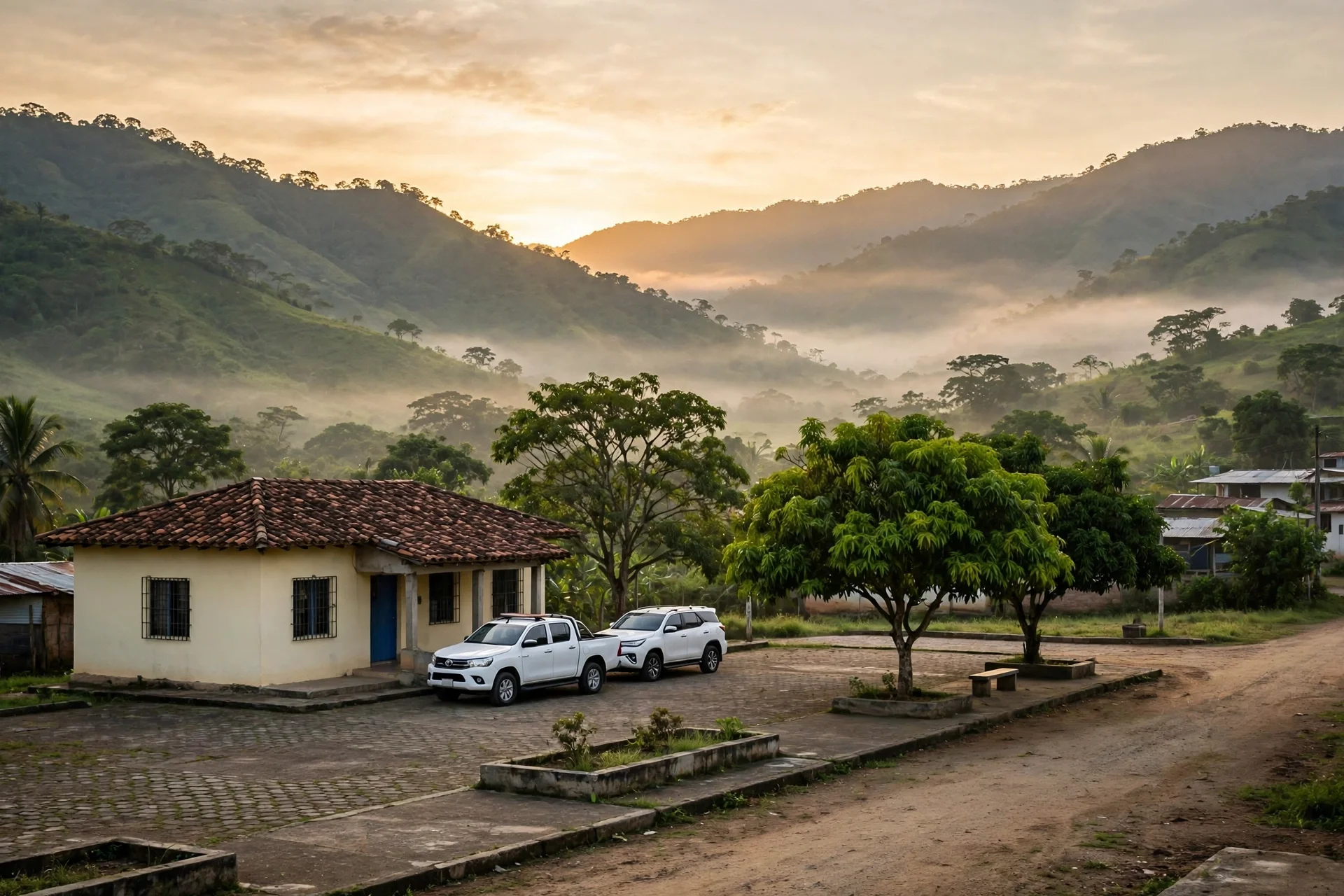
Un municipio del sur del Cesar al amanecer, con presencia oficial reforzada tras el ataque contra la estación de Policía de Pelaya. · Imagen generada para EPM
Drone attack on Pelaya police station wounds six officers in Cesar
A drone attack on the Pelaya police station in southern Cesar wounded six officers, two with health complications.
Six officers wounded as drones strike Pelaya police station in Cesar
Four grenades launched from drones hit the Pelaya police station and wounded six officers.
--- The context ---
Pelaya, in southern Cesar, is again at the center of security concerns after a new attack on its police station. The departmental government reported that this is the second action of this type to affect the municipality, a background that raises alarm about the use of drones carrying explosives against the public force.
The episode comes as authorities discuss how to respond to a threat that combines devices launched from the air with difficulties in detecting them in time. The Cesar government links what happened to other attacks with unmanned aircraft and to the need for technology to prevent new aggressions.
--- The facts ---
During the early morning, four grenades hit the Pelaya police station, according to Cesar government secretary Eduardo Esquivel in a video shared on the social network X. Authorities attributed the action to devices launched from drones and confirmed that six officers were wounded.
Two of the officers have health complications and are receiving care in health centers, according to the official report. The other four were taken for medical evaluation. After the attack, units of the National Army and the National Police reinforced their presence in the area, and a deployment was activated to locate those responsible and identify who allegedly operated the drones.
--- The positions ---
The government secretary conveyed indirectly the departmental government's rejection of what he described as a new terrorist attack in Pelaya and said monitoring continues from the Unified Command Post. The departmental government expressed solidarity with the wounded officers and their families and said it will maintain measures to reinforce security.
Governor Elvia Milena Sanjuan, as Esquivel explained, contacted the minister of Defense and the minister of the Interior to ask that the purchase of equipment to detect or neutralize drones be accelerated. The department seeks to advance an agreement with resources from the Cesar Security Fund, with joint financing, and reiterated a reward of up to $150 millones for information on those responsible.
--- What remains unknown ---
The departmental government did not specify when anti-drone technology would be available or provide details on the type of equipment it intends to acquire. It also did not say whether there are indications about the armed structure that allegedly took part, a central fact for understanding the threat and guiding the investigation.
--- Unanswered questions ---
What armed structure could be behind the attack on the Pelaya station? How were the explosives launched and from where were the drones operated without being detected? When will the anti-drone technology requested by the department arrive and what capacity will it have to prevent another attack?
--- EPM analysis ---
If a police station can be hit for a second time with grenades launched from drones, the problem is also one of anticipation and of protection for facilities that should have early warnings. The response combines a ground operation, coordination with the Tenth Brigade under the Urano Security Front and outreach to the national government, but its effectiveness will depend on concrete timelines and verifiable results.
📌 EPM Take:
In EPM's view, what happened in Pelaya confirms that the use of drones against the public force is no longer an isolated event in Cesar and requires a response that does not stop at public rejection. The immediate priority is the recovery of the six wounded officers and the identification of those responsible, but the deeper test will be whether the anti-drone agreement advances with clear deadlines, whether the reward produces useful information and whether the reinforced presence translates into sustained protection for residents and officers.
--- The context ---
The Pelaya police station, in southern Cesar, was attacked again during the early morning in an action the departmental government attributed to devices launched from drones. Government secretary Eduardo Esquivel said this is the second action of this type to affect the municipality, a fact that justifies immediately reinforcing protection for the public force.
At the center of the response is public order. The Cesar government says it will continue coordinated actions with the Tenth Brigade of the National Army and with the Police under the Urano Security Front, and that it will maintain monitoring from the Unified Command Post to guarantee the security of all residents of Cesar.
--- The facts ---
Four grenades hit the station, according to Esquivel in a video shared on the social network X. Six officers were wounded. Two have health complications and are receiving care in health centers, while the other four were taken for medical evaluation, according to the official report from the departmental government.
After the attack, units of the National Army and the National Police reinforced their presence in the area. The operation seeks to identify who allegedly operated the drones, establish how the explosives were launched and locate those responsible. The administration reiterated a reward of up to $150 millones for information that makes it possible to identify and locate those who use drones against the public force.
--- The positions ---
The departmental government conveyed indirectly its rejection of what it described as a new terrorist attack and expressed solidarity with the wounded officers and their families. Esquivel said the departmental government will maintain measures to reinforce security and that the objective is to strengthen protection for the population.
Governor Elvia Milena Sanjuan contacted the minister of Defense and the minister of the Interior to brief them on the attack, according to the secretary. The main request seeks to accelerate the purchase of equipment to detect or neutralize unmanned aircraft, through an agreement with resources from the Cesar Security Fund and joint financing.
--- What remains unknown ---
It is still not known what armed structure allegedly took part in the attack or what indications investigators have about the drone operators. The departmental government also did not specify when anti-drone technology would be available or what equipment would be added, clarifications needed to assess whether the announcement will become a real operational capacity.
--- Unanswered questions ---
Who operated the drones that launched the grenades against the Pelaya station? What concrete measures will now protect the officers at that headquarters against a third attack? Within what timeframe will the anti-drone agreement be signed and with exactly what resources will the joint financing be funded?
--- EPM analysis ---
The seriousness of the case lies in repetition. A second attack of the same type against the same population suggests those responsible found a route of aggression that evades traditional controls and strikes those who represent the state in the territory. Against that, the deployment and the reward seek to break impunity with citizen information and show immediate presence while the technological response is defined.
📌 EPM Take:
In EPM's view, the response in Pelaya must be measured in deeds and not only in statements, because the security of officers and neighbors depends on the announced reinforcement being sustained over time. The operation, the reward of up to $150 millones and the outreach to the ministers are coherent steps, but they will fall short if the drone operators are not identified soon, if the structure backing them is not clarified and if anti-drone technology is slow to reach the most vulnerable stations.
Seis policías heridos en ataque con drones contra estación de Pelaya
Un ataque con drones contra la estación de Policía de Pelaya, en el sur del Cesar, dejó seis uniformados heridos, dos con complicaciones de salud.
Ataque con drones en Pelaya deja seis policías heridos y activa operativo
Cuatro granadas lanzadas desde drones impactaron la estación de Policía de Pelaya y dejaron seis uniformados heridos.
--- El contexto ---
Pelaya, en el sur del Cesar, volvió a quedar en el centro de la preocupación por la seguridad tras un nuevo ataque contra su estación de Policía. La Gobernación departamental informó que se trata de la segunda acción de este tipo que afecta al municipio, un antecedente que eleva la alarma sobre el uso de drones con explosivos contra la fuerza pública.
El episodio ocurre mientras las autoridades discuten cómo responder a una amenaza que combina artefactos lanzados desde el aire y dificultades para detectarlos a tiempo. El Gobierno del Cesar lo vincula con otros ataques similares.
--- Los hechos ---
Durante la madrugada, cuatro granadas impactaron en la estación de Policía de Pelaya, según indicó el secretario de Gobierno del Cesar, Eduardo Esquivel, en un video difundido en la red social X. Las autoridades atribuyeron la acción a artefactos lanzados desde drones y confirmaron que seis uniformados resultaron heridos.
Dos de los policías presentan complicaciones de salud y reciben atención en centros asistenciales, de acuerdo con el reporte oficial. Los otros cuatro fueron trasladados para valoración médica. Tras el ataque, unidades del Ejército Nacional y de la Policía Nacional reforzaron su presencia en la zona y se activó un despliegue para localizar a los responsables e identificar a quienes habrían operado los drones.
--- Las posiciones ---
El secretario de Gobierno expresó en indirecto el rechazo del Gobierno departamental a lo que calificó como un nuevo ataque terrorista en Pelaya y sostuvo que se mantiene seguimiento desde el Puesto de Mando Unificado. La Gobernación expresó su solidaridad con los policías heridos y sus familias y afirmó que mantendrá las medidas para reforzar la seguridad.
La gobernadora Elvia Milena Sanjuan, según explicó Esquivel, contactó al ministro de Defensa y al ministro del Interior para pedir que se acelere la adquisición de equipos que permitan detectar o neutralizar drones. El Departamento busca avanzar en un convenio con recursos del Fondo de Seguridad del Cesar, con una bolsa conjunta de financiación, y reiteró una recompensa de hasta $150 millones por información sobre los responsables.
--- Lo que falta saber ---
La Gobernación no precisó cuándo estaría disponible la tecnología antidrones ni entregó detalles sobre el tipo de equipos que pretende incorporar. Tampoco informó si existen indicios sobre la estructura armada que habría participado, un dato central para entender la amenaza y orientar la investigación.
--- Preguntas sin respuesta ---
¿Qué estructura armada estaría detrás del ataque contra la estación de Pelaya? ¿Cómo fueron lanzados los explosivos y desde qué punto operaron los drones sin ser detectados? ¿Cuándo llegará la tecnología antidrones que reclama el departamento y qué capacidad tendrá para prevenir otro ataque?
--- Análisis EPM ---
Si una estación policial puede ser alcanzada por segunda vez con granadas lanzadas desde drones, el problema es también de anticipación y de protección de instalaciones que deberían contar con alertas tempranas. La respuesta combina operativo en terreno, coordinación con la Décima Brigada en el marco del Frente de Seguridad Urano y gestión ante el Gobierno nacional, pero su eficacia dependerá de tiempos concretos y de resultados verificables.
📌 Conclusion EPM:
A juicio de EPM, lo ocurrido en Pelaya confirma que el uso de drones contra la fuerza pública dejó de ser un hecho aislado en el Cesar y exige una respuesta que no se quede en el rechazo público. La prioridad inmediata es la recuperación de los seis policías heridos y la identificación de los responsables, pero la prueba de fondo será si el convenio antidrones avanza con plazos claros, si la recompensa produce información útil y si la presencia reforzada se traduce en protección sostenida para la población y los uniformados.
--- El contexto ---
La estación de Policía de Pelaya, en el sur del Cesar, fue atacada de nuevo durante la madrugada, en una acción que la Gobernación departamental atribuyó a artefactos lanzados desde drones. El secretario de Gobierno, Eduardo Esquivel, afirmó que se trata de la segunda acción de este tipo que afecta al municipio.
En el centro de la respuesta está el orden público. El Gobierno del Cesar sostiene que continuará las acciones articuladas con la Décima Brigada del Ejército Nacional y con la Policía en el marco del Frente de Seguridad Urano, y mantendrá el seguimiento desde el Puesto de Mando Unificado.
--- Los hechos ---
Cuatro granadas impactaron en la estación, según indicó Esquivel en un video difundido en la red social X. Seis uniformados resultaron heridos. Dos presentan complicaciones de salud y reciben atención en centros asistenciales, mientras los otros cuatro fueron trasladados para valoración médica, de acuerdo con el reporte oficial de la Gobernación.
Después del atentado, unidades del Ejército Nacional y de la Policía Nacional reforzaron su presencia en la zona. La operación busca identificar a quienes habrían operado los drones, establecer cómo fueron lanzados los explosivos y localizar a los responsables. La administración reiteró una recompensa de hasta $150 millones por información que permita identificar y ubicar a quienes usan drones contra la fuerza pública.
--- Las posiciones ---
El Gobierno departamental expresó en indirecto su rechazo a lo que calificó como un nuevo ataque terrorista y manifestó su solidaridad con los policías heridos y sus familias. Esquivel sostuvo que la Gobernación mantendrá las medidas para reforzar la seguridad y que el objetivo es fortalecer la protección de la población.
La gobernadora Elvia Milena Sanjuan contactó al ministro de Defensa y al ministro del Interior para contextualizarlos sobre el ataque, según afirmó el secretario. La solicitud apunta a acelerar la adquisición de equipos para detectar o neutralizar aeronaves no tripuladas, mediante un convenio con recursos del Fondo de Seguridad del Cesar y una bolsa conjunta de financiación.
--- Lo que falta saber ---
Aún no se conoce qué estructura armada habría participado en el ataque ni qué indicios manejan los investigadores sobre los operadores de los drones. La Gobernación tampoco precisó cuándo estaría disponible la tecnología antidrones ni qué equipos se incorporarían, precisiones necesarias para evaluar si el anuncio será una capacidad operativa real.
--- Preguntas sin respuesta ---
¿Quién operó los drones que lanzaron las granadas contra la estación de Pelaya? ¿Qué medidas concretas protegerán desde ahora a los policías de esa sede frente a un tercer ataque? ¿En qué plazo se firmará el convenio antidrones y con qué recursos contará la bolsa conjunta?
--- Análisis EPM ---
La gravedad del caso está en la repetición. Un segundo ataque del mismo tipo contra la misma población sugiere que los responsables encontraron una vía de agresión que elude controles tradicionales y castiga a quienes representan al Estado en el territorio. Frente a eso, el despliegue y la recompensa buscan romper la impunidad con información ciudadana y mostrar presencia inmediata mientras se define la respuesta tecnológica.
📌 Conclusion EPM:
A juicio de EPM, la respuesta en Pelaya debe medirse en hechos y no solo en pronunciamientos, porque la seguridad de los policías y de los vecinos depende de que el refuerzo anunciado se sostenga en el tiempo. El operativo, la recompensa de hasta $150 millones y la gestión ante los ministros son pasos coherentes, pero quedarán cortos si no se identifica pronto a los operadores de los drones, si no se aclara qué estructura los respalda y si la tecnología antidrones tarda en llegar a las estaciones más vulnerables.