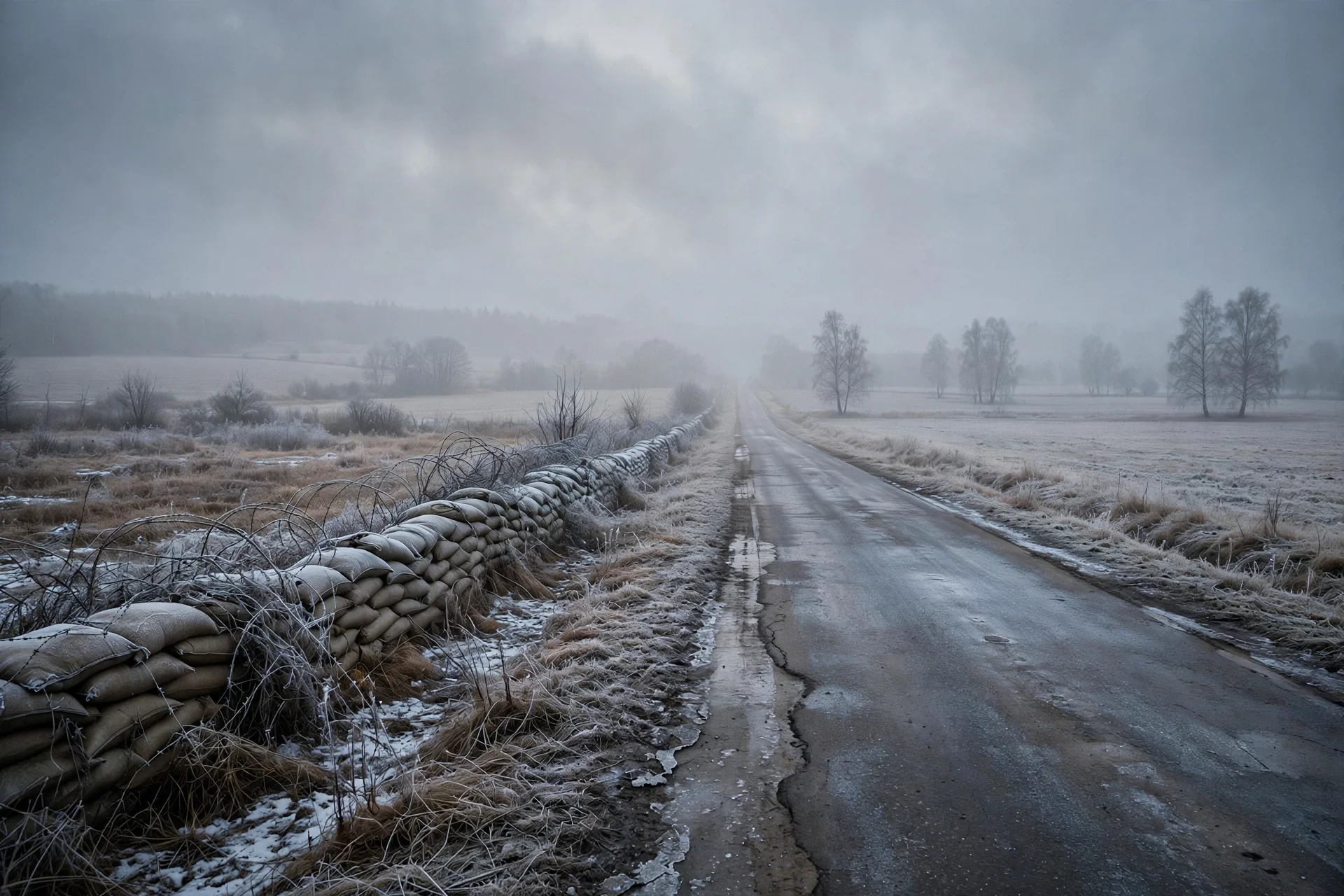
Imagen alusiva de una línea de frente en pausa en un paisaje invernal de Europa del Este. · Imagen generada para EPM
Zelensky open to freezing front line to move toward a peace deal
Volodymyr Zelensky showed himself willing to freeze the current front line to move toward a peace agreement, with United States security guarantees, help to…
Zelensky shifts from 1991 borders to freezing the current front
Zelensky moved beyond the demand to recover the 1991 borders and accepts freezing the current line, where Russia controls approximately 20% of the territory…
--- The context ---
Ukraine's president, Volodymyr Zelensky, has changed the tone he maintained since the start of the conflict.
Where the demand for a total withdrawal of Russian troops and the recovery of territorial integrity within the 1991 borders once prevailed, a more pragmatic stance now appears, focused on stopping the war, preserving the survival of the state and protecting the civilian population.
--- The facts ---
In a television interview in the United States, Zelensky showed himself willing to freeze the current front line if doing so moves toward a peace agreement. He said, in paraphrase of his remarks, that the conflict must be frozen at this moment and that this is the real way to end the war.
The front line stretches around 1,000 kilometres and Russian forces control approximately 20% of Ukrainian territory, including the Crimean peninsula, annexed in 2014, and areas of Donbas.
--- The positions ---
Zelensky argued that staying where the forces are and moving to diplomacy is the minimum now needed from Russia. He welcomed United States President Donald Trump's idea of launching a ceasefire, and defended that any agreement must pass through the country's parliament, because the Ukrainian people are the ones bearing all the losses. He also insisted that United States security guarantees must be present in any peace agreement, alongside partner help to rebuild the country.
--- What remains unknown ---
The source does not detail the concrete content of those security guarantees or a timetable for negotiating them. Nor does it specify what response Russia would give to a freeze of the current line, or on what terms the future of the territories controlled by Russian forces would be addressed. It also remains unspecified how the return would be handled of the 9.5 million Ukrainians who lost their homes and are now abroad, a figure Zelensky himself linked to reconstruction.
--- Unanswered questions ---
Would Russia accept stopping the fighting on the current line without new territorial demands? What concrete security guarantees would the United States offer and with what scope would they be written into an agreement? Does the Ukrainian parliament back a freeze of the front on these terms? When would the limitations still affecting the country's military communications be resolved?
--- EPM analysis ---
The shift matters because it reorders Kyiv's priorities: first stop the deaths and ensure that occupation does not return, then discuss the rest. Zelensky tied that security to external guarantees and to reconstruction, not only to a temporary ceasefire. At the same time, he acknowledged persistent limitations in Starlink, fundamental for military communications, and explained that those failures in recent days prevented responses to several large-scale attacks using Iranian drones, while stressing that those systems are used only to defend civilian lives in cities and towns.
📌 EPM Take:
In EPM's view, the willingness to freeze the front marks public recognition that the peace possible today runs through stopping the war rather than immediately recovering all the lost territory. That bet will only have value if the security guarantees are real, verifiable and capable of preventing occupation and deaths from returning. Without that backing, a pause on the current line would be merely a fragile respite, and not the stable end Zelensky says he seeks for his country and for those who lost their homes.
--- The context ---
For much of the conflict, Kyiv's public position rested on two maximal demands: the total withdrawal of Russian troops and the recovery of territorial integrity within the 1991 borders.
According to the report itself, Moscow never listened to those demands in peace conversations. The result is a front line stretching around 1,000 kilometres and Russian control of approximately 20% of Ukrainian territory, a reality that now frames every diplomatic option.
--- The facts ---
President Volodymyr Zelensky showed himself willing to accept the current front line to move toward a peace agreement. In a television interview in the United States, he acknowledged, in paraphrase of his statements, that the conflict must be frozen at this moment and that this is the real way to end the war.
Asked about an agreement when Ukraine has lost around 20% of its territory, he replied that freezing and stopping is the minimum now needed from Russia.
--- The positions ---
Zelensky defended staying where the forces are and moving to diplomacy, and welcomed United States President Donald Trump's idea of launching a ceasefire. He demanded that United States security guarantees be present in any agreement and that partners help rebuild the country alongside the 9.5 million Ukrainians who lost their homes and are abroad. He also held that nobody can simply leave and abandon their homes, and that every agreement must pass through parliament because the people bear the war's losses and efforts.
--- What remains unknown ---
The report provides no Russian response to this willingness and no agreement text on the table. It is not known what concrete guarantees will be requested from the United States president and from the Europeans, whom Zelensky said he will approach to request them. Nor is the future detailed of Crimea, annexed in 2014, or of the Donbas areas under Russian control, nor a deadline for parliament to pronounce on an eventual peace agreement.
--- Unanswered questions ---
Is Russia willing to freeze the current line or will it demand recognition of additional territorial changes? What security guarantees would the United States be willing to sign and for how long? Will the Ukrainian parliament accept an agreement that does not recover the 1991 borders? Will the Starlink limitations affecting the country's defence be resolved soon?
--- EPM analysis ---
The change of discourse reads as realism: the survival of the state and the end of the war take precedence over demands that found no hearing. But freezing a front does not amount to resolving the underlying conflict, because the occupied territory would remain under Russian control. The strength or weakness of the step will depend on the guarantees accompanying it and on Ukrainian defence not being left exposed while talks proceed, a sensitive point while limitations persist in military communications considered vital to protect civilians.
📌 EPM Take:
In EPM's view, Zelensky has put on the table the least bad option among those available: stopping the war on the current line rather than prolonging it in the name of maximal demands Moscow never listened to. Prudence requires not confusing that pause with a just or definitive peace. Its value will depend on firm security guarantees, on parliamentary approval and on the freeze not becoming the permanent consolidation of the loss of around 20% of Ukrainian territory.
Zelenski acepta congelar el frente para buscar un acuerdo de paz
Volodimir Zelenski se mostró dispuesto a congelar la actual línea del frente para avanzar hacia un acuerdo de paz, con garantías de seguridad de Estados…
Zelenski pasa de las fronteras de 1991 a congelar la línea actual
Zelenski dejó atrás la exigencia de recuperar las fronteras de 1991 y acepta congelar la línea actual, donde Rusia controla aproximadamente el 20% del…
--- El contexto ---
El presidente de Ucrania, Volodimir Zelenski, ha cambiado el tono que mantuvo desde el inicio del conflicto.
Donde antes predominaba la exigencia de una retirada total de las tropas rusas y la recuperación de la integridad territorial con las fronteras de 1991, ahora aparece una postura más pragmática, centrada en detener la guerra, preservar la supervivencia del Estado y proteger a la población civil.
--- Los hechos ---
En una entrevista televisiva en Estados Unidos, Zelenski se mostró dispuesto a congelar la actual línea del frente si con ello se avanza hacia un acuerdo de paz. Afirmó, en paráfrasis de sus palabras, que en este momento hay que congelar el conflicto y que esa es la forma real de terminar la guerra.
La línea del frente se extiende alrededor de 1.000 kilómetros y las fuerzas rusas controlan aproximadamente el 20% del territorio ucraniano, incluida la península de Crimea, anexionada en 2014, y zonas del Donbás.
--- Las posiciones ---
Zelenski sostuvo que quedarse donde están las fuerzas y pasar a la diplomacia es el paso mínimo que se necesita actualmente de Rusia. Aplaudió la idea de su par estadounidense, Donald Trump, de poner en marcha un alto el fuego, y defendió que cualquier acuerdo debe pasar por el Parlamento del país. Insistió en que las garantías de seguridad de Estados Unidos deben estar presentes en cualquier acuerdo, junto a la ayuda de los socios para reconstruir el país.
--- Lo que falta saber ---
La fuente no detalla el contenido concreto de esas garantías de seguridad ni un calendario para su negociación. Tampoco precisa qué respuesta daría Rusia a una congelación de la línea actual, ni en qué términos se abordaría el futuro de los territorios controlados por las fuerzas rusas. Queda igualmente sin concretar cómo se atendería el regreso de los 9,5 millones de ucranianos que perdieron sus hogares y que ahora se encuentran en el extranjero.
--- Preguntas sin respuesta ---
¿Aceptaría Rusia detener los combates en la línea actual sin nuevas exigencias territoriales? ¿Qué garantías de seguridad concretas ofrecería Estados Unidos y con qué alcance quedarían escritas en un acuerdo? ¿Respalda el Parlamento ucraniano una congelación del frente en estos términos? ¿Cuándo se resolverían las limitaciones que aún afectan a las comunicaciones militares del país?
--- Análisis EPM ---
El giro importa porque ordena las prioridades de Kiev de otro modo: primero detener las muertes y asegurar que la ocupación no regrese, después discutir el resto. Zelenski vinculó esa seguridad a garantías externas y a la reconstrucción, no solo a un alto el fuego temporal. Al mismo tiempo, reconoció limitaciones persistentes en Starlink, fundamentales para las comunicaciones militares, y explicó que esos fallos impidieron en los últimos días hacer frente a varios ataques a gran escala con drones iraníes.
📌 Conclusion EPM:
A juicio de EPM, la disposición a congelar el frente marca el reconocimiento público de que la paz posible hoy pasa por detener la guerra antes que por recuperar de inmediato todo el territorio perdido. Esa apuesta solo tendrá valor si las garantías de seguridad son reales, verificables y capaces de impedir que la ocupación y las muertes regresen. Sin ese respaldo, una pausa en la línea actual sería apenas un respiro frágil, y no el final estable que Zelenski dice buscar para su país y para quienes perdieron sus hogares.
--- El contexto ---
Durante buena parte del conflicto, la posición pública de Kiev se resumía en dos exigencias de máximos: la retirada total de las tropas rusas y la recuperación de la integridad territorial con las fronteras de 1991.
Según la propia crónica, Moscú nunca escuchó esas exigencias. El resultado es una línea del frente que se extiende alrededor de 1.000 kilómetros y un control ruso de aproximadamente el 20% del territorio ucraniano.
--- Los hechos ---
El presidente Volodimir Zelenski se mostró dispuesto a aceptar la actual línea del frente para avanzar hacia un acuerdo de paz. En una entrevista televisiva en Estados Unidos, reconoció, en paráfrasis de sus declaraciones, que en este momento hay que congelar el conflicto y que esa es la forma real de terminar la guerra.
Preguntado por un acuerdo cuando Ucrania ha perdido alrededor del 20% de su territorio, respondió que congelar y detener es lo mínimo que se necesita actualmente de Rusia.
--- Las posiciones ---
Zelenski defendió quedarse donde están las fuerzas y pasar a la diplomacia, y aplaudió la idea del presidente estadounidense, Donald Trump, de poner en marcha un alto el fuego. Exigió que las garantías de seguridad de Estados Unidos estén presentes en cualquier acuerdo y que los socios ayuden a reconstruir el país junto a los 9,5 millones de ucranianos que perdieron sus hogares y están en el extranjero. Sostuvo que nadie puede simplemente irse y dejar sus hogares, y que todo acuerdo debe pasar por el Parlamento porque el pueblo asume las pérdidas y los esfuerzos de la guerra.
--- Lo que falta saber ---
La crónica no aporta una respuesta rusa a esta disposición ni un texto de acuerdo sobre la mesa. No se conoce qué garantías concretas se pedirán al presidente estadounidense y a los europeos, a quienes Zelenski dijo que se dirigirá para solicitarlas. Tampoco se detalla el futuro de Crimea, anexionada en 2014, ni de las zonas del Donbás bajo control ruso.
--- Preguntas sin respuesta ---
¿Está Rusia dispuesta a congelar la línea actual o exigirá reconocer cambios territoriales adicionales? ¿Qué garantías de seguridad estaría dispuesto a firmar Estados Unidos y durante cuánto tiempo? ¿Aceptará el Parlamento ucraniano un acuerdo que no recupere las fronteras de 1991? ¿Se resolverán pronto las limitaciones de Starlink que afectan a la defensa del país?
--- Análisis EPM ---
El cambio de discurso tiene una lectura de realismo: prima la supervivencia del Estado y el fin de la guerra por encima de exigencias que no encontraron eco. Pero congelar un frente no equivale a resolver el conflicto de fondo, porque el territorio ocupado seguiría bajo control ruso. La fortaleza o debilidad del paso dependerá de las garantías que lo acompañen y de que la defensa ucraniana no quede expuesta mientras se negocia.
📌 Conclusion EPM:
A juicio de EPM, Zelenski ha puesto sobre la mesa la opción menos mala entre las disponibles: detener la guerra en la línea actual antes que prolongarla en nombre de unos máximos que Moscú nunca escuchó. La prudencia obliga a no confundir esa pausa con una paz justa o definitiva. Su valor dependerá de garantías de seguridad firmes, de la aprobación parlamentaria y de que la congelación no se convierta en la consolidación permanente de la pérdida de alrededor del 20% del territorio ucraniano.