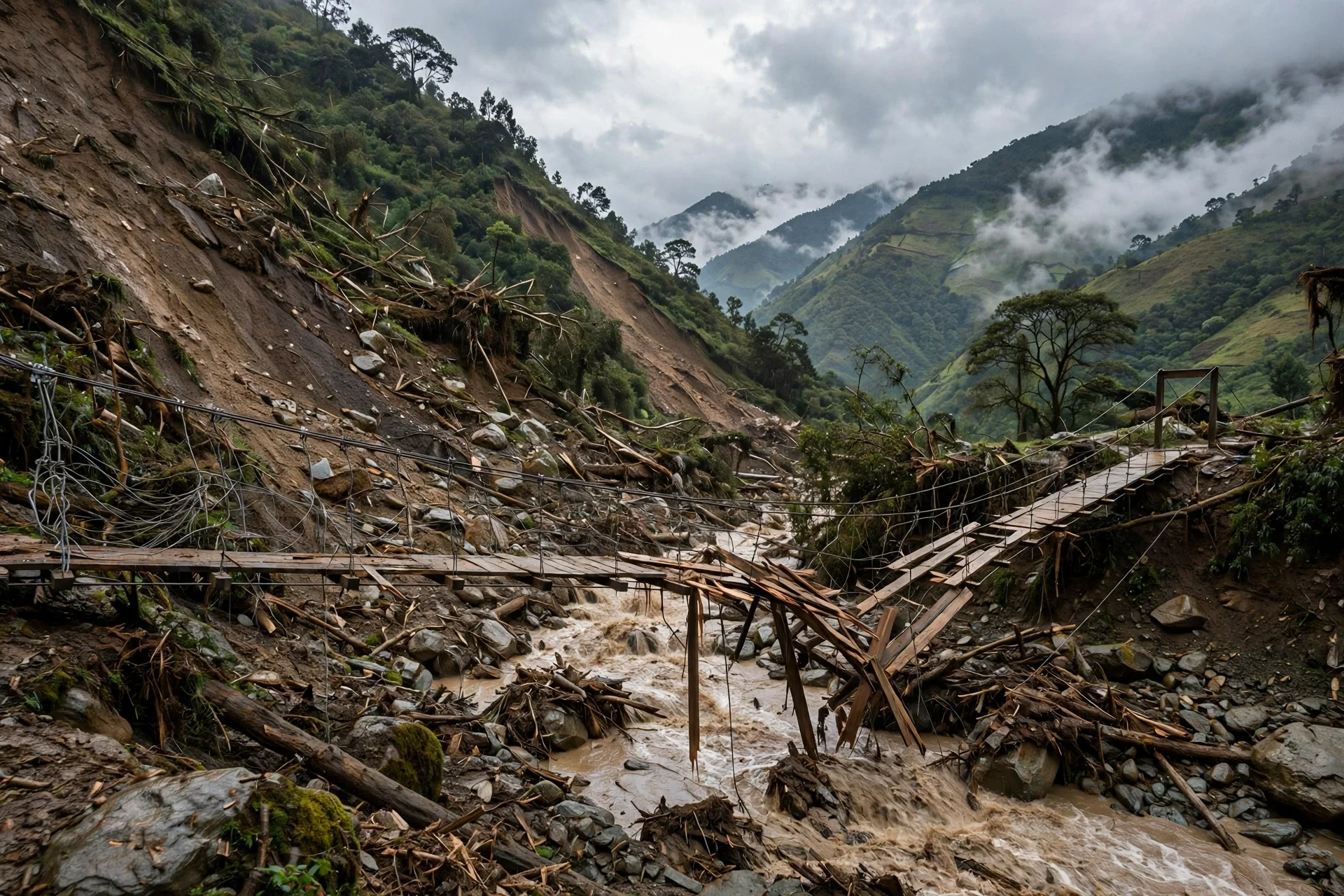
Avalanche in Guaca leaves 120 families without drinking water
An avalanche triggered by rains in the village of Sisota, in Guaca, Santander, left 120 families without drinking water, four bridges damaged, two homes…
Guaca seeks machinery after avalanche damages four bridges
The October 23, 2026 avalanche in the village of Sisota, in Guaca, Santander, damaged four bridges and the aqueduct, left 120 families without drinking water…
--- The context ---
The village of Sisota, in Guaca, Santander, depends on its rural aqueduct and on the road linking it with Los Ranchos. When rains damage that infrastructure, a farming community loses its water, its passage and part of its livelihood at the same time.
--- The facts ---
On October 23, 2026, the rains triggered an avalanche in Sisota that affected road infrastructure and the aqueduct, and 120 families remain without drinking water. The event left four bridges damaged, including two pedestrian bridges, two homes affected, and damage to the sewer system and to a batea.
The road connecting Guaca, Los Ranchos and Sisota remains closed, limiting rural travel and complicating access to the affected sectors. The emergency destroyed 10,000 trout fry and affected 10 hectares of potato, onion and garlic crops. Economic losses exceed $1,000 million, according to local authorities.
--- The positions ---
Mayor Ángel Ferney Villamizar said at a press conference that the municipality requires yellow machinery to work on the rural corridors, and attributed the families' lack of water to the damage to the aqueduct. The Mayor's Office asked the Government of Santander, the Ungrd and the Ministry of Agriculture for machinery, humanitarian aid and resources to reopen the roads, restore the supply and support the affected households.
Authorities in San Andrés, Cerrito and Suratá are monitoring the El Congreso, Servitá and Suratá rivers amid rains in the Almorzadero páramo, and relief agencies recommended staying away from banks, avoiding damaged bridges or roads and following official instructions.
--- What remains unknown ---
The scope of the interventions will depend on the technical assessment of the damage and on the availability of resources, with no known deadlines for the water or the road.
--- Unanswered questions ---
When will the 120 families recover drinking water?
When will the requested machinery and aid arrive?
What support will affected producers receive?
--- EPM analysis ---
A single avalanche cut off Sisota's water, mobility and income. If the response is limited to clearing the road, recovery will remain incomplete for those who lost crops and fry.
📌 EPM Take: In EPM's view, the priority in Guaca must be measured by the people of Sisota: drinking water first, safe passage next and real backing for those who lost crops and fry. The 120 families do not need announcements; they need machinery working, humanitarian aid arriving and a clear date for recovering their aqueduct. If the Government of Santander, the Ungrd and the Ministry of Agriculture respond quickly and with sufficient resources, the emergency can be addressed before persistent rains turn serious damage into a prolonged and far costlier rural crisis.
--- The context ---
Guaca, in Santander, sustains its rural life on the corridors connecting villages such as Sisota with Los Ranchos and on an aqueduct supplying its families. When an avalanche damages that basic infrastructure, the municipality needs local authority in charge and timely support from higher levels.
--- The facts ---
On October 23, 2026, the rains triggered an avalanche that affected road infrastructure and the aqueduct of Sisota, where 120 families remain without drinking water. The preliminary assessment records four bridges damaged, including two pedestrian bridges, two homes affected, and damage to the sewer system and to a batea.
The road connecting Guaca, Los Ranchos and Sisota remains closed, limiting rural travel and complicating access to the affected sectors. The emergency destroyed 10,000 trout fry and affected 10 hectares of potato, onion and garlic crops. Economic losses exceed $1,000 million, according to local authorities.
--- The positions ---
Mayor Ángel Ferney Villamizar said at a press conference that the municipality requires yellow machinery to work on the rural corridors, and reported the damage to the sewer system, the batea and the bridges, in addition to the crop losses. The Mayor's Office asked the Government of Santander, the Ungrd and the Ministry of Agriculture for machinery, humanitarian aid and resources to restore mobility and water.
Authorities in San Andrés, Cerrito and Suratá are monitoring the El Congreso, Servitá and Suratá rivers amid rains in the Almorzadero páramo, and relief agencies recommended staying away from banks, avoiding damaged bridges or roads and following official instructions.
--- What remains unknown ---
The scope of the interventions will depend on the technical assessment of the damage and on the availability of resources, with no deadlines set for reopening the road or restoring the water.
--- Unanswered questions ---
On what timeline can the closed road reopen?
When will the requested yellow machinery arrive?
How will producers who lost fry and crops be supported?
--- EPM analysis ---
Basic rural infrastructure admits no delays: a damaged bridge and a closed road isolate, and an affected aqueduct leaves 120 families without water. The response demands clear priorities and verifiable execution.
📌 EPM Take: In EPM's view, Guaca needs execution, not slow paperwork: the Mayor's Office has already identified the damage, requested the machinery and asked for support from the Government of Santander, the Ungrd and the Ministry of Agriculture. It is now up to those bodies to respond with concrete resources and verifiable deadlines. Each day with the road closed and without drinking water makes the emergency costlier and punishes the same families twice, first by the avalanche and then by the wait. Order is proven by restoring essential services quickly, safely and responsibly.
Avalancha en Guaca deja 120 familias sin agua potable
Una avalancha provocada por las lluvias en la vereda Sisota, en Guaca, Santander, dejó 120 familias sin agua potable, cuatro puentes con daños, dos viviendas…
Guaca pide maquinaria tras avalancha que dañó cuatro puentes
La avalancha del 23 de octubre de 2026 en la vereda Sisota, en Guaca, Santander, dañó cuatro puentes y el acueducto, dejó 120 familias sin agua potable y dos…
--- El contexto ---
La vereda Sisota, en Guaca, Santander, depende de su acueducto rural y de la vía que la conecta con Los Ranchos. Cuando las lluvias dañan esa infraestructura, una comunidad campesina pierde a la vez el agua, el paso y parte de su sustento.
--- Los hechos ---
El 23 de octubre de 2026 las lluvias provocaron una avalancha en Sisota que afectó la infraestructura vial y el acueducto, y 120 familias permanecen sin agua potable. El evento dejó cuatro puentes con daños, incluidos dos puentes peatonales, dos viviendas afectadas y daños en el alcantarillado y en una batea.
La vía que conecta Guaca, Los Ranchos y Sisota permanece cerrada, lo que limita el desplazamiento rural y complica la llegada a los sectores afectados. La emergencia destruyó 10.000 alevinos de trucha y afectó 10 hectáreas de cultivos de papa, cebolla y ajo. Las pérdidas económicas superan los $ 1.000 millones, según las autoridades locales.
--- Las posiciones ---
El alcalde Ángel Ferney Villamizar señaló en rueda de prensa que el municipio requiere maquinaria amarilla para intervenir los corredores rurales, y atribuyó a los daños en el acueducto que las familias sigan sin agua. La Alcaldía solicitó a la Gobernación de Santander, la Ungrd y el Ministerio de Agricultura maquinaria, ayuda humanitaria y recursos para habilitar las vías, recuperar el suministro y apoyar a los hogares damnificados.
Las autoridades de San Andrés, Cerrito y Suratá vigilan los ríos El Congreso, Servitá y Suratá por las lluvias en el páramo del Almorzadero, y los organismos de socorro recomendaron no acercarse a las riberas, evitar puentes o vías dañadas y seguir las instrucciones oficiales.
--- Lo que falta saber ---
El alcance de las intervenciones dependerá de la evaluación técnica de los daños y de la disponibilidad de recursos, sin plazos conocidos para el agua ni para la vía.
--- Preguntas sin respuesta ---
¿Cuándo recuperarán las 120 familias el agua potable?
¿Cuándo llegarán la maquinaria y la ayuda solicitadas?
¿Qué apoyo recibirán los productores afectados?
--- Análisis EPM ---
Una sola avalancha cortó el agua, la movilidad y el ingreso de Sisota. Si la respuesta se limita a despejar la vía, la recuperación quedará incompleta para quienes perdieron cultivos y alevinos.
📌 Conclusion EPM: A juicio de EPM, la prioridad en Guaca debe medirse por la gente de Sisota: agua potable primero, paso seguro después y respaldo real para quienes perdieron cultivos y alevinos. Las 120 familias no necesitan anuncios, necesitan maquinaria trabajando, ayuda humanitaria llegando y una fecha clara para recuperar su acueducto. Si la Gobernación, la Ungrd y el Ministerio de Agricultura responden con rapidez y recursos suficientes, la emergencia puede atenderse antes de que las lluvias persistentes conviertan un daño grave en una crisis rural prolongada y mucho más costosa.
--- El contexto ---
Guaca, en Santander, sostiene su vida rural sobre los corredores que conectan veredas como Sisota con Los Ranchos y sobre un acueducto que abastece a sus familias. Cuando una avalancha daña esa infraestructura básica, el municipio necesita autoridad local al frente y apoyo oportuno de las instancias superiores.
--- Los hechos ---
El 23 de octubre de 2026 las lluvias provocaron una avalancha que afectó la infraestructura vial y el acueducto de Sisota, donde 120 familias permanecen sin agua potable. El balance preliminar registra cuatro puentes con daños, incluidos dos puentes peatonales, dos viviendas afectadas y daños en el alcantarillado y en una batea.
La vía que conecta Guaca, Los Ranchos y Sisota permanece cerrada, lo que limita el desplazamiento rural y complica la llegada a los sectores afectados. La emergencia destruyó 10.000 alevinos de trucha y afectó 10 hectáreas de cultivos de papa, cebolla y ajo. Las pérdidas económicas superan los $ 1.000 millones, según las autoridades locales.
--- Las posiciones ---
El alcalde Ángel Ferney Villamizar indicó en rueda de prensa que el municipio requiere maquinaria amarilla para intervenir los corredores rurales, e informó de los daños en el alcantarillado, la batea y los puentes, además de las pérdidas en los cultivos. La Alcaldía solicitó a la Gobernación de Santander, la Ungrd y el Ministerio de Agricultura maquinaria, ayuda humanitaria y recursos para restablecer la movilidad y el agua.
Las autoridades de San Andrés, Cerrito y Suratá vigilan los ríos El Congreso, Servitá y Suratá por las lluvias en el páramo del Almorzadero, y los organismos de socorro recomendaron no acercarse a las riberas, evitar puentes o vías dañadas y seguir las instrucciones oficiales.
--- Lo que falta saber ---
El alcance de las intervenciones dependerá de la evaluación técnica de los daños y de la disponibilidad de recursos, sin plazos establecidos para reabrir la vía ni restablecer el agua.
--- Preguntas sin respuesta ---
¿En qué plazo podrá reabrirse la vía cerrada?
¿Cuándo llegará la maquinaria amarilla solicitada?
¿Cómo se apoyará a los productores que perdieron alevinos y cultivos?
--- Análisis EPM ---
La infraestructura rural básica no admite demoras: un puente dañado y una vía cerrada aíslan, y un acueducto afectado deja sin agua a 120 familias. La respuesta exige prioridades claras y ejecución verificable.
📌 Conclusion EPM: A juicio de EPM, Guaca necesita ejecución, no trámites lentos: la Alcaldía ya identificó los daños, pidió la maquinaria y solicitó apoyo a la Gobernación de Santander, la Ungrd y el Ministerio de Agricultura. Ahora corresponde que esas instancias respondan con recursos concretos y plazos verificables. Cada día con la vía cerrada y sin agua potable encarece la emergencia y castiga dos veces a las mismas familias, primero por la avalancha y después por la espera. El orden se demuestra restableciendo servicios esenciales con rapidez, seguridad y responsabilidad.