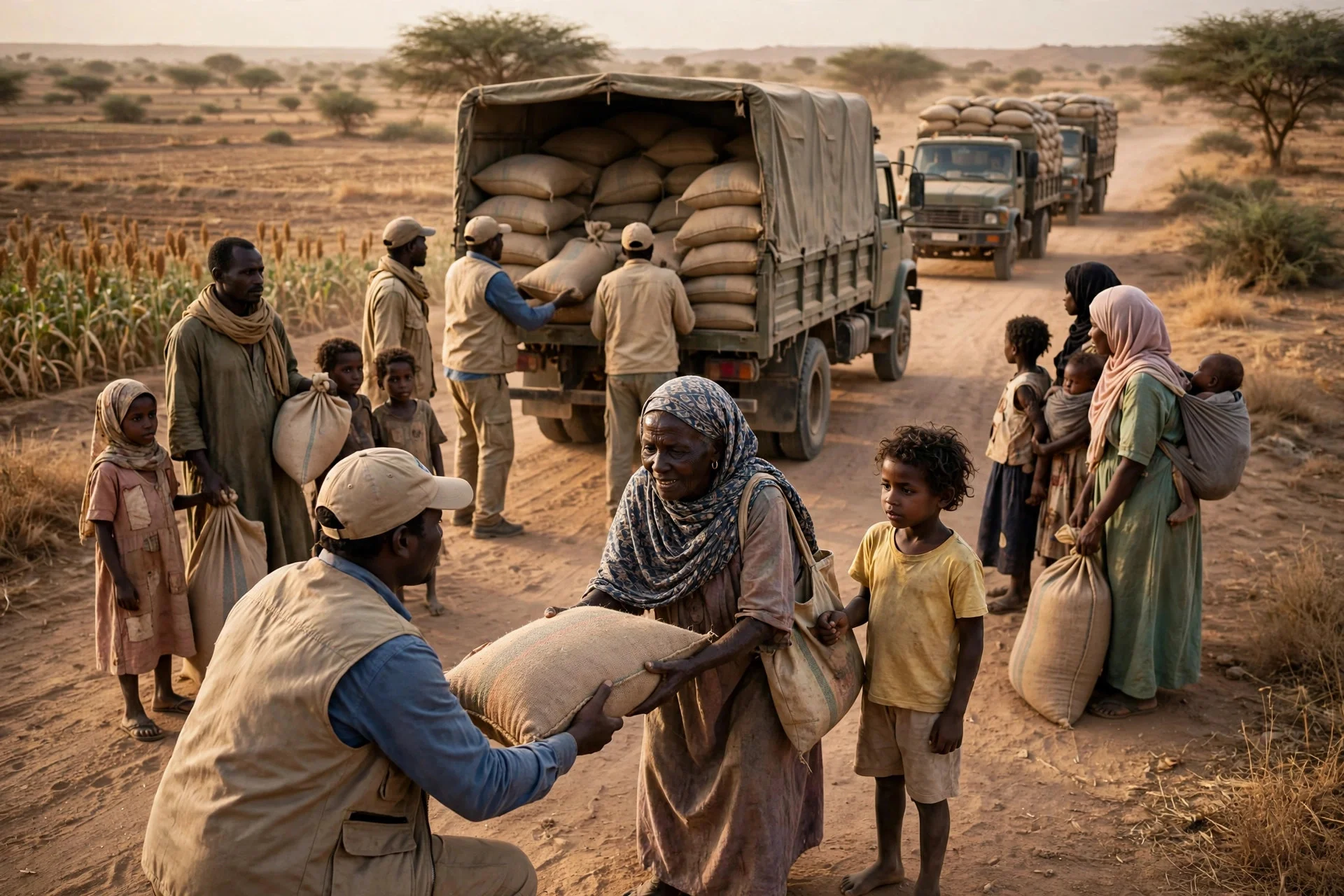
Sudan on the brink of famine: dozens of governments demand open aid access
A joint ministerial statement led by the United Kingdom and signed by dozens of governments warns of the risk of famine in Sudan, where 19.5 million people…
Without humanitarian access there is no way out of Sudan's food crisis
In a joint statement, dozens of governments assign primary responsibility for Sudan's crisis to the parties to the conflict and to the obstruction of aid.
--- The context ---
Sudan is experiencing an alarming deterioration in its food security, and the risk of famine in the coming months requires urgent action, according to the joint ministerial statement. The signatory ministers warned that there is no time to lose to save lives and prevent famine in a country where conflict has displaced millions of people and damaged critical infrastructure.
The deterioration has more than one cause. Alongside the violence, the statement points to the systematic obstruction of aid and the effects of El Niño, which have reduced rainfall and increased drought across over half of Sudan, damaging healthcare provision, food production, supply chains and markets.
--- The facts ---
An estimated 19.5 million people, 41% of the country's population, are experiencing high levels of acute food insecurity, including 5 million facing emergency levels, according to the statement. Without immediate action to reverse the current trajectory, the number of children suffering from severe acute malnutrition could exceed the projected 825,000.
The number of food insecure areas, initially assessed at 14, is expected to double. The signatories identified conflict as the key driver of the hunger crisis, displacing millions, damaging critical infrastructure and disrupting healthcare, food production, supply chains and markets across the country.
--- The positions ---
The signatory ministers urged the parties to the conflict to lift all impediments on humanitarian assistance, to allow and facilitate full, safe, rapid and unimpeded humanitarian access, and to protect humanitarian personnel. They stated that the parties to the conflict bear primary responsibility for alleviating the suffering of the Sudanese people.
In practice, the signatories called for authorising humanitarian operations through all crossline and cross-border routes, including air access into Darfur, reducing delays for visas and customs clearance, refraining from strikes on civilian infrastructure, and strengthening civil-military coordination. They also called on the international community to urgently scale up funding and to support the winter cropping season and locally led responses. Signatories include ministers from France, Germany, Italy and Spain, United States advisor Massad Boulos and British minister Kirsty McNeill.
--- What remains unknown ---
The statement sets no deadlines of its own and no verification mechanism on the ground. It also does not specify how much additional funding is committed or which governments will contribute which amounts in response to the increased needs.
It remains unknown whether the parties to the conflict will accept opening the routes and air access into Darfur, and under what conditions the presence of humanitarian personnel can be sustained throughout Sudan.
--- Unanswered questions ---
Will the parties to the conflict lift the impediments and guarantee full and safe humanitarian access? Will air access into Darfur be authorised in time to deploy aid and evacuate medical workers? Will international funding arrive at the scale this emergency demands? Can the winter cropping season be supported before the number of food insecure areas doubles?
--- EPM analysis ---
The strength of the statement lies in its breadth: dozens of governments speak with one voice and make concrete requests, from visas to the routes into Darfur. Its weakness is equally visible, because everything decisive depends on decisions by the parties to the conflict, who are named as primarily responsible for the suffering and, at the same time, as the key to relieving it.
The emphasis on the winter cropping season shows the signatories looking beyond immediate deliveries: without local production, dependence on aid is prolonged. The support pledged for locally led responses points in the same direction, although the statement assigns no specific resources or responsibilities for that support.
📌 EPM Take: In EPM's view, the statement is right to name those responsible without evasion and to turn open routes, protection for humanitarian personnel and urgent funding into concrete, verifiable demands. Its real value, however, will be measured in the coming months on the ground: if access into Darfur does not open, if visas and customs keep slowing the convoys and if the money does not arrive at the promised scale, the risk of famine will stop being a warning and become the outcome the signatories themselves said they wanted to prevent without any further delay.
--- The context ---
Sudan is facing an alarming deterioration in its food security, and the risk of famine in the coming months requires urgent action, according to the joint ministerial statement. The signatories warned there is no time to lose to save lives, in a country where millions of people have been displaced and critical infrastructure has been damaged by conflict.
Behind the emergency there are concrete decisions making it worse. The statement points to the systematic obstruction of aid as a factor aggravating the crisis, alongside the effects of El Niño, which have reduced rainfall and spread drought across over half of Sudan, affecting healthcare, food production, supplies and markets.
--- The facts ---
The figures gathered in the statement are severe: an estimated 19.5 million people, 41% of the population, are facing high levels of acute food insecurity, and 5 million of them are at emergency levels. Without immediate action, the number of children suffering from severe acute malnutrition could exceed the projected 825,000.
The food insecure areas were initially assessed at 14 and are expected to double. Conflict is identified as the key driver of hunger, through displacement, damage to infrastructure and the disruption of healthcare provision, food production, supply chains and markets throughout the country.
--- The positions ---
The statement assigns primary responsibility to the parties to the conflict and urges them to lift all impediments on humanitarian assistance, allow full, safe, rapid and unimpeded access, and protect humanitarian personnel. If those impediments remain, the signatories warned, the humanitarian response will be unable to address the famine risk.
The practical demands include authorising operations through all crossline and cross-border routes, with air access into Darfur, sustaining the presence and protection of humanitarian personnel, speeding up visas and customs clearance, refraining from strikes on civilian infrastructure such as agriculture and food systems, and strengthening civil-military coordination. The signatories also called for urgently scaling up international funding and supporting the winter cropping season and locally led responses. Signatories include ministers from France, Germany, Italy and Spain, United States advisor Massad Boulos and British minister Kirsty McNeill.
--- What remains unknown ---
The text establishes no consequences if the parties maintain the impediments, and no verifiable timetable for opening the routes. It also does not quantify the new financial commitments of each signatory in response to the increased needs.
It likewise remains unspecified how the safety of humanitarian personnel and humanitarian sites will be guaranteed in the areas where the conflict continues.
--- Unanswered questions ---
What will happen if the parties to the conflict maintain the obstruction of aid after this joint appeal? Will the cross-border routes and air access into Darfur open with the speed the emergency requires? How much new and effective funding will each signatory government actually provide? Who will verify on the ground that the impediments are truly lifted?
--- EPM analysis ---
The tone of the statement is that of an orderly demand: first the facts, then the responsibilities, and finally the measures. That order makes practical sense, because almost every request depends on administrative and security obstacles disappearing: without faster visas, smoother customs and open routes, additional funding is slow to become food.
The reference to agricultural infrastructure and the winter cropping season introduces a deeper criterion: protecting the capacity to produce is as urgent as distributing aid. If attacks and obstacles continue, each lost season multiplies external dependence and makes any later recovery of the country more costly.
📌 EPM Take: In EPM's view, the statement's greatest merit is its operational concreteness, because it does not merely lament the hunger but details routes, permits, protection of personnel and the winter cropping season as minimum conditions for averting famine. Its limit lies in the absence of pressure and verification mechanisms: the parties named as responsible receive demands, not announced consequences. Recent history in food crises counsels prudence, and only the effective opening of humanitarian access and the sustained arrival of funds will show whether this international unity was a turning point or one more warning.
Sudán al borde de la hambruna: decenas de gobiernos exigen abrir la ayuda
Una declaración ministerial conjunta liderada por el Reino Unido y suscrita por decenas de gobiernos advierte del riesgo de hambruna en Sudán, donde 19,5…
Sin acceso humanitario no hay salida para la crisis alimentaria de Sudán
Decenas de gobiernos atribuyen en una declaración conjunta la responsabilidad principal de la crisis de Sudán a las partes del conflicto y a la obstrucción de…
--- El contexto ---
Sudán atraviesa un deterioro alarmante de su seguridad alimentaria y el riesgo de hambruna en los próximos meses exige, según la declaración, una acción urgente. Los ministros firmantes advirtieron que no hay tiempo que perder para salvar vidas y evitar la hambruna, en un país donde el conflicto ha desplazado a millones de personas y ha dañado infraestructura crítica.
El deterioro no obedece a una sola causa. A la violencia se suman la obstrucción sistemática de la ayuda y los efectos de El Niño, que han reducido las lluvias y aumentado la sequía en más de la mitad de Sudán, con daños sobre la atención sanitaria, la producción de alimentos, las cadenas de suministro y los mercados.
--- Los hechos ---
Según la declaración, se estima que 19,5 millones de personas, el 41% de la población del país, padecen altos niveles de inseguridad alimentaria aguda, incluidas 5 millones en niveles de emergencia. Sin una acción inmediata que revierta la trayectoria actual, el número de niños con desnutrición aguda severa podría superar los 825,000 proyectados.
Las áreas con inseguridad alimentaria, evaluadas inicialmente en 14, se espera que se dupliquen. Los firmantes señalaron que el conflicto es el motor principal de la crisis de hambre, y que la obstrucción de la ayuda y la sequía agravan una emergencia que ya golpea a más de la mitad del territorio.
--- Las posiciones ---
Los ministros firmantes urgieron a las partes del conflicto a levantar todos los impedimentos a la asistencia humanitaria, permitir y facilitar un acceso humanitario pleno, seguro, rápido y sin obstáculos, y proteger al personal humanitario. Recordaron que las partes en conflicto tienen la responsabilidad principal de aliviar el sufrimiento de la población sudanesa.
En la práctica, los firmantes llamaron a autorizar operaciones humanitarias por todas las rutas terrestres y transfronterizas, incluido el acceso aéreo a Darfur, a reducir las demoras de visados y aduanas, a no atacar la infraestructura civil y a reforzar la coordinación civil-militar. También llamaron a la comunidad internacional a escalar con urgencia la financiación y a apoyar la temporada de cultivo de invierno y las respuestas lideradas localmente. Entre los firmantes figuran ministros de Francia, Alemania, Italia y España, el asesor estadounidense Massad Boulos y la ministra británica Kirsty McNeill.
--- Lo que falta saber ---
La declaración no precisa plazos propios de cumplimiento ni mecanismos de verificación sobre el terreno. Tampoco detalla cuánto financiamiento adicional se compromete ni qué gobiernos aportarán qué montos frente al aumento de las necesidades.
Tampoco se conoce si las partes en conflicto aceptarán abrir las rutas y el acceso aéreo a Darfur, ni en qué condiciones podrá sostenerse la presencia del personal humanitario en todo el país.
--- Preguntas sin respuesta ---
¿Aceptarán las partes en conflicto levantar los impedimentos y garantizar un acceso humanitario pleno y seguro? ¿Se autorizará a tiempo el acceso aéreo a Darfur para desplegar la ayuda y evacuar al personal sanitario? ¿Llegará la financiación internacional a la escala que exige una emergencia de esta magnitud? ¿Podrá apoyarse la temporada de cultivo de invierno antes de que las áreas con inseguridad alimentaria se dupliquen?
--- Análisis EPM ---
La fuerza de la declaración está en su amplitud: decenas de gobiernos hablan con una sola voz y formulan peticiones concretas, desde los visados hasta las rutas hacia Darfur. Su debilidad también es visible: todo lo decisivo depende de decisiones de las partes en conflicto, que son señaladas como responsables principales del sufrimiento y, a la vez, como la llave para aliviarlo.
El énfasis en la temporada de cultivo de invierno revela que los firmantes miran más allá del reparto inmediato: sin producción local, la dependencia de la ayuda se prolonga. La mención a las respuestas lideradas localmente apunta en la misma dirección, aunque la declaración no asigna recursos ni responsables específicos para ese apoyo.
📌 Conclusion EPM: A juicio de EPM, la declaración acierta al nombrar sin rodeos a los responsables y al convertir la apertura de rutas, la protección del personal humanitario y la financiación urgente en exigencias concretas y verificables. Su valor real, sin embargo, se medirá en los próximos meses sobre el terreno: si el acceso a Darfur no se abre, si los visados y las aduanas siguen frenando los convoyes y si el dinero no llega a la escala prometida, el riesgo de hambruna dejará de ser una advertencia para convertirse en el desenlace que los propios firmantes dijeron querer evitar a toda costa y sin más demora posible.
--- El contexto ---
Sudán vive un deterioro alarmante de su seguridad alimentaria y el riesgo de hambruna en los próximos meses requiere acción urgente, según la declaración ministerial conjunta. Los firmantes advirtieron que no hay tiempo que perder para salvar vidas, en un país donde millones de personas han sido desplazadas y la infraestructura crítica ha resultado dañada por el conflicto.
Detrás de la emergencia hay decisiones concretas que la agravan. La declaración señala la obstrucción sistemática de la ayuda como un factor que empeora la crisis, junto a los efectos de El Niño, que han reducido las lluvias y extendido la sequía por más de la mitad de Sudán, afectando la salud, la producción de alimentos, los suministros y los mercados.
--- Los hechos ---
Los datos que recoge la declaración son severos: se estima que 19,5 millones de personas, el 41% de la población, enfrentan altos niveles de inseguridad alimentaria aguda, y 5 millones de ellas se encuentran en niveles de emergencia. Sin acción inmediata, los niños con desnutrición aguda severa podrían superar los 825,000 proyectados.
Las áreas con inseguridad alimentaria fueron evaluadas inicialmente en 14 y se espera que se dupliquen. El conflicto es identificado como el motor principal del hambre, por el desplazamiento, el daño a la infraestructura y la interrupción de la atención sanitaria, la producción alimentaria, las cadenas de suministro y los mercados.
--- Las posiciones ---
La declaración asigna la responsabilidad principal a las partes del conflicto y les urge a levantar todos los impedimentos a la asistencia, permitir un acceso humanitario pleno, seguro, rápido y sin obstáculos, y proteger al personal humanitario. De mantenerse esos impedimentos, advirtieron los firmantes, la respuesta humanitaria no podrá hacer frente al riesgo de hambruna.
Las exigencias prácticas incluyen autorizar operaciones por todas las rutas terrestres y transfronterizas, con acceso aéreo a Darfur, sostener la presencia y protección del personal humanitario, agilizar visados y aduanas, abstenerse de atacar infraestructura civil como la agricultura y los sistemas alimentarios, y fortalecer la coordinación civil-militar. Los firmantes llamaron además a escalar la financiación internacional y a apoyar la temporada de cultivo de invierno y las respuestas locales. Firman, entre otros, ministros de Francia, Alemania, Italia y España, el asesor estadounidense Massad Boulos y la ministra británica Kirsty McNeill.
--- Lo que falta saber ---
El texto no establece consecuencias si las partes mantienen los impedimentos, ni un calendario verificable para la apertura de rutas. Tampoco cuantifica los compromisos financieros nuevos de cada firmante frente al aumento de necesidades.
Queda igualmente sin precisar cómo se garantizará la seguridad del personal humanitario y de los sitios de ayuda en las zonas donde continúa el conflicto.
--- Preguntas sin respuesta ---
¿Qué ocurrirá si las partes en conflicto mantienen la obstrucción de la ayuda tras este llamamiento conjunto? ¿Se abrirán las rutas transfronterizas y el acceso aéreo a Darfur con la rapidez que exige la emergencia? ¿Cuánta financiación nueva y efectiva aportará cada gobierno firmante? ¿Quién verificará sobre el terreno que los impedimentos se levantan de verdad?
--- Análisis EPM ---
El tono de la declaración es el de una exigencia ordenada: primero los hechos, después las responsabilidades y por último las medidas. Ese orden tiene sentido práctico, porque casi todas las peticiones dependen de que las trabas administrativas y de seguridad desaparezcan: sin visados ágiles, sin aduanas fluidas y sin rutas abiertas, la financiación adicional tarda en convertirse en alimentos.
La referencia a la infraestructura agrícola y a la temporada de cultivo de invierno introduce un criterio de fondo: proteger la capacidad de producir es tan urgente como repartir ayuda. Si los ataques y las trabas continúan, cada temporada perdida multiplica la dependencia externa y hace más costosa cualquier recuperación posterior del país.
📌 Conclusion EPM: A juicio de EPM, el mayor mérito de la declaración es su concreción operativa, porque no se limita a lamentar el hambre y detalla rutas, permisos, protección del personal y cultivo de invierno como condiciones mínimas para evitar la hambruna. Su límite está en la ausencia de mecanismos de presión y de verificación: las partes señaladas como responsables reciben exigencias, no consecuencias anunciadas. La historia reciente de las crisis alimentarias aconseja prudencia, y solo la apertura efectiva del acceso humanitario y la llegada sostenida de fondos permitirán juzgar si esta unidad internacional fue un punto de inflexión o una advertencia más.