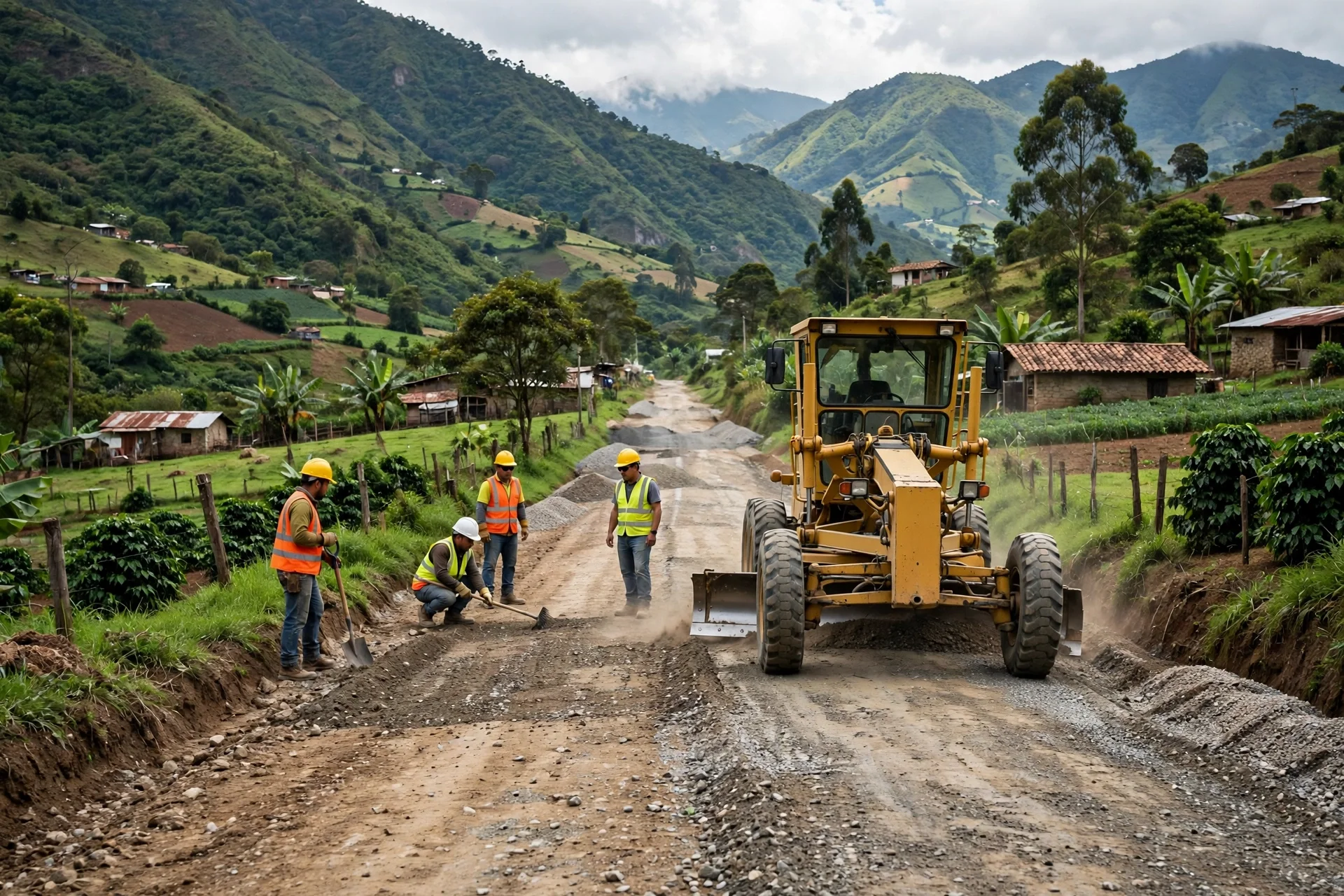
Tiger Roads Plan Targets 30,000 Kilometres to Close the Rural Gap
The Tiger Roads programme, led by President Abelardo de la Espriella together with Invías, aims to intervene in 30,000 kilometres of secondary and tertiary…
Tiger Roads Plan Ties 30,000 Kilometres to Viability and Funding
Tiger Roads, the programme of President Abelardo de la Espriella with Invías, will intervene in 30,000 kilometres of secondary and tertiary roads under…
--- The context ---
Across rural Colombia, the condition of secondary and tertiary roads shapes everyday life. Where terrain, rains and deterioration make travel difficult, reaching a market becomes slow and expensive, and inequality with the countryside deepens.
--- The facts ---
The Tiger Roads programme, led by President Abelardo de la Espriella together with Invías, has set as its main goal the intervention of 30,000 kilometres of secondary and tertiary roads through maintenance, rehabilitation and construction, in order to improve land communication for the rural population.
The effort seeks to improve connectivity, narrow the inequality gap with the countryside, raise quality of life and ease access to markets. It also includes the placa huella system to respond to needs identified by mayors.
--- The positions ---
Omar Darío Sepúlveda, deputy director of Invías and appointed manager of the Orinoquia-Pacífico road, explained that a methodology will be developed to pinpoint the most pressing needs on tertiary roads. He indicated that Invías has a project bank supported by technological platforms to identify and manage projects, and that a project included there probably already has geometric designs and studies, updated when necessary so that they remain within Tiger Roads.
Sepúlveda also noted that the plan envisages a system that creates a large fund where current revenues and some taxation can be collected. Invías spokespeople stressed the importance of intervening in rural corridors hit by terrain, rains and deterioration, and the director general presented before the Legal Accounts Commission of the House of Representatives a financial and budgetary balance with projections for 2027 and a projected budget close to 5.8 trillion pesos for the next term, backed by financing sources already identified.
--- What remains unknown ---
Which corridors will enter the programme first is not yet known, nor the pace of progress toward the overall target. It has not been detailed either how resources will be divided among maintenance, rehabilitation and construction, or how the planned revenues and taxation will be collected.
--- Unanswered questions ---
Which rural corridors will be prioritised in the first phase of Tiger Roads? How many of the planned 30,000 kilometres are tertiary roads and how many are secondary roads? How will sustained maintenance be guaranteed for the most remote communities once the initial intervention ends?
--- EPM analysis ---
The announced scale turns tertiary roads into a central front of public action, because inequality is expressed there in travel times and limited access to markets. The project bank and the placa huella system combine prior planning with solutions tailored to each territory, although the outcome will depend on execution and financing.
📌 EPM Take: In EPM's view, Tiger Roads is right to focus on the countryside, because no territorial equality policy can prosper while rural communities remain isolated by impassable roads for much of the year. Its value will be measured in markets reached, produce moved and services delivered. The challenge will be to sustain financing, prioritise with transparent technical criteria and demonstrate verifiable progress corridor by corridor, so that the announcement does not fade over time.
--- The context ---
Colombia carries a long-standing backlog on its secondary and tertiary roads, along which countryside production moves. In many rural corridors, terrain, rains and deterioration raise transport costs and hold back economic activity, a problem no speech can solve without planning, clear costs and secured financing.
--- The facts ---
The Tiger Roads programme, led by President Abelardo de la Espriella together with Invías, aims to intervene in 30,000 kilometres of secondary and tertiary roads through maintenance, rehabilitation and construction, to improve rural land communication and access to markets.
Following direct instructions from the Presidency, Invías set strict conditions: projects must be viable, have established costs and defined financing sources. Alongside conventional roads, the programme also includes the placa huella system for needs identified by mayors.
--- The positions ---
Omar Darío Sepúlveda, deputy director of Invías and appointed manager of the Orinoquia-Pacífico road, explained that a methodology will be developed to pinpoint the most pressing needs on tertiary roads. He indicated that Invías has a project bank with technological platforms to identify and manage projects, and that a project included there probably already has geometric designs and studies, updated when necessary so that they remain within Tiger Roads.
On resources, Sepúlveda noted that the plan envisages a system that creates a large fund where current revenues and some taxation can be collected. The director general of Invías presented before the Legal Accounts Commission of the House of Representatives a financial and budgetary balance with projections for 2027 focused on road maintenance, rehabilitation and improvement, and a projected budget close to 5.8 trillion pesos for the next term, backed by financing sources already identified, while agency spokespeople highlighted intervening in rural corridors affected by terrain and rains.
--- What remains unknown ---
It remains to be known which projects will first pass the filter of viability, costs and financing, and under what timetable they will be executed. Nor have the details of the large fund system been specified, or the weight taxation will carry within programme resources.
--- Unanswered questions ---
Which projects will be left out of Tiger Roads for failing to meet the viability and financing conditions? How will each peso invested across the 30,000 kilometres be monitored for efficient execution? What role will mayors play in overseeing municipal placa huella works?
--- EPM analysis ---
The announced design places the emphasis on order before spending: a project bank, prior studies and defined financing. That approach reduces the risk of improvised works and promises more responsible public resources, provided the technical filter is applied without exceptions.
📌 EPM Take: In EPM's view, the strongest part of Tiger Roads is not the figure of 30,000 kilometres, but the prior conditions attached to it, because a road without established costs or defined financing ends as an abandoned promise. If Invías maintains the discipline of the project bank and shields the large fund from pressures unrelated to technical criteria, the programme can leave durable infrastructure behind. Oversight of execution will matter as much as the announcement itself.
Caminos del Tigre llevará vías dignas a 30.000 kilómetros rurales
El programa Caminos del Tigre, liderado por el presidente Abelardo de la Espriella con el Invías, busca intervenir 30.000 kilómetros de vías secundarias y…
Caminos del Tigre exige viabilidad y financiación en 30.000 kilómetros
Caminos del Tigre, el programa del presidente Abelardo de la Espriella con el Invías, intervendrá 30.000 kilómetros de vías secundarias y terciarias bajo…
--- El contexto ---
En la Colombia rural, el estado de las vías secundarias y terciarias condiciona la vida diaria. Donde el terreno, las lluvias y el deterioro dificultan la movilidad, llegar a un mercado se vuelve costoso y lento, y la desigualdad con el campo crece.
--- Los hechos ---
El programa Caminos del Tigre, liderado por el presidente Abelardo de la Espriella junto con el Invías, tiene como objetivo principal intervenir 30.000 kilómetros de vías secundarias y terciarias con mantenimiento, rehabilitación y construcción para optimizar la comunicación terrestre rural.
La intervención busca mejorar la conectividad, cerrar la brecha de desigualdad con el campo, mejorar la calidad de vida y facilitar el acceso a mercados. El plan contempla además el sistema placa huella para responder a necesidades identificadas por los alcaldes.
--- Las posiciones ---
Omar Darío Sepúlveda, subdirector del Invías y gerente designado de la vía Orinoquia-Pacífico, explicó que se adelantará una metodología para precisar las necesidades más apremiantes en vías terciarias. Según indicó, el Invías tiene un banco de proyectos con plataformas tecnológicas para identificarlos y manejarlos, y un proyecto de ese banco probablemente ya tiene diseños geométricos y estudios, actualizables para que queden en Caminos del Tigre.
Sepúlveda señaló además que se piensa en un sistema que genera una gran caja donde recoger los ingresos actuales y algo de tributación. Voceros del Invías destacaron la intervención en corredores rurales castigados por el terreno, las lluvias y el deterioro, y el director general presentó ante la Comisión Legal de Cuentas de la Cámara de Representantes un balance financiero y presupuestal con proyecciones para 2027 y un presupuesto cercano a los 5,8 billones de pesos para la próxima vigencia, respaldado por fuentes de financiación ya identificadas.
--- Lo que falta saber ---
Aún no se conoce qué corredores entrarán primero ni el ritmo de avance sobre la meta total. Tampoco se ha detallado el reparto entre mantenimiento, rehabilitación y construcción, ni cómo se recogerán los ingresos y la tributación planteados.
--- Preguntas sin respuesta ---
¿Qué corredores rurales serán priorizados en la primera fase de Caminos del Tigre? ¿Cuántos de los 30.000 kilómetros previstos son vías terciarias y cuántos son vías secundarias? ¿Cómo se garantizará el mantenimiento sostenido en las comunidades más apartadas?
--- Análisis EPM ---
La magnitud anunciada convierte a las vías terciarias en un frente central de la acción pública, porque allí la desigualdad se expresa en tiempos de viaje y acceso limitado a mercados. El banco de proyectos y la placa huella combinan planificación previa con soluciones ajustadas a cada territorio, aunque todo dependerá de la ejecución y la financiación.
📌 Conclusion EPM: A juicio de EPM, Caminos del Tigre acierta al poner el foco en el campo, porque ninguna política de igualdad territorial prospera si las comunidades rurales siguen aisladas por vías intransitables durante buena parte del año. Su valor se medirá en mercados alcanzados, productos que salen y servicios que llegan. El reto será sostener la financiación, priorizar con criterios técnicos transparentes y demostrar avances verificables corredor a corredor, sin que el anuncio se diluya.
--- El contexto ---
Colombia arrastra un rezago histórico en sus vías secundarias y terciarias, por donde se mueve la producción del campo. En muchos corredores rurales, el terreno, las lluvias y el deterioro encarecen el transporte y frenan la economía, un problema que no se resuelve sin planeación, costos claros y financiación asegurada.
--- Los hechos ---
El programa Caminos del Tigre, liderado por el presidente Abelardo de la Espriella junto con el Invías, se propone intervenir 30.000 kilómetros de vías secundarias y terciarias mediante mantenimiento, rehabilitación y construcción, para mejorar la comunicación terrestre rural y el acceso a mercados.
Atendiendo instrucciones directas de Presidencia, el Invías fijó condiciones estrictas: los proyectos deben ser viables, tener costos establecidos y financiación definida. El programa contempla además el sistema placa huella para responder a necesidades identificadas por los alcaldes.
--- Las posiciones ---
Omar Darío Sepúlveda, subdirector del Invías y gerente designado de la vía Orinoquia-Pacífico, explicó que se adelantará una metodología para precisar las necesidades más apremiantes en vías terciarias. Según indicó, el Invías dispone de un banco de proyectos con plataformas tecnológicas para identificarlos y manejarlos, y un proyecto allí incluido probablemente ya tiene diseños geométricos y estudios, actualizables para que queden en Caminos del Tigre.
Sobre los recursos, Sepúlveda señaló que se piensa en un sistema que genera una gran caja donde recoger los ingresos actuales y algo de tributación. El director general del Invías presentó ante la Comisión Legal de Cuentas de la Cámara de Representantes un balance financiero y presupuestal con proyecciones para 2027 y un presupuesto cercano a los 5,8 billones de pesos para la próxima vigencia, respaldado por fuentes de financiación ya identificadas, mientras voceros resaltaron el peso de intervenir corredores rurales afectados por el terreno y las lluvias.
--- Lo que falta saber ---
Falta por conocerse qué proyectos superarán primero el filtro de viabilidad, costos y financiación, y con qué cronograma se ejecutarán. Tampoco se ha precisado el detalle de la gran caja ni el peso de la tributación en los recursos del programa.
--- Preguntas sin respuesta ---
¿Qué proyectos quedarán por fuera de Caminos del Tigre por no cumplir las condiciones de viabilidad y financiación? ¿Cómo se vigilará la eficiencia de cada peso invertido en los 30.000 kilómetros? ¿Qué papel tendrán los alcaldes en el seguimiento de la placa huella municipal?
--- Análisis EPM ---
El diseño anunciado pone el acento en el orden antes que en el gasto: banco de proyectos, estudios previos y financiación definida. Ese enfoque reduce el riesgo de obras improvisadas y promete recursos públicos mejor usados, siempre que el filtro técnico se aplique sin excepciones.
📌 Conclusion EPM: A juicio de EPM, lo más sólido de Caminos del Tigre no es la cifra, sino las condiciones previas que la acompañan, porque una vía sin costos ni financiación definida termina en promesa abandonada. Si el Invías mantiene la disciplina del banco de proyectos y protege la gran caja de presiones ajenas a la técnica, el programa puede dejar infraestructura durable. La vigilancia de la ejecución será tan importante como el anuncio.