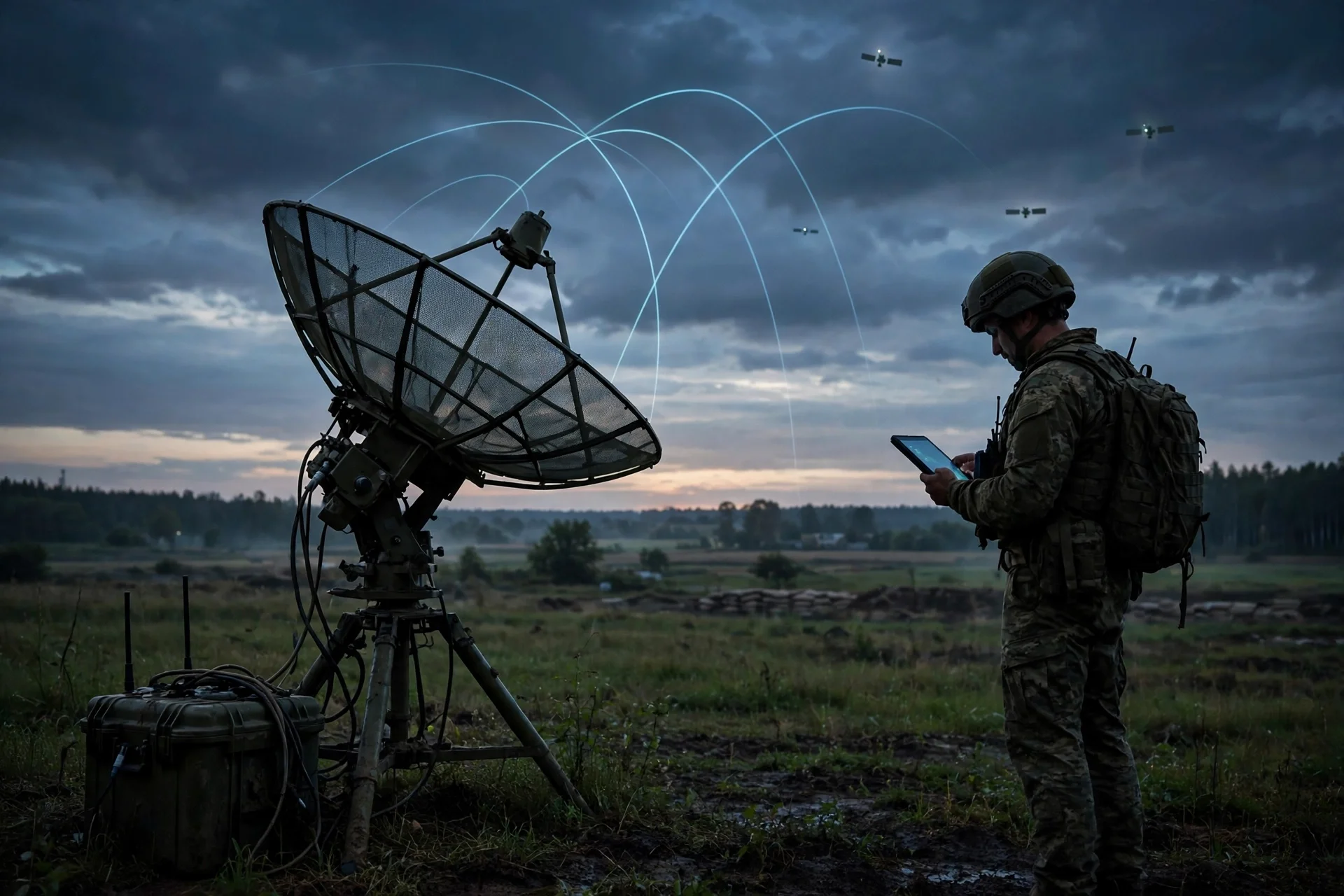
Ukraine regains Starlink and Starshield after a week of limits
Ukraine said on Saturday, October 24, that Starlink and Starshield were fully functional again, with a stable connection above 400 kph after more than a week…
Starshield back above 400 kph as Musk accuses Kyiv of violations
Starshield is operating above 400 kph again after restrictions capped it at 160 kph and disrupted Ukrainian operations.
--- The context ---
Ukraine relies on satellite connectivity to sustain its frontline communications, and that dependence was exposed again this week. For more than a week, restrictions on Starlink and its military version, Starshield, limited the operational capacity of Ukrainian forces and raised tensions between Kyiv and the United States.
--- The facts ---
Ukraine said on Saturday, October 24, that Starlink and Starshield were fully functional again. President Volodymyr Zelenskiy said speeds had returned overnight to the level needed, and the defence ministry reported that the connection remained stable at over 400 kph.
According to Ukrainian officials, the restrictions had capped Starshield at 160 kph (100 mph), which hampered the military ability to intercept Russian attack drones and forced the cancellation of some operations. The problems arose after President Donald Trump announced a deal to buy Russian diesel while pressing Kyiv to stop striking Russian oil refineries.
--- The positions ---
Hours after the Ukrainian announcement, Elon Musk, chief executive of SpaceX, the company that owns Starlink, accused the Ukrainian military of violating the terms of service by using it for offensive drone strikes, and said that loophole was closed last week.
Presidential adviser Serhiy Beskrestnov replied that Ukraine is physically unable to use Starlink for long- and medium-range attack drone operations, and noted that in long-range operations over Russian territory it operates at no more than 70-90 kph. The general staff and the defence ministry did not immediately comment on the accusation by Musk.
--- What remains unknown ---
Neither Musk nor the United States government, which operates Starshield using Starlink technology, took responsibility for imposing the curbs, and each side said publicly that any such decision could only have been taken by the other. The order to throttle Starshield was reported to have come from inside the White House.
The restrictions coincided with disruptions to allied warnings about incoming Russian missile attacks, although Kyiv later said it continued to receive United States intelligence. On Friday, Trump said that if problems persisted he would get it straightened out, contradicting his previous statement that the services had been fully restored.
--- Unanswered questions ---
Who actually ordered the Starshield limits and on what formal grounds? Could restrictions return if Ukraine carries out operations that the company or Washington deems offensive? What guarantees does Kyiv have that frontline connectivity will not again depend on decisions taken elsewhere in the middle of operations?
--- EPM analysis ---
The episode shows that private infrastructure and external political decisions can shape military operations under way. Restoration above 400 kph returns immediate capacity, but the public dispute over who imposed the limits leaves uncertainty about the continuity of the service fully intact.
📌 EPM Take:
In EPM's view, the central issue is not only that the service is back, but that nobody claimed who limited it or under what rules it could be limited again. Ukraine recovered a vital tool for its communications and for intercepting drones, yet its dependence was laid bare before decisions by one company and one allied government. Without clear responsibilities or verifiable guarantees, every new political friction can turn into a direct operational risk for Ukrainian forces at the front and for their planning.
--- The context ---
Satellite connectivity has become a central component of the war in Ukraine, and with it a basic question about rules and control. Starlink sustains frontline communications, and its military version, Starshield, is operated by the United States government using technology from the same network.
--- The facts ---
Ukraine said on Saturday, October 24, that Starlink and Starshield were working fully again after more than a week of restrictions. Zelenskiy said speeds were back at the level needed, and the defence ministry reported that the connection remained stable at over 400 kph.
During the restrictions, Starshield was capped at 160 kph (100 mph), which Ukrainian officials said hampered efforts to intercept Russian drones and forced operations to be cancelled. The problems arose after Trump announced a deal to buy Russian diesel while pressing Kyiv to stop striking Russian oil refineries.
--- The positions ---
Hours later, Elon Musk, chief executive of SpaceX, accused the Ukrainian military of violating the terms of service by using Starlink for offensive drone strikes and said that loophole was closed last week. The Ukrainian general staff and defence ministry did not immediately comment on that accusation.
Presidential adviser Serhiy Beskrestnov said Ukraine is physically unable to use Starlink for long- and medium-range attack drone operations, and that in long-range operations over Russian territory it operates at no more than 70-90 kph, so Kyiv would not depend on that network to strike refineries.
--- What remains unknown ---
Neither Musk nor the United States government took responsibility for imposing the limits, and each side said publicly that any such decision could only have been taken by the other. The order to throttle Starshield was reported to have come from inside the White House, without official confirmation of that attribution.
The restrictions coincided with disruptions to allied warnings about incoming Russian missile attacks, although Kyiv later said it continued to receive United States intelligence. On Friday, Trump said that if problems persisted he would get it straightened out, contradicting his previous statement that the services had been fully restored.
--- Unanswered questions ---
What exact use of Starlink did the company consider a breach of its terms? Who signed the order limiting Starshield if neither side acknowledges it? What formal mechanism will now govern Ukrainian access to a network on which its operations depend?
--- EPM analysis ---
The case combines three planes: a contract with defined terms, a strategic alliance and an active military operation. Restoring the service closes the technical emergency, but it does not settle the institutional question of who sets the limits or by what criteria they are applied.
📌 EPM Take:
In EPM's view, an alliance cannot work with blurred responsibilities over a decisive tool of war. If the terms were violated, that breach must be documented precisely; if there was a political order, it must be owned by name and office. Ukraine recovered connectivity above 400 kph, but the credibility of the arrangement depends on clear rules, attributable decisions and commitments that do not shift with the pressure of the moment or rest on duelling statements between allies.
Ucrania recupera Starlink y Starshield tras una semana de límites
Ucrania afirmó el sábado 24 de octubre que Starlink y Starshield volvieron a operar plenamente, con conexión estable a más de 400 kph tras más de una semana de…
Starshield vuelve a 400 kph y Musk acusa a Kiev de violar términos
Starshield volvió a operar a más de 400 kph tras restricciones que lo limitaron a 160 kph y afectaron operaciones ucranianas.
--- El contexto ---
Ucrania depende de la conectividad satelital para sostener sus comunicaciones en el frente, y esa dependencia volvió a quedar expuesta esta semana. Durante más de una semana, restricciones aplicadas a Starlink y a su versión militar, Starshield, limitaron la capacidad operativa de las fuerzas ucranianas y elevaron la tensión entre Kiev y Estados Unidos.
--- Los hechos ---
Ucrania afirmó el sábado 24 de octubre que Starlink y Starshield volvieron a operar plenamente. El presidente Volodímir Zelenski sostuvo que las velocidades regresaron durante la noche al nivel necesario, y el Ministerio de Defensa informó que la conexión se mantuvo estable a más de 400 kph.
Según funcionarios ucranianos, las restricciones habían limitado Starshield a 160 kph (100 mph), lo que dificultó interceptar drones rusos de ataque y obligó a cancelar algunas operaciones. El problema surgió después de que el presidente Donald Trump anunciara un acuerdo para comprar diésel ruso mientras presionaba a Kiev para que dejara de atacar refinerías rusas.
--- Las posiciones ---
Horas después del anuncio ucraniano, Elon Musk, director ejecutivo de SpaceX, la empresa propietaria de Starlink, acusó al ejército ucraniano de violar los términos del servicio al usarlo para ataques ofensivos con drones, y sostuvo que esa laguna se cerró la semana pasada.
El asesor presidencial Serhiy Beskrestnov respondió que Ucrania es físicamente incapaz de usar Starlink para operaciones de ataque con drones de largo y medio alcance, y precisó que en operaciones de largo alcance sobre territorio ruso no se supera 70-90 kph. El Estado Mayor y el Ministerio de Defensa no comentaron de inmediato la acusación de Musk.
--- Lo que falta saber ---
Ni Musk ni el gobierno de Estados Unidos, que opera Starshield con tecnología de Starlink, asumieron la responsabilidad de imponer los límites, y cada parte afirmó públicamente que la decisión solo podía haberla tomado la otra. Según lo reportado, la orden de limitar Starshield vino de dentro de la Casa Blanca.
Las restricciones coincidieron con interrupciones en las alertas aliadas sobre ataques rusos con misiles, aunque Kiev afirmó después que siguió recibiendo inteligencia estadounidense. El viernes, Trump dijo que si los problemas persistían lo arreglaría, contradiciendo su declaración previa de que los servicios ya estaban restaurados.
--- Preguntas sin respuesta ---
¿Quién ordenó realmente limitar Starshield y con qué justificación formal? ¿Volverán a aplicarse restricciones si Ucrania realiza operaciones que la empresa o Washington consideren ofensivas? ¿Qué garantías tiene Kiev de que la conectividad del frente no quedará sujeta a decisiones ajenas en plena operación?
--- Análisis EPM ---
El episodio muestra que una infraestructura privada y decisiones políticas externas pueden condicionar operaciones militares en curso. La restauración a más de 400 kph devuelve capacidad inmediata, pero la disputa pública sobre quién impuso los límites deja intacta la incertidumbre sobre la continuidad del servicio.
📌 Conclusion EPM:
A juicio de EPM, lo central no es solo que el servicio volvió, sino que nadie asumió quién lo limitó ni bajo qué reglas podría volver a limitarse. Ucrania recuperó una herramienta vital para sus comunicaciones y para interceptar drones, pero su dependencia quedó expuesta ante decisiones de una empresa y de un gobierno aliado. Sin responsabilidades claras ni garantías verificables, cada nueva fricción política puede traducirse en un riesgo operativo directo para las fuerzas ucranianas en el frente y para su planificación.
--- El contexto ---
La conectividad satelital se volvió un componente central de la guerra en Ucrania, y con ella creció una pregunta de fondo sobre reglas y control. Starlink sostiene comunicaciones en el frente y su versión militar, Starshield, es operada por el gobierno de Estados Unidos con tecnología de la misma red.
--- Los hechos ---
Ucrania afirmó el sábado 24 de octubre que Starlink y Starshield volvieron a funcionar plenamente tras más de una semana de restricciones. Zelenski sostuvo que las velocidades volvieron al nivel necesario y el Ministerio de Defensa informó que la conexión se mantuvo estable a más de 400 kph.
Durante las restricciones, Starshield quedó limitado a 160 kph (100 mph), lo que según funcionarios ucranianos dificultó interceptar drones rusos y forzó cancelar operaciones. El problema surgió después de que Trump anunciara un acuerdo para comprar diésel ruso mientras presionaba a Kiev para dejar de atacar refinerías rusas.
--- Las posiciones ---
Horas después, Elon Musk, director ejecutivo de SpaceX, acusó al ejército ucraniano de violar los términos del servicio al usar Starlink para ataques ofensivos con drones y afirmó que esa laguna se cerró la semana pasada. El Estado Mayor y el Ministerio de Defensa ucranianos no comentaron de inmediato esa acusación.
El asesor presidencial Serhiy Beskrestnov sostuvo que Ucrania es físicamente incapaz de usar Starlink para drones de ataque de largo y medio alcance, y que en operaciones de largo alcance sobre territorio ruso no se supera 70-90 kph, por lo que Kiev no dependería de esa red para atacar refinerías.
--- Lo que falta saber ---
Ni Musk ni el gobierno estadounidense asumieron la responsabilidad de imponer los límites, y cada parte afirmó públicamente que la decisión solo podía haberla tomado la otra. Según lo reportado, la orden de limitar Starshield vino de dentro de la Casa Blanca, sin confirmación oficial de esa atribución.
Las restricciones coincidieron con interrupciones en las alertas aliadas sobre ataques rusos con misiles, aunque Kiev dijo después que siguió recibiendo inteligencia estadounidense. El viernes, Trump afirmó que si los problemas persistían lo arreglaría, contradiciendo su declaración previa de que los servicios ya estaban restaurados.
--- Preguntas sin respuesta ---
¿Qué uso exacto de Starlink consideró la empresa una violación de sus términos? ¿Quién firmó la orden de limitar Starshield si ninguna de las partes la reconoce? ¿Qué mecanismo formal regirá desde ahora el acceso ucraniano a una red de la que dependen sus operaciones?
--- Análisis EPM ---
El caso combina tres planos: un contrato con términos definidos, una alianza estratégica y una operación militar activa. La restauración del servicio cierra la emergencia técnica, pero no resuelve la cuestión institucional de quién decide los límites ni con qué criterios se aplican.
📌 Conclusion EPM:
A juicio de EPM, una alianza no puede funcionar con responsabilidades difusas sobre una herramienta de guerra decisiva. Si hubo una violación de términos, debe documentarse con precisión; si hubo una orden política, debe asumirse con nombre y cargo. Ucrania recuperó la conectividad a más de 400 kph, pero la credibilidad del arreglo depende de reglas claras, decisiones atribuibles y compromisos que no cambien según la presión del momento ni queden librados a declaraciones cruzadas entre aliados.