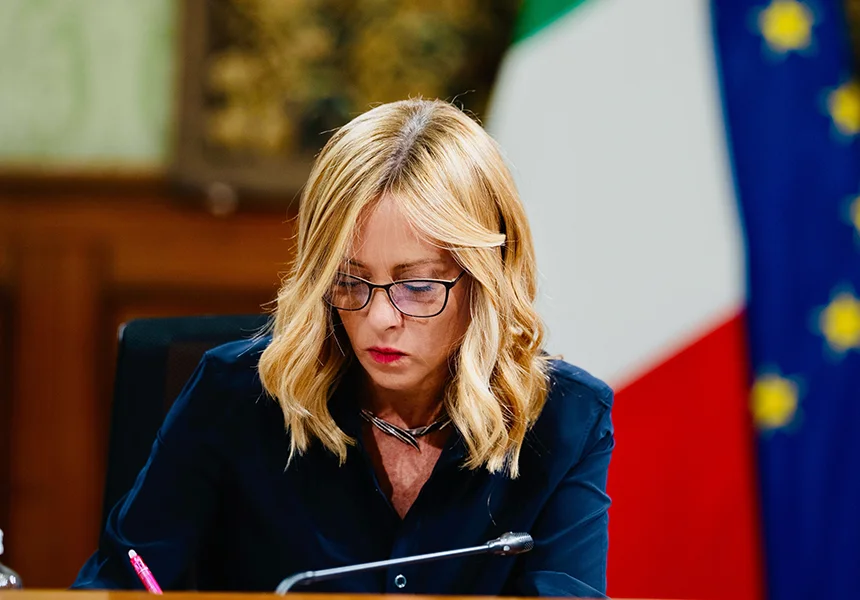
Italian Prime Minister Giorgia Meloni. Her written message to the Federchimica 2026 Public Assembly defended a review of European climate policies. · Governo Italiano — Presidenza del Consiglio dei Ministri (CC BY 3.0)
Meloni seeks climate policy review to sustain European chemistry
In a written message to the Federchimica 2026 Public Assembly, Giorgia Meloni defended the central role of chemistry, described its deep crisis in Europe and…
Meloni backs chemistry as pillar of industrial sovereignty
Giorgia Meloni sent a written message to the Federchimica 2026 Public Assembly linking the strength of chemistry to industrial sovereignty, denouncing energy…
--- The context ---
Chemistry rarely takes the political spotlight, yet it underpins much of modern production in Italy and across Europe. Its research supplies materials and solutions used by other industries.
In a written message to the 2026 Public Assembly of Federchimica, Prime Minister Giorgia Meloni addressed its president Buzzella and the business leaders there. She regretted being unable to attend and thanked the industry for its contribution to Italy's capacity to produce, innovate and compete.
--- The facts ---
According to the message, chemistry makes possible the progress of the country's main production chains, because it originates materials and solutions used throughout industry. Meloni stated that 95% of the products around us would not exist without chemical research and innovation.
The chains she cited include health, through active ingredients, medical devices and diagnostics, as well as agrifood, fashion and cosmetics, furniture and design, construction, mechanics and the automotive sector, electronics and energy. Behind their quality, she added, lies research and dialogue between companies innovating together.
--- The positions ---
Meloni described European chemistry as going through a deep crisis driven by the cost of energy, weak demand and international competition on unequal terms. In her account, the Green Deal and European policies worsened those difficulties with burdens and deadlines disconnected from sustainable alternatives, and she identified the ETS system as a knot requiring intervention.
She said decarbonisation remains a goal she wants to achieve, but argued that it requires companies able to invest and research, favouring those who produce over those who use the instrument speculatively. Closing a plant in Europe only to import the same products from countries with lower standards, she warned, loses jobs and autonomy without benefiting the climate, and she pledged pressure for a review of European climate policies.
--- What remains unknown ---
The message sets out a political direction without specifying concrete measures or timetables for the review it demands, nor how realistic timelines, technological neutrality, sustainable energy costs and protection against lower-cost competitors would be combined in practice.
--- Unanswered questions ---
What concrete changes will the Government propose for the ETS system and on what timetable will they be discussed? How will a climate review keep environmental requirements credible while easing burdens on producers in Europe? What support will companies receive to invest and research?
--- EPM analysis ---
The significance of the message lies in a tension it acknowledges without fully resolving. Decarbonisation stays as a stated goal, yet Meloni argues that a transition designed with burdens detached from real alternatives can weaken the companies expected to finance it. Climate ambition and industrial viability cross.
📌 EPM Take:
In EPM's view, reviewing European climate policies will only make sense if the correction protects both the climate and the capacity to produce, because a decarbonisation that drives out plants and jobs without reducing global harm is not a transition but a setback. The message is right to link decarbonisation with competitiveness and to seek realistic timelines and technological neutrality, yet its strength will depend on verifiable proposals and firm environmental safeguards.
--- The context ---
To speak of chemistry in Italy is to speak of the quiet foundation of industry, skilled work and the ability to compete without depending on others. When that foundation weakens, the chains turning research into products and markets suffer.
Prime Minister Giorgia Meloni sent a written message to the 2026 Public Assembly of Federchimica, addressed to its president Buzzella and to business leaders. She regretted being unable to join them and thanked the industry.
--- The facts ---
According to the message, chemistry makes possible the progress of all the main production chains, because it provides materials and solutions that allow other companies to improve products and reach new markets. Meloni recalled that 95% of the products around us would not exist without chemical research.
The areas she listed include health, through active ingredients, medical devices and diagnostics, and also agrifood, fashion and cosmetics, furniture and design, construction, mechanics and the automotive sector, electronics and energy.
--- The positions ---
Meloni said European chemistry is going through a deep crisis because of the cost of energy, weak demand and international competition not fought on equal terms. She argued that Europe cannot respond by adding costs on those who keep producing, and that the Green Deal aggravated the difficulties with burdens disconnected from sustainable alternatives, with the ETS system as a knot to address.
The prime minister maintained that decarbonisation must be pursued with strong companies, able to invest and research, favouring those who produce over those who speculate. She warned that closing a plant in Europe to import the same goods from countries with lower standards destroys jobs, skills and autonomy without benefiting the climate. She therefore said the Government will keep fighting to review European climate policies, starting with the ETS, with technological neutrality and sustainable energy costs.
--- What remains unknown ---
The text announces a political battle and a clear objective, a competitive chemistry in Italy and in Europe, but it does not detail the review proposals or their timetable.
--- Unanswered questions ---
What concrete measures will the Government defend in the review of European climate policies and the ETS system? How will protection against competitors with lower costs become rules that can be applied? What support will companies have to invest?
--- EPM analysis ---
The message orders its priorities plainly: first produce, invest and keep skills at home, and from that strength meet climate objectives. Its argument is one of sovereignty, linking chemical strength to industrial autonomy and denouncing the loss of European plants to import products made to worse standards.
📌 EPM Take:
In EPM's view, the defence of chemistry set out in the message is, at bottom, a defence of the capacity to decide and produce without depending on third parties, and therein lies its greatest strength. Seeking realistic timelines, technological neutrality and energy at sustainable costs answers a crisis described with concrete causes. The challenge will be to turn that position into negotiated results in Europe, because industrial sovereignty is proved by sustaining plants, jobs and skills.
Meloni pide revisar el clima europeo para sostener la química
En un mensaje escrito a la Asamblea Pública 2026 de Federchimica, Giorgia Meloni defendió el papel central de la química, describió su crisis en Europa y…
Meloni defiende la química como base de la soberanía industrial
Giorgia Meloni envió un mensaje escrito a la Asamblea Pública 2026 de Federchimica en el que vinculó la fuerza de la química con la soberanía industrial…
--- El contexto ---
La química sostiene gran parte de la producción italiana y europea. Sin su investigación, muchas cadenas perderían materiales y soluciones esenciales.
La presidenta del Consejo, Giorgia Meloni, hizo llegar un mensaje escrito a la Asamblea Pública 2026 de Federchimica. Lamentó no poder estar presente, saludó al presidente Buzzella y a los empresarios y agradeció el aporte del sector a la capacidad italiana de producir, innovar y competir.
--- Los hechos ---
Según el mensaje, la química hace posibles los progresos de las principales cadenas productivas, al estar en el origen de materiales y soluciones que permiten mejorar productos y abrir mercados. Meloni sostuvo que el 95% de los productos que nos rodean no existirían sin la investigación química.
Las cadenas citadas abarcan la salud, con principios activos, dispositivos médicos y diagnóstico, y también el agroalimentario, la moda y la cosmética, el mobiliario y el diseño, la construcción, la mecánica y la automoción, la electrónica y la energía. Tras esa calidad, añadió, hay investigación y diálogo entre empresas que innovan juntas.
--- Las posiciones ---
Meloni describió una química europea en crisis profunda por el coste de la energía, la debilidad de la demanda y una competencia internacional desigual. A su juicio, el Green Deal y las políticas europeas agravaron esas dificultades con cargas y plazos desconectados de alternativas sostenibles, y señaló el sistema ETS como nudo a intervenir.
La presidenta afirmó que la descarbonización es un objetivo que quiere realizar, pero que exige empresas capaces de invertir e investigar, privilegiando a quien produce frente a quien especula. Advirtió que cerrar una planta en Europa para importar lo mismo desde países con estándares inferiores pierde empleo y autonomía sin beneficiar al clima, y anunció que el Gobierno seguirá batiéndose por revisar las políticas climáticas europeas.
--- Lo que falta saber ---
El mensaje fija una dirección política, pero no detalla medidas ni calendarios para esa revisión, ni cómo se combinarían tiempos realistas, neutralidad tecnológica, energía a costes sostenibles y protección frente a competidores sin los mismos costes.
--- Preguntas sin respuesta ---
¿Qué cambios propondrá el Gobierno para el sistema ETS y en qué plazos se discutirán? ¿Cómo mantendrá la revisión exigencias ambientales creíbles mientras alivia las cargas sobre quien produce en Europa? ¿Qué apoyos recibirán las empresas para invertir e investigar?
--- Análisis EPM ---
El interés del mensaje está en la tensión que reconoce sin resolver. Mantiene la descarbonización como objetivo, pero sostiene que una transición con cargas ajenas a las alternativas reales puede debilitar a las empresas que deberían financiarla. Ambición climática y viabilidad industrial se cruzan.
📌 Conclusion EPM:
A juicio de EPM, revisar las políticas climáticas europeas solo tendrá sentido si la corrección protege a la vez el clima y la capacidad de producir, porque una descarbonización que expulsa plantas y empleo sin reducir el daño global no es transición sino retroceso. El mensaje acierta al vincular descarbonización y competitividad y al pedir tiempos realistas y neutralidad tecnológica, pero su fuerza dependerá de propuestas verificables, con costes energéticos sostenibles y salvaguardas ambientales firmes.
--- El contexto ---
Hablar de química en Italia es hablar de la base silenciosa de la industria, el empleo cualificado y la capacidad de competir sin depender de otros. Cuando esa base se debilita, sufren las cadenas productivas.
La presidenta del Consejo, Giorgia Meloni, envió un mensaje escrito a la Asamblea Pública 2026 de Federchimica, dirigido al presidente Buzzella y a los empresarios. Lamentó no poder acompañarlos y agradeció el aporte del sector, situando su defensa en la competitividad y la soberanía industrial.
--- Los hechos ---
De acuerdo con el mensaje, la química hace posibles los progresos de las principales cadenas productivas, al aportar materiales y soluciones que permiten mejorar productos y llegar a nuevos mercados. Meloni recordó que el 95% de los productos que nos rodean no existirían sin la investigación química.
Esa centralidad se refleja en la salud, con principios activos, dispositivos médicos y diagnóstico, y también en el agroalimentario, la moda y la cosmética, el mobiliario y el diseño, la construcción, la mecánica y la automoción, la electrónica y la energía.
--- Las posiciones ---
Meloni afirmó que la química europea atraviesa una crisis profunda por el coste de la energía, la debilidad de la demanda y una competencia internacional sin igualdad de condiciones. Sostuvo que Europa no puede responder añadiendo costes y que el Green Deal agravó las dificultades con cargas desconectadas de alternativas sostenibles, con el sistema ETS como nudo a intervenir.
La presidenta defendió que la descarbonización debe hacerse con empresas fuertes, capaces de invertir e investigar, privilegiando a quien produce frente a quien especula. Advirtió que cerrar un establecimiento en Europa para importar lo mismo desde países con estándares inferiores destruye empleo, competencias y autonomía sin beneficiar al clima. Por eso aseguró que el Gobierno seguirá batiéndose por revisar las políticas climáticas europeas, empezando por el ETS, con neutralidad tecnológica y energía a costes sostenibles.
--- Lo que falta saber ---
El texto anuncia una batalla política y un objetivo claro, una química competitiva en Italia y en Europa, pero no detalla las propuestas de revisión ni su calendario.
--- Preguntas sin respuesta ---
¿Qué medidas defenderá el Gobierno en la revisión de las políticas climáticas europeas y del sistema ETS? ¿Cómo se convertirá la protección frente a competidores con costes menores en reglas aplicables? ¿Con qué apoyos contarán las empresas para invertir?
--- Análisis EPM ---
El mensaje ordena las prioridades sin rodeos: primero producir, invertir y conservar competencias en casa, y desde esa fuerza cumplir los objetivos climáticos. Su argumento es de soberanía y denuncia perder plantas europeas para importar productos con estándares peores.
📌 Conclusion EPM:
A juicio de EPM, la defensa de la química que plantea el mensaje es, en el fondo, una defensa de la capacidad de decidir y producir sin depender de terceros, y ahí reside su mayor solidez. Pedir tiempos realistas, neutralidad tecnológica y energía a costes sostenibles responde a una crisis descrita con causas concretas. El reto será convertir esa posición en resultados negociados en Europa, porque la soberanía industrial se demuestra sosteniendo plantas, empleo y competencias.