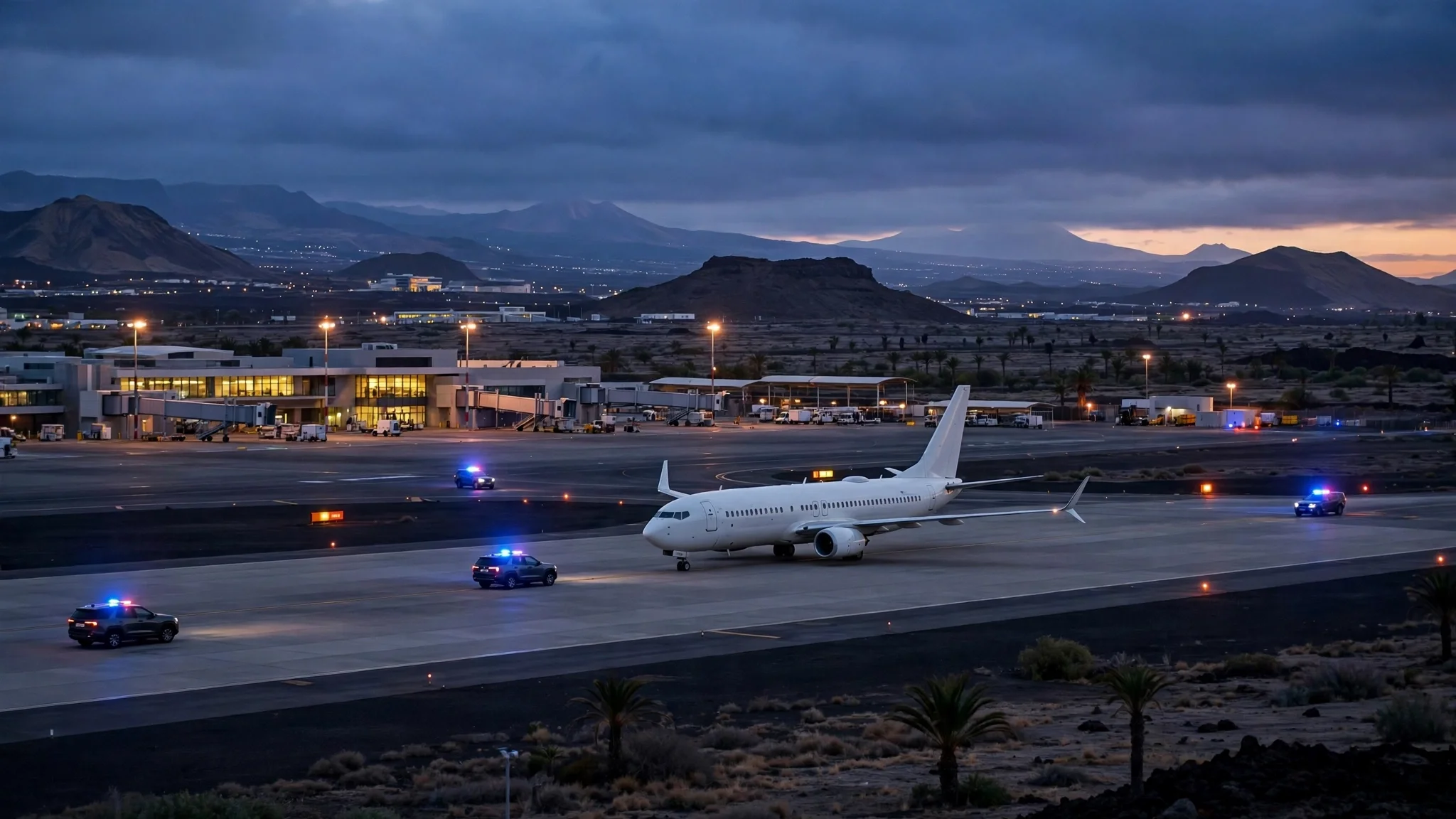
Avión aislado en la pista de un aeropuerto canario con vehículos de seguridad, imagen alusiva al dispositivo por el aviso en el vuelo procedente de Barcelona. · Erick Prometeo Media
Gran Canaria isolates Vueling flight after bomb warning
Gran Canaria airport activated an emergency operation after a bomb warning on Vueling flight VY3008 from Barcelona.
Security operation at Gran Canaria over Vueling flight warning
A bomb warning on Vueling flight VY3008 led Gran Canaria airport to isolate the aircraft, move passengers and crew to a separate room and inspect the baggage…
--- The context ---
Gran Canaria airport faced an exceptional situation on Monday night when a bomb warning forced staff to treat the arrival of a commercial flight as a full and urgent security emergency.
The episode centred on a single aircraft arriving from Barcelona, but its effects briefly reached other flights that were due to take off from or land at the same Canary Islands terminal.
--- The facts ---
Vueling flight VY3008 had taken off from Josep Tarradellas Barcelona-El Prat Airport at 17.25 and had been expected to arrive on the island at around 19.50, according to flight records consulted.
Police sources placed the landing at close to 19.30, minutes before eight in the evening, and the aircraft touched down without incident despite the warning received about that particular flight.
Immediately after landing, the aircraft moved to a remote area, with two bomb disposal units waiting on the runway, while passengers and crew went to an isolated room and teams inspected baggage and plane.
--- The positions ---
Aena said the airport maintained its usual operation and that no significant disruption was recorded across the rest of its services, despite the security operation deployed around the flight from Barcelona.
Local media pointed to a false alarm as the main hypothesis being considered, although the origin of the threat has not emerged and no suspicious object has been confirmed inside the aircraft.
--- What remains unknown ---
The authorities have not yet announced the final result of the inspection of the aircraft, nor have they officially confirmed or ruled out that a real risk existed for those on board.
--- Unanswered questions ---
What was the origin of the warning that triggered the emergency operation at Gran Canaria? When will the authorities announce the final result of the inspection of the aircraft and baggage? Will the false alarm be officially confirmed?
--- EPM analysis ---
The response combined isolation, specialist inspection and operational continuity, and its clearest effect was the wait of a Binter flight to Lanzarote, which departed about 20 minutes after the pilot's announcement, while other aircraft held in the air.
📌 EPM Take:
In EPM's view, the response at Gran Canaria shows a protocol that worked quickly on the ground, with the aircraft isolated, travellers kept in a separate room and specialists inspecting the plane, but one that still owes citizens a complete explanation, because without an official inspection result or clarification about the origin of the warning, the false alarm hypothesis remains a provisional assessment rather than a closed conclusion about what happened on Monday night at the terminal.
--- The context ---
A bomb warning received on Monday night was enough to trigger a special security operation at Gran Canaria airport around a commercial flight that had arrived from Barcelona earlier that evening.
From the first moment, the priority was to separate the aircraft concerned from the rest of the operation, inspect its interior thoroughly and keep travellers apart while the checks were completed properly.
--- The facts ---
The affected service was Vueling flight VY3008, which took off from Josep Tarradellas Barcelona-El Prat Airport at 17.25 and had initially been expected to land on the island at around 19.50.
According to police sources, the aircraft landed close to 19.30, minutes before eight in the evening, and did so without incident despite the threat reported against that particular flight during the evening.
Once on the ground, the aircraft moved to a remote area, with two bomb disposal units waiting nearby, and passengers and crew were taken to an isolated room while baggage and plane were inspected.
--- The positions ---
Aena reported that the airport was operating normally and that no significant disruption occurred across the rest of its operations, a judgement intended to convey control and continuity of the air service.
Local media said the main hypothesis being considered was a false alarm, with no suspicious object confirmed to have been found inside the aircraft that underwent the full security inspection on Monday.
--- What remains unknown ---
The origin of the threat is not yet known and the authorities have not published the final result of the inspection, so there is also no official confirmation about the real risk involved.
--- Unanswered questions ---
What was the specific origin of the bomb warning received about flight VY3008 on Monday? What exactly did the bomb disposal units find during their inspection of the aircraft and the baggage? When will the authorities provide a definitive official closure?
--- EPM analysis ---
The operation applied the essential precautionary measures in order, and its repercussions were limited but real: a Binter flight to Lanzarote departed about 20 minutes after the pilot's announcement and several aircraft held in the air.
📌 EPM Take:
In EPM's view, faced with a warning of this nature there can be no response other than the one applied at Gran Canaria, treating the threat as real while it is verified, isolating the aircraft and protecting passengers and crew first, although that necessary caution should not be mistaken for a closed file, because the official word on the inspection and on the origin of the warning is still missing, two facts that are essential to judge fairly both the security operation and the calm shown by the terminal.
Gran Canaria aísla un vuelo de Vueling tras un aviso de bomba
El aeropuerto de Gran Canaria activó un dispositivo de emergencia por un aviso de bomba en el vuelo VY3008 de Vueling procedente de Barcelona.
Dispositivo de seguridad en Gran Canaria por aviso en vuelo de Vueling
Un aviso de bomba en el vuelo VY3008 de Vueling obligó a aislar la aeronave en Gran Canaria, trasladar a pasajeros y tripulación a una sala aislada e…
--- El contexto ---
El aeropuerto de Gran Canaria vivió este lunes por la noche una situación excepcional cuando un aviso de bomba obligó a tratar la llegada de un vuelo comercial como una emergencia de seguridad prioritaria.
El episodio se concentró en un único avión procedente de Barcelona, pero su impacto alcanzó durante un tiempo a otros vuelos que debían despegar o aterrizar en la misma terminal canaria.
--- Los hechos ---
El vuelo VY3008 de Vueling despegó del Aeropuerto Josep Tarradellas Barcelona-El Prat a las 17.25 horas y tenía prevista su llegada a la isla alrededor de las 19.50 horas.
Fuentes policiales situaron la toma de tierra cerca de las 19.30 horas, minutos antes de las ocho de la noche, y el aterrizaje se produjo sin incidencias pese al aviso recibido.
Nada más aterrizar, el avión fue trasladado a una zona apartada, con dos unidades de artificieros esperando en la pista, mientras pasajeros y tripulación pasaban a una sala aislada y se inspeccionaban equipaje y aeronave.
--- Las posiciones ---
Aena sostuvo que el aeropuerto mantenía su funcionamiento habitual y que no se registraron alteraciones significativas en el resto de las operaciones, pese al operativo desplegado en torno al vuelo.
Medios locales apuntaron que la principal hipótesis manejada es la de una falsa alarma, aunque no ha trascendido el origen de la amenaza ni se ha confirmado ningún objeto sospechoso.
--- Lo que falta saber ---
Las autoridades no han comunicado todavía el resultado final de la inspección de la aeronave ni han confirmado o descartado oficialmente que existiera un riesgo real para quienes viajaban a bordo del avión.
--- Preguntas sin respuesta ---
¿Qué origen tuvo el aviso que activó el dispositivo de emergencia en Gran Canaria? ¿Cuándo comunicarán las autoridades el resultado final de la inspección de la aeronave y el equipaje? ¿Se confirmará oficialmente la falsa alarma?
--- Análisis EPM ---
La respuesta combinó aislamiento, revisión especializada y continuidad operativa, y su efecto más visible fue la espera de un vuelo de Binter a Lanzarote, que despegó unos 20 minutos después del aviso del piloto, mientras otros aviones aguardaban en el aire.
📌 Conclusion EPM:
A juicio de EPM, la actuación en Gran Canaria muestra un protocolo que funcionó con rapidez sobre el terreno, con el avión aislado, los viajeros en una sala separada y especialistas revisando la aeronave, pero que todavía debe su explicación completa a los ciudadanos, porque sin un resultado oficial de la inspección ni una aclaración sobre el origen del aviso, la hipótesis de la falsa alarma sigue siendo una valoración provisional y no una conclusión cerrada sobre lo ocurrido durante la noche del lunes en la terminal.
--- El contexto ---
Un aviso de bomba recibido este lunes por la noche bastó para activar en el aeropuerto de Gran Canaria un dispositivo especial de seguridad en torno a un vuelo comercial procedente de Barcelona.
La prioridad fue desde el primer momento separar la aeronave señalada del resto de la operativa, revisar a fondo su interior y mantener a los viajeros apartados mientras duraba la inspección correspondiente.
--- Los hechos ---
El vuelo afectado fue el VY3008 de Vueling, que despegó del Aeropuerto Josep Tarradellas Barcelona-El Prat a las 17.25 horas y esperaba aterrizar en la isla cerca de las 19.50 horas previstas.
Según fuentes policiales, el avión tomó tierra cerca de las 19.30 horas, minutos antes de las ocho de la noche, y lo hizo sin incidencias a pesar de la amenaza recibida sobre el vuelo.
Una vez en tierra, la aeronave pasó a un área apartada, con dos unidades de artificieros en la pista, y pasajeros y tripulación fueron llevados a una sala aislada mientras se inspeccionaban equipaje y avión.
--- Las posiciones ---
Aena informó de que el aeropuerto operaba con normalidad y de que no se produjeron alteraciones significativas en el resto de las operaciones, una valoración de control y continuidad del servicio aéreo.
Medios locales señalaron que la principal hipótesis manejada es la de una falsa alarma, sin que se haya confirmado la localización de ningún objeto sospechoso en el interior del avión revisado.
--- Lo que falta saber ---
Por el momento no se conoce el origen de la amenaza y las autoridades no han hecho público el resultado final de la inspección, por lo que tampoco existe confirmación oficial sobre el riesgo real.
--- Preguntas sin respuesta ---
¿Cuál fue el origen concreto del aviso de bomba recibido sobre el vuelo VY3008? ¿Qué encontraron los artificieros durante la inspección de la aeronave y del equipaje revisado a fondo? ¿Cuándo ofrecerán las autoridades un cierre oficial definitivo?
--- Análisis EPM ---
El dispositivo aplicó con orden las medidas de prudencia esenciales, y sus repercusiones fueron limitadas pero reales: un vuelo de Binter hacia Lanzarote despegó unos 20 minutos después del aviso del piloto y varios aviones esperaron en el aire.
📌 Conclusion EPM:
A juicio de EPM, ante un aviso de esta naturaleza no cabe otra respuesta que la aplicada en Gran Canaria, tratar la amenaza como real mientras se verifica, aislar la aeronave y proteger primero a pasajeros y tripulación, aunque esa prudencia obligada no debe confundirse con un expediente cerrado, porque falta todavía la palabra oficial sobre la inspección y sobre el origen del aviso, dos datos imprescindibles para valorar con justicia tanto la seguridad del operativo como la calma mostrada por la terminal.