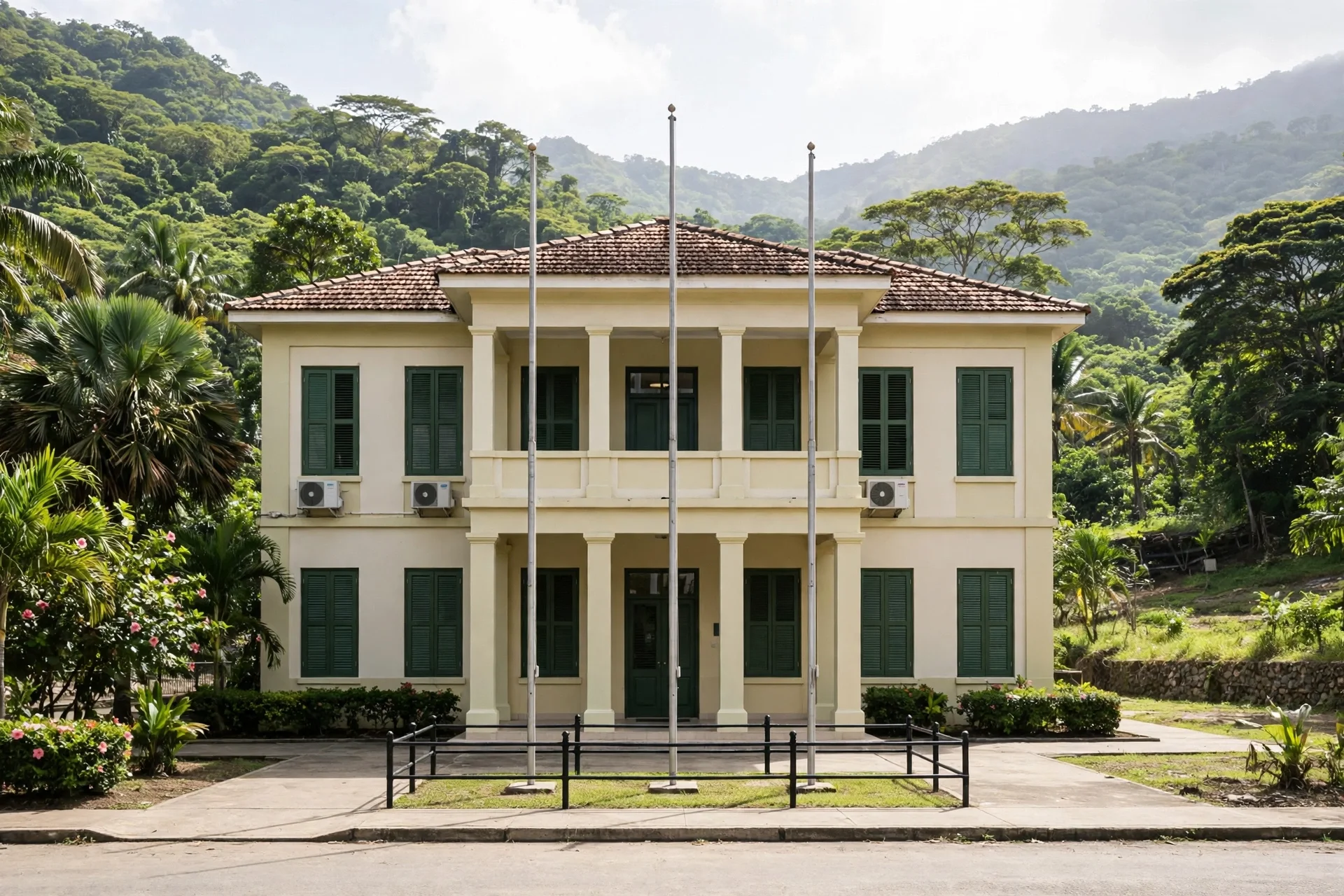
Imagen alusiva a una sede diplomática en el Caribe. · Erick Prometeo Media
Haiti summons Dominican ambassador over alleged incursions
Haiti's Foreign Ministry summoned the Dominican ambassador in Port-au-Prince, Faruk Miguel, to discuss reports of alleged Dominican military incursions, with a…
Haiti summons Dominican ambassador after incursion claims
Haiti's Foreign Ministry summoned Dominican ambassador Faruk Miguel to discuss reports of alleged Dominican military incursions, with a meeting scheduled for…
--- The context ---
Relations between Haiti and the Dominican Republic are under strain along their shared border following the summons of the Dominican ambassador. Posts circulating on social media attribute evictions and demolitions of homes to the Dominican Army, and a message shared in Haitian Creole denounces an alleged entry by Dominican soldiers into Thomazeau, in Haiti's West department. Amid these conflicting accounts, and before any independent verification of what happened, the diplomacy of both countries has been called on to provide explanations.
--- The facts ---
Haiti's Foreign Ministry summoned the Dominican ambassador in Port-au-Prince, Faruk Miguel, to discuss reports of alleged Dominican military incursions into Haitian territory, a source confirmed. The meeting is scheduled for Thursday, October 29, at noon, at the headquarters of Haiti's Ministry of Foreign Affairs. The coincidence between the posts and the reason for the summons suggests a link between the two, although Haitian authorities have not expressly confirmed that connection.
The message shared in Creole holds, according to its own account, that the soldiers demanded that a group of Haitians leave the area, arguing that the land belonged to the Dominican Republic, and it attributes the destruction of homes to them while calling for a response from the Haitian authorities. Although the message mentions photographs, the shared content does not establish the precise location of the houses or verify the circumstances described.
--- The positions ---
Against that denunciation, an unofficial version points in the opposite direction. According to those sources, the houses had been occupied for years by Haitian citizens but stood on the Dominican side of the border. Under that version, the residents were relocated into Haitian territory and received help to build their new homes. The location of the houses is therefore the central point of the conflicting accounts: a denounced incursion into Haiti, or a transfer from Dominican territory accompanied by assistance.
--- What remains unknown ---
The unofficial sources did not specify how many families were moved, when the relocation took place or which institutions took part in the assistance. For now there is no official explanation of what happened and no independent verification to establish where the houses stood. The accusations remain pending confirmation, and the meeting is scheduled for Thursday, October 29, at noon to discuss reports of alleged incursions.
--- Unanswered questions ---
Where exactly were the houses mentioned in the posts located? Will Haiti's Foreign Ministry confirm that the summons of Ambassador Faruk Miguel responds to those denunciations? How many families were moved, when did the relocation occur and which institutions took part in the assistance? Will there be a joint official explanation after the noon meeting on Thursday, October 29?
--- EPM analysis ---
The case could be showing a temporal coincidence between a social media denunciation and a diplomatic summons, with no expressly confirmed link. Prudence requires separating what is confirmed, namely the summons and the scheduled meeting, from what is merely attributed, namely the incursion, the evictions and the demolitions. There is also a human dimension: behind the dispute are families whose relocation nobody has yet quantified with official data.
📌 EPM Take: In EPM's view, the only firm facts so far are the summons of Ambassador Faruk Miguel and the meeting scheduled for Thursday, October 29, at noon, because the denounced incursion is unverified and the unofficial version is equally unconfirmed. The location of the houses will decide which account stands, and that evidence does not yet exist in the public record. Haiti and the Dominican Republic owe that verification to the affected families and to a bilateral relationship that cannot be governed by unexamined posts.
--- The context ---
Social media posts, a denunciation concerning Thomazeau and the diplomatic summons frame the matter. Posts on social media attribute evictions and demolitions of homes to the Dominican Army, while a message in Haitian Creole denounces an alleged entry by Dominican soldiers into Thomazeau, in the West department. Before any independent verification, the matter has already reached Haiti's Foreign Ministry.
--- The facts ---
Haiti's Foreign Ministry summoned the Dominican ambassador in Port-au-Prince, Faruk Miguel, to discuss reports of alleged Dominican military incursions into Haitian territory, a source confirmed. The meeting is scheduled for Thursday, October 29, at noon, at the headquarters of Haiti's Ministry of Foreign Affairs. The coincidence between those posts and the reason for the summons suggests a link, but Haitian authorities have not expressly confirmed that connection.
The message shared in Creole holds, in its own account, that the soldiers demanded that a group of Haitians leave the area, arguing that the land belonged to the Dominican Republic, and it attributes the destruction of homes to them while calling for a response from the Haitian authorities. Although the message mentions photographs, the shared content does not make it possible to establish the precise location of the houses or to verify the circumstances described.
--- The positions ---
An unofficial version offers the opposite explanation. According to those sources, the houses had been occupied for years by Haitian citizens but stood on the Dominican side of the border. The residents were relocated into Haitian territory and received help to build their new homes, according to that version. The location of the houses is the central point of the conflicting accounts: if they stood on the Dominican side, there was no incursion to explain, but rather a transfer carried out with assistance.
--- What remains unknown ---
The unofficial sources did not specify how many families were moved, when the relocation took place or which institutions took part in the assistance. There is no official explanation of what happened and no independent verification of the accusations. The meeting on Thursday, October 29, at noon will be the setting where Haiti can present its claim and where the Dominican side can set out its version, with Ambassador Faruk Miguel as the summoned interlocutor.
--- Unanswered questions ---
Were the houses on the Dominican side or on the Haitian side of the border? Will Haiti present at the meeting any evidence placing the houses in Thomazeau? How many families were moved, when did the relocation occur and which institutions took part in the assistance? Will Haiti's Foreign Ministry expressly confirm that the summons responds to the posts circulating on social media?
--- EPM analysis ---
On border matters, the order of factors matters: first the location, then the conclusions. A diplomatic summons is a legitimate instrument of clarification, but it does not turn a denunciation on social media into a proven fact. The unofficial version, if confirmed, describes action on Dominican territory with help for those relocated; the denunciation has not yet provided the elementary proof of where the houses stood.
📌 EPM Take: In EPM's view, the summons of Ambassador Faruk Miguel should serve to establish the facts with evidence, starting with the location of the houses, and not to treat as certain an incursion that nobody has verified. The meeting on Thursday, October 29, at noon is the right forum for that comparison. Until an official explanation exists, prudence requires treating the evictions and demolitions as attributions made by posts, and the assisted transfer as an unofficial version still awaiting documentary confirmation.
Haití cita al embajador dominicano por presuntas incursiones
La Cancillería haitiana citó al embajador dominicano en Puerto Príncipe, Faruk Miguel, para tratar informaciones sobre presuntas incursiones militares…
Haití cita al embajador dominicano tras denuncias de incursiones
La Cancillería haitiana citó al embajador dominicano Faruk Miguel para tratar informaciones sobre presuntas incursiones militares dominicanas, con reunión…
--- El contexto ---
La relación entre Haití y República Dominicana se tensa en torno a la frontera que comparten tras la citación al embajador dominicano. Publicaciones difundidas en redes sociales atribuyen al Ejército dominicano desalojos y demoliciones de viviendas, y un mensaje difundido en criollo haitiano denuncia una supuesta entrada de militares dominicanos en Thomazeau, en el departamento Oeste de Haití. En ese clima de versiones encontradas, la diplomacia de ambos países quedó llamada a dar explicaciones.
--- Los hechos ---
La Cancillería haitiana citó al embajador dominicano en Puerto Príncipe, Faruk Miguel, para tratar informaciones sobre presuntas incursiones militares dominicanas en territorio haitiano, según confirmó una fuente. La reunión está prevista para el jueves 29 de octubre, al mediodía, en la sede del Ministerio de Asuntos Exteriores de Haití. La coincidencia entre las publicaciones y el motivo de la citación sugiere una relación entre ambos hechos, aunque ese vínculo no ha sido confirmado expresamente por las autoridades haitianas.
El mensaje difundido en criollo sostiene, según su propio relato, que los soldados exigieron a un grupo de haitianos abandonar la zona alegando que los terrenos pertenecían a República Dominicana, y les atribuye la destrucción de viviendas, al tiempo que reclama una respuesta de las autoridades haitianas. Sin embargo, aunque el mensaje menciona fotografías, el contenido compartido no permite establecer la ubicación precisa de las casas ni verificar las circunstancias descritas.
--- Las posiciones ---
Frente a esa denuncia circula una versión extraoficial de sentido contrario. Según esas fuentes, las casas estaban ocupadas desde hacía años por ciudadanos haitianos, pero se encontraban del lado dominicano de la frontera. Los residentes, de acuerdo con esa versión, fueron reubicados en territorio haitiano y recibieron ayuda para construir sus nuevas viviendas. La ubicación de las viviendas es así el punto central de las versiones contrapuestas: una incursión denunciada en Haití o un traslado desde territorio dominicano acompañado de ayuda.
--- Lo que falta saber ---
Las fuentes extraoficiales no precisaron cuántas familias fueron trasladadas, cuándo ocurrió la reubicación ni qué instituciones participaron en la asistencia. Tampoco hay, por ahora, una explicación oficial sobre lo ocurrido ni una verificación independiente que permita fijar dónde estaban las viviendas. Las acusaciones permanecen pendientes de confirmación y la reunión está prevista para el jueves 29 de octubre al mediodía para tratar informaciones sobre presuntas incursiones.
--- Preguntas sin respuesta ---
¿Dónde estaban ubicadas exactamente las viviendas mencionadas en las publicaciones? ¿Confirmará la Cancillería haitiana que la citación al embajador Faruk Miguel responde a esas denuncias? ¿Cuántas familias fueron trasladadas, cuándo ocurrió la reubicación y qué instituciones participaron en la asistencia? ¿Habrá una explicación oficial conjunta tras la reunión del mediodía del jueves 29 de octubre?
--- Análisis EPM ---
El caso podría estar mostrando una coincidencia temporal entre una denuncia en redes y una citación diplomática, sin vínculo confirmado expresamente. La prudencia obliga a separar lo confirmado, que es la citación y la reunión prevista, de lo atribuido, que son la incursión, los desalojos y las demoliciones. También hay una dimensión humana: detrás de la disputa hay familias cuyo traslado nadie ha cuantificado con datos oficiales.
📌 Conclusion EPM: A juicio de EPM, lo único firme hasta ahora es la citación al embajador Faruk Miguel y la reunión prevista el jueves 29 de octubre al mediodía, porque la incursión denunciada no está verificada y la versión extraoficial tampoco está confirmada. La ubicación de las viviendas decidirá cuál relato se sostiene, y esa prueba todavía no existe en el registro público. Haití y República Dominicana deben esa verificación a las familias afectadas y a una relación bilateral que no puede gobernarse a golpe de publicaciones sin contrastar.
--- El contexto ---
Las publicaciones en redes sociales, la denuncia relativa a Thomazeau y la citación diplomática enmarcan el asunto. Publicaciones en redes sociales atribuyen al Ejército dominicano desalojos y demoliciones de viviendas, mientras un mensaje en criollo haitiano denuncia una supuesta entrada de militares dominicanos en Thomazeau, en el departamento Oeste. Antes de cualquier verificación independiente, el asunto ya llegó a la Cancillería haitiana.
--- Los hechos ---
La Cancillería haitiana citó al embajador dominicano en Puerto Príncipe, Faruk Miguel, para tratar informaciones sobre presuntas incursiones militares dominicanas en territorio haitiano, según confirmó una fuente. La reunión está prevista para el jueves 29 de octubre, al mediodía, en la sede del Ministerio de Asuntos Exteriores de Haití. La coincidencia entre esas publicaciones y el motivo de la citación sugiere una relación, pero ese vínculo no ha sido confirmado expresamente por las autoridades haitianas.
El mensaje difundido en criollo sostiene, en su propio relato, que los soldados exigieron a un grupo de haitianos abandonar la zona alegando que los terrenos pertenecían a República Dominicana, y les atribuye la destrucción de viviendas, además de reclamar una respuesta de las autoridades haitianas. Aunque el mensaje menciona fotografías, el contenido compartido no permite establecer la ubicación precisa de las casas ni verificar las circunstancias descritas.
--- Las posiciones ---
Una versión extraoficial ofrece la explicación opuesta. Según esas fuentes, las casas estaban ocupadas desde hacía años por ciudadanos haitianos, pero se encontraban del lado dominicano de la frontera. Los residentes fueron reubicados en territorio haitiano y recibieron ayuda para construir sus nuevas viviendas, de acuerdo con esa versión. La ubicación de las viviendas es el punto central de las versiones contrapuestas: si estaban del lado dominicano, no hubo incursión alguna que explicar, sino un traslado con asistencia.
--- Lo que falta saber ---
Las fuentes extraoficiales no precisaron cuántas familias fueron trasladadas, cuándo ocurrió la reubicación ni qué instituciones participaron en la asistencia. No hay explicación oficial sobre lo ocurrido ni verificación independiente de las acusaciones. La reunión está prevista para el jueves 29 de octubre al mediodía para tratar informaciones sobre presuntas incursiones.
--- Preguntas sin respuesta ---
¿Estaban las viviendas del lado dominicano o del lado haitiano de la frontera? ¿Presentará Haití en la reunión alguna prueba que ubique las casas en Thomazeau? ¿Cuántas familias fueron trasladadas, cuándo ocurrió la reubicación y qué instituciones participaron en la asistencia? ¿Confirmará la Cancillería haitiana que la citación responde expresamente a las publicaciones difundidas en redes sociales?
--- Análisis EPM ---
En materia de frontera, el orden de los factores importa: primero la ubicación, después las conclusiones. Una citación diplomática es un instrumento legítimo de aclaración, pero no convierte una denuncia en redes en un hecho probado. La versión extraoficial, si se confirma, describe una actuación sobre territorio propio con ayuda a los reubicados; la denuncia aún no aporta la prueba elemental de dónde estaban las viviendas.
📌 Conclusion EPM: A juicio de EPM, la citación al embajador Faruk Miguel debe servir para fijar los hechos con pruebas, empezando por la ubicación de las viviendas, y no para dar por cierta una incursión que nadie ha verificado. La reunión del jueves 29 de octubre al mediodía es el foro correcto para ese contraste. Hasta que exista una explicación oficial, la prudencia manda tratar los desalojos y las demoliciones como atribuciones de unas publicaciones, y el traslado con ayuda como una versión extraoficial pendiente de confirmación documental.