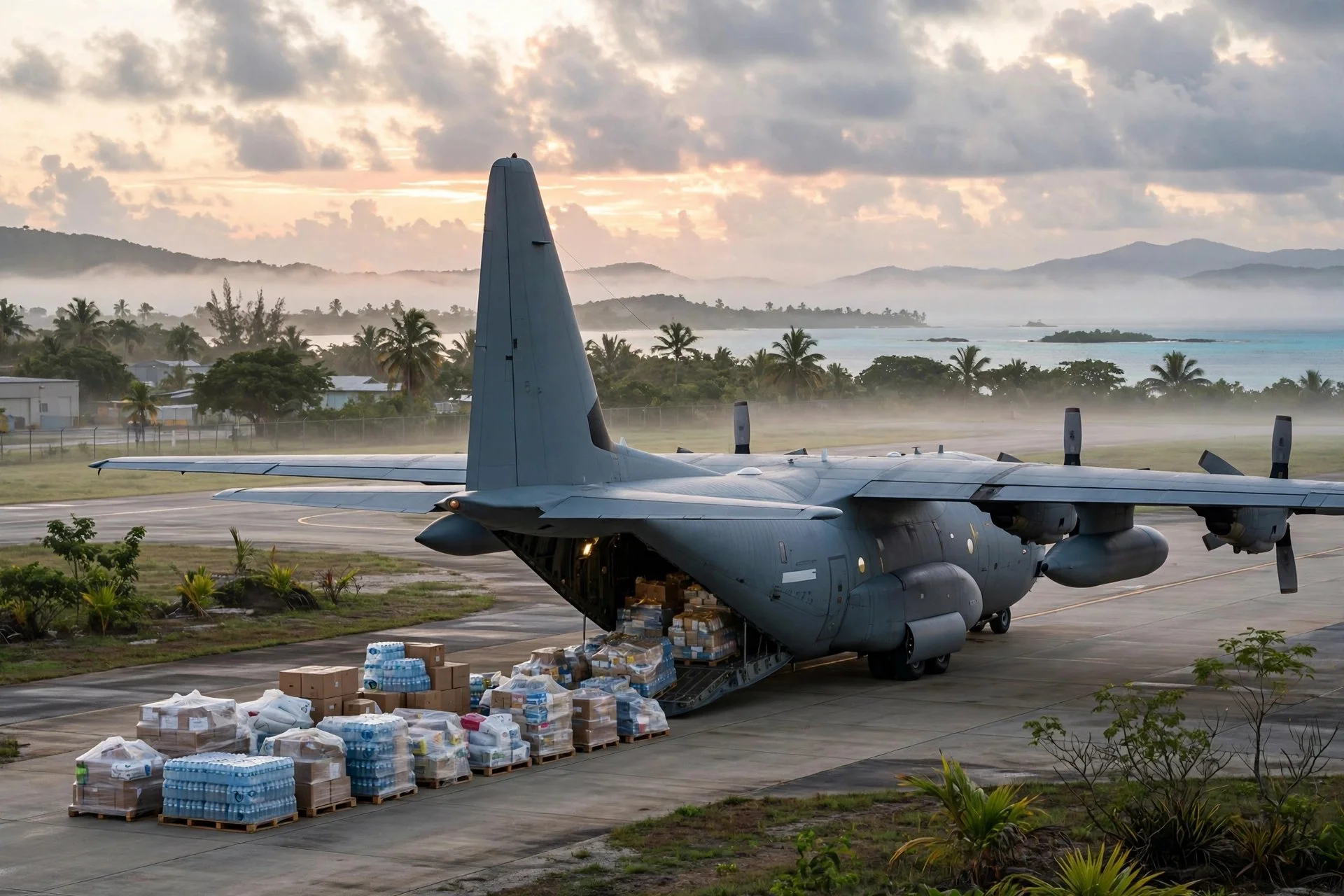
Imagen alusiva al refuerzo del despliegue en Haití: un avión de transporte militar en pista caribeña al amanecer. · Erick Prometeo Media
El Salvador expands its Haiti deployment in search of four soldiers
El Salvador's military presence in Haiti has grown to at least 600 personnel, according to a researcher, while another estimate places it at around 1,000.
Bukele reinforces Haiti mission and challenges the power of gangs
El Salvador has reinforced its military presence in Haiti to at least 600 personnel, according to a researcher, and around 1,000 according to a security…
--- The context ---
Haiti has spent years trapped in a security crisis that overwhelmed its institutions. Gangs have seized wide areas of the capital and ravaged much of the country, while long-delayed elections remain unscheduled. Operating in that setting is the Gang Repression Force, a multinational contingent authorized by the United Nations Security Council for 5,500 personnel, although it fields less than half.
--- The facts ---
El Salvador's military presence in Haiti has grown to at least 600 personnel, according to a prominent researcher, as part of President Nayib Bukele's efforts to locate four missing soldiers. Another estimate, attributed to a security official in Haiti, places the figure at around 1,000.
At least three charter flights arrived from El Salvador on Tuesday, and a fourth was en route. Flight-tracking records show three Boeing 747-400 aircraft arriving that day from San Salvador, within a steady flow of flights carrying Salvadoran soldiers and equipment.
The crisis intensified on October 18, when the disappearance of the four soldiers, members of the multinational mission, was reported. On Saturday, Bukele denied reports suggesting the bodies had been recovered, and a day later the force said it had received remains suspected to be those of the four, while being unable to confirm their identities.
--- The positions ---
Days after the disappearances, Bukele sent a first group of troops pledging to finish off the criminal groups, in line with what was done in his own country, where about 90,000 people have been jailed on gang-related accusations. His government did not respond to requests for comment.
The researcher, an international research director at a policy center and the author of a book on Haiti, argued that Bukele has much at stake in his image as the ultimate crime fighter and that the deployment could showcase his security model to the world.
The Dominican Republic, which shares a 392-kilometer border with Haiti, provides diplomatic and logistical help that includes medical care for wounded mission soldiers, troop transport and economic support, according to its foreign minister. The minister ruled out Dominican troops on the ground because of the long-standing animosity between the two countries and defended that the solution has to come from Haiti.
--- What remains unknown ---
The identity of the remains received by the mission has not been confirmed, and the whereabouts of the four soldiers remain unclear if those remains are not theirs. There is also no single official figure for the deployment, which ranges from at least 600 to around 1,000 personnel.
--- Unanswered questions ---
When will the identity of the remains received by the mission be confirmed? How many Salvadoran personnel are actually on the ground in Haiti? Will a date finally be set for Haiti's first elections in more than a decade?
--- EPM analysis ---
The reinforcement turns a search for missing soldiers into the most visible foreign test of the Salvadoran security model. Yet the mission still operates far below its authorized strength and the country still has no election date, even though 18 presidential candidates registered before the October 31 deadline.
📌 EPM Take: In EPM's view, the Salvadoran reinforcement answers a real emergency, yet it cannot replace what Haiti needs: institutions of its own able to sustain security and elections that restore legitimacy to the state. Until the identity of the remains is confirmed and an election date is set, every arriving flight adds strength to a mission operating below its authorized level and leaves untouched the question of who will govern the country once foreign troops leave.
--- The context ---
Haiti is today a territory where gangs rule wide areas of the capital and have ravaged much of the country, while the state proves unable to impose order. Without security there can be no elections, and the power vacuum stretches beyond a decade. To contain the collapse, the United Nations Security Council authorized a multinational force of up to 5,500 personnel that today fields less than half that strength.
--- The facts ---
El Salvador has raised its military presence to at least 600 personnel, according to a prominent researcher, while a security official in Haiti raises the estimate to around 1,000. The increase is part of President Nayib Bukele's efforts to locate four soldiers who went missing in the Caribbean country.
At least three charter flights from El Salvador landed on Tuesday, and a fourth was en route. Flight-tracking records show three Boeing 747-400 aircraft arriving that day from San Salvador, within a steady flow of flights transporting Salvadoran soldiers and equipment.
The disappearance of the four soldiers was reported on October 18. Bukele on Saturday denied reports suggesting the bodies had been recovered, and a day later the multinational force announced it had received remains suspected to be those of the four, although it could not confirm their identities.
--- The positions ---
Bukele reacted days after the disappearances by sending a first group of troops with a declared pledge to finish off the criminal groups, applying the same determination with which some 90,000 people accused of gang-related crimes have been jailed in El Salvador. His government did not immediately respond to requests for comment.
The researcher acknowledged that Bukele has much at stake in his image as the ultimate crime fighter and that the deployment may serve to show his security model to the world. The multinational force declined to provide details about the reinforcement.
The Dominican Republic supports without deploying troops: sharing a 392-kilometer border, it provides diplomatic and logistical aid, medical care for wounded mission soldiers, troop transport and economic support, according to its foreign minister, who considered Dominican forces on the ground inadvisable given the long animosity between the two countries.
--- What remains unknown ---
Official confirmation of the identity of the remains is still missing, as is a settled figure for the Salvadoran contingent, which varies between at least 600 and around 1,000 personnel. A definitive election date is also missing, even though 18 presidential candidates registered before the October 31 deadline.
--- Unanswered questions ---
Will it be confirmed that the remains received belong to the four missing soldiers? Will the multinational mission ever reach its authorized strength of 5,500 personnel? Can Haiti hold elections while gangs control wide areas of the capital?
--- EPM analysis ---
The episode tests the security doctrine El Salvador already applied at home: massive presence, sustained pressure and measurable results against the gangs. In Haiti the margin is narrow, because the mission operates incomplete, but every flight that lands shifts the balance against criminal groups accustomed to acting without real opposition.
📌 EPM Take: In EPM's view, when gangs rule entire neighborhoods, the answer cannot remain indefinite waiting. The Salvadoran reinforcement brings real capacity to a mission operating with less than half its authorized strength and sends a clear message to the criminal groups that disappear soldiers. That firmness must come with truthful information about the four missing men and an electoral calendar that lets Haiti regain control of its own territory as soon as possible.
El Salvador amplía su despliegue en Haití en busca de cuatro soldados
La presencia militar de El Salvador en Haití ha aumentado hasta al menos 600 efectivos, según un investigador, mientras otra estimación la sitúa en torno a…
Bukele refuerza la misión en Haití y desafía el poder de las bandas
El Salvador ha reforzado su presencia militar en Haití hasta al menos 600 efectivos, según un investigador, y en torno a 1.000 según un responsable de…
--- El contexto ---
Haití lleva años atrapado en una crisis que desbordó a sus instituciones: las bandas se han apoderado de amplias zonas de la capital y han asolado gran parte del país, mientras las elecciones acumulan retrasos. En ese escenario opera la Fuerza de Represión de Pandillas, contingente multinacional autorizado por el Consejo de Seguridad de las Naciones Unidas a desplegar 5.500 efectivos, aunque cuenta con menos de la mitad.
--- Los hechos ---
La presencia militar de El Salvador ha aumentado hasta al menos 600 efectivos, según un destacado investigador, en los esfuerzos del presidente Nayib Bukele por localizar a cuatro soldados desaparecidos. Una estimación atribuida a un responsable de seguridad en Haití sitúa la cifra en torno a 1.000.
El martes llegaron al menos tres vuelos chárter desde El Salvador y un cuarto estaba en ruta. Los registros de seguimiento muestran tres Boeing 747-400 llegados ese día desde San Salvador, dentro de un flujo constante de vuelos con soldados y equipamiento.
La crisis se intensificó el 18 de octubre, cuando se denunció la desaparición de los cuatro militares. El sábado, Bukele desmintió que se hubieran recuperado los cuerpos, y un día después la misión afirmó haber recibido unos restos que se sospechaba eran los de los cuatro, sin poder confirmar sus identidades.
--- Las posiciones ---
Días después de las desapariciones, Bukele envió un primer grupo de tropas con el compromiso de acabar con los grupos criminales, en la línea de lo hecho en su país, donde unas 90.000 personas han sido encarceladas por acusaciones relacionadas con las bandas. Su Gobierno no respondió a las solicitudes de comentarios.
El investigador citado, director de investigación internacional de un centro de estudios y autor de un libro sobre Haití, sostuvo que Bukele se juega su imagen de luchador definitivo contra el crimen y que el despliegue puede funcionar como vitrina de su modelo de seguridad.
La República Dominicana, que comparte una frontera de 392 kilómetros con Haití, presta ayuda diplomática y logística —atención médica a heridos de la misión, traslado de efectivos y apoyo económico—, según su ministro de Asuntos Exteriores, quien descartó tropas dominicanas sobre el terreno por la animosidad histórica y defendió que la solución tiene que venir de Haití.
--- Lo que falta saber ---
No se ha confirmado la identidad de los restos recibidos ni el paradero de los cuatro militares si esos restos no fueran suyos. Tampoco hay cifra oficial única del despliegue, que oscila entre al menos 600 y en torno a 1.000 efectivos.
--- Preguntas sin respuesta ---
¿Cuándo se confirmará la identidad de los restos recibidos por la misión? ¿Cuántos efectivos salvadoreños hay realmente sobre el terreno? ¿Se fijará fecha para las primeras elecciones haitianas en más de una década?
--- Análisis EPM ---
El refuerzo convierte la búsqueda de desaparecidos en el mayor gesto exterior del modelo de seguridad salvadoreño. Pero la misión sigue muy por debajo de su fuerza autorizada y el país continúa sin fecha electoral, con 18 candidatos presidenciales inscritos antes de la fecha límite del 31 de octubre.
📌 Conclusion EPM: A juicio de EPM, el refuerzo salvadoreño responde a una emergencia real, pero no sustituye lo que Haití necesita: instituciones propias capaces de sostener la seguridad y unas elecciones que devuelvan legitimidad al Estado. Mientras la identidad de los restos no se confirme y la fecha electoral siga sin fijarse, cada vuelo añade fuerza a una misión que opera por debajo de su nivel autorizado y deja intacta la pregunta sobre quién gobernará el país cuando las tropas se retiren.
--- El contexto ---
Haití es hoy un territorio donde las bandas mandan sobre amplias zonas de la capital y han asolado gran parte del país, mientras el Estado no logra imponer el orden. Sin seguridad no hay elecciones, y el vacío de poder supera ya una década. Para contener el colapso, el Consejo de Seguridad de las Naciones Unidas autorizó una fuerza multinacional de hasta 5.500 efectivos, hoy con menos de la mitad.
--- Los hechos ---
El Salvador ha elevado su presencia militar hasta al menos 600 efectivos, según un destacado investigador, y un responsable de seguridad en Haití sitúa la estimación en torno a 1.000. El aumento forma parte de los esfuerzos del presidente Nayib Bukele por localizar a cuatro soldados desaparecidos.
El martes aterrizaron al menos tres vuelos chárter procedentes de El Salvador y un cuarto se encontraba en ruta. Los registros de seguimiento muestran tres Boeing 747-400 llegados ese día desde San Salvador, en un flujo constante de vuelos con soldados y equipamiento.
La desaparición de los cuatro militares se denunció el 18 de octubre. Bukele desmintió el sábado que se hubieran recuperado los cuerpos, y un día después la fuerza multinacional comunicó que había recibido unos restos que se sospechaba que eran los de los cuatro, aunque no podía confirmar sus identidades.
--- Las posiciones ---
Bukele reaccionó días después enviando un primer grupo de tropas con el compromiso de acabar con los grupos criminales, con la determinación con la que en El Salvador se encarceló a unas 90.000 personas acusadas de delitos relacionados con las bandas. Su Gobierno no respondió de inmediato a las solicitudes de comentarios.
El investigador citado reconoció que Bukele tiene mucho en juego en su imagen como el luchador definitivo contra el crimen y que el despliegue puede servir para mostrar su modelo de seguridad al mundo. La fuerza multinacional declinó facilitar detalles sobre el refuerzo.
La República Dominicana apoya sin desplegar tropas: con una frontera de 392 kilómetros, presta ayuda diplomática y logística, atención médica a soldados heridos de la misión, traslado de efectivos y apoyo económico, según su ministro de Asuntos Exteriores, quien consideró no aconsejables tropas dominicanas sobre el terreno por la larga animosidad bilateral.
--- Lo que falta saber ---
Falta confirmar la identidad de los restos y cerrar la cifra del contingente, que varía entre al menos 600 y en torno a 1.000 efectivos. También falta una fecha definitiva para las elecciones, pese a que 18 candidatos presidenciales se inscribieron antes de la fecha límite del 31 de octubre.
--- Preguntas sin respuesta ---
¿Se confirmará que los restos recibidos corresponden a los cuatro militares desaparecidos? ¿Alcanzará la misión alguna vez su fuerza autorizada de 5.500 efectivos? ¿Podrá Haití celebrar elecciones con las bandas controlando amplias zonas de la capital?
--- Análisis EPM ---
El episodio pone a prueba la doctrina de seguridad que El Salvador ya aplicó en casa: presencia masiva, presión sostenida y resultados medibles contra las bandas. En Haití el margen es estrecho, porque la misión opera incompleta, pero cada vuelo que aterriza altera el equilibrio frente a grupos criminales acostumbrados a actuar sin oposición real.
📌 Conclusion EPM: A juicio de EPM, cuando las bandas gobiernan barrios enteros, la respuesta no puede seguir siendo la espera indefinida. El refuerzo salvadoreño aporta capacidad real a una misión que opera con menos de la mitad de su fuerza autorizada y envía un mensaje claro a los grupos criminales que desaparecen soldados. Esa firmeza debe acompañarse de información veraz sobre los cuatro desaparecidos y de un calendario electoral que permita a Haití recuperar el control de su propio territorio cuanto antes.