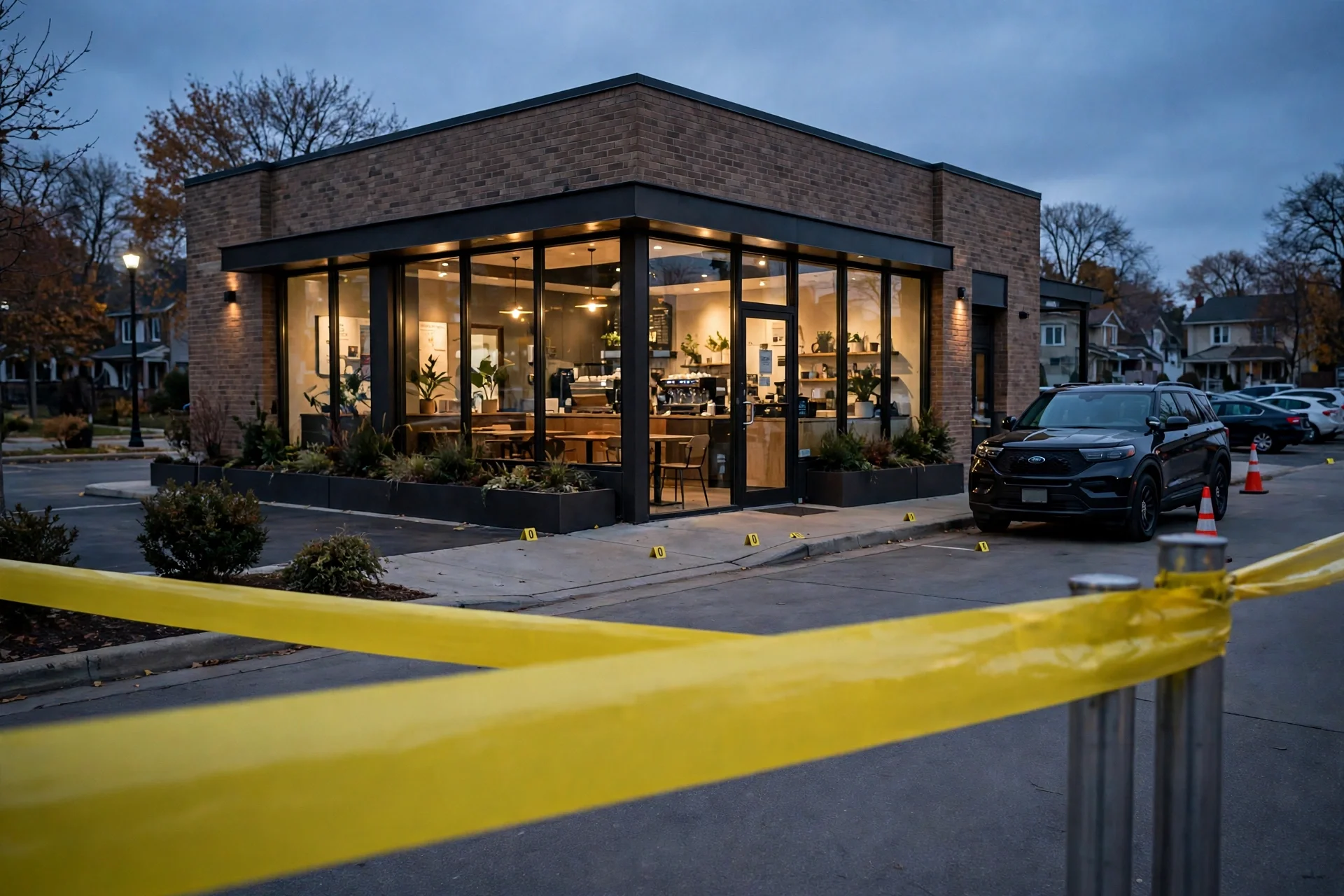
Cafetería suburbana al anochecer bajo ambiente de investigación, en alusión a los robos escenificados investigados por autoridades federales. · Imagen generada para EPM
Staged robberies for U visas: two-year sentence in Chicago
Parth Nayi, 29, of Woodridge, Illinois, was sentenced to two years in federal prison and fined $50,000 for organizing hundreds of staged armed robberies…
U visa fraud: man sentenced for staging hundreds of robberies
A Woodridge, Illinois man received two years in federal prison and a $50,000 fine after pleading guilty to conspiracy to commit visa fraud.
--- The context ---
U visas were created to protect migrants who suffer serious crimes and cooperate with authorities, a mechanism designed to give real victims safety and to strengthen police investigations across the country.
--- The facts ---
Parth Nayi, 29, of Woodridge, Illinois, organized between 2022 and 2024 hundreds of staged armed robberies at coffee shops, restaurants, liquor stores and gas stations throughout the country, including Chicago and its suburbs, according to the official information released about the case.
Nayi recruited fake victims, paid store owners to use their locations, coordinated and paid fake robbers, and coached participants through every step of the plan. Thousands of individuals each paid between $5,000 and $30,000. The fake robbers brandished what appeared to be firearms and demanded money, and the purported victims then sought police certification and filed fraudulent U visa applications with USCIS.
--- The positions ---
The sentence was announced by the U.S. Attorney's Office for the Northern District of Illinois, the FBI Chicago Field Office and ICE Homeland Security Investigations, and USCIS assisted in the investigation. Nayi pleaded guilty earlier this year to conspiracy to commit visa fraud, and on Oct. 22 Judge Mary M. Rowland sentenced him to two years in federal prison and fined him $50,000. Five other individuals were also convicted in the same federal investigation.
--- What remains unknown ---
The announcement does not say what will happen to the U visa applications already filed by participants or how many were approved, and it does not specify what happened to the money collected from thousands of people while the scheme operated.
--- Unanswered questions ---
What will happen to the U visa applications tied to these fake robberies? Will the people who paid between $5,000 and $30,000 get their money back? How can certification checks be strengthened without closing the door to real victims who cooperate with investigators?
--- EPM analysis ---
The case shows the permanent tension between protecting victims and preventing abuse. When an immigration benefit depends on a police certification, controls must verify the facts rigorously without discouraging those who genuinely need help and provide valuable information to investigations.
📌 EPM Take: In EPM's view, this case requires confronting the fraud without losing sight of why U visas exist, which is to protect real victims. The convictions of Nayi and five other individuals show that the system detected and punished the network, but they also reveal how much damage such a scheme does to public trust. Strengthening certification checks, prosecuting the organizers and preserving access for genuine victims are compatible and necessary tasks so that protection does not become a business.
--- The context ---
The United States immigration system reserves U visas for victims of certain crimes who help law enforcement investigate, a benefit that depends entirely on the truthfulness of each report and on the certification issued by local authorities.
--- The facts ---
Between 2022 and 2024, Parth Nayi, 29, of Woodridge, Illinois, organized and participated in hundreds of staged armed robberies at coffee shops, restaurants, liquor stores and gas stations throughout the country, including Chicago and its suburbs, according to the official account of the case.
The scheme ran as a coordinated operation: Nayi recruited fake victims, paid store owners to use their locations, coordinated and paid fake robbers, and coached each participant on how to act. Thousands of individuals each paid between $5,000 and $30,000. The fake robbers brandished what appeared to be firearms and demanded money, and the purported victims then sought police certification and filed fraudulent U visa applications with USCIS.
--- The positions ---
The U.S. Attorney's Office for the Northern District of Illinois, the FBI Chicago Field Office and ICE Homeland Security Investigations announced the sentence, with USCIS assisting the investigation. Nayi pleaded guilty earlier this year to conspiracy to commit visa fraud, and on Oct. 22 Judge Mary M. Rowland sentenced him to two years in federal prison and fined him $50,000. Five other individuals were also convicted as part of the investigation.
--- What remains unknown ---
The official announcement does not state how many fraudulent applications were filed or whether any was approved before investigators dismantled the operation, a key figure for measuring the real scale of the fraud that was committed over two years.
--- Unanswered questions ---
Was any fraudulent application approved before the operation was dismantled? Will the store owners who were paid to lend their locations also face consequences? Are two years in prison and a $50,000 fine enough to deter schemes of this scale?
--- EPM analysis ---
Fraud on this scale erodes confidence in the entire immigration system and harms those who follow legal channels. The institutional response combined a federal investigation, cooperation among agencies and criminal penalties against the organizer and his accomplices.
📌 EPM Take: In EPM's view, the sentence sends the right message: fabricating crimes to obtain immigration benefits is a serious fraud against the state and against genuine victims. The effort that brought together prosecutors, the FBI, ICE and USCIS shows that verification works when agencies share information. Keeping that coordination, reviewing the certifications already issued in this case and applying firm penalties to every participant is how a legitimate benefit is protected without letting it become merchandise.
Robos falsos para visas U: dos años de cárcel en Chicago
Parth Nayi, de 29 años y residente en Woodridge, Illinois, fue condenado a 2 años de prisión federal y a una multa de $50,000 por organizar entre 2022 y 2024…
Fraude de visas U: condenado por escenificar cientos de robos
Un hombre de Woodridge, Illinois, recibió 2 años de prisión federal y una multa de $50,000 tras declararse culpable de conspiración para cometer fraude de…
--- El contexto ---
Las visas U fueron creadas para proteger a personas migrantes que sufren delitos graves y colaboran con las autoridades, un mecanismo pensado para dar seguridad a víctimas reales y para fortalecer las investigaciones policiales en todo el país.
--- Los hechos ---
Parth Nayi, de 29 años y residente en Woodridge, Illinois, organizó entre 2022 y 2024 cientos de robos a mano armada escenificados en cafeterías, restaurantes, licorerías y gasolineras de todo el país, incluidos Chicago y sus suburbios, según la información oficial difundida sobre el caso.
Nayi reclutó a falsas víctimas, pagó a dueños de locales por usar sus establecimientos, coordinó y pagó a falsos asaltantes e instruyó a los participantes en cada paso del plan. Miles de personas pagaron entre $5,000 y $30,000 cada una. Los falsos asaltantes exhibían lo que parecían armas de fuego y exigían dinero, y después las supuestas víctimas pedían certificación policial y presentaban solicitudes fraudulentas de visa U ante USCIS.
--- Las posiciones ---
La Fiscalía del Distrito Norte de Illinois, el FBI de Chicago y la oficina de investigaciones de seguridad nacional de ICE anunciaron la sentencia, y USCIS colaboró en la investigación. Nayi se declaró culpable este año de conspiración para cometer fraude de visas, y la jueza Mary M. Rowland lo condenó el 22 de octubre a dos años de prisión federal y a una multa de $50,000. Otros cinco individuos también fueron condenados en la misma investigación federal.
--- Lo que falta saber ---
El anuncio no detalla qué ocurrirá con las solicitudes de visa U ya presentadas por los participantes ni cuántas llegaron a aprobarse, y tampoco precisa el destino del dinero cobrado a miles de personas durante los años en que operó el esquema.
--- Preguntas sin respuesta ---
¿Qué pasará con las solicitudes de visa U vinculadas a estos robos falsos? ¿Recuperarán su dinero las personas que pagaron entre $5,000 y $30,000 por participar? ¿Cómo se reforzará la verificación de las certificaciones sin cerrar la puerta a las víctimas reales que colaboran con la justicia?
--- Análisis EPM ---
El caso muestra la tensión permanente entre proteger a las víctimas y evitar abusos. Cuando un beneficio migratorio depende de una certificación policial, los controles deben verificar los hechos con rigor, sin desalentar a quienes sí necesitan ayuda y aportan información valiosa a las investigaciones.
📌 Conclusion EPM: A juicio de EPM, este caso obliga a mirar el fraude sin perder de vista el propósito original de las visas U, que existen para proteger a víctimas reales. La condena de Nayi y de otros cinco individuos muestra que el sistema detectó y castigó la red, pero también revela cuánto daño hace un esquema así a la confianza pública. Fortalecer la verificación de certificaciones, perseguir a los organizadores y preservar el acceso de las víctimas genuinas son tareas compatibles y necesarias para que la protección no se convierta en negocio.
--- El contexto ---
El sistema migratorio estadounidense reserva las visas U a víctimas de ciertos delitos que ayudan a la investigación, un beneficio que depende por completo de la veracidad de cada denuncia y de la certificación que emiten las autoridades locales.
--- Los hechos ---
Entre 2022 y 2024, Parth Nayi, de 29 años y residente en Woodridge, Illinois, organizó y participó en cientos de robos a mano armada escenificados en cafeterías, restaurantes, licorerías y gasolineras de todo el país, incluidos Chicago y sus suburbios, de acuerdo con la información oficial del caso.
El esquema funcionaba como una operación coordinada: Nayi reclutaba falsas víctimas, pagaba a dueños de locales por usar sus establecimientos, coordinaba y pagaba a falsos asaltantes y enseñaba a cada participante cómo actuar. Miles de personas pagaron entre $5,000 y $30,000 cada una. Los falsos asaltantes exhibían lo que parecían armas de fuego y exigían dinero, y luego las supuestas víctimas pedían certificación policial y presentaban solicitudes fraudulentas de visa U ante USCIS.
--- Las posiciones ---
La sentencia fue anunciada por la Fiscalía del Distrito Norte de Illinois, el FBI de Chicago y la oficina de investigaciones de seguridad nacional de ICE, con la colaboración de USCIS en la investigación. Nayi se declaró culpable este año de conspiración para cometer fraude de visas, y el 22 de octubre la jueza Mary M. Rowland lo condenó a dos años de prisión federal y a una multa de $50,000. Otros cinco individuos también resultaron condenados.
--- Lo que falta saber ---
El anuncio oficial no precisa cuántas solicitudes fraudulentas alcanzaron a presentarse ni si alguna llegó a aprobarse antes de que la investigación desmantelara la operación, un dato clave para medir el alcance real del fraude cometido.
--- Preguntas sin respuesta ---
¿Alcanzó alguna solicitud fraudulenta a ser aprobada antes del desmantelamiento? ¿Responderán también los dueños de locales que cobraron por prestar sus establecimientos? ¿Bastan dos años de prisión y $50,000 de multa para disuadir esquemas de esta escala?
--- Análisis EPM ---
Fraudes de esta magnitud erosionan la confianza en todo el sistema migratorio y perjudican a quienes siguen los canales legales. La respuesta institucional combinó investigación federal, cooperación entre agencias y sanción penal contra el organizador y sus cómplices.
📌 Conclusion EPM: A juicio de EPM, la condena envía el mensaje correcto: fabricar delitos para obtener beneficios migratorios es un fraude grave contra el Estado y contra las víctimas verdaderas. El operativo que reunió a la Fiscalía, el FBI, ICE y USCIS demuestra que la verificación funciona cuando las agencias comparten información. Mantener esa coordinación, revisar las certificaciones ya emitidas en este caso y aplicar sanciones firmes a cada participante es la manera de proteger un beneficio legítimo sin permitir que se convierta en mercancía.