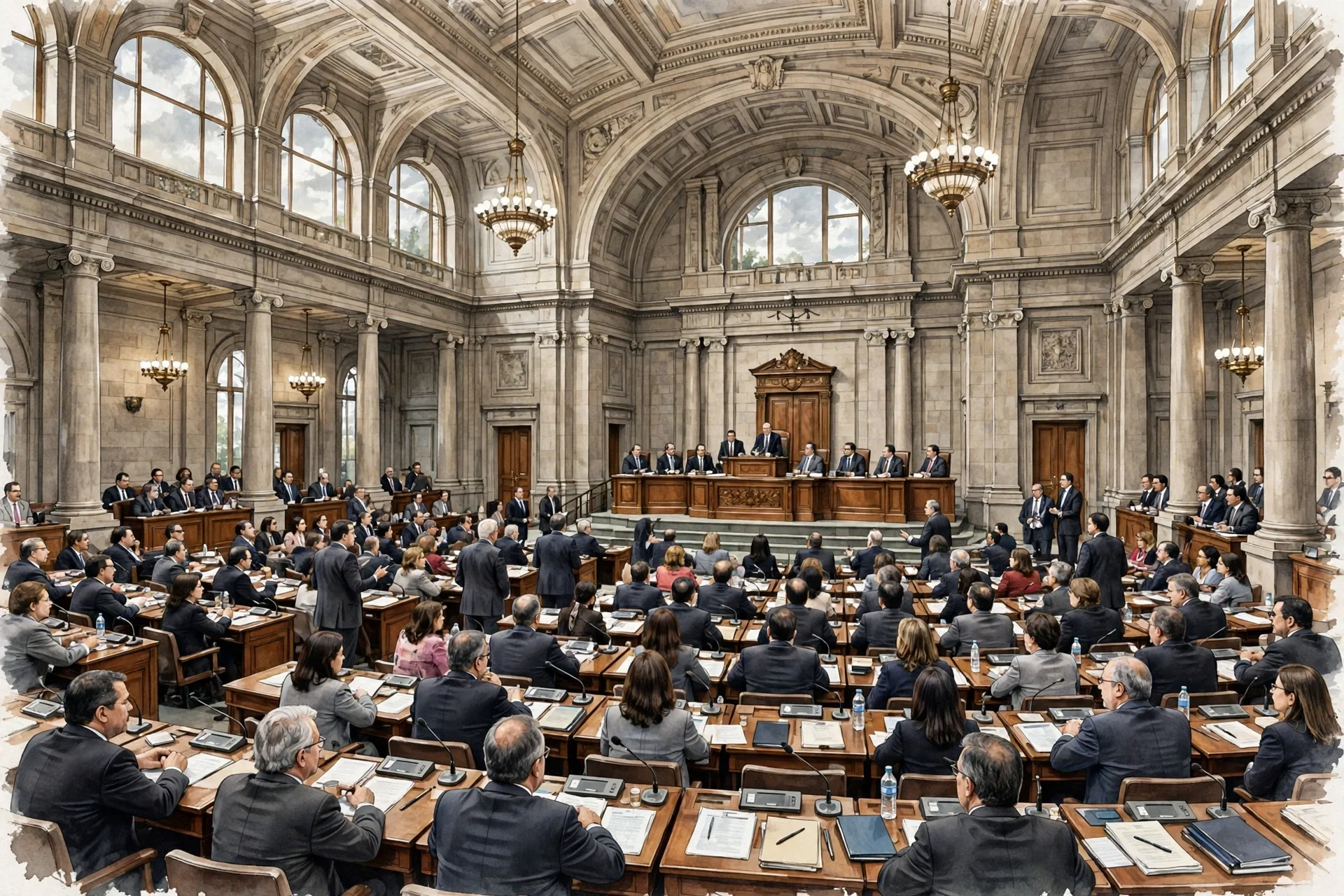
Imagen generada: sesión de debate en una cámara legislativa, a propósito del trámite de la ley de sometimiento.
Submission law races against the clock in Congress
The Senate approved four articles of the submission law and 25 remain to be discussed.
Submission bill with clear limits awaits final vote
The submission law must be approved before November 4 after reconciliation.
--- The context ---
One of the main banners of the government of Abelardo De La Espriella is the frontal fight against criminals. To sustain that line, the executive needs to pass the submission law, which sets the conditions for offenders to submit to justice in exchange for few benefits.
--- The facts ---
Congress is running on a tight schedule to approve it. Approval must happen no later than November 4, after the Senate and the House of Representatives reconcile the text. As of this Friday, the Senate had begun discussing the bill and had advanced approval of four articles, while the House was summoned for Monday, November 2, which is a holiday.
The four approved articles had no propositions. They deal with creating a special unit in the Prosecutor's Office, protecting victims of sexual violence, setting political and administrative disqualifications for those who submit, and clarifying that no new benefits can be created or the established conditions changed. Another 25 articles remain and will be discussed on Tuesday starting at nine in the morning.
--- The positions ---
Senator Hernán Cadavid, coordinator of the bill, said indirectly that there is no political negotiation and that this is a reform of criminal law on legal ground so criminal organizations submit to justice. He also said the processes will remain in the hands of the Prosecutor's Office, that no special tribunals will be created, and that a core purpose is to end the total peace policy of the government of Gustavo Petro.
--- What remains unknown ---
It remains to be seen what political will emerges in the coming days. Added to that is the absence of a confirmed Interior minister, in a debate where government sectors seek to accelerate discussion and the opposition seeks to torpedo the debate so the rules remain stalled.
--- Unanswered questions ---
Will Congress manage to approve and reconcile the bill before November 4? Will the opposition succeed in delaying the process with the propositions filed? Will the absence of a confirmed Interior minister weigh on the final vote?
--- EPM analysis ---
From the first debate, around 320 propositions were filed by all sectors. To prevent delays, a forum was held last Thursday with opposition members and actors such as the Prosecutor's Office and the Ombudsman's Office, and the recommendations were incorporated into adjustments to the text. Among the changes, recruiters of children under 14 will not access the benefits, and the period for offenses such as laundering, fronting and illicit enrichment was adjusted from one to three years. Asset surrender must be complete, effective and verifiable, and the reduction will be 50 percent for the base and 30 percent for leaders.
📌 EPM Take: In EPM's view, the process enters its decisive stretch with more precise rules and a calendar with no room for error in the coming days. Approval of four articles shows real progress, but the remaining 25 articles concentrate the central content of the bill. If Tuesday's debate keeps pace and reconciliation is completed before November 4, the law will be defined with verifiable demands on assets, benefits and effective submission before the Prosecutor's Office for every person who seeks its benefits.
--- The context ---
The government of Abelardo De La Espriella keeps the frontal fight against criminals as one of its main banners. Its central legislative instrument is the submission law, which sets the conditions for offenders to submit to justice in exchange for few benefits, without opening a political negotiation.
--- The facts ---
The deadline is strict. The law must be approved no later than November 4, after the Senate and the House of Representatives reconcile it. As of this Friday, the Senate had begun discussing the bill and had advanced approval of four articles. The House was summoned for Monday, November 2, which is a holiday, and the Senate will resume on Tuesday starting at nine in the morning.
Another 25 articles remain to be discussed, described as the core of the bill. The four already approved create a special unit in the Prosecutor's Office, protect victims of sexual violence, set political and administrative disqualifications for those who submit, and clarify that no new benefits can be created or the conditions established in the law changed.
--- The positions ---
Senator Hernán Cadavid, coordinator of the bill, explained indirectly that the processes will remain in the hands of the Prosecutor's Office and that no special tribunals will be created. He also said the total peace policy of the government of Gustavo Petro is normatively closed and that the approach to security and public order is being rethought. In principle, the government would have the majorities to approve it.
--- What remains unknown ---
It is not yet known whether there will be enough political will to sustain the pace. The opposition seeks to torpedo the debate so the rules remain stalled, and the around 320 propositions filed from the first debate can be used to delay the process, a risk that last Thursday's forum sought to prevent.
--- Unanswered questions ---
Will the majorities that in principle back the government hold? Can the opposition halt discussion of the remaining 25 articles? Will reconciliation between the Senate and the House be completed before November 4?
--- EPM analysis ---
The text was adjusted since it was filed. Recruiters of children under 14 will not access the benefits, and for laundering, fronting and illicit enrichment the period was adjusted from one to three years before requesting release after serving the sentence. Asset surrender must be complete, effective and verifiable, on pain of losing the benefits, and the will to surrender will be expressed through a lawyer who does not belong to the organization.
📌 EPM Take: In EPM's view, the strength of the bill lies in its explicit and enforceable limits, with processes in the Prosecutor's Office, no special tribunals and benefits conditioned on complete and verifiable surrender. The 50 percent reduction for the base and 30 percent for leaders marks a clear difference within the structures. The immediate challenge is purely legislative, because without approval and reconciliation before November 4 those rules will not take effect in the coming debate.
Ley de sometimiento contra el reloj en el Congreso
El Senado aprobó cuatro artículos de la ley de sometimiento y faltan 25 por discutir.
Sometimiento con límites claros espera votación final
La ley de sometimiento deberá aprobarse antes del 4 de noviembre tras su conciliación.
--- El contexto ---
Una de las principales banderas del Gobierno de Abelardo De La Espriella es el combate frontal contra los criminales. Para sostener esa línea, el Ejecutivo necesita sacar adelante la ley de sometimiento, que delimita las condiciones para que los delincuentes se acojan a la justicia a cambio de pocos beneficios.
--- Los hechos ---
El Congreso tiene los tiempos ajustados para aprobarla. La aprobación deberá suceder a más tardar el 4 de noviembre, luego de que el Senado y la Cámara de Representantes la concilien. Hasta este viernes, el Senado comenzó la discusión y avanzó en la aprobación de cuatro artículos, mientras la Cámara fue citada para el lunes 2 de noviembre, que es festivo.
Los cuatro artículos aprobados no tenían proposiciones. Están relacionados con la creación de una unidad especial en la Fiscalía, la protección a las víctimas de violencia sexual, las inhabilidades políticas y administrativas de quienes se sometan y la aclaración de que no se pueden crear nuevos beneficios ni modificar las condiciones establecidas. Faltan 25 artículos, que se discutirán el martes a partir de las nueve de la mañana.
--- Las posiciones ---
El senador Hernán Cadavid, coordinador del proyecto, afirmó en indirecto que no hay una negociación de carácter político y que se trata de una reforma a la ley penal en un terreno jurídico para que las organizaciones criminales se sometan a la justicia. También señaló que los procesos quedarán en manos de la Fiscalía y que no se crearán tribunales especiales, y que un propósito de fondo es acabar con la paz total del Gobierno de Gustavo Petro.
--- Lo que falta saber ---
Todavía falta ver la voluntad política que haya en los próximos días. A ello se suma la ausencia de un ministro del Interior en propiedad, en un debate donde los sectores gobiernistas buscan acelerar la discusión y la oposición pretende torpedear el debate para que la normativa quede estancada.
--- Preguntas sin respuesta ---
¿Alcanzará el Congreso a aprobar y conciliar el proyecto antes del 4 de noviembre? ¿Logrará la oposición dilatar el trámite con las proposiciones presentadas? ¿Pesará la ausencia de un ministro del Interior en propiedad en la votación final?
--- Análisis EPM ---
Desde el primer debate se presentaron alrededor de 320 proposiciones de todos los sectores. Para prevenir dilaciones se realizó un foro el pasado jueves con miembros de la oposición y actores como la Fiscalía y la Defensoría del Pueblo, y las recomendaciones fueron quedando establecidas en el ajuste del texto. Entre los ajustes, los reclutadores de menores de 14 años no podrán acceder a los beneficios, y el plazo para delitos como lavado, testaferrato y enriquecimiento ilícito pasó de uno a tres años. La entrega de bienes deberá ser completa, efectiva y verificable, y la reducción será del 50 por ciento para la base y del 30 por ciento para los cabecillas.
📌 Conclusion EPM: A juicio de EPM, el trámite entra en su tramo decisivo con reglas más precisas y un calendario sin margen de error. La aprobación de cuatro artículos muestra avance, pero los 25 artículos restantes concentran el contenido central del proyecto. Si el debate del martes mantiene el ritmo y la conciliación se concreta antes del 4 de noviembre, la ley quedará definida con exigencias verificables sobre bienes, beneficios y sometimiento efectivo ante la Fiscalía.
--- El contexto ---
El Gobierno de Abelardo De La Espriella mantiene como bandera el combate frontal contra los criminales. Su instrumento legislativo central es la ley de sometimiento, que delimita las condiciones para que los delincuentes se acojan a la justicia a cambio de pocos beneficios, sin abrir una negociación de carácter político.
--- Los hechos ---
El plazo es estricto. La ley deberá ser aprobada a más tardar el 4 de noviembre, luego de que el Senado y la Cámara de Representantes la concilien. Hasta este viernes, el Senado comenzó la discusión del proyecto y avanzó en la aprobación de cuatro artículos. La Cámara de Representantes fue citada para el lunes 2 de noviembre, que es festivo, y el Senado retomará el martes a partir de las nueve de la mañana.
Quedan 25 artículos por discutir, descritos como el núcleo del proyecto. Los cuatro ya aprobados crean una unidad especial en la Fiscalía, protegen a las víctimas de violencia sexual, fijan inhabilidades políticas y administrativas para quienes se sometan y aclaran que no se pueden crear nuevos beneficios ni modificar las condiciones establecidas en la ley.
--- Las posiciones ---
El senador Hernán Cadavid, coordinador del proyecto, explicó en indirecto que los procesos quedarán en manos de la Fiscalía y que no se crearán tribunales especiales. También afirmó que se cierra normativamente la paz total del Gobierno de Gustavo Petro y que se replantea el enfoque en materia de seguridad y orden público. En principio, el Gobierno contaría con las mayorías para aprobarla.
--- Lo que falta saber ---
No se conoce aún si habrá voluntad política suficiente para sostener el ritmo. La oposición pretende torpedear el debate para que la normativa quede estancada, y las alrededor de 320 proposiciones presentadas desde el primer debate pueden ser utilizadas para dilatar el proceso, un riesgo que el foro del pasado jueves buscó prevenir.
--- Preguntas sin respuesta ---
¿Se mantendrán las mayorías que en principio respaldan al Gobierno? ¿Podrá la oposición frenar la discusión de los 25 artículos restantes? ¿Se cumplirá la conciliación entre Senado y Cámara antes del 4 de noviembre?
--- Análisis EPM ---
El texto fue ajustado desde su radicación. Los reclutadores de menores de 14 años no podrán acceder a los beneficios, y para lavado, testaferrato y enriquecimiento ilícito el plazo se ajustó de uno a tres años antes de poder solicitar la libertad tras cumplir la pena. La entrega de bienes deberá ser completa, efectiva y verificable, so pena de perder los beneficios, y la voluntad de entrega se hará mediante un abogado que no pertenezca a la organización.
📌 Conclusion EPM: A juicio de EPM, la fortaleza del proyecto está en sus límites expresos, con procesos en la Fiscalía, sin tribunales especiales y con beneficios condicionados a una entrega verificable. La reducción del 50 por ciento para la base y del 30 por ciento para los cabecillas marca una diferencia clara dentro de las estructuras. El reto inmediato es puramente legislativo, porque sin aprobación y conciliación antes del 4 de noviembre esas reglas no entrarán en vigor.