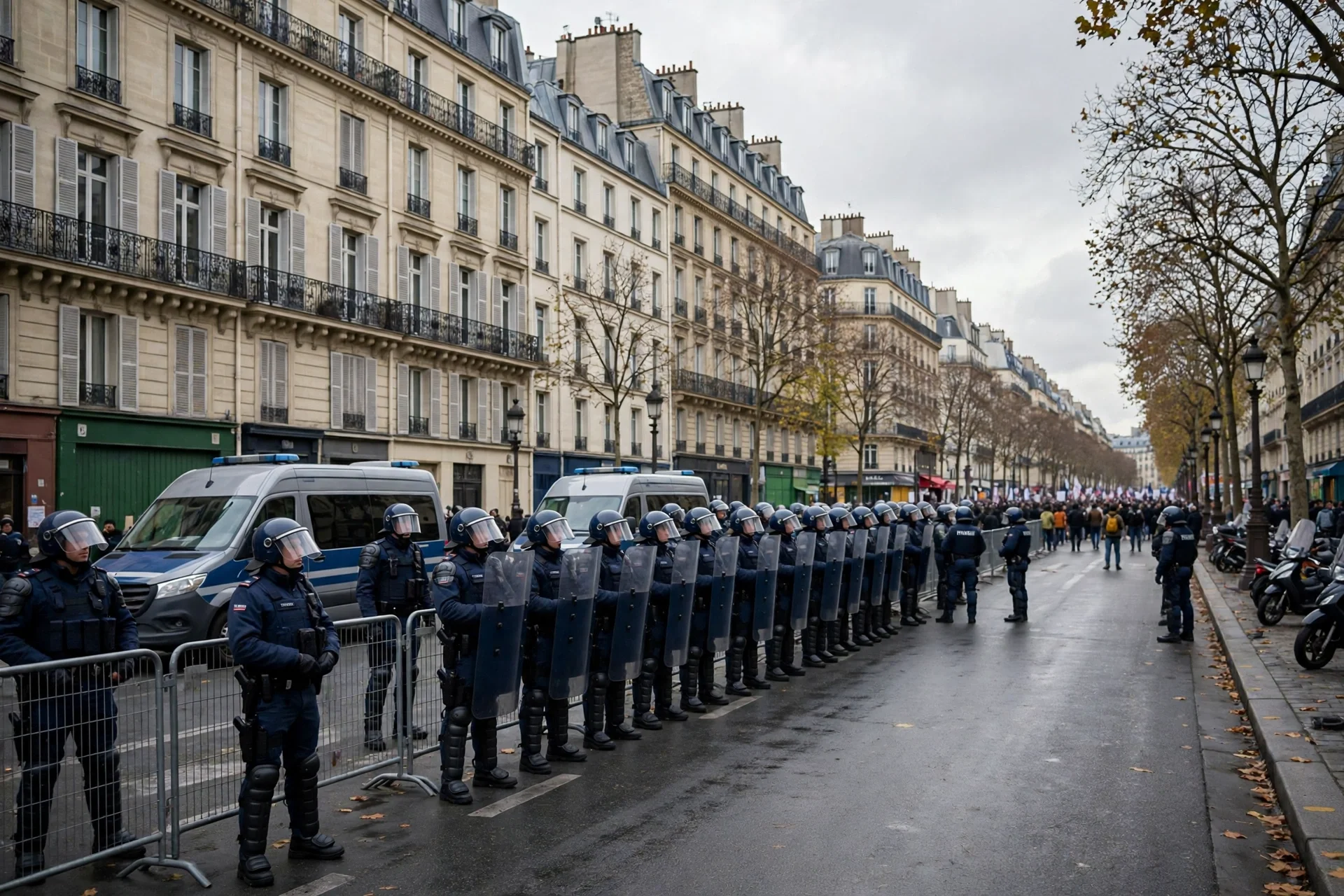
Despliegue policial en una avenida de París ante la tercera jornada consecutiva de protestas en Francia.
France deploys 70,000 officers for a third day of mass protests
France faces a third consecutive day of protests with students, unions and yellow vests united by the cost of living, a deployment of up to 70,000 officers and…
France deploys 70,000 officers to protect order amid protests
France will deploy up to 70,000 officers on its third day of protests to prevent new disturbances after the October 17 looting, with bans on night gatherings…
--- The context ---
France heads into this Saturday with a protest that no longer belongs to a single movement. Student mobilizations began more than three weeks ago and converged with union demands and with the yellow vests, in a shared grievance over the rising cost of living and the deterioration of public services.
--- The facts ---
This Saturday marks the third consecutive day of mass protests and it follows the episodes of violence of October 17, when looting and destruction were recorded in several cities. That toll includes the burning of the Limoges town hall, damage to the municipal headquarters in Marseille and to the tourism office in Lyon, as well as attacks against some 3,000 businesses.
For this Saturday the government will deploy up to 70,000 police officers and gendarmes, supported by special units, drones, helicopters, armored vehicles and canine and mounted teams. The interior minister, Laurent Nuñez, submitted his resignation after those disturbances, but President Emmanuel Macron rejected it, so he remains in charge of the security operation.
--- The positions ---
Authorities are focusing their concern on calls spread through social media for Halloween night. Nuñez warned about calls to join violent demonstrations from 20:00 onward and announced that those gatherings will be banned, as will the use of masks. The minister attributed some of the calls to far-left movements and noted that they include appeals to revolution, while several circulate through a messaging application without the internet that hinders police tracking.
The deployment also created friction with those calling the marches. In Paris, unions intended to march between the Bastille and Nation squares, but the prefecture limited the route to a more peripheral area. The yellow vests asked to set up a camp in front of the National Assembly and that possibility was ruled out, while protesters expect to gather hundreds of thousands of people once again.
--- What remains unknown ---
It is still unknown how many people will answer the calls or whether the announced bans for the night will be enforced without incidents. It is also unclear what will happen with the youth calls planned in the Netherlands, where messages inciting vandalism and looting circulate without confirmation of violence, and where several shops in The Hague are already boarding up their storefronts.
--- Unanswered questions ---
Will hundreds of thousands of people answer this Saturday call as protesters expect? Can the marches remain peaceful with 70,000 officers on the streets? Will the government open any response to the cost of living and the deterioration of public services that sparked the protest?
--- EPM analysis ---
The French protest shows an uncommon convergence among students, unions and yellow vests, united less by a single slogan than by the cost of living and public services in decline. Every restriction on routes or camps is also read as a dispute over the space of protest itself, while the general strike held on Friday in Italy confirms that discontent reaches well beyond French borders.
📌 EPM Take: In EPM's view, this Saturday in France measures something deeper than the police capacity for containment, because behind every march there is accumulated discontent over the cost of living and over public services that many citizens feel are steadily deteriorating. Deploying 70,000 officers may prevent destruction, but it does not answer the causes that have filled the streets for weeks. A lasting way out requires listening to those demands and offering verifiable responses, without giving up on protecting residents and businesses.
--- The context ---
France faces this Saturday its third consecutive day of mass protests with the government priority of preventing new disturbances. Student mobilizations, opened more than three weeks ago, converged with union demands and with the yellow vests, in a scenario marked by the rising cost of living and the deterioration of public services.
--- The facts ---
The immediate reference is the violence of October 17, when radical groups carried out looting and destruction in several cities. The burning of the Limoges town hall, the damage to the municipal headquarters in Marseille and to the tourism office in Lyon, as well as the attacks against some 3,000 businesses, caused deep shock. Afterwards, the interior minister, Laurent Nuñez, submitted his resignation and President Emmanuel Macron rejected it.
The response for this Saturday is a deployment of up to 70,000 police officers and gendarmes, supported by special units, drones, helicopters, armored vehicles and canine and mounted teams. The operation reflects the risk perceived after the attacks on municipal buildings and businesses, and seeks demonstrations without new looting or destruction.
--- The positions ---
The greatest official concern focuses on calls spread through social media for Halloween night. Nuñez warned about calls to take part in violent demonstrations from 20:00 onward and announced that those gatherings will be banned, as will the use of masks. The minister attributed some calls to far-left movements, noted that they include appeals to revolution and to overwhelming public order, and several circulate through messaging without the internet, hindering police tracking.
The operation generated friction with organizers, without authorities yielding on their plans. In Paris, unions intended to march between the Bastille and Nation squares, but the prefecture limited the route to a more peripheral area. The yellow vests asked for a camp in front of the National Assembly and the possibility was ruled out, while protesters expect to gather hundreds of thousands of people once again.
--- What remains unknown ---
It is not yet known whether the bans and the deployment will contain the violent calls announced from 20:00 onward, or the final turnout. In the Netherlands it is also unconfirmed whether the youth calls in The Hague, Maastricht and Eindhoven will turn violent, although messages inciting vandalism and looting circulate and several shops in The Hague protect their storefronts with wooden boards.
--- Unanswered questions ---
Will the deployment of 70,000 officers prevent a repeat of the looting of October 17? Will the announced bans on gatherings and masks for Halloween night be respected? Will organizers keep the marches within the routes authorized by the prefecture?
--- EPM analysis ---
The French case poses the classic tension between protest and order when a previous mobilization leaves town halls burned and thousands of businesses attacked. Protecting municipal headquarters, public offices and small businesses is no minor detail, because every act of destruction is paid for by residents and shopkeepers outside the dispute. Storefronts boarded up in the Netherlands before any confirmed violence show how far the threat already disrupts everyday life.
📌 EPM Take: In EPM's view, the deployment of 70,000 officers in France answers an elementary duty of the state after the looting and destruction of October 17, because no grievance legitimizes burning a town hall or attacking some 3,000 businesses. Protecting public order and those who work behind every storefront is a condition for peaceful protest to remain possible. Protest deserves a hearing, but violence announced on social media demands firm prevention and clear consequences for those who promote it.
Francia despliega 70.000 agentes ante su tercera jornada de protestas
Francia afronta su tercera jornada consecutiva de protestas con estudiantes, sindicatos y chalecos amarillos unidos por el coste de vida, un despliegue de…
Francia refuerza el orden con 70.000 agentes ante nuevas protestas
Francia desplegará hasta 70.000 agentes en su tercera jornada de protestas para evitar nuevos disturbios tras los saqueos del 17 de octubre, con prohibiciones…
--- El contexto ---
Francia llega a este sábado con una protesta que ya no pertenece a un solo colectivo. Las movilizaciones estudiantiles comenzaron hace más de tres semanas y confluyeron con las reivindicaciones sindicales y con los chalecos amarillos, en un malestar compartido por el encarecimiento del coste de vida y por el deterioro de los servicios públicos.
--- Los hechos ---
La jornada de este sábado es la tercera consecutiva de protestas masivas y llega después de la violencia del pasado 17 de octubre, cuando se registraron saqueos y destrozos en distintas ciudades. En ese balance figuran el incendio del Ayuntamiento de Limoges, los daños en la sede municipal de Marsella y en la oficina de turismo de Lyon, además de ataques contra unos 3.000 comercios.
Para este sábado el Gobierno desplegará hasta 70.000 agentes de policía y gendarmería, con apoyo de unidades especiales, drones, helicópteros, vehículos blindados y equipos caninos y ecuestres. El ministro del Interior, Laurent Nuñez, presentó su dimisión tras aquellos disturbios, pero el presidente Emmanuel Macron la rechazó y sigue al frente del dispositivo.
--- Las posiciones ---
Las autoridades concentran su preocupación en las convocatorias difundidas por redes sociales para la noche de Halloween. Nuñez advirtió sobre llamamientos a manifestaciones violentas a partir de las 20:00 y anunció que esas concentraciones serán prohibidas, al igual que el uso de máscaras. El ministro atribuyó algunas convocatorias a la ultraizquierda, con llamados a la revolución, mientras varias circulan por una mensajería sin internet que dificulta el seguimiento policial.
El despliegue también generó fricciones con quienes convocan las marchas. En París, los sindicatos pretendían marchar entre las plazas de la Bastilla y de la Nación, pero la prefectura limitó el recorrido a una zona más periférica. Los chalecos amarillos reclamaron un campamento frente a la Asamblea Nacional y esa posibilidad fue descartada, mientras los manifestantes esperan reunir nuevamente a cientos de miles de personas.
--- Lo que falta saber ---
Todavía no se conoce cuántas personas responderán a las convocatorias ni si las prohibiciones anunciadas se aplicarán sin incidentes. Tampoco está claro qué ocurrirá con las convocatorias juveniles en Países Bajos, donde circulan mensajes que incitan al vandalismo y al saqueo sin confirmación de violencia, y donde tiendas de La Haya cubren sus escaparates con tablones.
--- Preguntas sin respuesta ---
¿Responderán cientos de miles de personas a la convocatoria de este sábado como esperan los manifestantes? ¿Podrán mantenerse pacíficas las marchas con 70.000 agentes en las calles? ¿Abrirá el Gobierno alguna respuesta al coste de vida y al deterioro de los servicios públicos que originaron la protesta?
--- Análisis EPM ---
La protesta francesa muestra una confluencia entre estudiantes, sindicatos y chalecos amarillos, unidos menos por una consigna única que por el coste de vida y unos servicios públicos en retroceso. Cada restricción sobre recorridos o campamentos se lee también como una disputa sobre el espacio de la protesta, mientras la huelga general del viernes en Italia confirma que el malestar desborda las fronteras francesas.
📌 Conclusion EPM: A juicio de EPM, la jornada de este sábado mide algo más profundo que la capacidad de contención policial de Francia, porque detrás de cada marcha hay un malestar acumulado por el coste de vida y por servicios públicos que muchos ciudadanos sienten en deterioro constante. Desplegar 70.000 agentes puede evitar destrozos, pero no responde a las causas que llenan las calles desde hace semanas. La salida duradera exige escuchar esas demandas y ofrecer respuestas verificables, sin renunciar a proteger a vecinos y comercios.
--- El contexto ---
Francia afronta este sábado su tercera jornada consecutiva de protestas masivas con la prioridad gubernamental de evitar nuevos disturbios. Las movilizaciones estudiantiles, abiertas hace más de tres semanas, confluyeron con las reivindicaciones sindicales y con los chalecos amarillos, por el encarecimiento del coste de vida y el deterioro de los servicios públicos.
--- Los hechos ---
La referencia inmediata es la violencia del pasado 17 de octubre, cuando grupos radicales protagonizaron saqueos y destrozos en distintas ciudades. El incendio del Ayuntamiento de Limoges, los daños en la sede municipal de Marsella y en la oficina de turismo de Lyon, además de los ataques contra unos 3.000 comercios, provocaron una fuerte conmoción. Tras ello, el ministro del Interior, Laurent Nuñez, presentó su dimisión y el presidente Emmanuel Macron la rechazó.
La respuesta para este sábado es un despliegue de hasta 70.000 agentes de policía y gendarmería, con apoyo de unidades especiales, drones, helicópteros, vehículos blindados y equipos caninos y ecuestres. El operativo refleja el riesgo percibido tras los ataques a edificios municipales y comercios, y busca manifestaciones sin nuevos saqueos ni destrozos.
--- Las posiciones ---
La mayor preocupación oficial se concentra en las convocatorias difundidas por redes sociales para la noche de Halloween. Nuñez advirtió sobre llamamientos a manifestaciones violentas a partir de las 20:00 y anunció que esas concentraciones serán prohibidas, al igual que el uso de máscaras. El ministro atribuyó algunas convocatorias a la ultraizquierda, con llamados a la revolución y a desbordar el orden público, y varias circulan por una mensajería sin internet que dificulta el seguimiento policial.
El operativo generó fricciones con los organizadores, sin que las autoridades cedieran en sus planes. En París, los sindicatos pretendían marchar entre las plazas de la Bastilla y de la Nación, pero la prefectura limitó el recorrido a una zona más periférica. Los chalecos amarillos reclamaron un campamento frente a la Asamblea Nacional y la posibilidad fue descartada, mientras los manifestantes esperan reunir nuevamente a cientos de miles de personas.
--- Lo que falta saber ---
Aún no se sabe si las prohibiciones y el despliegue bastarán para contener los llamamientos violentos anunciados desde las 20:00 ni la participación final. En Países Bajos tampoco está confirmado que las convocatorias juveniles de La Haya, Maastricht y Eindhoven deriven en violencia, aunque circulan mensajes que incitan al vandalismo y al saqueo y varias tiendas de La Haya protegen sus escaparates con tablones.
--- Preguntas sin respuesta ---
¿Logrará el despliegue de 70.000 agentes impedir que se repitan los saqueos del 17 de octubre? ¿Se respetarán las prohibiciones de concentraciones y de máscaras anunciadas para la noche de Halloween? ¿Mantendrán los organizadores las marchas dentro de los recorridos autorizados por la prefectura?
--- Análisis EPM ---
El caso francés plantea la tensión entre protesta y orden cuando una movilización previa deja ayuntamientos incendiados y miles de comercios atacados. Proteger sedes municipales, oficinas públicas y pequeños negocios no es un detalle menor, porque cada destrozo lo pagan vecinos y comerciantes ajenos a la disputa. Los escaparates cubiertos en Países Bajos antes de confirmarse violencia alguna muestran cómo la amenaza ya altera la vida cotidiana.
📌 Conclusion EPM: A juicio de EPM, el despliegue de 70.000 agentes responde a una obligación elemental del Estado tras los saqueos y destrozos del 17 de octubre, porque ningún reclamo legitima incendiar un ayuntamiento ni atacar unos 3.000 comercios. Proteger el orden público y a quienes trabajan detrás de cada escaparate es condición para que la protesta pacífica siga siendo posible. La protesta merece escucha, pero la violencia anunciada en redes exige prevención firme y consecuencias claras para quienes la promuevan.