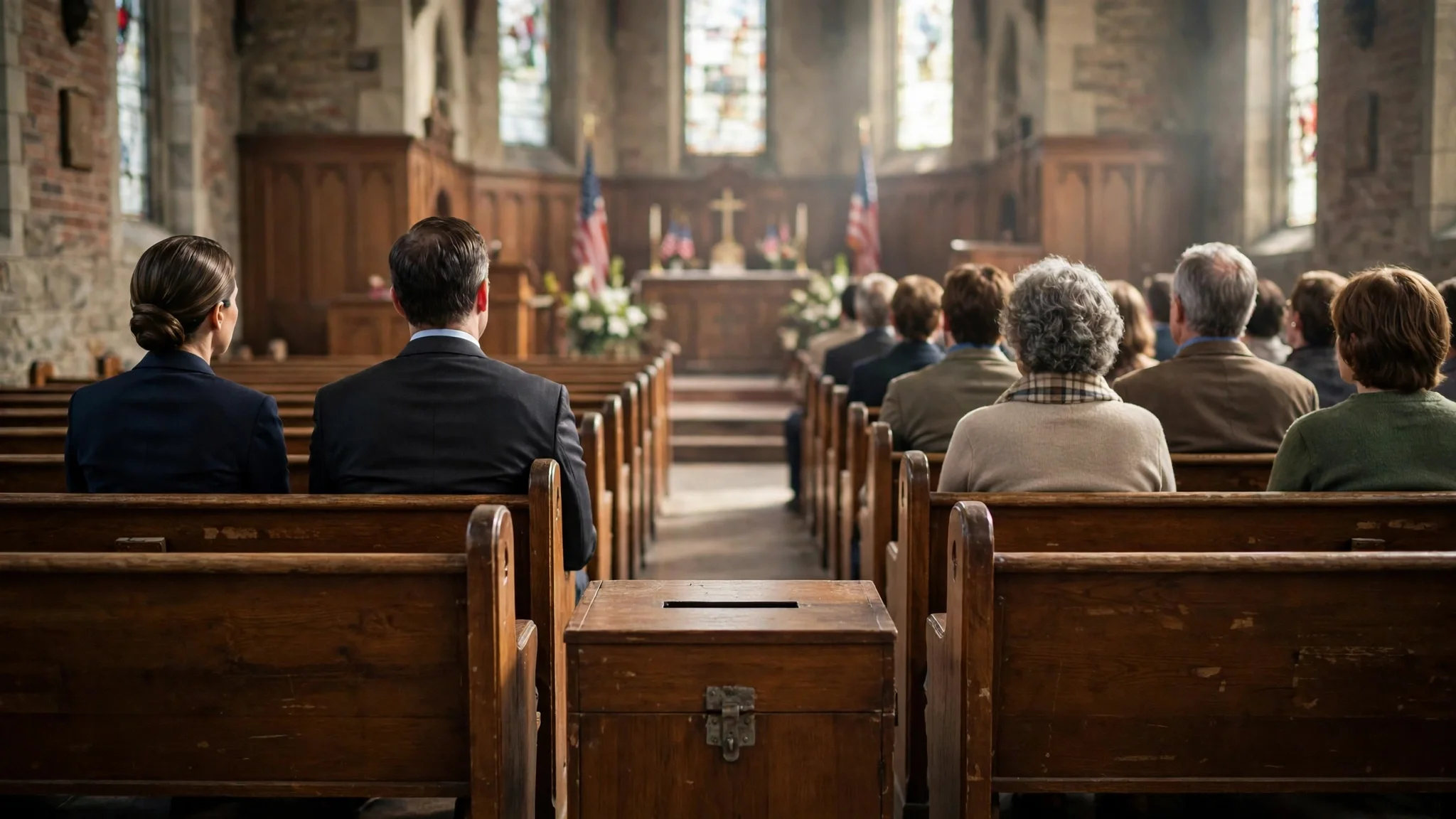
Ilustración alusiva a la jornada dominical que dividió a los demócratas de Míchigan. · Imagen generada por EPM
Stevens backs Republican Rogers and splits Michigan Democrats before election day
Haley Stevens, beaten by Abdul El-Sayed in the August Democratic primary, endorsed Republican Mike Rogers on Sunday after attending a Detroit church service…
Stevens endorsement of Rogers exposes Democratic division in Michigan race
Congresswoman Haley Stevens endorsed Republican Mike Rogers on Sunday after worshipping with him in Detroit, following the collapse of a planned joint event…
--- The context ---
Michigan's Senate contest reached its decisive weekend with the Democratic Party split in public view. Gary Peters is retiring, and holding his seat is vital to the party's effort to win a majority for the final two years of President Donald Trump's second term. The race pits Democrat Abdul El-Sayed against Republican Mike Rogers, a former congressman backed by Trump, in a tightly contested contest.
The backdrop is an August primary counted among the most bitter of the year. El-Sayed, a former state public health official, defeated Congresswoman Haley Stevens by a slim margin after months of mutual accusations of personal attacks and tens of millions of dollars in outside spending poured into the race. Since then, the two had not appeared together in public since a unity breakfast two days after El-Sayed's summer win, even though Stevens had pledged after the primary to help him however she could.
--- The facts ---
On Sunday, Stevens endorsed Rogers after attending a Detroit church service with him. In a video announcing the decision, she said the Democratic nominee had told her she was no longer welcome in his campaign and should stay away, and she argued that he was right and that this was why she was endorsing Rogers for the United States Senate. The scene, with Stevens alongside Rogers and his wife Kristi in the pews of a church north of Detroit, stunned Democrats across the political spectrum.
The congresswoman attended with her fiance, Jason Turkish, who said last week to a local newspaper that he would vote for Rogers because, in his view, El-Sayed had not done enough to address the Jewish community's concerns. The endorsement came only days after Stevens herself had publicly reaffirmed that she would vote for El-Sayed, and the internal fallout was swift: her longtime chief of staff resigned, and a number of staff members were expected to follow soon, according to a person familiar with the developments who spoke on condition of anonymity to discuss internal matters.
A few miles away, El-Sayed attended another church service seeking to present a united front with fellow Democrats. He was joined by Representative Debbie Dingell, South Carolina Representative Jim Clyburn, Maryland Senator Angela Alsobrooks and state Senator Mallory McMorrow, who dropped out of the Democratic primary before voting began. El-Sayed spoke for nearly ten minutes at the service, said the foundation of his life had been built in churches and pews like those, and did not address the latest controversy.
--- The positions ---
The immediate trigger was a joint appearance that never happened. Stevens was initially set to join the nominee and Clyburn at a church event, but the plans unraveled after a dispute over Israel and an outside group's campaign advertisement escalated into a public exchange of criticism. Dingell, a senior Democratic figure in the state who had organized the planned appearance to bring Democrats together in the final days, explained that she was the one who pulled it because it had become far too distracting, that she asked Stevens not to attend and Stevens agreed, and that the bishop was getting upset because it was a real church service.
Stevens has been critical of El-Sayed's comments surrounding Israel, and on Friday she released a lengthy statement calling on him to condemn an advertisement by an independent left-wing group that linked United States support for Israel to high grocery prices. In that statement she argued that El-Sayed promises to get money out of politics and can begin by getting Israel out of his explanation for everything Michigan cannot afford. El-Sayed responded that the congresswoman seemed intent on relitigating a primary that ended three months ago and urged everyone to focus on the task at hand, and on Saturday evening he repeated that the advertisement was not made by his campaign and that he did not agree with its contents.
Despite the split, Dingell and other Democrats insist the party is united behind El-Sayed. Early voting has been underway since October twenty-four, before the latest tensions erupted, and Stevens herself had written late Friday that whenever anyone tries to set Democrats against each other there is an obligation to stand up and fight back, closing with a call to go vote.
--- What remains unknown ---
The tensions carry particular weight in Wayne County, which includes Detroit, and neighboring Oakland County. Stevens defeated El-Sayed in both counties in the August primary, drawing support from Black and Jewish voters who are important parts of the Democratic coalition. Democrats are seeking to drive turnout in Detroit, where roughly three-quarters of residents are Black and strong support is essential to statewide success. El-Sayed planned to continue Sunday with a series of church visits alongside Clyburn and other prominent Black Democrats, including Detroit Mayor Mary Sheffield, secretary of state nominee Garlin Gilchrist II and several Michigan bishops.
--- Unanswered questions ---
Can El-Sayed's campaign contain the damage of a rival's endorsement announced so close to Tuesday? Will more members of Stevens' staff follow her chief of staff and resign in the coming hours? In Detroit and in Wayne and Oakland counties, which image will weigh more, El-Sayed's show of unity or Stevens seated beside Rogers in church? Will the Black and Jewish voters who decided the August primary in those counties hold to the choices they made then?
--- EPM analysis ---
Read in sequence, the facts describe a primary the party never finished processing. Outside money, including from a super PAC affiliated with a pro-Israel public affairs committee that backed Stevens, and an outside advertisement that El-Sayed took offense to for accusing him of disrespecting women, left wounds that a single unity breakfast could not close. That the rupture played out in churches, the very spaces where both campaigns seek to mobilize their bases, underlines that this is no longer an internal procedural quarrel. It is a contest over legitimacy before the voters each side needs on Tuesday.
📌 EPM Take: In EPM's view, Stevens' endorsement of Rogers grows out of more than one Sunday disagreement, since it caps a primary that was never truly settled and a dispute over Israel that nobody contained in time. A progressive reading of the episode has to count the collective cost, because when party leaders turn the closing days into a settling of scores, the voters of Detroit and the decisive counties pay for it, receiving contradictory messages exactly when their turnout decides whether Michigan stays in Democratic hands and how the balance of power on Capitol Hill will look.
--- The context ---
Michigan votes on Tuesday for a Senate seat that could shape the balance of power on Capitol Hill. Democrat Gary Peters is retiring, and keeping the state is vital for his party's bid to win a majority for the final two years of President Donald Trump's second term. Republican Mike Rogers, a former congressman backed by Trump, faces Abdul El-Sayed, a former Michigan public health official who would become the country's first Muslim senator if elected on Tuesday.
The campaign arrived here scarred by a Democratic primary in August regarded as among the most bitter this year. Stevens lost to El-Sayed by a slim margin in a contest filled with mutual accusations of personal attacks and tens of millions of dollars in outside spending. After losing, she pledged to help her rival however she could, yet the two never appeared together in public again after a unity breakfast two days following his summer victory.
--- The facts ---
On Sunday, Stevens announced her endorsement of Rogers in a video after attending a church service with him in Detroit. She explained that the Democratic nominee had said she was no longer welcome in his campaign and that she should stay away, and she stated that he was right and that this was why she was endorsing Rogers for the United States Senate. At the church north of Detroit, Stevens and her fiance Jason Turkish worshipped with Rogers and his wife Kristi, in an appearance that stunned Democrats across the political spectrum.
The move contradicted what Stevens had said only days earlier, when she publicly reaffirmed that she would vote for El-Sayed. Turkish had already told a local newspaper last week that he would vote for Rogers, arguing that El-Sayed had not done enough to address the concerns of the Jewish community. The internal reaction was immediate: Stevens' longtime chief of staff resigned, and several staff members were expected to follow soon, according to a person familiar with the developments who spoke on condition of anonymity to discuss internal matters.
Miles away, El-Sayed kept a separate Sunday schedule with his party's leadership. He attended a service alongside Representative Debbie Dingell, Representative Jim Clyburn of South Carolina, Senator Angela Alsobrooks of Maryland and state Senator Mallory McMorrow, who had dropped out of the Democratic Senate primary before voting began. The nominee spoke for nearly ten minutes, recalled that the foundation of his life was built in churches like that one, and did not address the day's controversy, as he tried to present a united front with fellow Democrats.
--- The positions ---
The break was sealed around an event meant to display reconciliation. Stevens was set to join the nominee and Clyburn at a church gathering, but those plans unraveled after a dispute over Israel and an outside group's advertisement escalated into a public exchange of criticism between the rivals. Dingell, a senior Democratic figure in the state who helped organize the appearance, said she was the one who pulled it because it had become way too distracting, that she asked Stevens not to attend and that Stevens told her she would abide by that, adding that the bishop was getting upset because it was a real church service.
On Friday, Stevens released a lengthy statement calling on El-Sayed to condemn an ad by an independent left-wing group that linked United States support for Israel to high grocery prices. She wrote that El-Sayed promises to get money out of politics and can begin by getting Israel out of his explanation for everything Michigan cannot afford. El-Sayed answered that the congresswoman seemed intent on relitigating a primary that ended three months ago and urged focus on the task at hand, and on Saturday evening he repeated that the ad was not made by his campaign and that he did not agree with its contents.
Dingell and other Democrats, for their part, insist the party is united behind El-Sayed. Early voting has been underway since October twenty-four, before the latest tensions erupted, and Stevens herself wrote late Friday that whenever anyone tries to set Democrats against each other, they have an obligation to stand up and fight back, ending with a call to go vote.
--- What remains unknown ---
The electoral weight of the quarrel sits in Wayne County, which includes Detroit, and neighboring Oakland County. Stevens defeated El-Sayed in both counties in the August primary, drawing support from Black and Jewish voters who are important parts of the Democratic coalition. Democrats are seeking to drive turnout in Detroit, where roughly three-quarters of residents are Black and strong support is essential to Democratic success statewide. El-Sayed's Sunday program also included church visits with Detroit Mayor Mary Sheffield, Garlin Gilchrist II, the nominee for secretary of state, and several Michigan bishops, according to campaign advisories.
--- Unanswered questions ---
Will Democratic voters accept a cross-party endorsement from the candidate who lost the primary and promised to help the winner? Will the additional staff departures expected after the chief of staff's resignation actually materialize? Can El-Sayed sustain his Detroit turnout effort without the congresswoman who beat him in Wayne and Oakland counties in August? In a race described as tight, will this public division move any votes with only days left before Tuesday?
--- EPM analysis ---
The episode shows the limits of unity that is proclaimed but never built. There was a unity breakfast and verbal pledges of support, but no joint appearance afterward, while the disagreements over Israel kept growing in public: an outside group's advertisement, El-Sayed's objection to a piece accusing him of disrespecting women, and outside financial backing for Stevens during the primary formed a chain of grievances. Coalitions are not held together by statements; they hold through shared presence and the discipline of settling disputes before an opponent turns them into his strongest closing argument with the voters who decide the outcome.
📌 EPM Take: In EPM's view, what happened in Michigan is a lesson in internal order that reaches beyond its protagonists, because a party that does not close its primaries ends up contesting them in public against its own nominee, and it does so at the worst possible moment, with early voting open and the seat at stake. Stevens exercised her right to dissent, but endorsing a Trump-backed Republican, staged beside him in church, shifts the cost onto her entire party. The bill for indiscipline is rarely paid by whoever causes it; the whole coalition pays it on election day.
Stevens respalda al republicano Rogers y fractura el cierre demócrata en Míchigan
Haley Stevens, derrotada por Abdul El-Sayed en la primaria demócrata de agosto, respaldó el domingo al republicano Mike Rogers tras asistir con él a un…
El respaldo de Stevens a Rogers expone la división demócrata en Míchigan
La congresista Haley Stevens respaldó el domingo al republicano Mike Rogers tras compartir un servicio religioso con él en Detroit, después de que el acto…
--- El contexto ---
La disputa por el escaño senatorial de Míchigan llegó a su fin de semana decisivo con el Partido Demócrata dividido en público. El asiento lo deja Gary Peters, que se retira, y conservarlo es vital para que los demócratas aspiren a la mayoría durante los dos últimos años del segundo mandato del presidente Donald Trump. En ese escenario, cada gesto de unidad o de ruptura pesa sobre una contienda descrita como muy cerrada entre el demócrata Abdul El-Sayed y el republicano Mike Rogers, excongresista.
El trasfondo es una primaria de agosto entre las más amargas del año. El-Sayed, exfuncionario de salud pública del estado, venció a la congresista Haley Stevens por un margen estrecho, tras meses de acusaciones cruzadas de ataques personales y con decenas de millones de dólares de gasto externo volcados en la carrera.
--- Los hechos ---
El domingo, Stevens respaldó a Rogers después de asistir con él a un servicio religioso en Detroit. En un video en el que anunció su decisión, sostuvo que el candidato demócrata le había dicho que ya no era bienvenida en su campaña y que debía mantenerse alejada, y afirmó que él tenía razón y que por eso respaldaba a Rogers para el Senado.
La congresista acudió acompañada de su prometido, Jason Turkish, quien la semana pasada había declarado a un diario local que votaría por Rogers porque, a su juicio, El-Sayed no había hecho lo suficiente para atender las preocupaciones de la comunidad judía. El respaldo llegó apenas días después de que la propia Stevens reafirmara públicamente que votaría por El-Sayed, y las consecuencias internas fueron rápidas: su jefa de gabinete de años presentó la renuncia y, según una persona familiarizada con los hechos que habló bajo condición de anonimato, se esperaba que varios miembros más de su equipo siguieran el mismo camino.
Mientras tanto, a pocas millas de distancia, El-Sayed asistió a otro servicio religioso buscando mostrar un frente unido junto a correligionarios. Lo acompañaron la representante Debbie Dingell, el representante de Carolina del Sur Jim Clyburn, la senadora de Maryland Angela Alsobrooks y la senadora estatal Mallory McMorrow, quien se había retirado de la primaria antes de que comenzara la votación. El-Sayed habló durante casi diez minutos en el servicio, afirmó que en iglesias como esa se había construido la base de su vida y no abordó la controversia más reciente.
--- Las posiciones ---
El origen inmediato de la ruptura fue un acto conjunto que nunca ocurrió. Stevens debía acompañar al candidato y a Clyburn en una iglesia, pero los planes se deshicieron tras una disputa sobre Israel y un anuncio de un grupo externo que derivó en un intercambio público de críticas. Dingell, figura demócrata veterana del estado que había organizado el encuentro para reunir al partido, explicó que fue ella quien pidió a Stevens que no asistiera porque el asunto se había vuelto demasiado distractor, que la congresista le dijo que aceptaría esa decisión y que el obispo se estaba molestando porque se trataba de un servicio religioso real.
Stevens ha sido crítica con los comentarios de El-Sayed sobre Israel, y el viernes publicó un comunicado extenso en el que le pidió condenar un anuncio de un grupo independiente de izquierda que vinculaba el apoyo estadounidense a Israel con los altos precios de los alimentos. En ese texto sostuvo que El-Sayed promete sacar el dinero de la política y que puede empezar por sacar a Israel de su explicación para todo lo que Míchigan no puede pagar. El-Sayed respondió que la congresista parecía empeñada en reabrir una primaria terminada hacía tres meses e invitó a concentrarse en la tarea pendiente, y el sábado por la noche repitió que el anuncio no era de su campaña y que no estaba de acuerdo con su contenido.
Pese a la fractura, Dingell y otros demócratas insisten en que el partido está unido detrás de El-Sayed. La votación anticipada está en marcha desde el veinticuatro de octubre, antes de que estallaran las últimas tensiones, y Stevens misma había cerrado su comunicado del viernes afirmando que, cuando alguien intenta enfrentarlos entre sí, existe la obligación de plantarse y responder, con un llamado final a votar.
--- Lo que falta saber ---
Las tensiones tienen un peso particular en el condado de Wayne, que incluye Detroit, y en el vecino condado de Oakland. Stevens derrotó a El-Sayed en ambos condados en la primaria de agosto, con apoyo de votantes negros y judíos que son piezas importantes de la coalición demócrata. Los demócratas buscan impulsar la participación en Detroit, donde cerca de tres cuartas partes de los residentes son negros y un respaldo fuerte resulta esencial para el éxito demócrata en todo el estado.
--- Preguntas sin respuesta ---
¿Podrá la campaña de El-Sayed contener el daño de un respaldo rival anunciado a tan poco del martes? ¿Cuántos miembros más del equipo de Stevens dejarán sus cargos tras la renuncia de su jefa de gabinete? ¿Pesará más en Detroit y en los condados de Wayne y Oakland la escena de unidad de El-Sayed o la imagen de Stevens junto a Rogers en los bancos de la iglesia? ¿Mantendrán los votantes negros y judíos, decisivos en la primaria, el respaldo que cada candidato obtuvo en agosto?
--- Análisis EPM ---
La secuencia ordena los hechos con crudeza: una primaria amarga, una unidad que nunca se escenificó y un desacuerdo sobre Israel que terminó convertido en el centro del cierre de campaña. El gasto externo, incluido el de un comité vinculado a una organización de asuntos públicos proisraelí que respaldó a Stevens, y el anuncio que El-Sayed consideró ofensivo por acusarlo de faltar al respeto a las mujeres, dejaron heridas que el desayuno de unidad no cerró.
📌 Conclusion EPM: A juicio de EPM, el respaldo de Stevens a Rogers no nace de un solo desacuerdo dominical, sino de una primaria que el partido nunca procesó y de una disputa sobre Israel que nadie quiso o supo contener a tiempo. La lectura progresista del episodio obliga a mirar el costo colectivo: cuando la dirigencia convierte el cierre de campaña en un ajuste de cuentas, quienes pagan son los votantes de Detroit y de los condados decisivos, que reciben mensajes contradictorios justo cuando su participación define si Míchigan sigue en manos demócratas y cómo quedará el equilibrio de poder en el Capitolio.
--- El contexto ---
Míchigan decide el martes un escaño del Senado que puede inclinar el equilibrio de poder en el Capitolio. El demócrata Gary Peters se retira y mantener el estado es vital para que su partido aspire a la mayoría en los dos últimos años del segundo mandato del presidente Donald Trump. El republicano Mike Rogers, excongresista y candidato respaldado por Trump, disputa esa banca contra Abdul El-Sayed, exfuncionario de salud pública que, de ser elegido el martes, sería el primer senador musulmán del país.
La campaña llegó a este punto marcada por una primaria demócrata de agosto considerada entre las más amargas del año. Stevens perdió ante El-Sayed por un margen estrecho, en una contienda con acusaciones mutuas de ataques personales y decenas de millones de dólares de gasto externo.
--- Los hechos ---
El domingo, Stevens anunció su respaldo a Rogers en un video grabado tras asistir con él a un servicio religioso en Detroit. Según su explicación, el candidato demócrata le había comunicado que ya no era bienvenida en su campaña y que debía mantenerse alejada, y la congresista afirmó que él tenía razón y que por ese motivo respaldaba a Rogers para el Senado. En la iglesia, al norte de Detroit, Stevens y su prometido Jason Turkish compartieron el culto con Rogers y su esposa Kristi, en una imagen que dejó atónitos a demócratas de todo el espectro.
El gesto contradijo lo que la propia Stevens había declarado días antes, cuando reafirmó públicamente que votaría por El-Sayed. Turkish ya había adelantado la semana pasada, en declaraciones a un diario local, que votaría por Rogers porque consideraba que El-Sayed no había hecho lo suficiente frente a las preocupaciones de la comunidad judía. La reacción interna no tardó: la jefa de gabinete de Stevens durante años presentó su renuncia y, de acuerdo con una persona familiarizada con los acontecimientos que habló bajo condición de anonimato, se esperaba que varios integrantes más de su personal hicieran lo mismo en breve.
A pocas millas, El-Sayed cumplía otra agenda dominical con la dirigencia de su partido. Estuvo en un servicio acompañado por la representante Debbie Dingell, el representante Jim Clyburn de Carolina del Sur, la senadora Angela Alsobrooks de Maryland y la senadora estatal Mallory McMorrow, quien abandonó la primaria demócrata antes de que empezara la votación. El candidato habló casi diez minutos, recordó que en iglesias como esa se formó la base de su vida y evitó referirse a la controversia del día.
--- Las posiciones ---
La ruptura se consumó en torno a un acto que debía sellar la reconciliación. Stevens iba a sumarse al candidato y a Clyburn en un evento en una iglesia, pero el plan se deshizo cuando una disputa sobre Israel y un anuncio de campaña de un grupo externo escalaron hasta un intercambio público de reproches. Dingell, figura veterana del partido en el estado y organizadora del encuentro, relató que fue ella quien canceló la aparición conjunta porque se había vuelto demasiado distractora, que pidió a Stevens no asistir y que la congresista aceptó, y añadió que el obispo se estaba incomodando porque aquello era un servicio religioso verdadero y no un escenario de campaña.
El viernes, Stevens difundió un comunicado extenso exigiendo a El-Sayed que condenara un anuncio de un grupo independiente de izquierda que relacionaba el apoyo de Estados Unidos a Israel con los precios altos de los alimentos. En ese texto planteó que El-Sayed promete sacar el dinero de la política y que puede comenzar por sacar a Israel de su explicación para todo lo que Míchigan no puede costear. El-Sayed replicó que la congresista parecía decidida a reabrir una primaria concluida tres meses atrás y pidió concentrarse en la tarea inmediata; el sábado por la noche reiteró que el anuncio no pertenecía a su campaña y que no compartía su contenido.
Del otro lado, Dingell y otros demócratas sostienen que el partido permanece unido en torno a El-Sayed. El miércoles, horas después de que su prometido anunciara su voto por Rogers, la congresista había confirmado en una entrevista televisiva que apoyaría a El-Sayed, aunque exhortó a su campaña a excluir el odio y a llamarlo por su nombre.
--- Lo que falta saber ---
El peso electoral de la disputa se concentra en el condado de Wayne, donde está Detroit, y en el vecino Oakland. Stevens se impuso a El-Sayed en ambos durante la primaria de agosto, apoyada por votantes negros y judíos que integran el núcleo de la coalición demócrata. El partido necesita elevar la participación en Detroit, ciudad donde cerca de tres cuartas partes de los residentes son negros y cuyo respaldo fuerte es condición del triunfo estatal. El programa dominical de El-Sayed incluía además visitas a iglesias con la alcaldesa Mary Sheffield, el candidato a secretario de estado Garlin Gilchrist II y varios obispos de Míchigan, según los avisos de campaña.
--- Preguntas sin respuesta ---
¿Aceptará el electorado demócrata un respaldo cruzado anunciado por quien perdió la primaria y prometió ayudar al ganador? ¿Se confirmarán las renuncias adicionales en el equipo de Stevens tras la salida de su jefa de gabinete? ¿Podrá El-Sayed sostener su movilización en Detroit sin la presencia de la congresista que lo venció en Wayne y Oakland en agosto? ¿Inclinará esta división pública algún voto en una contienda descrita como muy cerrada a dos días de la elección?
--- Análisis EPM ---
El episodio muestra los límites de una unidad decretada pero no construida. Hubo un desayuno de reconciliación y compromisos verbales de apoyo, pero ninguna aparición conjunta posterior, y las diferencias sobre Israel siguieron creciendo a la vista de todos: el anuncio de un grupo externo, el reproche de El-Sayed por una pieza que lo acusaba de faltar al respeto a las mujeres y el respaldo financiero externo a Stevens durante la primaria formaron una cadena de agravios.
📌 Conclusion EPM: A juicio de EPM, lo ocurrido en Míchigan es una lección de orden interno que trasciende a sus protagonistas: un partido que no cierra sus primarias termina disputándolas en público contra su propio candidato, y lo hace en el peor momento posible, con la votación anticipada abierta y el escaño en juego. Stevens ejerció su derecho a disentir, pero el respaldo a un republicano respaldado por Trump, escenificado junto a él en una iglesia, traslada el costo a todo su partido. La factura de la indisciplina rara vez la paga quien la provoca; la paga la coalición entera el día de la elección.