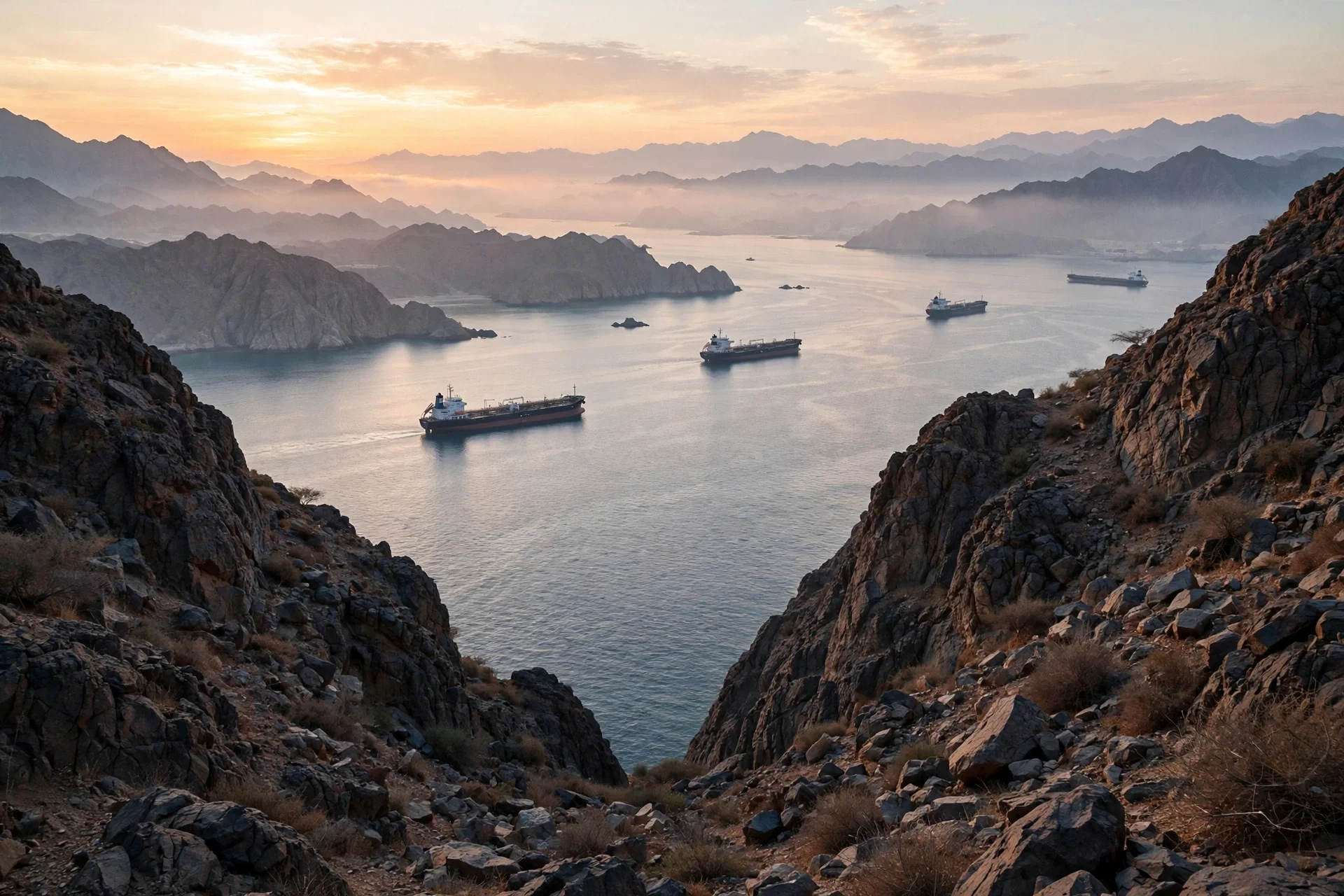
Buques petroleros atraviesan un estrecho entre costas rocosas al amanecer, en una imagen alusiva a las negociaciones sobre Ormuz. · Imagen generada por EPM
Iran and the United States negotiate a two-day Hormuz reopening
Iran said on Sunday that indirect talks with the United States, mediated by Qatar, are continuing over a two-day plan to reopen the Strait of Hormuz, with no…
Tehran ties Hormuz reopening to Washington's answers
Iran is holding indirect talks with the United States, mediated by Qatar, to reopen the Strait of Hormuz for two days, but its foreign minister warned that the…
--- The context --- The Strait of Hormuz sits at the center of the dispute that keeps the eight-month war between Iran and the United States open. Its reopening is the central piece of a peace plan Tehran presented with a seven-day timeframe and now negotiates in two days, with Qatar as mediator.
--- The facts --- Iran said on Sunday that indirect talks with the United States, mediated by Qatar, are continuing over a two-day plan to reopen the strait, although no concrete result has been reached yet after a week of intense diplomatic efforts.
Iranian Foreign Minister Abbas Araghchi said on the sidelines of a parliamentary session, as reported by the Iranian parliamentary agency, that the outcome depends on the other side's answers to Iran's questions. An Iranian delegation led by a deputy foreign minister traveled to Qatar yesterday to continue talks with the Qatari mediators, who had visited Tehran before.
--- The positions --- Araghchi said his country is doing everything possible through diplomacy and expressed hope that the other side would act rationally and give priority to diplomacy, while noting that Iran is prepared for any scenario. He clarified that the Qatar meetings included no plan for direct negotiation with Washington.
President Donald Trump, who rejected the seven-day plan and keeps up the pressure through the naval blockade and sanctions, said yesterday that he will not attack before this Tuesday's midterm elections and that the negotiations are going well, although he warned that Washington still has pending military objectives.
--- What remains unknown --- The proposal of September 25, presented by Araghchi in New York, on the sidelines of the General Assembly, called for a ceasefire in the Middle East, an end to the naval blockade, the lifting of sanctions on Iranian oil and the release of frozen assets, in exchange for reopening Hormuz and negotiating a definitive agreement. Qatar proposed cutting that timeframe from seven to five days, and work is under way to bring it down to two, Araghchi explained yesterday to a Qatari channel.
--- Unanswered questions --- What answers does Tehran expect from the other side in order to close the two-day plan? Would the brief reopening include any verification of transit, or would it rest entirely on mutual trust? Could a two-day agreement open the door to negotiating the oil sanctions and frozen assets?
--- EPM analysis --- Shortening the timeframe, from seven days to two, suggests a search for a testable measure rather than a complete settlement. A Qatari delegation traveled to Iran at least twice this week, and senior defense officials from Pakistan, Saudi Arabia and Turkey met on Monday in Tehran.
📌 EPM Take: In EPM's view, the fact that the timeframe has shrunk from seven days to two shows that the negotiation is moving through practical steps and that mediation is producing movement where pressure alone did not. The decisive fact is not yet an agreement, but the continuity of the indirect channel after an intense week of contacts. If the pending answers arrive before the midterm elections, the brief reopening could become the first verifiable de-escalation measure after eight months of war, provided both sides honor what is agreed.
--- The context --- The Strait of Hormuz is the central friction point of the eight-month war pitting Iran against the United States. Tehran links it to a peace plan whose timeframe has been shrinking, from seven days to five and now to two, with no concrete result announced.
--- The facts --- Iran said on Sunday that indirect talks with the United States, mediated by Qatar, are continuing over a two-day plan to reopen the strait, with no concrete result yet. Foreign Minister Abbas Araghchi confirmed it on the sidelines of a parliamentary session, as reported by the Iranian parliamentary agency.
Araghchi stressed that the outcome depends on the answers the other side gives to the questions raised by Iran. He added that the meetings in Qatar, where an Iranian delegation led by a deputy foreign minister traveled yesterday, included no plan for negotiations with the American side.
--- The positions --- The head of Iranian diplomacy said his country is doing everything possible along the diplomatic path and hopes the other side acts rationally and prioritizes diplomacy, although he noted that Iran is prepared for any scenario. That dual signal sets Tehran's tone.
In Washington, President Donald Trump rejected the seven-day plan and keeps up the pressure through the naval blockade and sanctions. Yesterday he said he will not attack before this Tuesday's midterm elections and that the negotiations are going well, but he warned that the United States still has pending military objectives.
--- What remains unknown --- The proposal of September 25, presented by Araghchi at a press conference in New York, on the sidelines of the General Assembly, called for a ceasefire in the Middle East, an end to the naval blockade, the lifting of sanctions on Iranian oil and the release of frozen assets, in exchange for reopening Hormuz and negotiating a definitive agreement. Qatar proposed cutting that timeframe from seven days to five, and work is now under way to bring it down to two, Araghchi explained yesterday to a Qatari channel.
--- Unanswered questions --- Would Washington accept any September trade-off, such as ending the naval blockade, in exchange for a reopening lasting only two days? What will happen to transit when that window expires if there is no definitive agreement? To what extent does Trump's pause until the midterm elections shape the negotiation's timetable?
--- EPM analysis --- Regional diplomacy is moving in parallel: a Qatari delegation traveled to Iran at least twice this week, and senior defense officials from Pakistan, Saudi Arabia and Turkey met on Monday in Tehran. That deployment does not replace an agreement between the parties, which has yet to materialize.
📌 EPM Take: In EPM's view, caution is the only responsible reading, because Tehran is negotiating without withdrawing its core demands and Washington keeps the naval blockade, the sanctions and pending military objectives in place. A two-day plan may be a useful gesture, but it does not amount to an agreement and offers no guarantee that the strait will stay open afterwards. The test will be verifiable facts on the water: if transit resumes and holds, there will have been progress; if it hinges on unconfirmed concessions, everything will remain fragile.
Irán y Estados Unidos negocian reabrir Ormuz en dos días
Irán informó este domingo de que continúan las conversaciones indirectas con Estados Unidos, con mediación de Catar, sobre un plan de dos días para reabrir el…
Teherán condiciona la reapertura de Ormuz a Washington
Irán mantiene conversaciones indirectas con Estados Unidos, con mediación de Catar, para reabrir el estrecho de Ormuz durante dos días, pero su canciller…
--- El contexto --- El estrecho de Ormuz concentra la disputa que mantiene abierta la guerra de ocho meses entre Irán y Estados Unidos. Su reapertura es la pieza central del plan de paz de Teherán, presentado a siete días y negociado hoy en dos, con mediación de Catar.
--- Los hechos --- Irán informó este domingo de que continúan las conversaciones indirectas con Estados Unidos, con mediación catarí, sobre un plan de dos días para reabrir el estrecho, aunque aún no hay un resultado concreto tras una semana de intensos esfuerzos diplomáticos.
El ministro iraní de Exteriores, Abás Araqchí, declaró en los márgenes de una sesión parlamentaria, según la agencia parlamentaria iraní, que el resultado depende de las respuestas de la contraparte a las preguntas de Irán. Una delegación iraní encabezada por un viceministro viajó ayer a Catar para seguir los diálogos con los mediadores cataríes, que antes visitaron Teherán.
--- Las posiciones --- Araqchí sostuvo que su país hace todo lo posible por la vía diplomática y espera que la otra parte actúe con racionalidad y priorice la diplomacia, aunque recordó que Irán está preparado para cualquier escenario. Precisó que en Catar no había plan de negociación directa con Washington.
El presidente Donald Trump, que rechazó el plan de siete días y mantiene la presión con el bloqueo naval y las sanciones, aseguró ayer que no atacará antes de las elecciones de medio mandato de este martes y que las negociaciones marchan bien, aunque advirtió que Washington tiene objetivos militares pendientes.
--- Lo que falta saber --- La propuesta del 25 de septiembre, presentada por Araqchí en Nueva York al margen de la Asamblea General de las Naciones Unidas, pedía un alto al fuego en Medio Oriente, el fin del bloqueo naval, el levantamiento de las sanciones al petróleo iraní y la liberación de los activos congelados, a cambio de reabrir Ormuz y negociar un acuerdo definitivo. Catar planteó bajar ese plazo de siete a cinco días y ahora se trabaja para dejarlo en dos, según explicó ayer Araqchí a una cadena catarí.
--- Preguntas sin respuesta --- ¿Qué respuestas espera Teherán de la contraparte para cerrar el plan de dos días? ¿La reapertura incluiría alguna verificación del tránsito o quedaría librada a la confianza mutua? ¿Podría ese acuerdo abrir luego la negociación sobre sanciones y activos congelados?
--- Análisis EPM --- Acortar el plazo, de siete días a dos, sugiere que se busca una medida comprobable antes que un acuerdo completo. Una delegación catarí viajó al menos dos veces a Irán esta semana, y altos cargos de Defensa de Pakistán, Arabia Saudí y Turquía se reunieron el lunes en Teherán.
📌 Conclusion EPM: A juicio de EPM, que el plazo haya pasado de siete días a dos muestra que la negociación avanza por la vía práctica y que la mediación produce movimiento donde la presión sola no lo logró. El dato decisivo no es un acuerdo, sino la continuidad del canal indirecto tras una semana intensa de contactos. Si las respuestas pendientes llegan antes de las elecciones de medio mandato, la reapertura breve podría ser la primera medida verificable de distensión en ocho meses, si ambas partes cumplen lo pactado.
--- El contexto --- El estrecho de Ormuz es el punto de fricción central de la guerra de ocho meses entre Irán y Estados Unidos. Teherán lo vincula a un plan de paz cuyo plazo se ha reducido, de siete días a cinco y ahora a dos, sin resultado concreto anunciado.
--- Los hechos --- Irán informó este domingo de que continúan las conversaciones indirectas con Estados Unidos, con mediación de Catar, sobre un plan de dos días para reabrir el estrecho, sin un resultado concreto. Lo confirmó su ministro de Exteriores, Abás Araqchí, en los márgenes de una sesión parlamentaria, según la agencia parlamentaria iraní.
Araqchí subrayó que el resultado depende de las respuestas que la contraparte dé a las preguntas de Irán. Añadió que en las reuniones de Catar, adonde viajó ayer una delegación iraní encabezada por un viceministro, no había plan de negociaciones con la parte estadounidense.
--- Las posiciones --- El jefe de la diplomacia iraní aseguró que su país hace todo lo posible por la vía diplomática y espera que la otra parte actúe con racionalidad, aunque recordó que Irán está preparado para cualquier escenario. Esa doble señal marca a Teherán.
En Washington, el presidente Donald Trump rechazó el plan de siete días y mantiene la presión con el bloqueo naval y las sanciones. Ayer aseguró que no atacará antes de las elecciones de medio mandato de este martes y que las negociaciones marchan bien, pero advirtió que Estados Unidos tiene objetivos militares pendientes.
--- Lo que falta saber --- La propuesta del 25 de septiembre, presentada por Araqchí en rueda de prensa en Nueva York, al margen de la Asamblea General, pedía un alto al fuego en Medio Oriente, el fin del bloqueo naval, el levantamiento de las sanciones al petróleo iraní y la liberación de los activos congelados, a cambio de reabrir Ormuz y negociar un acuerdo definitivo. Catar planteó bajar ese plazo de siete a cinco días y ahora se trabaja para dejarlo en dos, según explicó ayer Araqchí a una cadena catarí.
--- Preguntas sin respuesta --- ¿Aceptaría Washington alguna contrapartida de septiembre, como el fin del bloqueo naval, por una reapertura de solo dos días? ¿Qué ocurrirá con el tránsito cuando expire ese plazo si no hay un acuerdo definitivo? ¿La pausa de Trump hasta las elecciones condiciona el calendario de la negociación?
--- Análisis EPM --- La diplomacia regional se mueve en paralelo: una delegación catarí viajó al menos dos veces a Irán esta semana, y altos cargos de Defensa de Pakistán, Arabia Saudí y Turquía se reunieron el lunes en Teherán. Ese despliegue no sustituye el acuerdo entre las partes, que sigue sin producirse.
📌 Conclusion EPM: A juicio de EPM, la cautela es la única lectura responsable: Teherán negocia sin retirar sus exigencias de fondo y Washington conserva el bloqueo naval, las sanciones y objetivos militares pendientes. Un plan de dos días puede ser un gesto útil, pero no equivale a un acuerdo ni garantiza que el estrecho siga abierto después. La prueba estará en los hechos verificables: si el tránsito se reanuda y se sostiene, habrá avance; si la reapertura depende de concesiones previas no confirmadas, todo seguirá frágil y reversible.