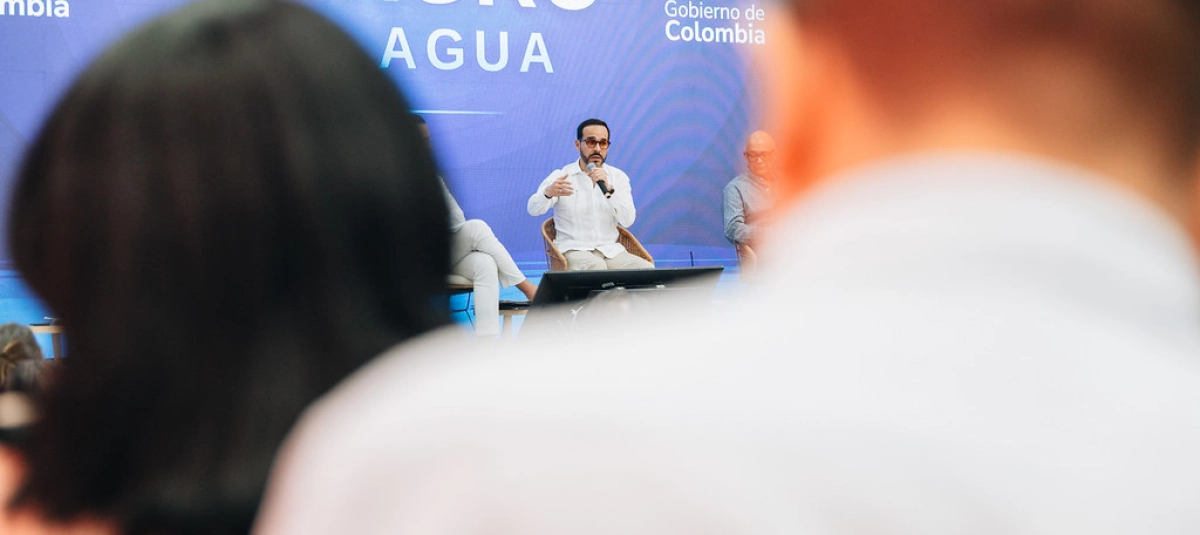
El presidente Abelardo De La Espriella presentó en Santa Marta el plan para captar agua del río Magdalena y conducirla hasta la ciudad. · El Tiempo
El Milagro del Agua: De La Espriella bets on the Magdalena River for Santa Marta
President Abelardo De La Espriella presented in Santa Marta the plan to draw water from the Magdalena River and carry it to the city and the Troncal del Caribe…
De La Espriella presents El Milagro del Agua for Santa Marta
At Universidad Sergio Arboleda, the president presented the regional project to carry Magdalena River water to Santa Marta, Puebloviejo and Tasajera.
President Abelardo De La Espriella presented in Santa Marta a regional project called El Milagro del Agua, designed to draw water from the Magdalena River and carry it to the capital of Magdalena in order to resolve the city's water shortage crisis.
--- The context ---
The presentation took place at Universidad Sergio Arboleda. According to El Tiempo, the initiative would also supply towns such as Puebloviejo and Tasajera, intervene in the aqueduct networks and recover underground sources. The announced scheme would carry the resource from the river to the communities along the Troncal del Caribe corridor before conducting it to the capital, in three phases: capture from the river, conduction to the beneficiary towns, recovery of deep wells and intervention of the distribution networks.
--- The facts ---
According to the figures disclosed at the presentation, around 1,760 liters of water per second enter the system, but only about 704 liters per second effectively reach users, against an estimated demand of 2,000 liters per second: losses close to 60 percent of the incoming flow. The president announced that he will seek Ecopetrol's support to structure a technical project to reduce losses, that he will turn to CAF and other entities to complete the financing, and that he ruled out desalination plants as an alternative of his Government. The execution horizon is set at 2031 and the president promised to manage bringing it forward by at least seven months so as to leave it in operation before the end of his term.
--- The positions ---
De La Espriella denounced alleged economic interests around the distribution of water by tanker trucks: he said he handed the Attorney General's Office names, videos and other elements concerning people who allegedly appropriate water to commercialize it, and announced that his Government will seek to dismantle that mafia, whoever falls. Santa Marta mayor Carlos Pinedo Cuello backed the proposal and suggested directing the resources linked to desalination toward reducing system losses, coordinating aqueduct works with sewerage works. Representative Felipe Hernández asked the Government to explain why an alternative discussed under previous administrations would now be viable, and raised concerns about costs, water quality and effects on the Ciénaga Grande de Santa Marta and the Vía Parque Isla de Salamanca. Lawyer Abraham Katime argued that the debate should not be reduced to choosing between the river and desalination, but to defining which option answers the emergency first.
--- What remains unknown ---
The conditions and responsibilities of Triple A's possible technical participation in operating the regional scheme have not been publicly defined, nor has the financial closing that will determine the scope of the works and their schedule.
--- Unanswered questions ---
How will the project's financing be completed? What measures will protect the Ciénaga Grande de Santa Marta and the Vía Parque Isla de Salamanca? What verifiable targets will be set to reduce aqueduct losses? When will water begin to reach Santa Marta homes effectively?
--- EPM analysis ---
The plan combines a new supply source with intervention in the networks where most of the flow is currently lost, and adds the denunciation against illegal tanker-truck distribution.
📌 EPM Take: In EPM's view, the central merit of the plan is that it attacks both fronts at once: drawing water from the Magdalena River would solve nothing if the networks kept losing most of the flow, which is why recovering wells, intervening in the networks and seeking a technical partner are part of the same commitment. The denunciation against the tanker-truck mafia, with material handed to prosecutors, also puts the spotlight on scarcity as a business. Everything will now depend on whether the financial closing, the dates and the loss-reduction targets are made public and verifiable.
At Universidad Sergio Arboleda, President Abelardo De La Espriella presented El Milagro del Agua: drawing water from the Magdalena River and conducting it to Santa Marta and the towns of the Troncal del Caribe corridor to resolve the chronic shortage in the capital of Magdalena.
--- The context ---
Santa Marta's drinking water crisis returned to the center of the national agenda with this announcement. According to El Tiempo, the initiative would also supply Puebloviejo and Tasajera, intervene in the aqueduct networks and recover underground sources, in three phases: capture from the river, conduction to the beneficiary towns, recovery of deep wells and intervention of the distribution networks. The president ruled out desalination plants as an alternative of his Government.
--- The facts ---
The figures presented show the scale of the problem: around 1,760 liters of water per second enter the system and only about 704 effectively reach users, against an estimated demand of 2,000 liters per second, with losses close to 60 percent. The president announced Ecopetrol's support to structure a technical loss-reduction project, steps before CAF and other entities to complete the financing, and an execution horizon in 2031 that he promised to bring forward by at least seven months so that he himself cuts the ribbon.
--- The positions ---
The president denounced alleged economic interests in tanker-truck distribution: he said he has names, videos and other elements concerning people who allegedly appropriate water to commercialize it, material he handed to the Attorney General's Office, and he promised to dismantle that mafia, whoever falls. Mayor Carlos Pinedo Cuello backed the new approach and proposed directing desalination resources toward reducing losses, coordinating aqueduct and sewerage works and integrating the Master Plan and the El Curval plant. Representative Felipe Hernández questioned reviving a route discussed under previous administrations without specifying what changed regarding the technical and financial obstacles, and requested information on costs, water quality and protection of the Ciénaga Grande and the Vía Parque Isla de Salamanca. Abraham Katime asked that it be defined which alternative answers the emergency first without abandoning the structural solution.
--- What remains unknown ---
The financial closing is still missing, as are defined works with responsible parties and dates, and the conditions of Triple A's eventual participation as technical partner of the regional scheme.
--- Unanswered questions ---
What changed regarding the obstacles that stalled this alternative under previous governments? How will the quality of the water drawn from the Magdalena River be guaranteed? What budget will be allocated to reducing aqueduct losses? Within what timeframe will supply in homes begin to improve?
--- EPM analysis ---
The commitment recovers the Magdalena River as a regional source, rules out desalination and places loss reduction and distribution control at the center of the strategy.
📌 EPM Take: In EPM's view, the right signal is to stop feeding a system that loses most of the water it captures: the plan is right to condition the new source on intervening in the networks and to confront the illegal tanker-truck business with a formal denunciation before prosecutors. The firmness of the announcement must be confirmed with defined works, secured resources, identified responsible parties and public execution dates, because for residents the measure of success will not be the plan's presentation, but water reaching their homes sufficiently and continuously.
«El Milagro del Agua»: Abelardo apuesta por el río Magdalena para Santa Marta
El presidente Abelardo De La Espriella presentó en Santa Marta el plan para captar agua del río Magdalena y conducirla hasta la ciudad y el corredor de la…
Abelardo presenta «El Milagro del Agua» y anuncia acciones contra la mafia de carrotanques
En la Universidad Sergio Arboleda, el presidente presentó el proyecto regional para llevar agua del río Magdalena a Santa Marta, Puebloviejo y Tasajera.
El presidente Abelardo De La Espriella presentó en Santa Marta «El Milagro del Agua», un proyecto regional para captar agua del río Magdalena y conducirla hasta la capital del Magdalena, con el que busca resolver la crisis de desabastecimiento de la ciudad.
--- El contexto ---
La presentación se realizó en la Universidad Sergio Arboleda. La iniciativa contempla abastecer también a poblaciones como Puebloviejo y Tasajera, intervenir las redes del acueducto y recuperar fuentes subterráneas. El esquema anunciado busca llevar el recurso desde el río hacia las poblaciones del corredor de la Troncal del Caribe antes de conducirlo hasta la capital, y contempla tres fases: captación desde el río, conducción hacia las poblaciones beneficiarias, recuperación de pozos profundos e intervención de las redes de distribución.
--- Los hechos ---
Según las cifras divulgadas en la presentación, al sistema ingresan alrededor de 1.760 litros de agua por segundo, pero a los usuarios llegan efectivamente unos 704 litros por segundo, frente a una demanda estimada de 2.000 litros por segundo: pérdidas cercanas al 60 por ciento del caudal que entra. El presidente anunció que buscará el acompañamiento de Ecopetrol para estructurar un proyecto técnico que reduzca las pérdidas, que acudirá a la CAF y a otras entidades para completar la financiación y que descartó las plantas desalinizadoras como alternativa de su Gobierno. El horizonte de ejecución se ubica en 2031 y el mandatario prometió gestionar su adelanto por lo menos siete meses para dejarlo en funcionamiento antes de concluir su mandato.
--- Las posiciones ---
De La Espriella denunció presuntos intereses económicos alrededor de la distribución de agua en carrotanques: aseguró que entregó a la Fiscalía General de la Nación nombres, videos y otros elementos sobre personas que presuntamente se apropiarían del agua para comercializarla, y anunció que su Gobierno buscará desarticular esa mafia, «caiga quien caiga». El alcalde de Santa Marta, Carlos Pinedo Cuello, respaldó el planteamiento y propuso orientar los recursos relacionados con las desalinizadoras a reducir las pérdidas del sistema, articulando las obras de acueducto con las de alcantarillado. El representante Felipe Hernández pidió explicar por qué ahora sería viable una alternativa discutida en administraciones anteriores y planteó reparos sobre costos, calidad del agua y efectos sobre la Ciénaga Grande de Santa Marta y el Vía Parque Isla de Salamanca. El abogado Abraham Katime planteó que el debate no debe reducirse a elegir entre el río y las desalinizadoras, sino a definir cuál responde primero a la emergencia.
--- Lo que falta saber ---
No se han definido públicamente las condiciones ni las responsabilidades de la posible participación técnica de Triple A en la operación del esquema regional, ni el cierre financiero que determinará el alcance de las obras y su cronograma.
--- Preguntas sin respuesta ---
¿Cómo se completará la financiación del proyecto? ¿Qué medidas protegerán la Ciénaga Grande de Santa Marta y el Vía Parque Isla de Salamanca? ¿Qué metas verificables se fijarán para reducir las pérdidas del acueducto? ¿Cuándo empezará a llegar el agua de manera efectiva a los hogares de Santa Marta?
--- Análisis EPM ---
El plan combina una nueva fuente de abastecimiento con la intervención de las redes donde hoy se pierde la mayor parte del caudal, y suma la denuncia contra la distribución ilegal en carrotanques.
📌 Conclusion EPM: A juicio de EPM, el acierto central del plan está en atacar los dos frentes a la vez: captar agua del río Magdalena no resolvería nada si las redes siguieran perdiendo la mayor parte del caudal, y por eso la recuperación de pozos, la intervención de las redes y la búsqueda de un socio técnico forman parte de la misma apuesta. La denuncia contra la mafia de carrotanques, con material entregado a la Fiscalía, pone además el foco en la escasez como negocio. Todo dependerá ahora de que el cierre financiero, las fechas y las metas de reducción de pérdidas se hagan públicos y verificables.
En la Universidad Sergio Arboleda, el presidente Abelardo De La Espriella presentó «El Milagro del Agua»: captar agua del río Magdalena y conducirla hasta Santa Marta y las poblaciones del corredor de la Troncal del Caribe para resolver el desabastecimiento crónico de la capital del Magdalena.
--- El contexto ---
La crisis de agua potable de Santa Marta volvió al centro de la agenda nacional con este anuncio. La iniciativa contempla abastecer también a Puebloviejo y Tasajera, intervenir las redes del acueducto y recuperar fuentes subterráneas, en tres fases: captación desde el río, conducción hacia las poblaciones beneficiarias, recuperación de pozos profundos e intervención de las redes de distribución. El mandatario descartó las plantas desalinizadoras como alternativa de su Gobierno.
--- Los hechos ---
Las cifras expuestas muestran la dimensión del problema: ingresan alrededor de 1.760 litros de agua por segundo y a los usuarios llegan efectivamente unos 704, frente a una demanda estimada de 2.000 litros por segundo, con pérdidas cercanas al 60 por ciento. El presidente anunció el acompañamiento de Ecopetrol para estructurar un proyecto técnico de reducción de pérdidas, gestiones ante la CAF y otras entidades para completar la financiación, y un horizonte de ejecución en 2031 que prometió adelantar por lo menos siete meses para cortar él mismo la cinta.
--- Las posiciones ---
El mandatario denunció presuntos intereses económicos en la distribución por carrotanques: aseguró tener nombres, videos y otros elementos sobre personas que presuntamente se apropian del agua para comercializarla, material que entregó a la Fiscalía General de la Nación, y prometió desarticular esa mafia, «caiga quien caiga». El alcalde Carlos Pinedo Cuello respaldó el nuevo planteamiento y planteó que los recursos de las desalinizadoras se orienten a reducir las pérdidas, articulando acueducto y alcantarillado e integrando el Plan Maestro y la planta de El Curval. El representante Felipe Hernández cuestionó que se retome una ruta discutida en administraciones anteriores sin precisar qué cambió frente a los obstáculos técnicos y financieros, y pidió información sobre costos, calidad del agua y protección de la Ciénaga Grande y el Vía Parque Isla de Salamanca. Abraham Katime pidió definir cuál alternativa responde primero a la emergencia sin abandonar la solución estructural.
--- Lo que falta saber ---
Faltan el cierre financiero, las obras definidas con responsables y fechas, y las condiciones de la eventual participación de Triple A como socio técnico del esquema regional.
--- Preguntas sin respuesta ---
¿Qué cambió frente a los obstáculos que frenaron esta alternativa en gobiernos anteriores? ¿Cómo se garantizará la calidad del agua captada del río Magdalena? ¿Qué presupuesto se destinará a reducir las pérdidas del acueducto? ¿En qué plazo empezará a mejorar el suministro en los hogares?
--- Análisis EPM ---
La apuesta recupera el río Magdalena como fuente regional, descarta la desalinización y pone la reducción de pérdidas y el control de la distribución en el centro de la estrategia.
📌 Conclusion EPM: A juicio de EPM, la señal correcta es no seguir alimentando un sistema que pierde la mayor parte del agua que capta: el plan acierta al condicionar la nueva fuente a la intervención de las redes y al enfrentar el negocio ilegal de los carrotanques con una denuncia formal ante la Fiscalía. La firmeza del anuncio deberá confirmarse con obras definidas, recursos asegurados, responsables identificados y fechas de ejecución públicas, porque para los habitantes la medida del éxito no será la presentación del plan, sino que el agua llegue de forma suficiente y continua a sus hogares.