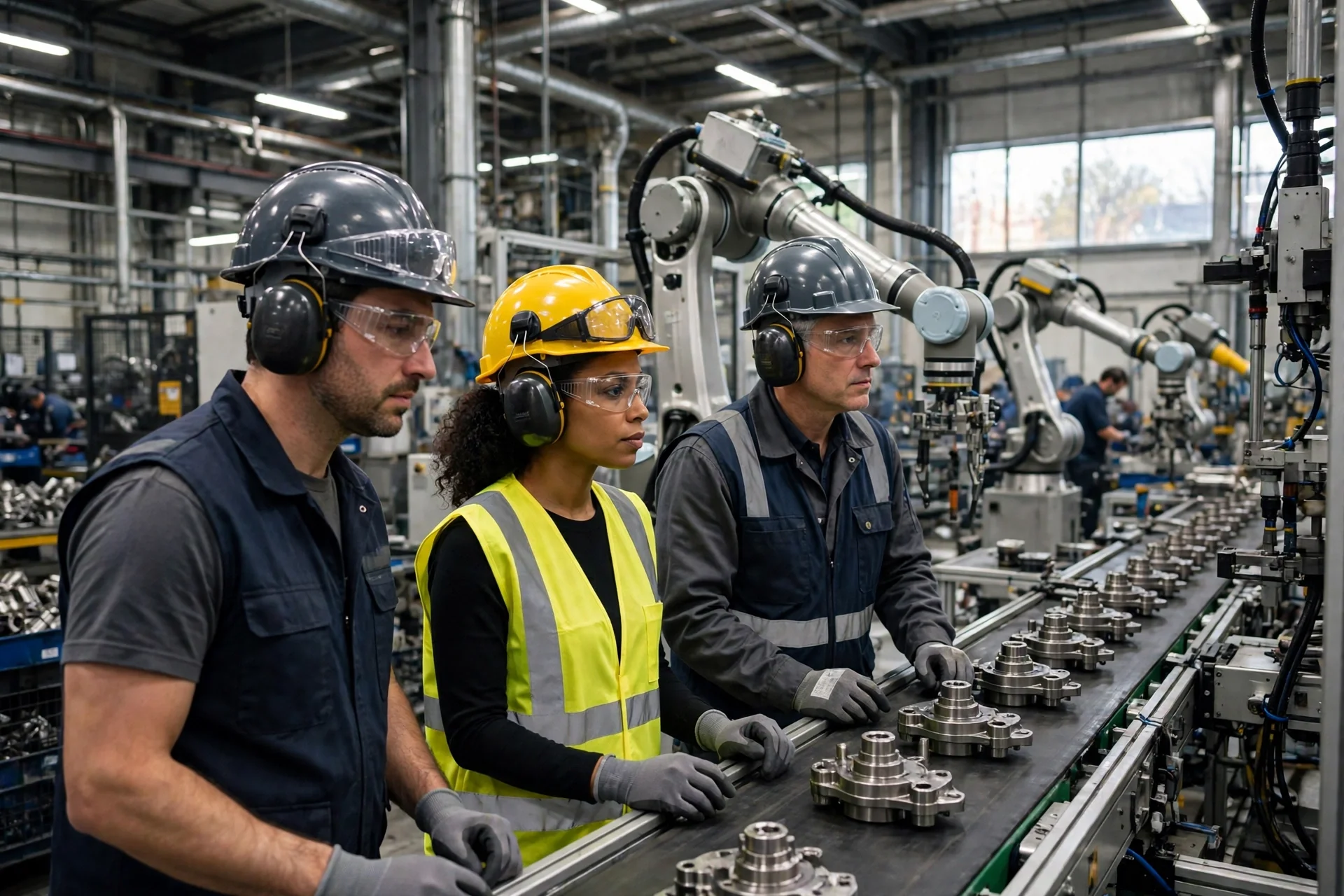
Imagen alusiva: producción manufacturera en Estados Unidos, en el debate sobre el retorno de fábricas al país. · EPM
White House credits tariffs with manufacturing return
The White House credited tariffs and tax cuts with bringing manufacturing production back to the United States, alongside rising factory and factory…
White House: tariffs and tax cuts bring factories back
According to the White House, tariffs and tax cuts are bringing production back to the United States, with manufacturing and factory construction employment…
--- The context ---
The White House issued a release attributing a return of manufacturing production to the United States to the tariffs and tax cuts championed by President Donald Trump. According to the release, that strategy is strengthening supply chains and raising blue-collar wages, in an assessment that the administration itself presents as confirmation of its economic agenda.
--- The facts ---
As brief context, the release cites the October jobs report, according to which 165,000 jobs were added that month, beating expectations by over 100,000, and notes that revisions raised September to 60,000 jobs and August to 186,000 jobs. At the centre of its manufacturing argument, the White House says 19,000 manufacturing jobs were added in October, the strongest monthly gain since 2023 according to the official text itself.
According to the release, more than 100,000 manufacturing jobs and 120,000 factory construction jobs have been added since President Trump returned to office, and manufacturing employment is rising for the first time in three years, reversing, according to the White House, an earlier loss of more than 200,000 factory jobs. The text adds that more than 1.25 million private sector jobs have been added in that period and that jobless claims fell to a new 57-year low.
--- The positions ---
The administration's position, as set out in the release, is that tariffs and tax cuts are bringing production home and that the economy grew 3.4% in the third quarter, defying the experts. According to the White House, the trade deficit dropped over 12% in September and goods exports hit a record high, up nearly 15% year over year, while capital goods imports reached a record 46% share of total imports.
--- What remains unknown ---
The release does not detail which specific companies have moved production, in which states the new posts are concentrated, or how much of the advance responds to tariffs and how much to other factors. Nor does its text offer an independent comparison on wages, costs for consumers or effects on trading partners, so a complete reading of the phenomenon still awaits additional data and outside verification.
--- Unanswered questions ---
Which companies and sectors account for the production return that the White House attributes to tariffs? Will the pace of manufacturing job creation described in the release hold in the coming months? What effects will tariffs have on prices and supply chains over the medium term?
--- EPM analysis ---
The value of the release lies in the thesis that organises its figures: it does not present tariffs as an isolated measure, but as part of a package with tax cuts aimed at rebuilding domestic industry. Its reshoring numbers give that thesis content, because, according to the official text, 36% of equipment manufacturers have reshored or are reshoring, 63% are making capital investments to expand production in the country, manufacturing expanded for a 10th straight month and core capital goods orders are up almost 14% from a year ago.
📌 EPM Take: In EPM's view, the release should be read for what it is, an interested account from the administration itself, and its figures require independent verification before they can be treated as settled. That said, the thesis it defends is clear and politically powerful: linking tariffs and tax cuts with factories, wages and jobs connects trade policy with workers' pay packets. The discussion that matters is not whether the White House celebrates its numbers, but whether reshoring takes hold, spreads across the country and endures through the coming quarters.
--- The context ---
The White House argued in a release that President Donald Trump's tariffs and tax cuts are bringing production back to the United States and creating jobs for the country's workers. According to the official text, the strategy is strengthening supply chains and raising blue-collar wages, and the administration presents it as the delivery of its promise to put the American worker at the centre of economic policy.
--- The facts ---
The release mentions as context the October jobs report, according to which 165,000 jobs were added, blowing out expectations by over 100,000, with upward revisions that left September at 60,000 jobs and August at 186,000 jobs. Its central argument, however, is industrial: according to the White House, October added 19,000 manufacturing jobs, the strongest monthly gain since 2023.
According to the White House, more than 100,000 manufacturing jobs and 120,000 factory construction jobs have been added since President Trump returned, and factory employment is rising for the first time in three years, against an earlier loss of more than 200,000 posts that the release attributes to the previous period. The text adds more than 1.25 million private sector jobs created in that period and jobless claims at a new 57-year low.
--- The positions ---
The administration holds in the release that tariffs and tax cuts are the lever behind that turn, and supports the thesis with trade and growth: according to the text, the economy grew 3.4% in the third quarter, the trade deficit dropped over 12% in September and goods exports hit a record high, up nearly 15% year over year. According to the White House, capital goods imports also reached a record 46% share of total imports.
--- What remains unknown ---
The release does not identify the specific plants that have supposedly returned or break employment down by state or industrial branch, and it does not quantify possible tariff costs for importers and consumers. Without that breakdown and without independent verification, the lasting reach of the factory return proclaimed by the administration remains to be proven with complete series and data on investment actually carried out.
--- Unanswered questions ---
How many plants have effectively returned to the country and how many are still at the announcement or investment stage? Will tariffs weigh more as an incentive to produce at home or as a cost for those who import inputs? Will the manufacturing return hold if global trade conditions change?
--- EPM analysis ---
The release builds a doctrine of industrial sovereignty: produce at home, depend less on the outside and use the tariff as an instrument of negotiation and employment. The indicators the text itself chooses point in that direction, because, according to the White House, 36% of equipment manufacturers have reshored or are reshoring, 63% are investing to expand national production, manufacturing has expanded for a 10th straight month and core capital goods orders are up almost 14% from a year ago.
📌 EPM Take: In EPM's view, the White House is right to put industry at the centre of the economic debate, because a country that does not produce is exposed in every supply crisis. But the release is a partisan document and each of its figures must be verified outside the official narrative before becoming a conclusion. The decisive test will be practical: factories opened, investment carried out and factory employment sustained over time, not merely announced. If that return is confirmed by independent data, the tariff turn will have changed American industrial policy for a generation.
La Casa Blanca atribuye a aranceles el retorno fabril
La Casa Blanca atribuyó a los aranceles y a los recortes fiscales el retorno de la producción manufacturera a Estados Unidos, con más empleo fabril y de…
Casa Blanca: aranceles y recortes traen fábricas de vuelta
Según la Casa Blanca, los aranceles y los recortes fiscales están devolviendo la producción a Estados Unidos, con empleo manufacturero y de construcción fabril…
--- El contexto ---
La Casa Blanca difundió un comunicado en el que atribuye a los aranceles y a los recortes fiscales del presidente Donald Trump un retorno de la producción manufacturera a Estados Unidos. De acuerdo con el comunicado, esa estrategia estaría fortaleciendo las cadenas de suministro y elevando los salarios manuales, en un balance que la administración presenta como confirmación de su agenda económica.
--- Los hechos ---
Como contexto breve, el comunicado cita el informe de empleo de octubre, según el cual se añadieron 165,000 empleos, por encima de las expectativas en más de 100,000, con revisiones que elevaron septiembre a 60,000 empleos y agosto a 186,000 empleos. En su argumento manufacturero, la Casa Blanca afirma que en octubre se sumaron 19,000 empleos fabriles, la ganancia mensual más fuerte desde 2023 según el texto oficial.
De acuerdo con el comunicado, desde el regreso del presidente Trump se han añadido más de 100,000 empleos manufactureros y 120,000 empleos de construcción de fábricas, y el empleo fabril estaría subiendo por primera vez en tres años, revirtiendo, según la Casa Blanca, una pérdida anterior de más de 200,000 empleos fabriles. El texto añade más de 1,25 millones de empleos creados en el sector privado en ese periodo y unas solicitudes de desempleo en un mínimo de 57 años.
--- Las posiciones ---
La administración sostiene que los aranceles y los recortes fiscales están trayendo la producción de vuelta y que la economía creció un 3,4% en el tercer trimestre desafiando a los expertos. Según la Casa Blanca, el déficit comercial bajó más de un 12% en septiembre, las exportaciones de bienes marcaron un récord con un alza cercana al 15% interanual y las importaciones de bienes de capital llegaron a una cuota récord del 46% del total.
--- Lo que falta saber ---
El comunicado no detalla qué empresas han trasladado producción, en qué estados se concentran los nuevos puestos ni qué parte del avance responde a los aranceles frente a otros factores. Tampoco ofrece una comparación independiente sobre salarios, costes para los consumidores o efectos en los socios comerciales, por lo que la lectura completa queda pendiente de contraste externo.
--- Preguntas sin respuesta ---
¿Qué empresas y sectores concentran el retorno que la Casa Blanca atribuye a los aranceles? ¿Se mantendrá el ritmo de empleo manufacturero que describe el comunicado? ¿Qué efectos tendrán los aranceles sobre precios y cadenas de suministro?
--- Análisis EPM ---
El comunicado no presenta los aranceles como medida aislada, sino como parte de un paquete con recortes fiscales para reconstruir la industria. Sus cifras de relocalización dan contenido a esa tesis: según el texto, un 36% de los fabricantes de equipos ya ha relocalizado o está relocalizando, un 63% invierte en capital para expandir la producción nacional, la manufactura se expandió por décimo mes consecutivo y los pedidos de bienes de capital básicos subieron casi un 14% interanual.
📌 Conclusion EPM: A juicio de EPM, el comunicado debe leerse como lo que es, un balance interesado de la propia administración, y sus cifras exigen contraste independiente antes de darse por cerradas. Dicho eso, la tesis que defiende es clara y políticamente potente: vincular aranceles y recortes fiscales con fábricas, salarios y empleo conecta la política comercial con el bolsillo de los trabajadores. La discusión que importa no es si la Casa Blanca celebra sus números, sino si la relocalización se consolida, se reparte por el país y resiste el paso de los próximos trimestres.
--- El contexto ---
La Casa Blanca defendió en un comunicado que los aranceles y los recortes fiscales del presidente Donald Trump están trayendo la producción de vuelta a Estados Unidos. Según el texto oficial, la estrategia fortalece las cadenas de suministro y eleva los salarios manuales, y la administración la presenta como cumplimiento de su promesa de defender al trabajador estadounidense.
--- Los hechos ---
El comunicado menciona como contexto el informe de empleo de octubre, según el cual se añadieron 165,000 empleos, superando las expectativas en más de 100,000, con revisiones que dejaron septiembre en 60,000 empleos y agosto en 186,000 empleos. Su argumento central es industrial: de acuerdo con la Casa Blanca, octubre sumó 19,000 empleos manufactureros, la mayor ganancia mensual desde 2023.
Según la Casa Blanca, desde el regreso del presidente Trump se han añadido más de 100,000 empleos manufactureros y 120,000 empleos de construcción de fábricas, y el empleo fabril estaría creciendo por primera vez en tres años, frente a una pérdida anterior de más de 200,000 puestos. El texto suma más de 1,25 millones de empleos del sector privado en ese periodo y unas solicitudes de desempleo en un mínimo de 57 años.
--- Las posiciones ---
La administración sostiene que aranceles y recortes fiscales son la palanca de ese giro: según el texto, la economía creció un 3,4% en el tercer trimestre, el déficit comercial se redujo más de un 12% en septiembre y las exportaciones de bienes marcaron un récord con una subida cercana al 15% interanual. De acuerdo con la Casa Blanca, las importaciones de bienes de capital alcanzaron además una cuota récord del 46%.
--- Lo que falta saber ---
El comunicado no identifica las plantas que habrían regresado ni desglosa el empleo por estados o ramas, y tampoco cuantifica posibles costes de los aranceles para importadores y consumidores. Sin ese desglose y sin contraste independiente, el alcance duradero del retorno fabril queda por comprobar con series completas y datos de inversión ejecutada.
--- Preguntas sin respuesta ---
¿Cuántas plantas han regresado y cuántas están aún en fase de anuncio o inversión? ¿Pesarán más los aranceles como incentivo o como coste para quien importa insumos? ¿Se sostendrá el retorno manufacturero si cambia el comercio mundial?
--- Análisis EPM ---
El comunicado construye una doctrina de soberanía industrial: producir dentro, depender menos del exterior y usar el arancel como instrumento de empleo. Los indicadores que el texto elige apuntan en esa dirección, porque, según la Casa Blanca, un 36% de los fabricantes de equipos ya ha relocalizado o está relocalizando, un 63% invierte para expandir su producción nacional, la manufactura acumula su décimo mes de expansión y los pedidos de bienes de capital básicos crecen casi un 14% interanual.
📌 Conclusion EPM: A juicio de EPM, la Casa Blanca acierta al poner la industria en el centro del debate económico, porque un país que no produce queda expuesto en cada crisis de suministro. Pero el comunicado es un documento de parte y cada cifra suya debe verificarse fuera del relato oficial. La prueba decisiva será práctica: fábricas abiertas, inversión ejecutada y empleo fabril sostenido, no solo anunciado. Si ese retorno se confirma con datos independientes, el giro arancelario habrá cambiado la política industrial por una generación.