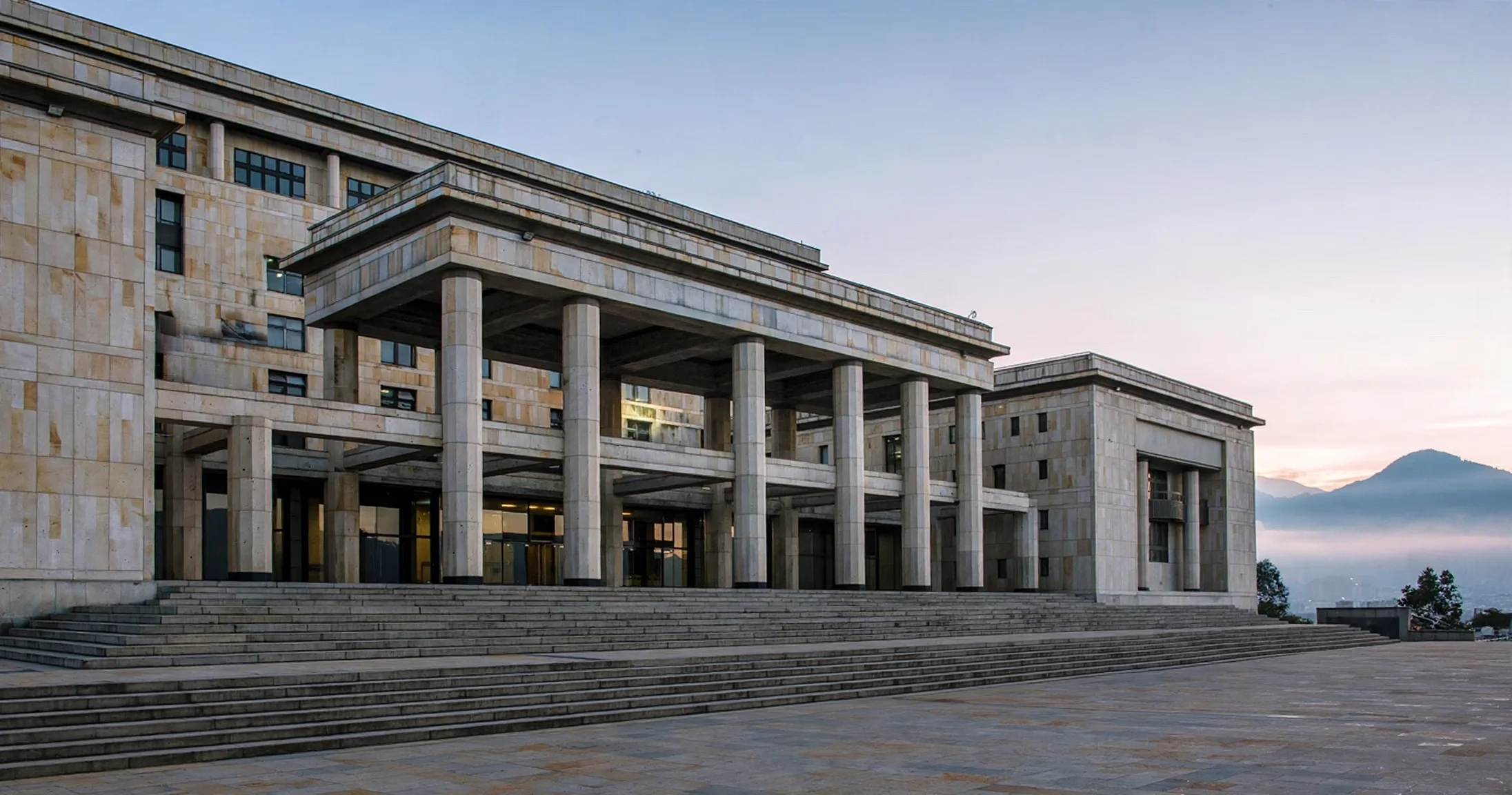
Un edificio judicial en Bogotá al amanecer. · Imagen generada por EPM
JEP to announce close to 20 indictments before December 15
Danilo Rojas announced close to 20 new indictments in the macro-cases before December 15, despite a cut of 170,000 million pesos, alongside an austerity plan…
JEP pledges 20 indictments and adopts a strict austerity plan
The JEP announced close to 20 indictments before December 15 and an austerity plan after a cut of 170,000 million pesos, with a headquarters move, virtual work…
--- The context ---
Colombia's Special Jurisdiction for Peace is entering a decisive stage. After work begun in 2018, built on dialogic procedures, accounts and testimony, the tribunal is moving toward more visible results, with a far tighter financial setting.
--- The facts ---
Danilo Rojas, president of the JEP, announced close to 20 new indictments in the macro-cases before December 15. The Recognition Chamber is following a timetable with decisions in all the macro-cases, despite a cut of 170,000 million pesos ordered by the government.
The announcement coincides with summonses of former members of the Farc secretariat over the recruitment of 18,677 girls and boys, and with decisions on the donkey-bomb attack in Chalán, Sucre. Rojas attributed this moment to a harvest of results from years of cross-checking evidence.
--- The positions ---
Rojas said, in statements reported by the press, that the decisions are not a reaction to the cut or to criticism. He acknowledged a paradox: more results must come with fewer resources, but assured the adjustment will not affect the essential mandate or central judicial activity.
--- What remains unknown ---
Austerity includes moving the Bogotá headquarters, at Calle 64 with Carrera Séptima, from close to 15,000 square meters to a property of close to 4,200 square meters, saving close to 26,000 million pesos a year. Virtual work will become the rule and workstations will rotate.
There will also be an 85% cut in service-provision contracts, with savings of between 83,000 and 85,000 million pesos. It remains to be seen how the move will be organized and how team continuity will be guaranteed.
--- Unanswered questions ---
Will the close to 20 indictments arrive before December 15 across all the macro-cases? How will central judicial activity be protected while contracts and space shrink? Will the move and virtual work absorb the cut without delaying decisions?
--- EPM analysis ---
The sequence combines judicial output and administrative contraction. If decisions arrive with solid support, they will show that prolonged cross-checking produces concrete consequences. If the reorganization weakens follow-up, the debate will shift from the announcement to the quality and timeliness of each indictment.
📌 EPM Take: In EPM's view, the announcement matters because it tests the central promise of transitional justice: turning years of listening and cross-checking into verifiable decisions without sacrificing victims in the adjustment. If the Recognition Chamber meets its timetable and austerity leaves judicial work fully intact, the JEP will gain legitimacy at a demanding moment. If the cut erodes teams and follow-up, the cost will be measured in truth, reparation and public trust in the peace framework.
--- The context ---
In Colombia, explaining its method is no longer enough for the Special Jurisdiction for Peace. After a process begun in 2018, based on dialogic procedures, accounts and cross-checking, expectation now centers on concrete decisions, as it operates on a smaller budget.
--- The facts ---
Danilo Rojas, president of the JEP, announced close to 20 new indictments in the macro-cases before December 15. The Recognition Chamber is following a timetable with decisions in all the macro-cases, despite a cut of 170,000 million pesos ordered by the government.
There are summonses of former members of the Farc secretariat over the recruitment of 18,677 girls and boys, and decisions on the donkey-bomb attack in Chalán, Sucre. For Rojas, this is the result of years of gathering information and cross-checking evidence.
--- The positions ---
Rojas rejected the idea that the announcement responds to the cut or to questions. He admitted the paradox of more results with fewer resources and committed, indirectly, that the reduction will not touch the core mandate or central judicial activity, focusing cuts on administration.
--- What remains unknown ---
The reorganization leaves the Bogotá headquarters, at Calle 64 with Carrera Séptima, covering close to 15,000 square meters, for a property of close to 4,200 square meters, saving close to 26,000 million pesos a year, with virtual work and rotating workstations.
There will be an 85% cut in service-provision contracts, with savings of between 83,000 and 85,000 million pesos. Which functions will lose external support, and whether the new structure will keep pace with the macro-case timetable, remains unspecified.
--- Unanswered questions ---
Will the Recognition Chamber present decisions in all the macro-cases before December 15? Can an 85% cut in service contracts be sustained without affecting investigations? Will savings from the new headquarters offset the reduction without shifting costs onto victims and defendants?
--- EPM analysis ---
The balance is narrow: austerity in administration and firmness in judicial work. It will be credible only if each indictment arrives supported and the reorganization creates no permanent delays. The question is not only how much the tribunal spends, but whether its structure matches its decisions.
📌 EPM Take: In EPM's view, the demand is twofold and reasonable: firm judicial results and public spending under control, with no excuses on either front. A special jurisdiction cannot ask for trust on the strength of its mandate alone; it must show solid indictments, respect for due process and an austere structure. If the move, virtual work and contract cuts protect what is essential without weakening casework, the adjustment will be defensible. Otherwise, the debate will become one about institutional credibility.
JEP anunciará cerca de 20 imputaciones antes del 15 de diciembre
Danilo Rojas anunció cerca de 20 nuevas imputaciones en los macrocasos antes del 15 de diciembre, pese al recorte de 170.000 millones de pesos, y presentó un…
JEP promete 20 imputaciones y aplica un fuerte plan de austeridad
La JEP anunció cerca de 20 imputaciones antes del 15 de diciembre y un plan de austeridad por el recorte de 170.000 millones de pesos, con traslado de sede…
--- El contexto ---
La Jurisdicción Especial para la Paz atraviesa una etapa decisiva. Tras años de trabajo desde 2018, con procedimientos dialógicos, versiones y testimonios, el tribunal se acerca a resultados visibles, con un escenario financiero limitado.
--- Los hechos ---
Danilo Rojas, presidente de la JEP, anunció cerca de 20 nuevas imputaciones en los macrocasos antes del 15 de diciembre. La Sala de Reconocimiento avanza en un cronograma con decisiones en todos los macrocasos, pese a la reducción de 170.000 millones de pesos decretada por el Gobierno.
Coincide con citaciones a antiguos integrantes del secretariado de las Farc por el reclutamiento de 18.677 niñas y niños, y con decisiones sobre el atentado con burro bomba en Chalán, Sucre. Rojas lo atribuyó a una cosecha de resultados de años de contrastación.
--- Las posiciones ---
Rojas sostuvo, en declaraciones recogidas por la prensa, que estas no responden al recorte ni a las críticas. Reconoció la paradoja de más resultados con menos recursos, pero aseguró que el ajuste no afectará el núcleo del mandato ni la actividad judicial central.
--- Lo que falta saber ---
La austeridad incluye trasladar la sede de Bogotá, en la calle 64 con carrera séptima, de cerca de 15.000 metros cuadrados, a un inmueble de cerca de 4.200 metros cuadrados, con ahorro anual cercano a 26.000 millones de pesos. Habrá trabajo virtual como regla y rotación de puestos.
Se suma un recorte del 85 % en contratos de prestación de servicios, con un ahorro de entre 83.000 y 85.000 millones de pesos. Falta conocer cómo se ordenará el traslado y la continuidad de los equipos de los macrocasos.
--- Preguntas sin respuesta ---
¿Se conocerán las cerca de 20 imputaciones antes del 15 de diciembre en todos los macrocasos? ¿Cómo se protegerá la actividad judicial central con menos contratos y espacio? ¿Alcanzarán traslado y virtualidad para absorber el recorte sin retrasar decisiones?
--- Análisis EPM ---
La secuencia combina producción judicial y contracción administrativa. Si las decisiones llegan con sustento sólido, mostrarán que la contrastación prolongada produce consecuencias concretas. Si la reorganización debilita el seguimiento, el debate pasará del anuncio a la calidad de cada imputación.
📌 Conclusion EPM: A juicio de EPM, el anuncio importa porque pone a prueba la promesa central de la justicia transicional: convertir años de escucha y contrastación en decisiones verificables sin sacrificar a las víctimas en el ajuste. Si la Sala de Reconocimiento cumple el cronograma y la austeridad preserva intacta la actividad judicial, la JEP ganará legitimidad en un momento exigente. Si el recorte erosiona equipos y seguimiento, el costo será de verdad, de reparación y de confianza pública.
--- El contexto ---
En Colombia, a la Jurisdicción Especial para la Paz ya no le basta explicar su método. Tras un proceso iniciado en 2018, con procedimientos dialógicos, versiones y contrastación, la expectativa se concentra en decisiones concretas, cuando debe operar con menos presupuesto.
--- Los hechos ---
Danilo Rojas, presidente de la JEP, anunció cerca de 20 imputaciones en los macrocasos antes del 15 de diciembre. La Sala de Reconocimiento sigue un cronograma con decisiones en todos los macrocasos, pese a la reducción de 170.000 millones de pesos decretada por el Gobierno.
Figuran las citaciones a antiguos integrantes del secretariado de las Farc por el reclutamiento de 18.677 niñas y niños, y las decisiones sobre el atentado con burro bomba en Chalán, Sucre. Para Rojas, es resultado de años de recopilación y contrastación.
--- Las posiciones ---
Rojas rechazó que responda al recorte o a los cuestionamientos. Admitió la paradoja de entregar más resultados con menos recursos y se comprometió, en indirecto, a que esta no tocará el núcleo del mandato ni la actividad judicial central, con recortes en lo administrativo.
--- Lo que falta saber ---
La reorganización deja la sede de Bogotá, en la calle 64 con carrera séptima, de cerca de 15.000 metros cuadrados, por un inmueble de cerca de 4.200 metros cuadrados, con ahorro anual cercano a 26.000 millones de pesos, virtualidad y rotación.
Habrá un recorte del 85 % en contratos de prestación de servicios, con ahorro de entre 83.000 y 85.000 millones de pesos. Queda por precisar qué funciones perderán apoyo y si la estructura mantendrá el ritmo del cronograma.
--- Preguntas sin respuesta ---
¿Presentará la Sala decisiones en todos los macrocasos antes del 15 de diciembre? ¿Puede sostenerse un recorte del 85 % en contratos sin afectar la instrucción? ¿Bastará el ahorro de la sede sin trasladar costos a víctimas y comparecientes?
--- Análisis EPM ---
El equilibrio es estrecho: austeridad en lo administrativo y firmeza en lo judicial. Solo será creíble si cada imputación llega sustentada y la reorganización no genera demoras. La discusión no es solo el gasto, sino si su estructura será proporcionada a sus decisiones.
📌 Conclusion EPM: A juicio de EPM, la exigencia es doble y razonable: resultados judiciales firmes y gasto público bajo control, sin excusas en ninguno de los dos frentes. Una jurisdicción especial no puede pedir confianza solo por su mandato; debe mostrar imputaciones sólidas, respeto al debido proceso y una estructura austera. Si el traslado, la virtualidad y el recorte de contratos protegen lo esencial sin debilitar la instrucción, el ajuste será defendible. Si no, la discusión pasará a ser de credibilidad institucional.