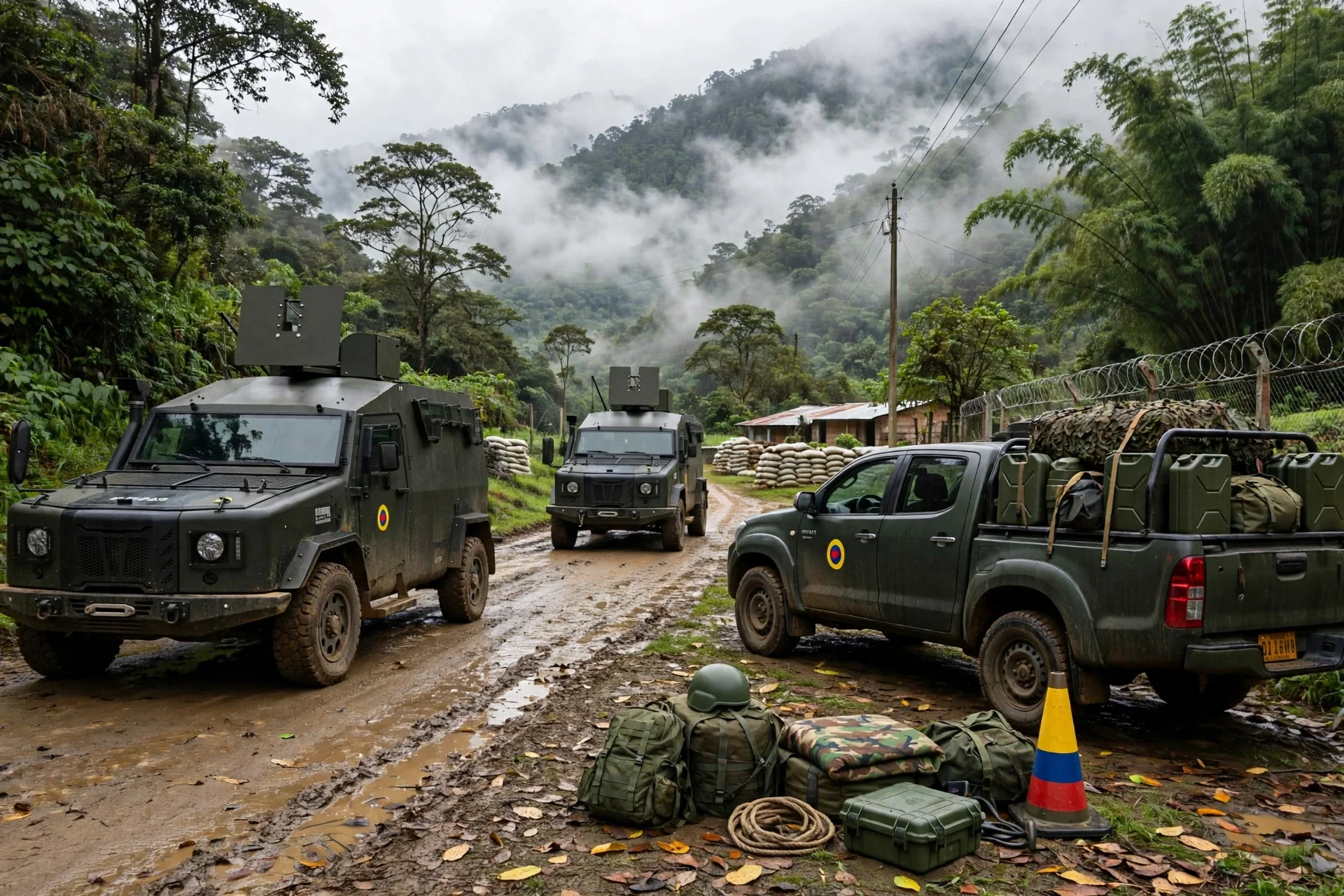
Imagen alusiva de un operativo de seguridad en zona rural. · Imagen generada
Uribe backs Abelardo's determination to restore security in Colombia
Former president Álvaro Uribe declined to dwell on President Abelardo de la Espriella's face-to-face confrontations, backed his determination to restore…
Uribe defends firm security and allied help to recover sovereignty
Álvaro Uribe backed President Abelardo de la Espriella's security policy, wished his determination success, recalled the three soldiers killed in Bolívar and…
--- The context ---
President Abelardo de la Espriella draws many reactions for confronting, face to face, criminals detained in operations in which he takes part. Those encounters are the visible face of the security policy begun on August seventh.
Against that backdrop, former president Álvaro Uribe Vélez spoke on a debate program. He preferred not to go deep into the confrontations and focused instead on presidential determination and the country's complex situation.
--- The facts ---
The head of state shares on his X account the videos where he is seen face to face with detainees and is heard telling them «Bienvenidos a la Patria Milagro». That short phrase is the central fact that prompted the questions to Uribe.
Uribe recalled recent violent events, such as the drone attack in Bolívar, which left three soldiers dead. He cited it to underline the seriousness of the moment faced by state forces in several regions.
--- The positions ---
Uribe said he was prudent and would refer only to the president's determination to restore security, wishing him success. He did not dwell on each video: he backed the presidential will to regain control and calm.
He also noted that De La Espriella has been at the Casa de Nariño for three months and that the situation is complex because of what the Petro government did, in his assessment. He hoped for improvement through presidential determination and support from the United States and Israel.
--- What remains unknown ---
Uribe argued that help from those allied countries does not mean handing over sovereignty, as the opposition says. In his framing, sovereignty today has been lost through terrorism in many regions, and security serves to recover it for the state and democracy.
The bottom line was clear: Uribe showed himself in favor of what De La Espriella and his government are doing on security. He offered no new operational detail and no concrete calendar of results.
--- Unanswered questions ---
Will presidential determination translate into less violence in the regions hardest hit by terrorism?
What concrete form will support from the United States and Israel take in security policy?
Will Uribe keep his prudence about the confrontations or speak about them again?
--- EPM analysis ---
By not going deep into each confrontation, Uribe moves the debate from the images toward results: restoring security as the state's central task. His mention of the Bolívar attack anchors that discussion in recent facts.
His defense of cooperation introduces the recovered-sovereignty argument: sovereignty is not surrendered by accepting allied help, because it was already lost to terrorism, and security would be the way to return it to the state.
📌 EPM Take: In EPM's view, Uribe's backing strengthens the president's security strategy because it arrives with prudence rather than an empty celebration of the images. The message is that presidential determination should be judged by the effective recovery of territory and of calm for citizens. If allied support produces verifiable results, the thesis of recovered sovereignty will gain force across the country. That backing also orders the public debate around results rather than gestures alone today.
--- The context ---
Security returned to the center of the agenda once President Abelardo de la Espriella began taking part directly in operations and confronting detained criminals. His videos have sparked many reactions and sum up the policy launched on August seventh.
Asked on a debate program, former president Álvaro Uribe Vélez answered with deliberate prudence. He preferred not to go deep into each episode and concentrated on presidential determination and the complex public-order inheritance.
--- The facts ---
In the videos the head of state himself shares on his X account, he is seen face to face with detainees and is heard telling them «Bienvenidos a la Patria Milagro». That scene was the fact that prompted the questions to the former president.
Uribe framed his answer by recalling the drone attack in Bolívar, which left three soldiers dead. The reminder sizes up the challenge: regions battered by terrorism and state forces under attack.
--- The positions ---
The former president said he was prudent and would refer only to the president's determination to restore security, wishing him success. He thus avoided controversy over style and backed the substance: authority, state presence and resolve against crime.
He recalled that De La Espriella has been at the Casa de Nariño for three months and that the situation is complex because of what the Petro government did, in his analysis. He hoped for improvement through presidential determination and support from the United States and Israel.
--- What remains unknown ---
Against the opposition, Uribe argued that allied help does not mean handing over sovereignty. He pointed out that sovereignty has been lost through terrorism in many regions and that security cooperation helps recover it for the state and democracy.
In that way, he showed himself in favor of what De La Espriella and his government are doing on security. His support included help from allied countries against violence, presented as backing for a national effort for order.
--- Unanswered questions ---
What concrete results will the authorities show in the regions most affected by terrorism?
Will the president maintain his direct presence in operations and his face-to-face confrontations?
Will the government recover the territories where, according to Uribe, sovereignty was lost to terrorism?
--- EPM analysis ---
Uribe's answer orders the debate: authority and results first, discussion of style afterward. By declaring his prudence, he concentrates attention on presidential determination, the axis of security policy since August.
His sovereignty argument closes an opposition flank: if sovereignty was already lost in regions under terrorism, recovering it with allied help defends the state and democracy rather than surrendering them. That reinforces the political alignment with the government.
📌 EPM Take: In EPM's view, Uribe sent a signal of clear alignment with the president's security policy, careful in form and unambiguous in substance. His prudence does not subtract support; it ties that support to the determination to restore security and territory. Cooperation from the United States and Israel, defended as a path to recover sovereignty, is thus legitimized by the voice with the greatest historical authority on security. The country will judge that bet in the territory.
Uribe respalda la determinación de Abelardo para recuperar la seguridad
El expresidente Álvaro Uribe evitó profundizar en los encarés del presidente Abelardo de la Espriella, respaldó su determinación de recuperar la seguridad…
Uribe defiende la mano firme y la ayuda aliada para recuperar la soberanía
Álvaro Uribe respaldó la política de seguridad del presidente Abelardo de la Espriella, deseó éxito a su determinación, recordó los tres militares muertos en…
--- El contexto ---
El presidente Abelardo de la Espriella genera muchas reacciones por encarar cara a cara a delincuentes detenidos en operativos en los que participa. Esos encuentros son la cara visible de la política de seguridad iniciada el pasado siete de agosto.
En ese ambiente, el expresidente Álvaro Uribe Vélez habló en un programa de debate. Prefirió no profundizar en los encarés y centrarse en la determinación presidencial y en la compleja situación del país.
--- Los hechos ---
El jefe de Estado comparte en su cuenta de X los videos donde se le ve frente a frente con los detenidos y se escucha que les dice «Bienvenidos a la Patria Milagro». Esa frase breve es el hecho central que motivó las preguntas a Uribe.
Uribe recordó hechos violentos recientes, como el ataque con drones en Bolívar que dejó tres militares muertos. Lo citó para subrayar la gravedad del momento que enfrentan las fuerzas del Estado en varias regiones.
--- Las posiciones ---
Uribe dijo ser prudente y referirse solo a la determinación del presidente de recuperar la seguridad, deseándole éxito. No entró en el detalle de cada video: respaldó la voluntad presidencial de recuperar el control y la tranquilidad.
También señaló que De La Espriella lleva tres meses en la Casa de Nariño y que la situación es compleja por lo hecho por el gobierno Petro, según su valoración. Expresó esperanza de mejora con la determinación presidencial y el apoyo de Estados Unidos e Israel.
--- Lo que falta saber ---
Uribe sostuvo que la ayuda de esos países aliados no es entregar la soberanía, como dice la oposición. Según su planteamiento, la soberanía hoy se ha perdido por el terrorismo en muchas regiones y la seguridad sirve para recuperarla para el Estado y la democracia.
La conclusión de fondo quedó clara: Uribe se mostró a favor de lo que hacen De La Espriella y su Gobierno en seguridad. No anunció datos operativos nuevos ni un calendario concreto de resultados.
--- Preguntas sin respuesta ---
¿Se traducirá la determinación presidencial en menos violencia en las regiones más golpeadas por el terrorismo?
¿Qué forma concreta tomará el apoyo de Estados Unidos e Israel en la política de seguridad?
¿Mantendrá Uribe su prudencia sobre los encarés o volverá a pronunciarse sobre ellos?
--- Análisis EPM ---
Al no profundizar en cada encaré, Uribe traslada el debate desde las imágenes hacia los resultados: recuperar la seguridad como tarea central del Estado. Su mención al ataque en Bolívar ancla esa discusión en hechos recientes.
Su defensa de la cooperación introduce el argumento de la soberanía recuperada: no se entrega al aceptar ayuda aliada, porque ya se habría perdido por el terrorismo, y la seguridad sería la vía para devolverla al Estado.
📌 Conclusion EPM: A juicio de EPM, el respaldo de Uribe fortalece la estrategia de seguridad del presidente porque llega con prudencia y no con una celebración vacía de las imágenes. El mensaje es que la determinación presidencial debe juzgarse por la recuperación efectiva del territorio y de la tranquilidad ciudadana. Si el apoyo aliado produce resultados verificables, la tesis de la soberanía recuperada ganará fuerza ante el país. Ese respaldo, además, ordena el debate público alrededor de resultados y no de gestos.
--- El contexto ---
La seguridad volvió al centro de la agenda desde que el presidente Abelardo de la Espriella participa directamente en operativos y encara a los delincuentes detenidos. Sus videos han desatado muchas reacciones y resumen la política iniciada el pasado siete de agosto.
Consultado en un programa de debate, el expresidente Álvaro Uribe Vélez respondió con prudencia deliberada. Prefirió no profundizar en cada episodio y concentrarse en la determinación presidencial y en la herencia compleja del orden público.
--- Los hechos ---
En los videos que el propio jefe de Estado comparte en su cuenta de X, se le ve cara a cara con los detenidos y se escucha que les dice «Bienvenidos a la Patria Milagro». La escena fue el hecho que motivó las preguntas al expresidente.
Uribe enmarcó su respuesta recordando el ataque con drones en Bolívar, que dejó tres militares muertos. El recordatorio dimensiona el desafío: regiones golpeadas por el terrorismo y fuerzas del Estado bajo ataque.
--- Las posiciones ---
El expresidente dijo ser prudente y referirse solo a la determinación del presidente de recuperar la seguridad, deseándole éxito. Así evitó la polémica sobre las formas y respaldó el fondo: autoridad, presencia del Estado y decisión frente al delito.
Recordó que De La Espriella lleva tres meses en la Casa de Nariño y que la situación es compleja por lo hecho por el gobierno Petro, según su análisis. Esperó mejora con la determinación presidencial y el apoyo de Estados Unidos e Israel.
--- Lo que falta saber ---
Frente a la oposición, Uribe sostuvo que la ayuda aliada no significa entregar la soberanía. Apuntó que esta se ha perdido por el terrorismo en muchas regiones y que la cooperación en seguridad ayuda a recuperarla para el Estado y la democracia.
De esa forma, se mostró a favor de lo que hacen De La Espriella y su Gobierno en seguridad. Su respaldo incluyó la ayuda de países aliados contra la violencia, presentada como apoyo a un esfuerzo nacional de orden.
--- Preguntas sin respuesta ---
¿Qué resultados concretos mostrarán las autoridades en las regiones más afectadas por el terrorismo?
¿Mantendrá el presidente su presencia directa en los operativos y sus encarés cara a cara?
¿Recuperará el Gobierno los territorios donde, según Uribe, la soberanía se perdió por el terrorismo?
--- Análisis EPM ---
La respuesta de Uribe ordena el debate: primero la autoridad y los resultados, después la discusión sobre las formas. Al declarar su prudencia, concentra la atención en la determinación presidencial, eje de la política de seguridad desde agosto.
Su argumento sobre la soberanía cierra un flanco opositor: si ya se perdió en regiones bajo terrorismo, recuperarla con ayuda aliada defiende al Estado y a la democracia, no los entrega. Eso refuerza la alianza política con el Gobierno.
📌 Conclusion EPM: A juicio de EPM, Uribe envió una señal de alineamiento claro con la política de seguridad del presidente, cuidando las formas y defendiendo el fondo sin ambigüedades. Su prudencia no resta respaldo: lo ata a la determinación de recuperar la seguridad y el territorio. La cooperación de Estados Unidos e Israel, defendida como vía para recuperar la soberanía, queda legitimada por la voz de mayor autoridad histórica en seguridad. El país juzgará esa apuesta en el territorio.